Slime has a way of turning up in the last place we want it — smeared across a sleeve, ground into a school uniform, or hardened onto a favorite pair of jeans. It looks like a lost cause the moment it dries, but slime stains are rarely permanent. With the right combination of household products and a little patience, we’ve found that even caked-on slime comes out of most fabrics without a trip to the dry cleaner.
How to Get Slime Out of Clothes
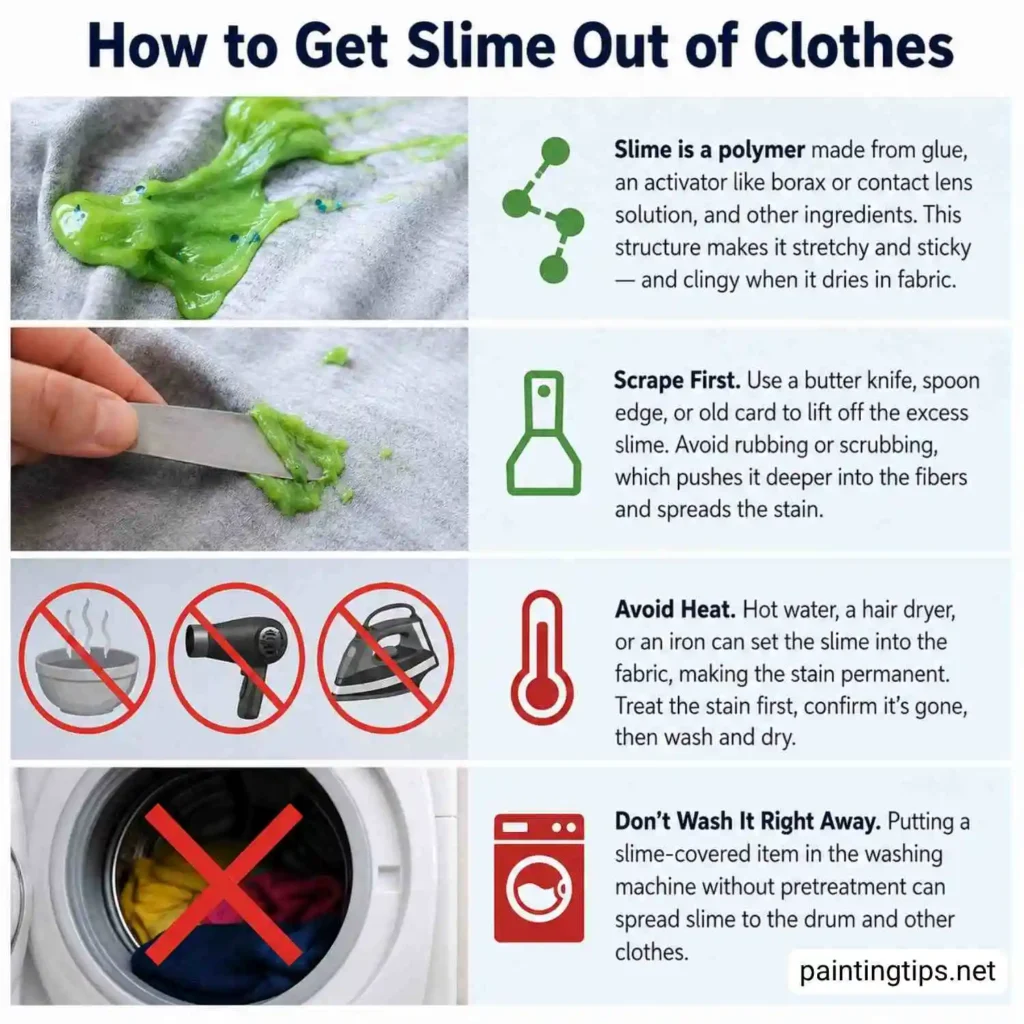
Slime is a sticky polymer, usually built from glue and an activator like borax, which is why it clings to fabric fibers so stubbornly but also why it breaks down fairly easily with acids, alcohols, and enzymes. Before reaching for any product, we always scrape away the excess slime first — a butter knife, the edge of a spoon, or an old gift card lifts off the bulk without pressing it deeper into the weave, since rubbing or scrubbing at this stage almost always spreads the slime further into the fibers instead of lifting it out.
Heat is the other major thing to avoid early on. Hot water, a hair dryer, or an ironing pass can all cause the slime’s polymers to set permanently into the fabric, so we treat the stain first, confirm it’s gone, and only then move on to a normal wash and dry cycle. Tossing a slime-covered item straight into the washing machine without any pretreatment is one of the most common mistakes, since loose slime can transfer to the drum and onto other clothes in the same load.
1. White Vinegar
White vinegar is consistently the top-performing method for getting slime out of clothes, according to cleaning experts and real-world testing alike. The acetic acid in vinegar breaks down the polymer bonds in most glue-based slime and also helps dissolve any leftover borax residue.
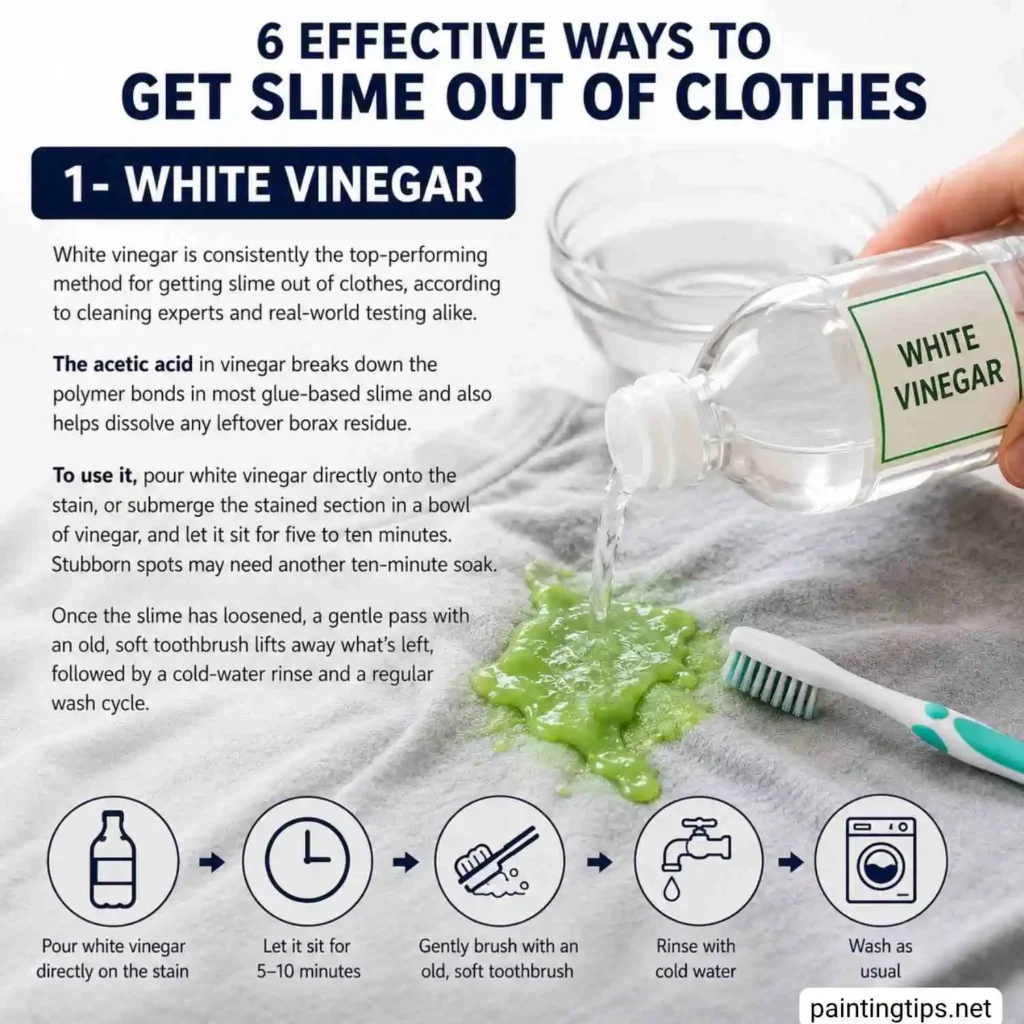
To use it, pour white vinegar directly onto the stain, or submerge the stained section in a bowl of vinegar, and let it sit for five to ten minutes. Stubborn spots may need another ten-minute soak. Once the slime has loosened, a gentle pass with an old, soft toothbrush lifts away what’s left, followed by a cold-water rinse and a regular wash cycle.
2. Freezing Dried Slime
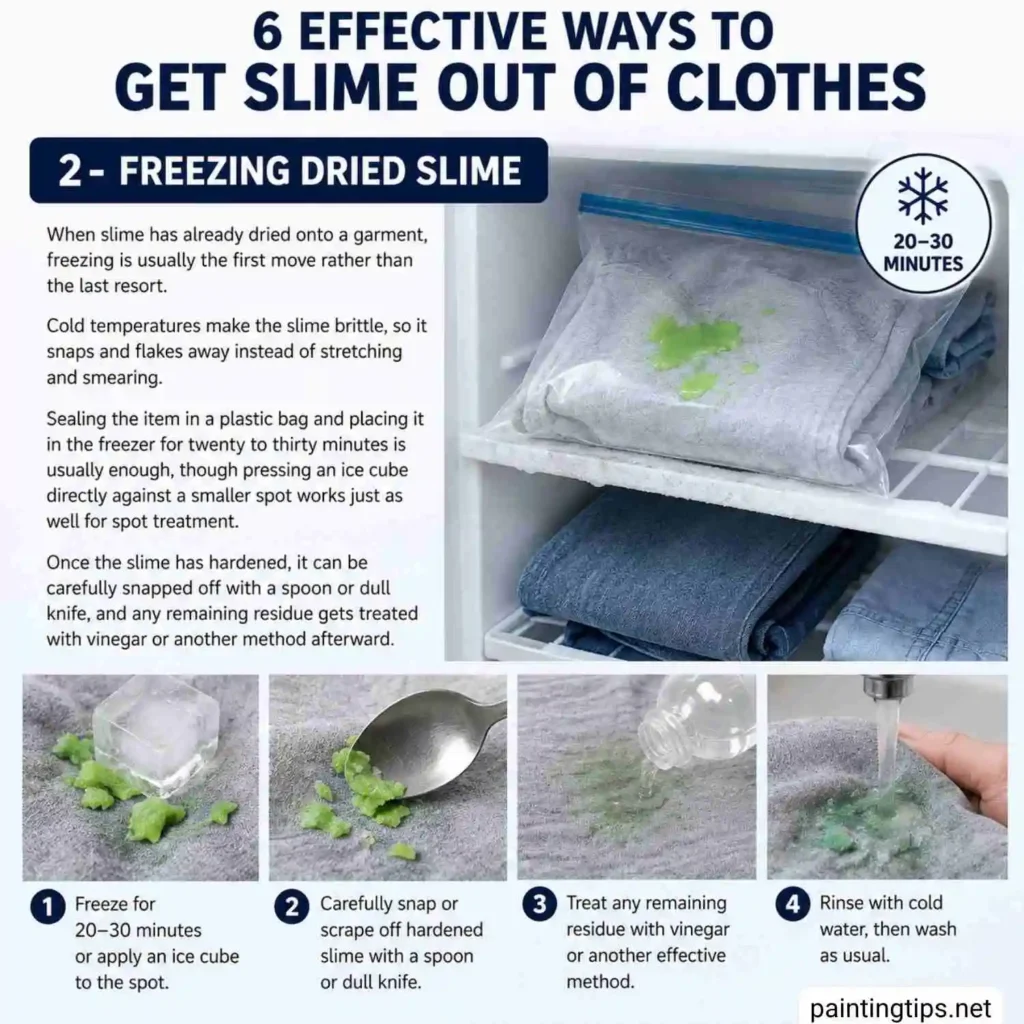
When slime has already dried onto a garment, freezing is usually the first move rather than the last resort. Cold temperatures make the slime brittle, so it snaps and flakes away instead of stretching and smearing. Sealing the item in a plastic bag and placing it in the freezer for twenty to thirty minutes is usually enough, though pressing an ice cube directly against a smaller spot works just as well for spot treatment. Once the slime has hardened, it can be carefully snapped off with a spoon or dull knife, and any remaining residue gets treated with vinegar or another method afterward.
3. Isopropyl Alcohol
Isopropyl alcohol, the same rubbing alcohol found in most medicine cabinets, is particularly good on dried-on residue and slime that’s resisted vinegar. It works by breaking down the sticky film left behind rather than the bulk of the slime itself, which makes it a strong second step rather than a first one.
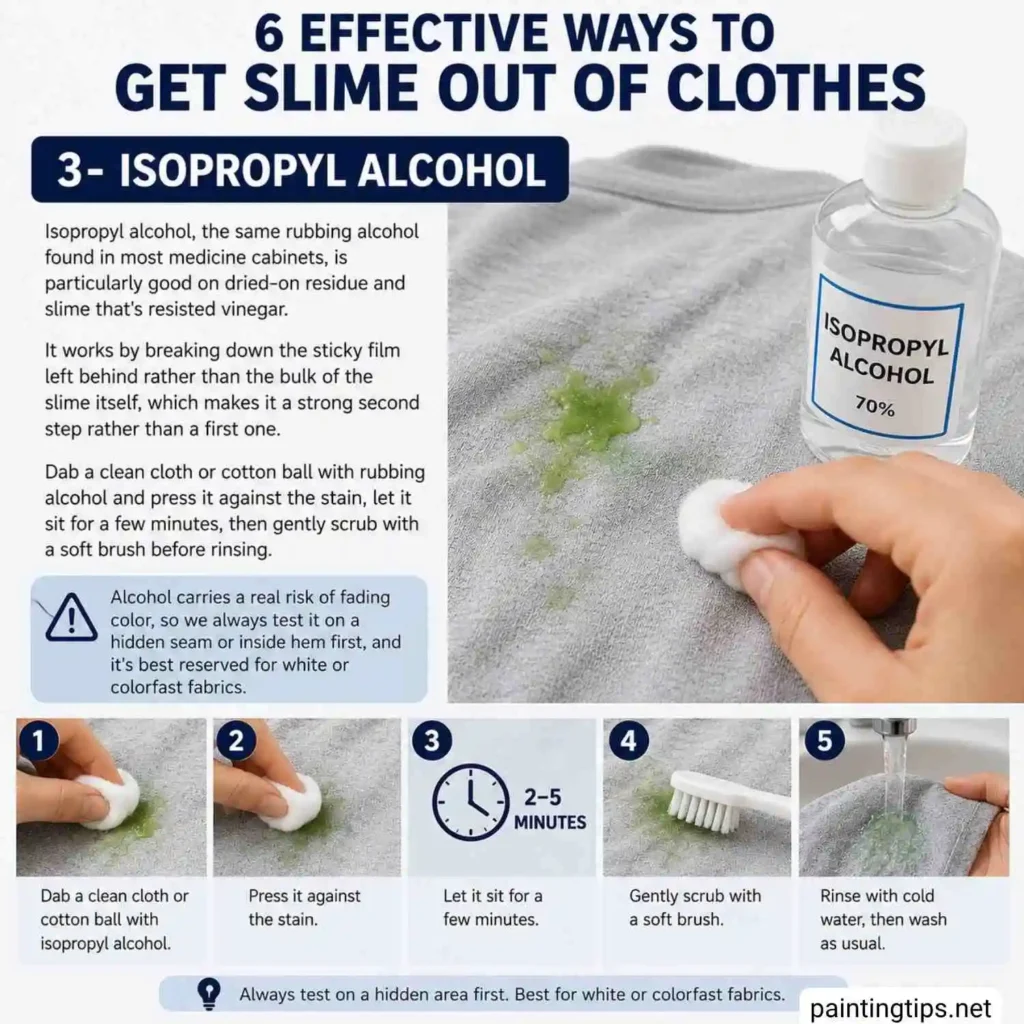
Dab a clean cloth or cotton ball with rubbing alcohol and press it against the stain, let it sit for a few minutes, then gently scrub with a soft brush before rinsing. Alcohol carries a real risk of fading color, so we always test it on a hidden seam or inside hem first, and it’s best reserved for white or colorfast fabrics.
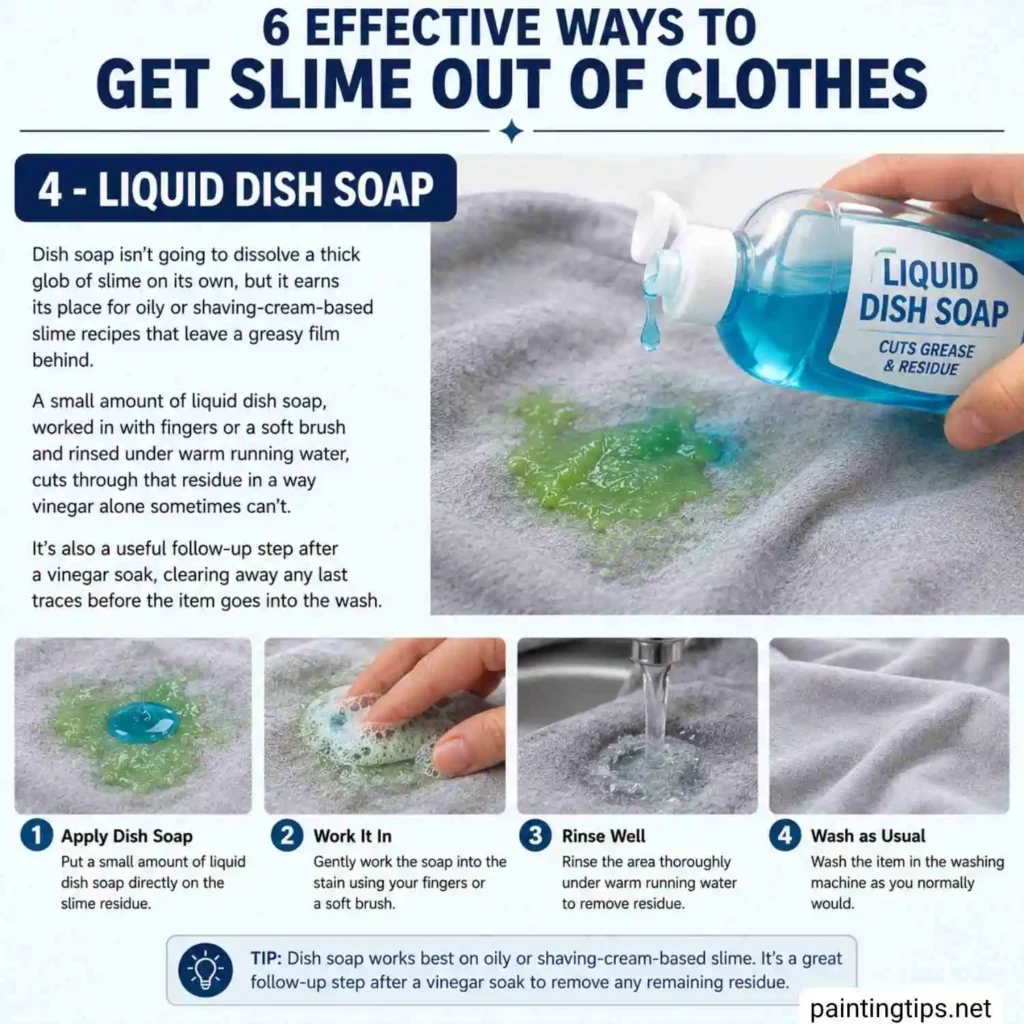
4. Liquid Dish Soap
Dish soap isn’t going to dissolve a thick glob of slime on its own, but it earns its place for oily or shaving-cream-based slime recipes that leave a greasy film behind. A small amount of liquid dish soap, worked in with fingers or a soft brush and rinsed under warm running water, cuts through that residue in a way vinegar alone sometimes can’t. It’s also a useful follow-up step after a vinegar soak, clearing away any last traces before the item goes into the wash.
The same grease-cutting properties make dish soap one of the go-to products for how to get oil paint out of clothes, since both stains respond to breaking down an oily film rather than a water-soluble one.
5. Enzyme Laundry Detergent
Once the bulk of the slime is gone, an enzyme-based liquid laundry detergent handles what’s left. Enzymes are built to break down organic material, and they do a good job finishing off any protein or starch-based residue that a vinegar or alcohol treatment didn’t fully lift. Washing with an enzyme detergent instead of a standard one is a small swap that noticeably improves the odds of getting slime off clothes completely on the first try.
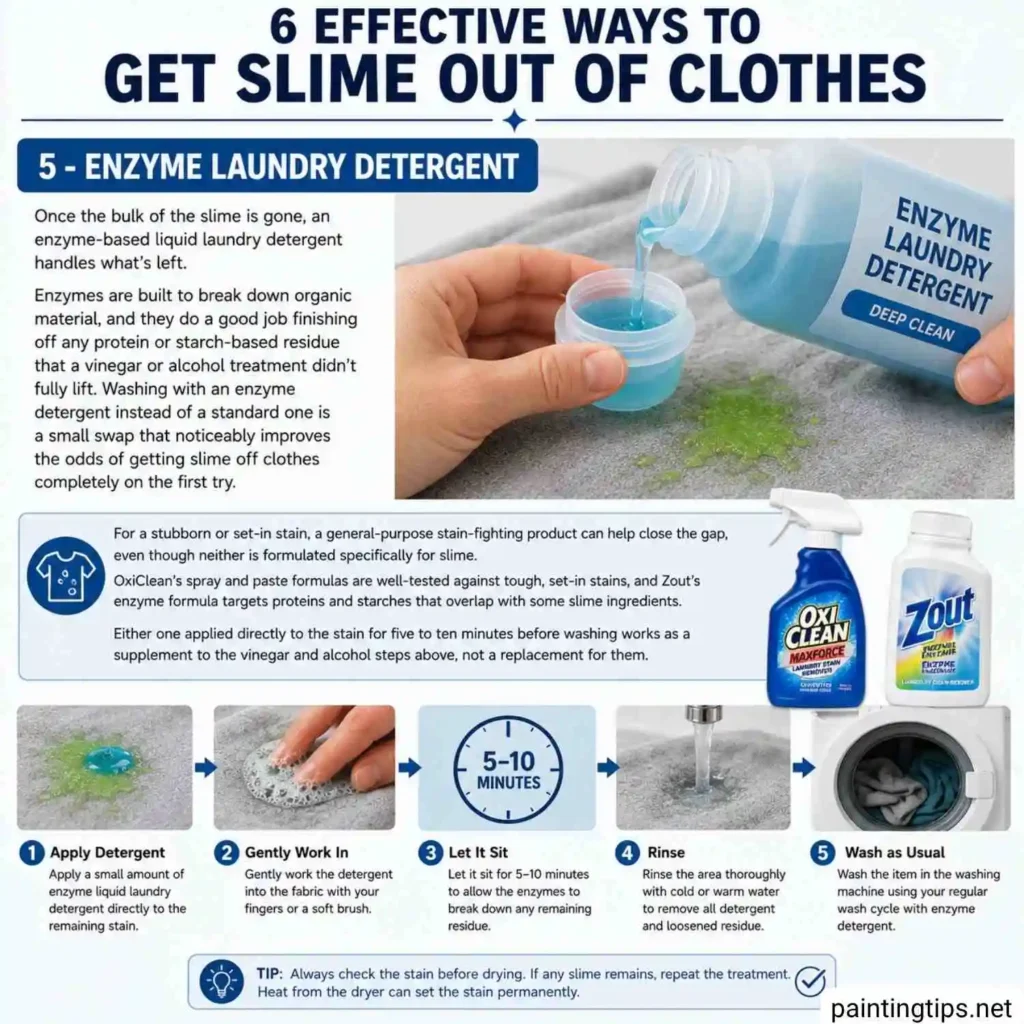
For a stubborn or set-in stain, a general-purpose stain-fighting product can help close the gap, even though neither is formulated specifically for slime. OxiClean’s spray and paste formulas are well-tested against tough, set-in stains, and Zout’s enzyme formula targets proteins and starches that overlap with some slime ingredients. Either one applied directly to the stain for five to ten minutes before washing works as a supplement to the vinegar and alcohol steps above, not a replacement for them.
6. Baking Soda and Warm Water
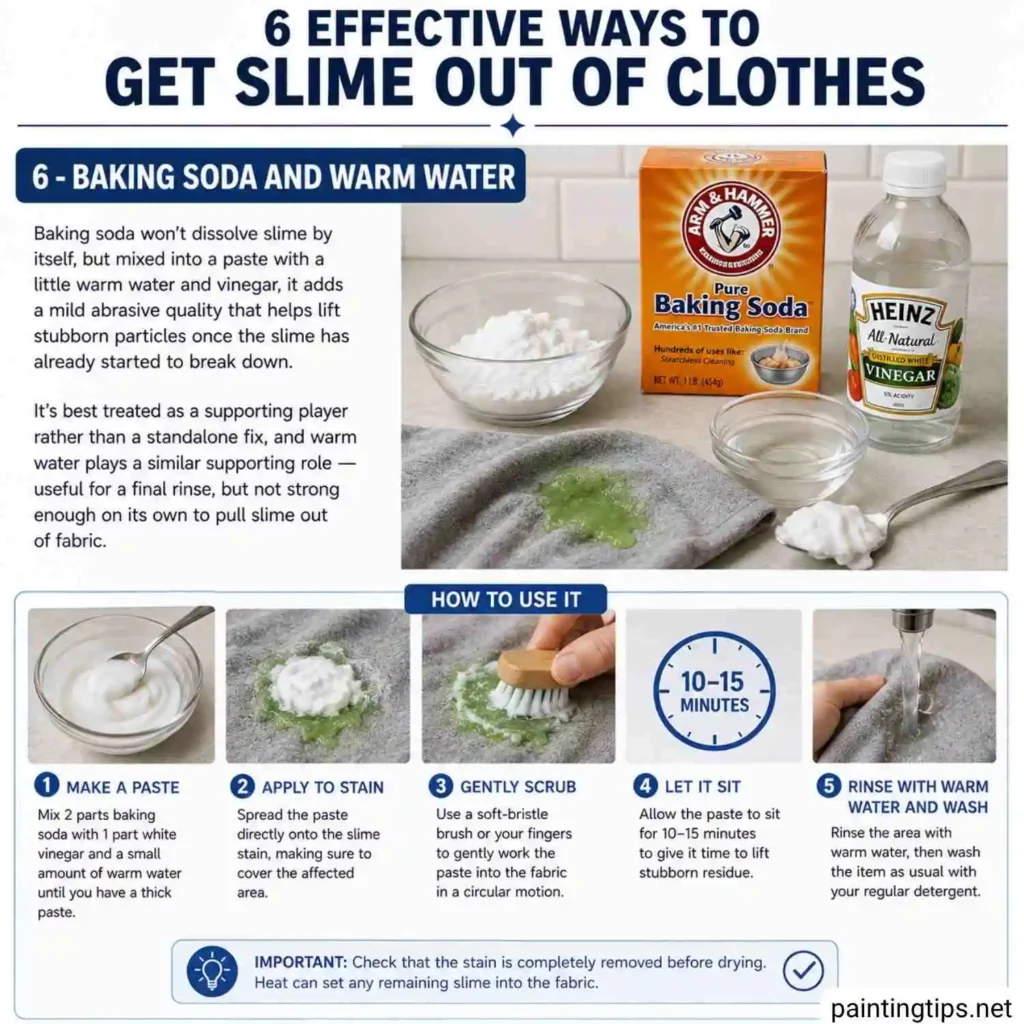
Baking soda won’t dissolve slime by itself, but mixed into a paste with a little warm water and vinegar, it adds a mild abrasive quality that helps lift stubborn particles once the slime has already started to break down. It’s best treated as a supporting player rather than a standalone fix, and warm water plays a similar supporting role — useful for a final rinse, but not strong enough on its own to pull slime out of fabric.
Does Slime Come Out in the Wash?
Slime rarely comes out in a regular wash cycle on its own. Because it’s a sticky polymer rather than a typical liquid or oil-based stain, it needs to be softened and lifted with vinegar, alcohol, or a similar treatment before laundering. Skipping that step usually means the slime just spreads to the washing machine drum and other clothes in the load, rather than washing away.
Does Slime Stain Clothes Permanently?
In most cases, no. Slime stains feel permanent because they’re sticky and visible, but the underlying polymer responds well to the acids and alcohols described above. The main way a slime stain becomes truly permanent is by applying heat, through hot water, an iron, or a dryer cycle, before the stain has been fully treated and confirmed gone.
What Is the Best Stain Remover for Slime?
White vinegar is the most reliable first-line treatment for slime, since it’s inexpensive, gentle on most fabrics, and directly breaks down the polymer bonds. Isopropyl alcohol comes in a close second for dried-on residue that vinegar alone doesn’t fully clear, and a general-purpose laundry pretreatment can round things out on the most stubborn stains, though none of these products were built for slime specifically.
What Will Dissolve Dried Slime?
Dried slime softens fastest with white vinegar, especially when the fabric is pre-loosened by freezing the slime first so it can be scraped away in pieces. Isopropyl alcohol also breaks down the sticky film that’s left behind once the bulk of a dried patch has been removed.
Does Water Remove Slime?
Water alone isn’t enough to remove slime, but it plays an important supporting role. Keeping slime wet or rewetting a dried patch with cool water makes it easier for vinegar or dish soap to penetrate, and a final rinse with cool water helps flush away loosened residue before washing. Warm or cool water is fine for this; hot water should be avoided until the stain is gone. Water plays a much bigger role for other craft-related stains: unlike slime, how to remove water based paint from clothes often comes down to plain water alone, as long as it’s treated before the paint dries.
Does Vinegar Remove Slime?
Yes, and it’s the single most effective household method available. Vinegar’s acetic acid breaks down the glue and borax that make up most slime recipes, which is why it consistently outperforms other common household options in both professional testing and everyday use.
Does Hand Sanitizer Remove Slime?
Hand sanitizer can help in a pinch, since most formulas are alcohol-based and work similarly to rubbing alcohol on sticky residue. It’s a reasonable backup when nothing else is on hand, but it’s less concentrated than rubbing alcohol and often needs to be reapplied a few times to fully remove slime from clothing, so it’s better treated as an emergency substitute than a first choice.
Slime isn’t the only stubborn, polymer-based mess that ends up on clothing. If acrylic paint has found its way onto a shirt or pair of jeans, we’ve covered that in how to remove acrylic paint from fabric, since it responds to a lot of the same treatment described above.
