If you’ve ever sat under a porch painted haint blue, you know why people keep asking about this color. It has moved well beyond the porch, and we now see it in bathrooms, kitchens, bedrooms, and on porch ceilings too. Here’s the catch: Sherwin-Williams, Benjamin Moore, Behr, and Valspar don’t sell one official paint called “Haint Blue,” but each brand has several colors that land right in that range. To make the decision easier, we’ve matched the closest haint blue colors from all four brands, added their LRV values and light notes where we could confirm them, and included plenty of photos so you can see the colors in real rooms.
Haint Blue Color
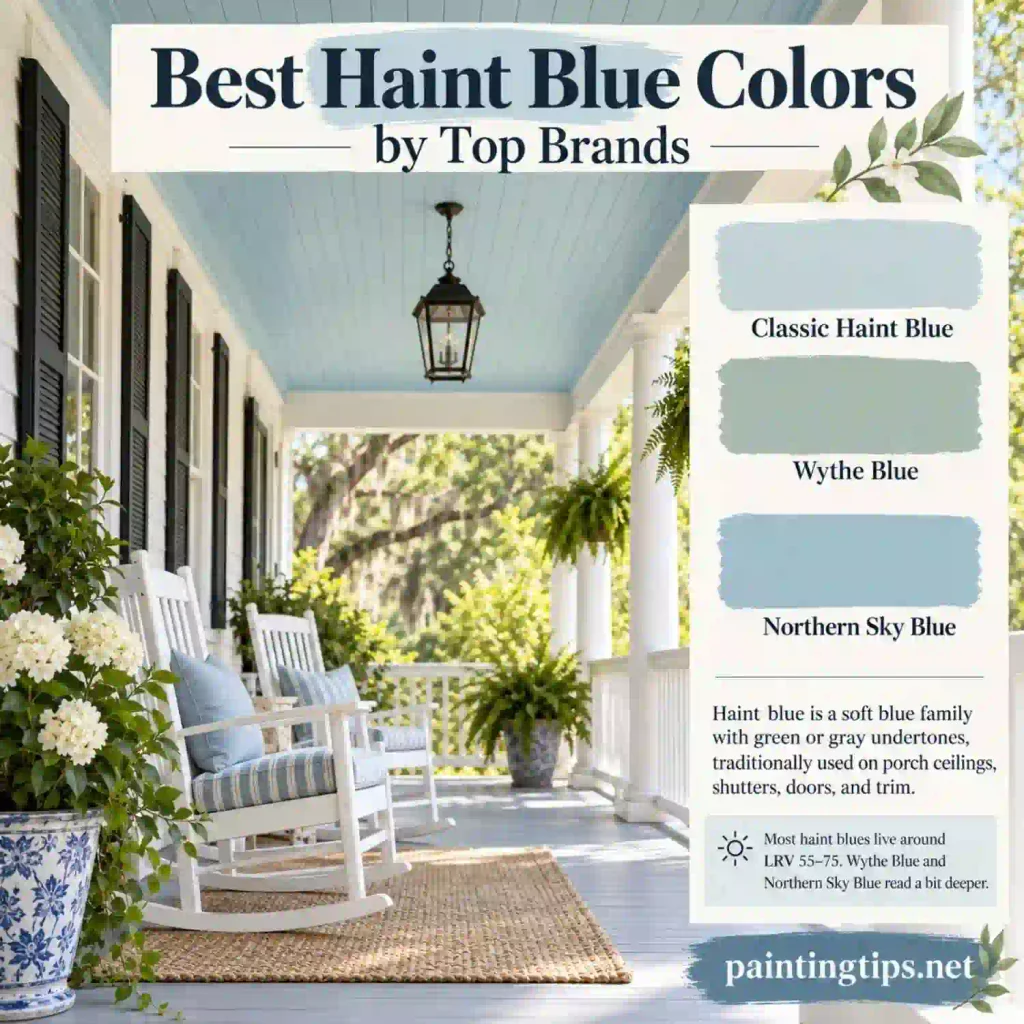
Haint blue is a pale, soft blue, usually with a touch of green or gray in it. It isn’t one exact shade but a family of colors, and they all do the same job: they look like a clear sky. On a ceiling, that means the space feels open instead of capped by a flat white lid. The tradition comes from the Gullah Geechee communities of the South Carolina and Georgia Lowcountry, and it spread across the Southern states from there. Porch ceilings are still the most common place you’ll see it, along with shutters, doors, and window trim. Lately, more people are taking it indoors.
One number helps when you compare these colors: LRV, or Light Reflectance Value, which is the percentage of light a color reflects, from 0 for black to 100 for white. For haint blue, we’d stay roughly between 55 and 75, because that’s where the soft, sky-like look lives. A few colors in this guide, like Wythe Blue and Northern Sky Blue, sit a little below that range. They’re deeper, and they read that way.
Sherwin Williams Haint Blue
Sherwin-Williams doesn’t have a color officially named Haint Blue, but it has some of the most popular stand-ins.
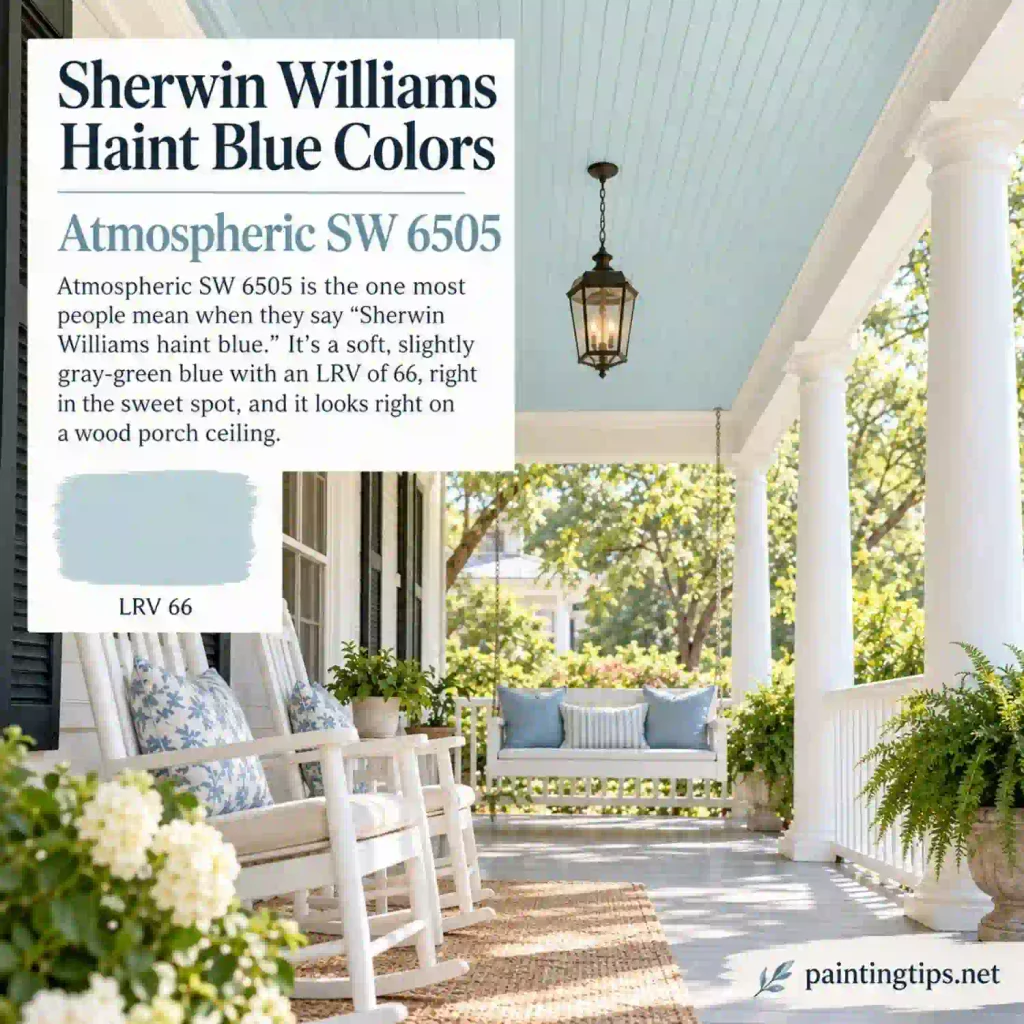
Atmospheric SW 6505 is the one most people mean when they say “Sherwin Williams haint blue.” It’s a soft, slightly gray-green blue with an LRV of 66, right in the sweet spot. If you want the closest thing to a classic haint blue color from Sherwin-Williams, this is it, and it looks right on a wood porch ceiling.
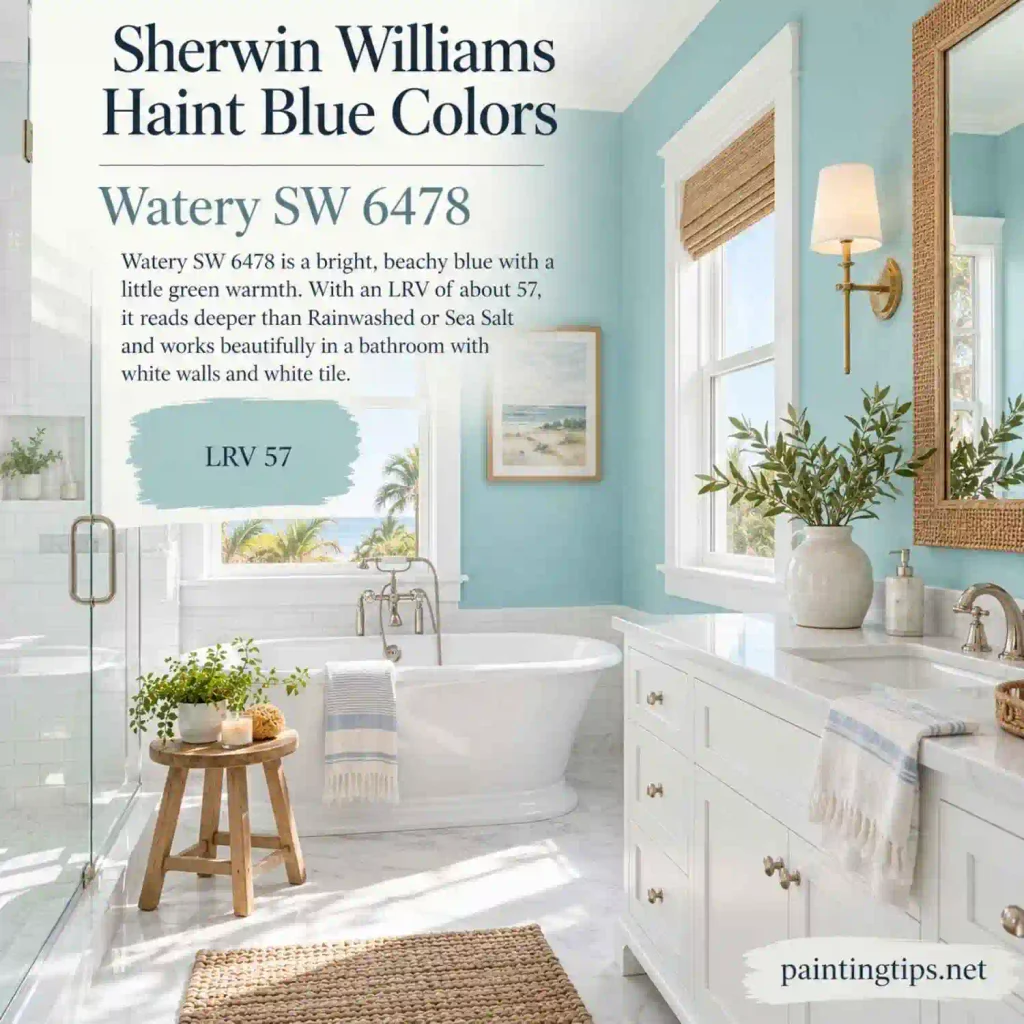
Watery SW 6478 is a bright, beachy blue with a little green warmth in it. It has more color than the others in this group, so it reads more aqua, and with an LRV of about 57 it looks a bit deeper than Rainwashed or Sea Salt. If you like haint blue but want a bolder version, this is the one. We’d use it in a bathroom when you want the blue to be noticed, especially with white walls and white tile.
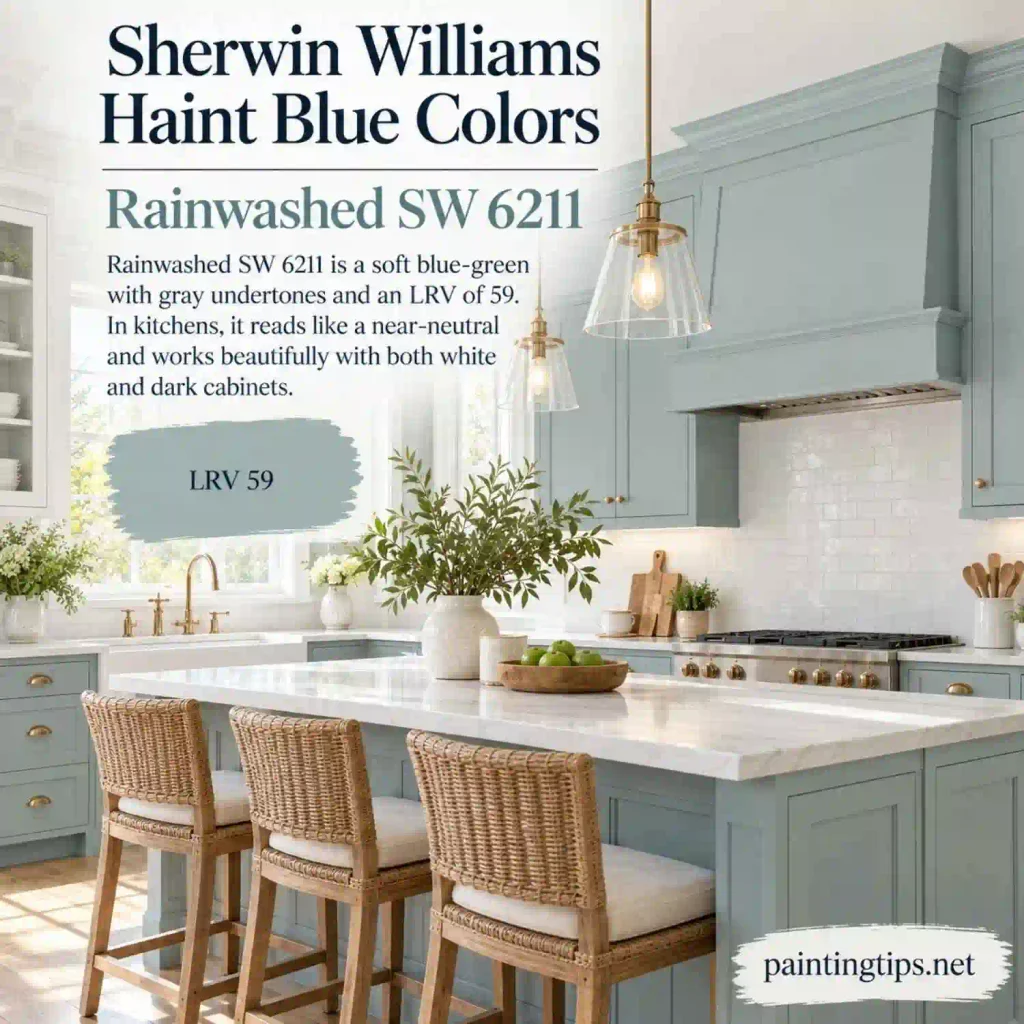
Rainwashed SW 6211 is a soft blue-green with gray undertones, and it has an LRV of 59. It’s balanced enough to play a nearly neutral role, which is why it works so well as a haint blue wall color in kitchens. In a room with lots of natural light it reads lighter than the chip suggests, and it gets along with both white and dark cabinets.
Rainwashed SW 6211 article. If Rainwashed is on your shortlist, we’d recommend reading our full guide on it before you buy a sample. It shows how the color behaves in different kinds of light.
Sea Salt SW 6204 isn’t a true blue, so think of it as a softer, more changeable take on haint blue. It’s a cool blue-green with a gray undertone and an LRV of 63, and it can shift between green, blue, and gray depending on the light. It usually looks greener in daylight and more blue-gray at night. That makes it a good fit for bedrooms and modern farmhouse styles, where you want something quiet and a little changeable.
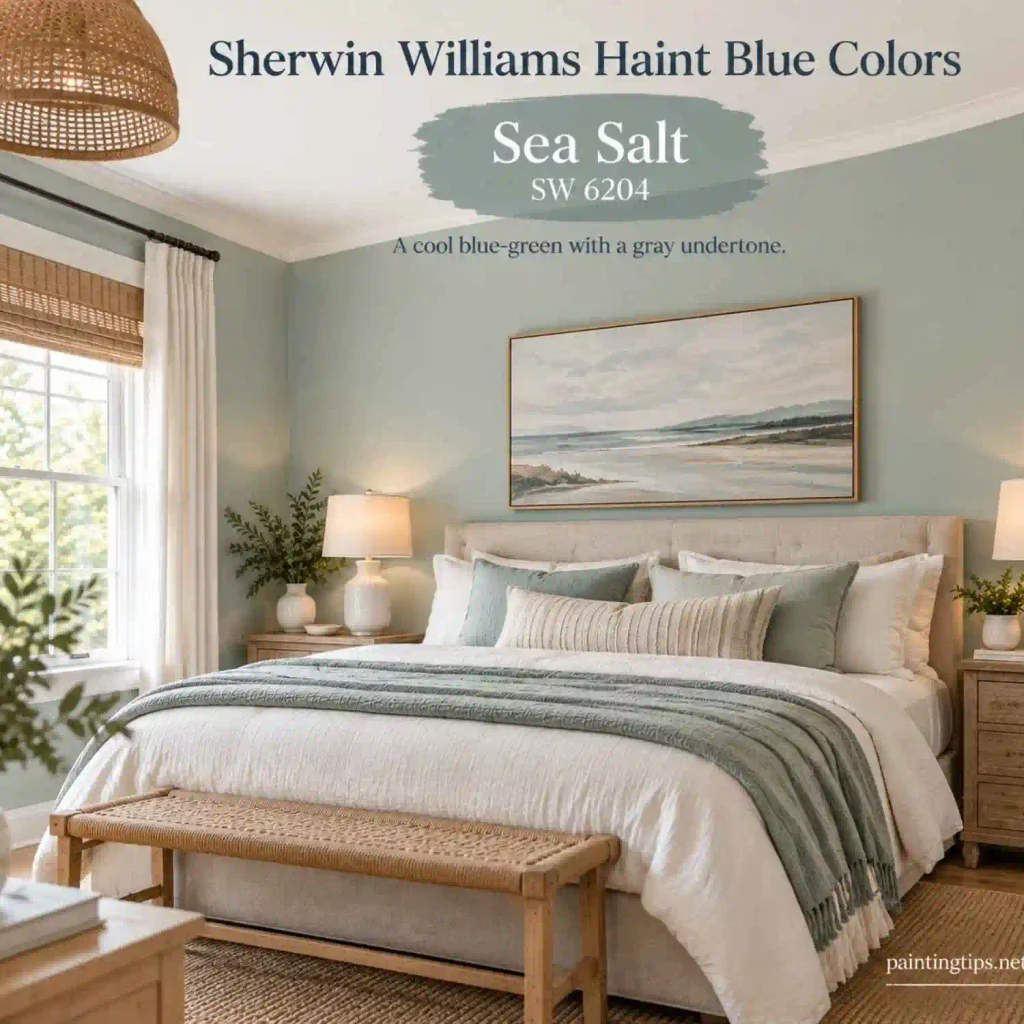
Sea Salt SW 6204 article. Because Sea Salt changes so much through the day, we’d suggest checking our Sea Salt guide first to see how it looks in bedrooms before you commit.
A quick note from the trade: prep matters more than the brand, and so does testing. We prime bare wood, caulk the seams, and let everything dry before we paint. Then we always sample in the actual spot, because blue-greens shift through the day and look different depending on where the light comes from. A peel-and-stick sample is the easiest way to do it. Stick it up, check it in the morning, at midday, and in the evening, and look at it with the lights on and off. In our experience, that one habit prevents most regrets, and skipped prep is behind most of the peeling we see on porch ceilings.
Benjamin Moore Haint Blue
Benjamin Moore is probably the brand most often named for haint blue, and Palladian Blue HC-144 is usually the first color on any list. It’s the haint blue color most people start with: a light blue with a hint of green and a little gray, with an LRV of about 61. It’s slightly more vibrant than Rainwashed, with less gray and more blue and green. It’s an easy match for white trim and gray siding.
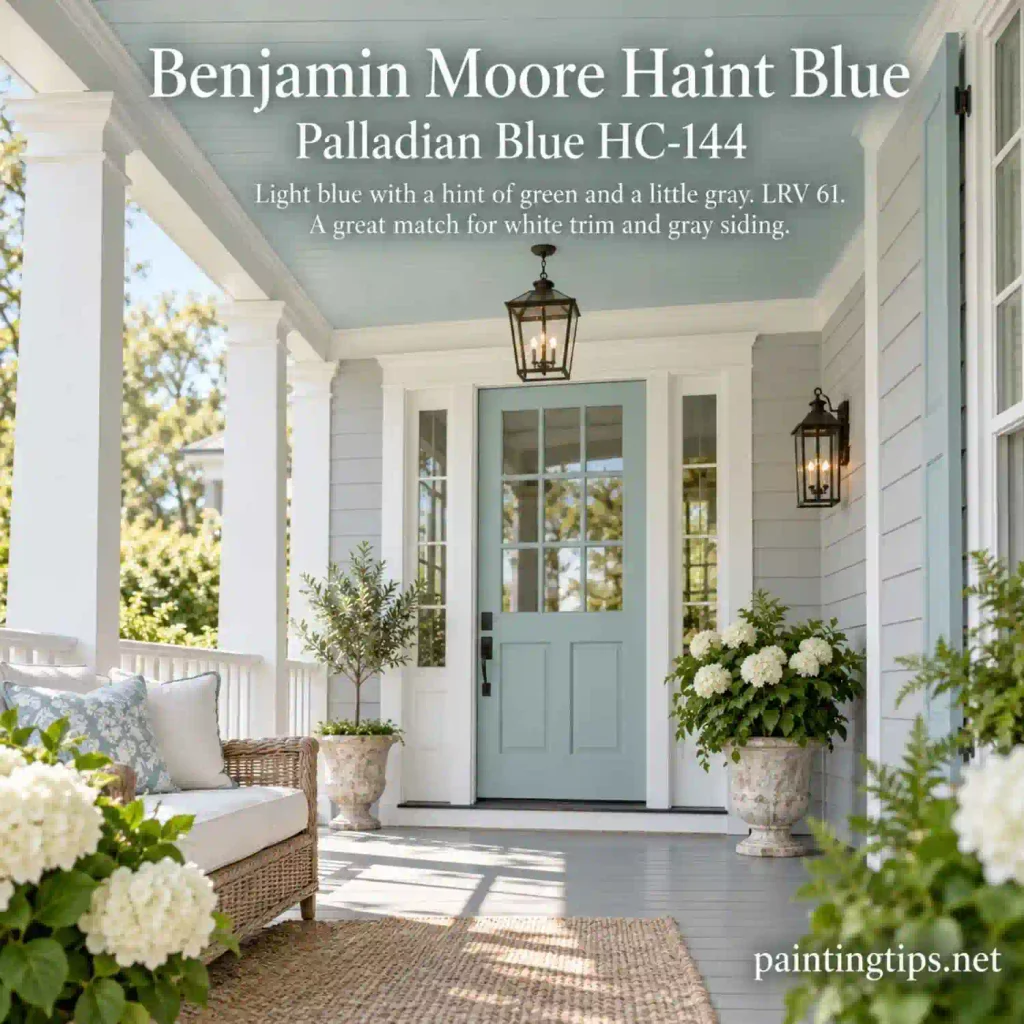
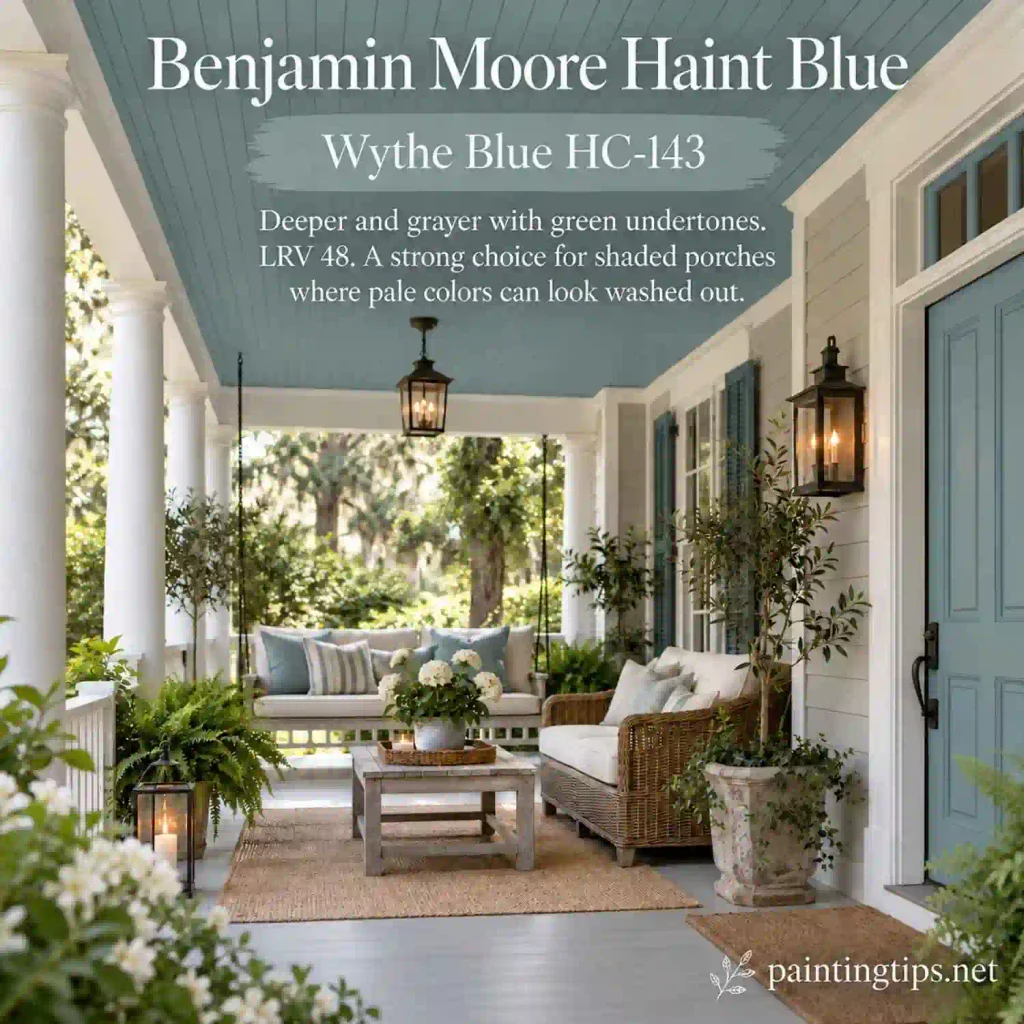
Wythe Blue HC-143 is a noticeably deeper haint blue, with an LRV of 48 and a grayer, greener character. It holds up well on shaded porches where a very pale color could look washed out.
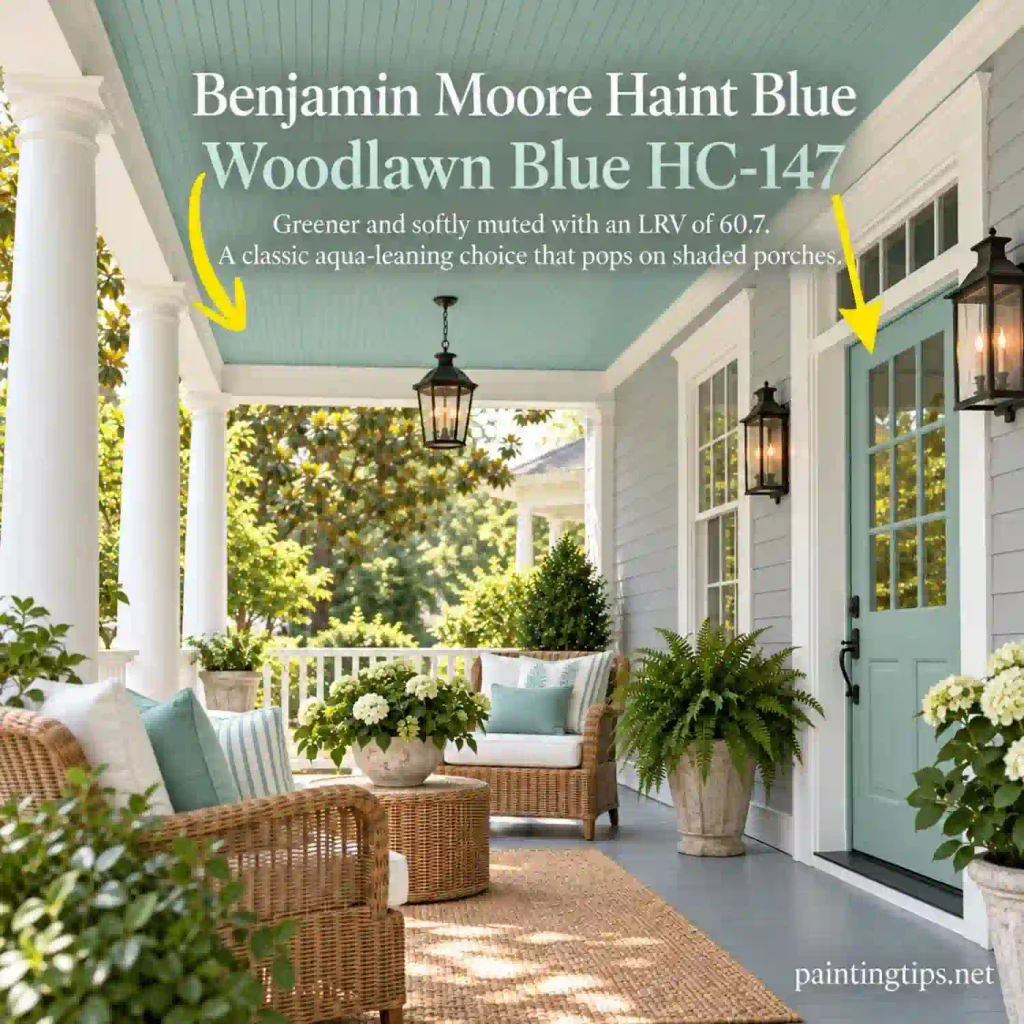
If you want a greener haint blue color, look at Woodlawn Blue HC-147. It has an LRV of 60.7 and a lot of green in it, almost reaching aqua but muted enough to stay classic. It pops on shaded porches.
Behr Haint Blue
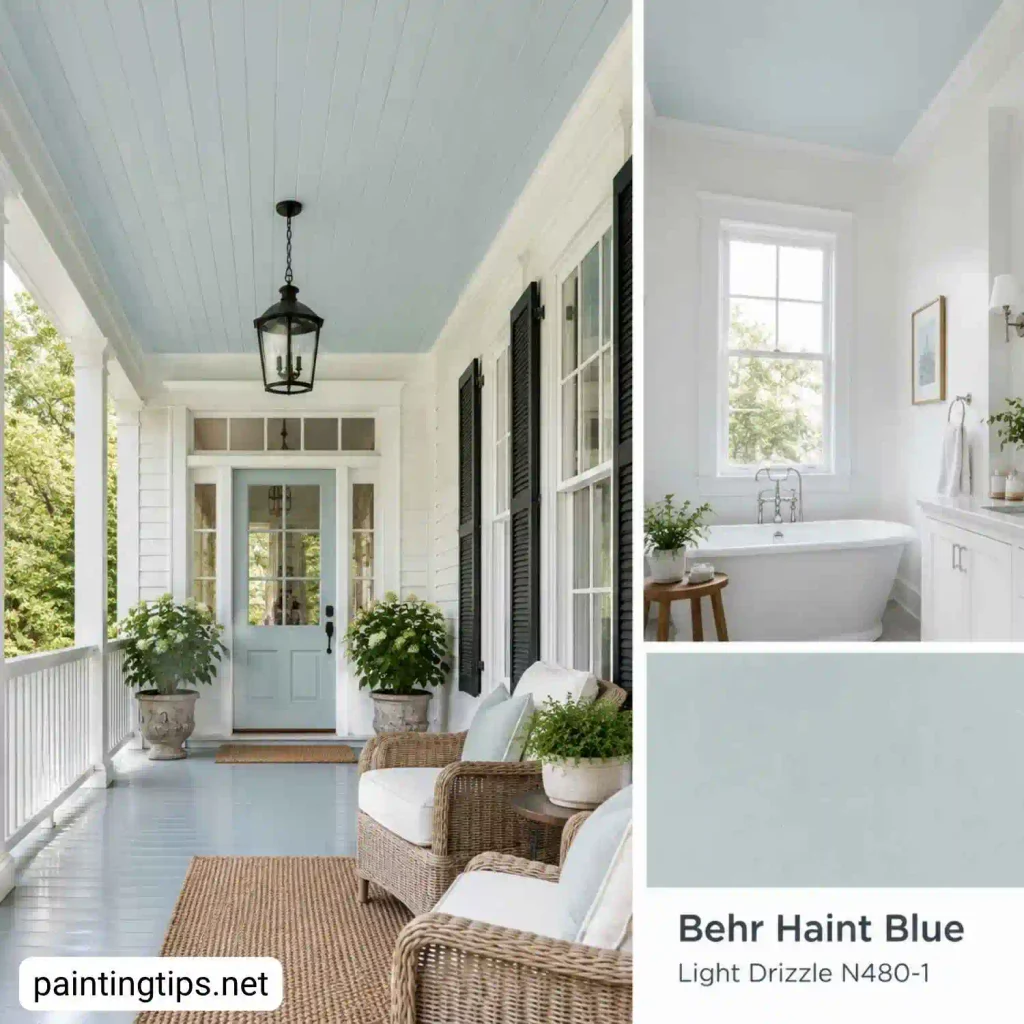
Behr’s closest match to haint blue is Light Drizzle N480-1. It’s a pale blue-gray with a subtle blue undertone and an LRV of 64, and it’s easy to live with. We’d suggest using it on the ceiling of an otherwise white bathroom, where it adds a soft hint of color without competing with anything else.
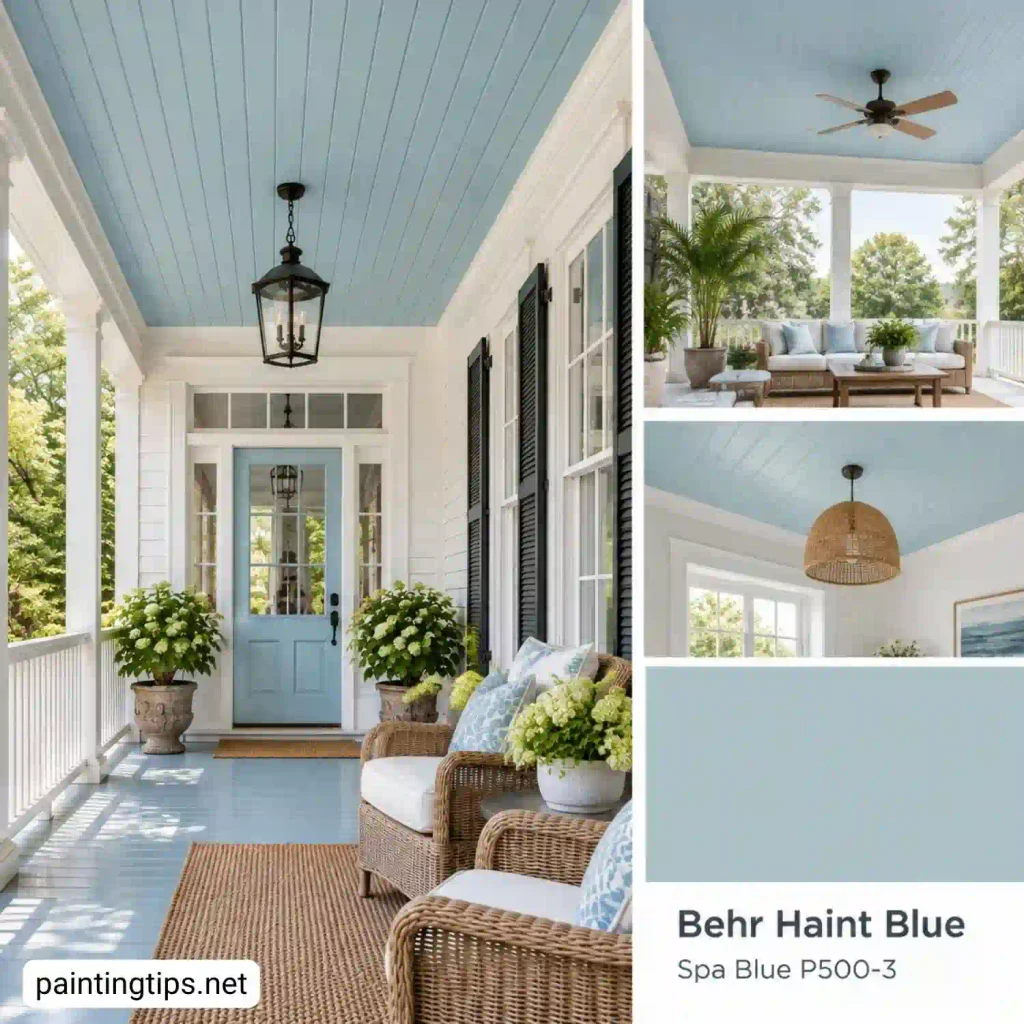
If you want more color, try Spa Blue P500-3. It has an LRV of about 59, so it’s in the right range, but it’s brighter and cleaner than a traditional haint blue. It feels more modern, which makes it a good haint blue wall color for rooms where you want the blue to be noticed.
Haint Blue Valspar
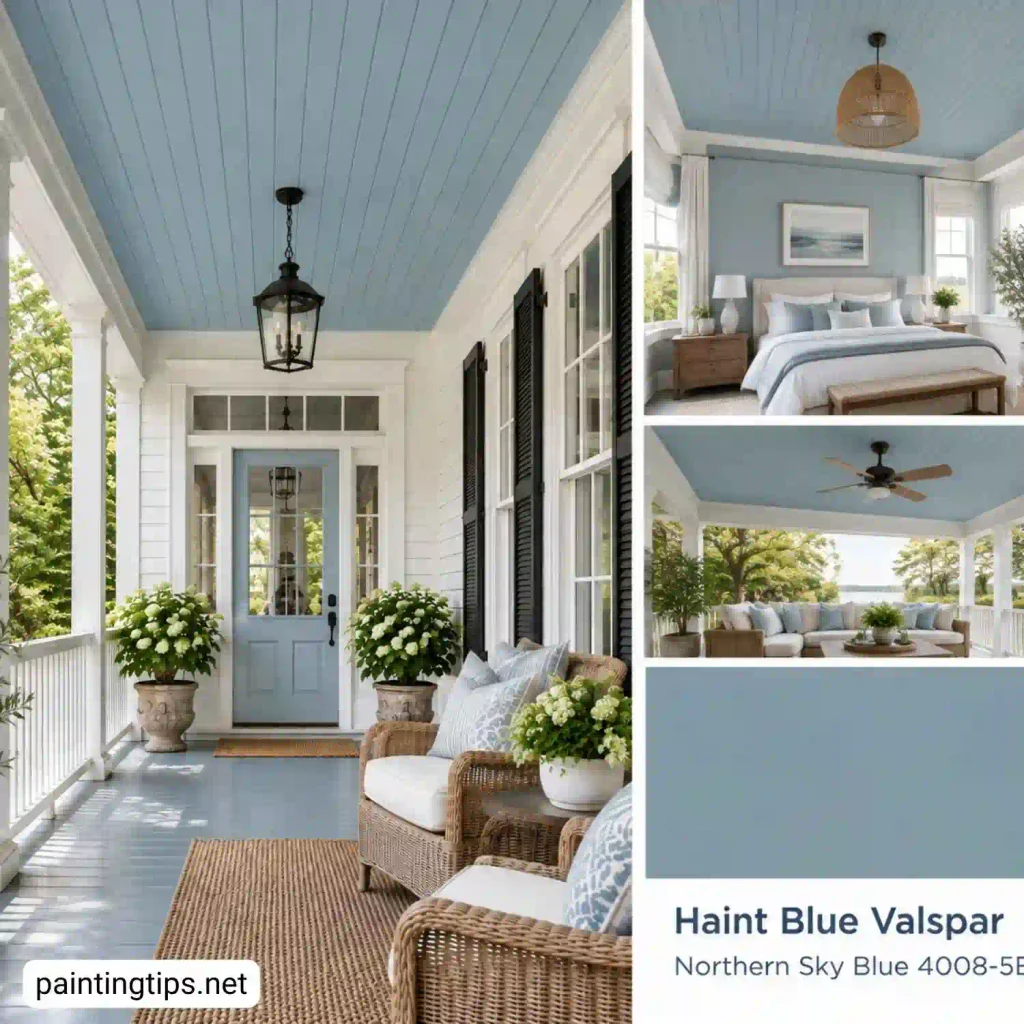
Valspar’s best haint blue paint match is Northern Sky Blue 4008-5B. It’s a soft blue with gray undertones, and it feels like a clear morning sky. Its LRV is 51, which puts it a little below the ideal haint blue range, so it reads deeper than the others. That makes it a good choice for a shaded porch, or for a bedroom where you want more depth.
What Colors Go With Haint Blue?
Whichever brand you pick, the same pairing rules hold. Here’s what works with haint blue, and how we’d use each one.
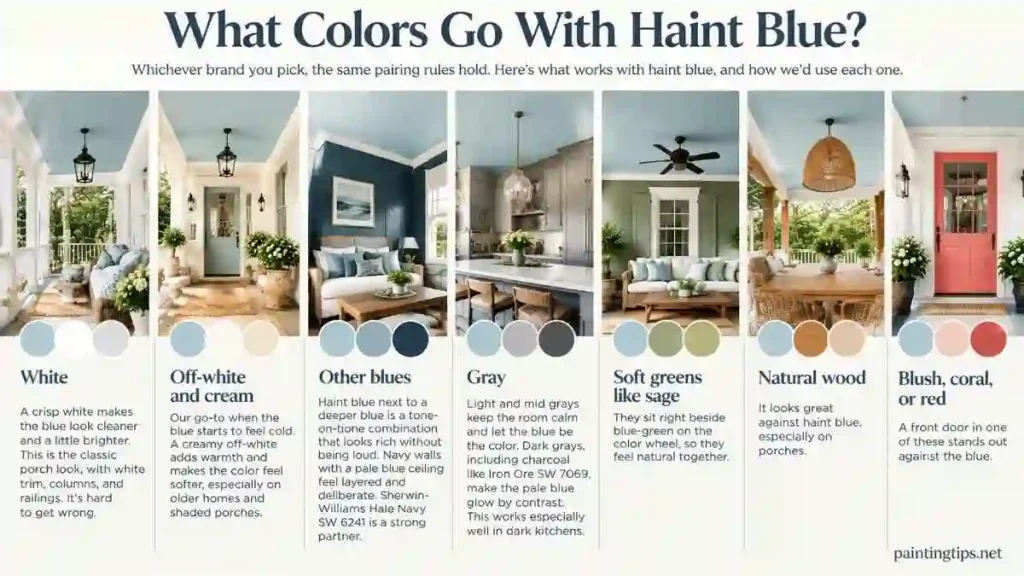
- White: A crisp white makes the blue look cleaner and a little brighter. This is the classic porch look, with white trim, columns, and railings. It’s hard to get wrong.
- Off-white and cream: Our go-to when the blue starts to feel cold. A creamy off-white adds warmth and makes the color feel softer, especially on older homes and shaded porches.
- Other blues: Haint blue next to a deeper blue is a tone-on-tone combination that looks rich without being loud. Navy walls with a pale blue ceiling feel layered and deliberate. Sherwin-Williams Hale Navy SW 6241 is a strong partner.
- Gray: Light and mid grays keep the room calm and let the blue be the color. Dark grays, including charcoal like Iron Ore SW 7069, make the pale blue glow by contrast. This works especially well in dark kitchens.
- Soft greens like sage: They sit right beside blue-green on the color wheel, so they feel natural together.
- Natural wood: It looks great against haint blue, especially on porches.
- Blush, coral, or red: A front door in one of these stands out against the blue.
What Does Haint Blue Ceiling Mean?
A haint blue ceiling is a ceiling painted a soft, pale blue, traditionally on a porch. “Haint” is a Southern word for a restless spirit, and the tradition says the color protects the home from them. Most people choose it today for the look, but the history is a big part of why it feels special.
Does Haint Blue Really Keep Bugs Away?
Not reliably. There’s no solid proof that the color repels insects. One popular idea is that wasps and other insects mistake the blue for open sky and skip building nests there. Another points to old paint recipes that contained lye, which may have discouraged bugs. Both are stories, not facts. If you have a wasp problem, deal with it directly, and enjoy the color for its beauty.
Is Haint Blue Still Used Today?
Yes, very much. It’s common on porch ceilings across the South, in places like Charleston and Savannah, and it’s now popular in homes all over the country. Designers also use it on interior ceilings, and every major paint brand has colors that work for it.
What Is Haint Blue Paint?
Haint blue paint is a light blue, often with a touch of green or gray. It’s traditionally used on porch ceilings, doors, and shutters. The tradition comes from the Gullah Geechee people, who believed spirits couldn’t cross water, so a blue that looked like water would keep them out. There’s no official formula, so the exact shade varies from house to house. Today, almost any soft sky blue in that tradition gets called haint blue.
Is Haint Blue Offensive?
No. Haint blue isn’t considered offensive. It’s a cultural tradition from the Gullah Geechee community, and it’s widely used and appreciated today. It helps to know the history and to credit its roots. Not everyone in the Gullah community shares the spirit belief, but the color is part of Southern heritage.
What Is the Color Code for Haint Blue?
There isn’t one official code, because haint blue is a family of colors, not a single paint. These are the closest matches from each brand:
- Sherwin-Williams: Atmospheric SW 6505, Watery SW 6478, Rainwashed SW 6211, Sea Salt SW 6204
- Benjamin Moore: Palladian Blue HC-144, Wythe Blue HC-143, Woodlawn Blue HC-147
- Behr: Light Drizzle N480-1, Spa Blue P500-3
- Valspar: Northern Sky Blue 4008-5B
What Is the Best Haint Blue Color?
It depends on your light and your exterior, but if we had to pick one, we’d say Atmospheric SW 6505 for a classic look, or Palladian Blue HC-144 if you want a little more softness. For shaded porches, Wythe Blue HC-143 holds its color better. Whatever you choose, test a sample in the actual spot first.
