A cracked cabinet door is one of those small kitchen annoyances that seems to get worse the longer it sits. What starts as a hairline crack from years of humidity, a slammed door, or an accidental bump can slowly widen, chip further, or even loosen the hinge if it’s left untreated. In this post, we’ll go over how to repair small surface cracks, peeling laminate or paint, and deeper cracks that have separated or lost material, so you can match the right fix to what you’re actually dealing with.
How to Fix a Cracked Cabinet Door
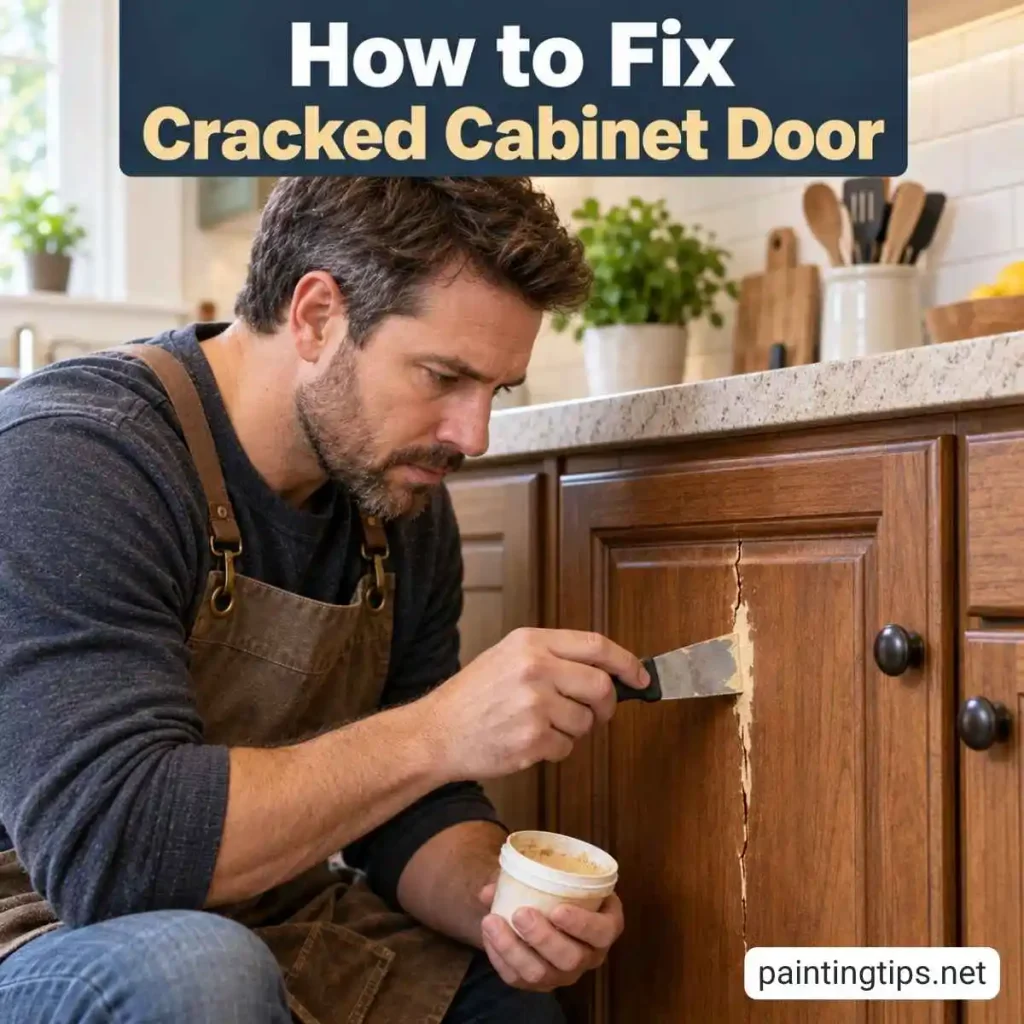
The approach we take to repair a cracked cabinet door depends almost entirely on the severity of the crack. A shallow surface crack that hasn’t separated is a very different job than a door that’s split apart or lost a chunk of wood near the edge.
We’ve also found that cracks near the hinge behave differently than cracks in the middle of a panel, since hinge-area damage carries the extra weight of the door opening and closing every day. Below, we’ll walk through each scenario separately so you can match the repair to what you’re actually dealing with, along with the products that tend to work best for each situation.
If the Cabinet Door Crack Is Surface-Level
If the crack hasn’t separated or isn’t at risk of breaking apart and is really just an eyesore, you’re in the easiest category to deal with. In this case, a thin layer of acrylic filler in a shade that matches your cabinet color, applied over the crack and sanded smooth once it cures, usually takes care of it without much fuss.
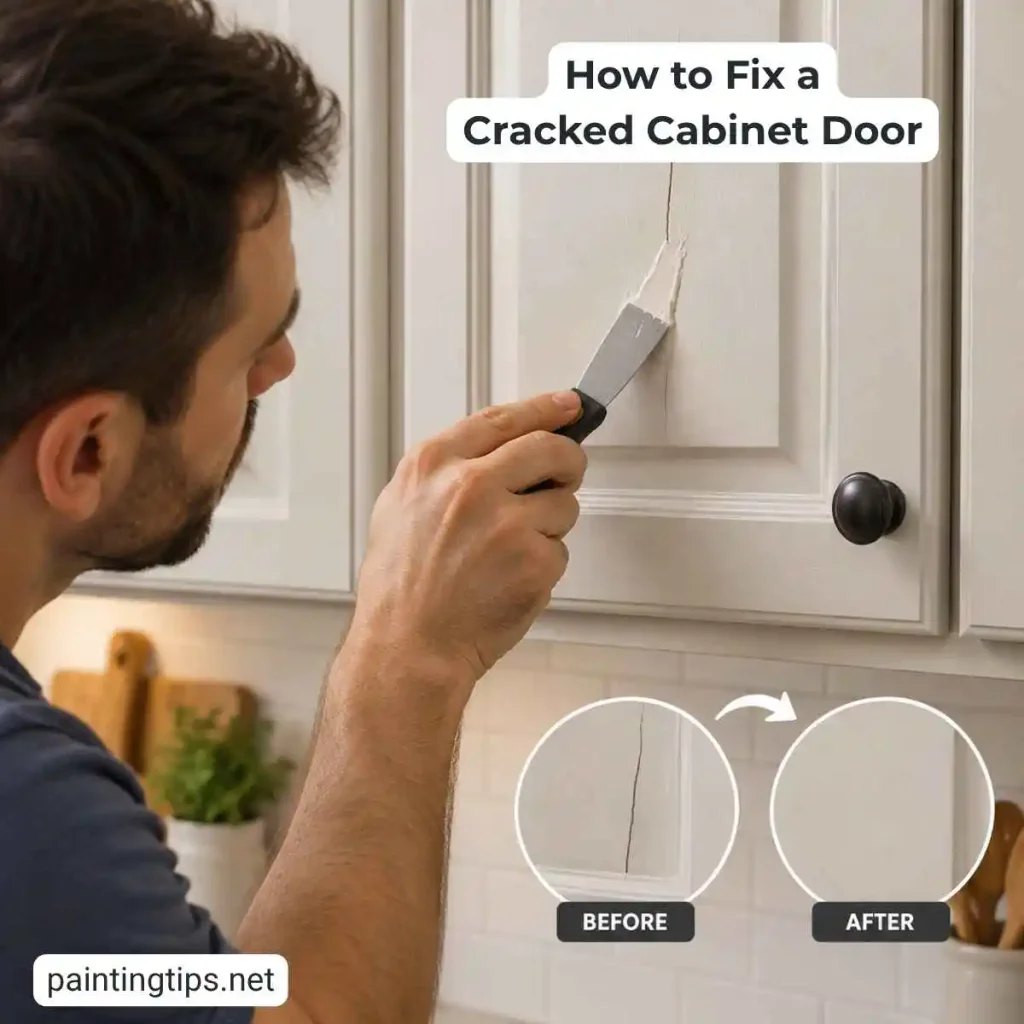
It’s a low-effort fix that blends in well once you sand and finish the area properly, and if you end up needing to touch up or redo the finish afterward, our guides on how to paint kitchen cabinets and changing color of kitchen cabinets walk through that process in more detail.
Another option we like, especially if you want to refresh the whole kitchen while you’re at it, is applying a matching self-adhesive vinyl foil or peel and stick wallpaper across all your cabinet doors. This does double duty: it gives the kitchen a decorative update while also hiding the cracked cabinet door completely, since the material sits on top of the surface rather than trying to disguise the damage underneath.
If your cabinets have been painted before, it’s worth checking out our guide on wallpapering over paint before you start, since painted surfaces need a bit of extra prep for the adhesive to hold properly. And if your cabinet doors are plywood or paneled rather than painted wood, can wallpaper be applied on plywood and how to wallpaper over paneling cover the surface prep those materials need instead.
If the crack has opened up wider, split through the panel, or looks like it could break apart with more use, surface fillers won’t hold up, and you’ll need a stronger repair method instead.
If the Cabinet Door Crack Has Separated or the Door Has Fallen Apart
When the pieces of the door still fit back together and return to their original shape, a liquid or spray cyanoacrylate adhesive is often the fastest route to repair a cracked cabinet door. It sets quickly and bonds tightly, which makes it a solid choice when you can hold or clamp the pieces in alignment while it cures.
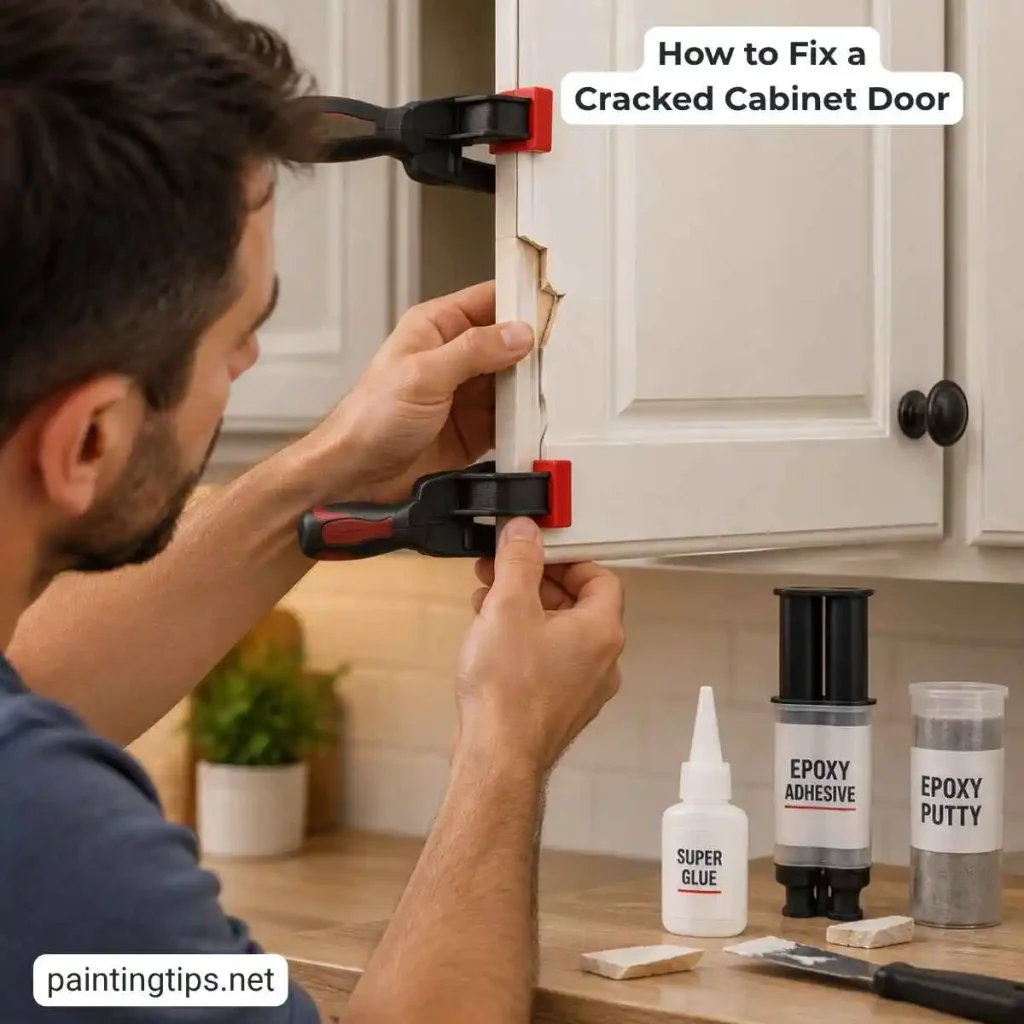
A two-component epoxy adhesive is another strong option, and in our experience it actually provides a more durable bond than cyanoacrylate for larger cracks. The trade-off is that epoxy is thicker, so it can leave a small gap where the crack was rather than pulling the pieces together as tightly.
If the door has actual missing material, meaning chunks have broken off rather than just cracked, an epoxy putty is the better tool for the job. Epoxy putty can rebuild broken corners and edges, and it can even be shaped to recreate a missing section of wood so the door looks whole again once it’s sanded and finished.
If the Crack Is Near the Hinge
A crack near the hinge deserves extra attention because it doesn’t just affect appearance. Over time, it can cause the door to sag or come loose from the cabinet frame, and it also tends to loosen the hinge screws bit by bit as the door works back and forth on a weakened area.
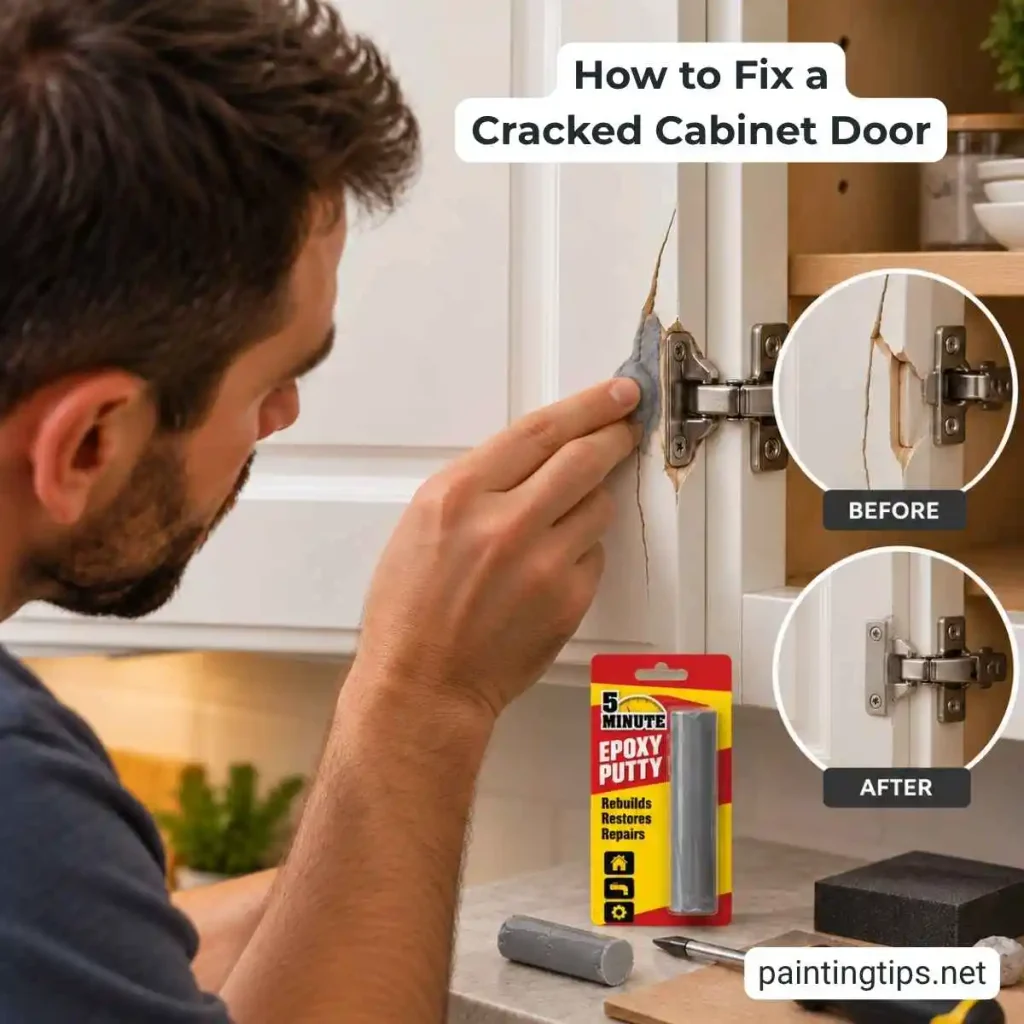
The most reliable way to both repair and prevent further damage here is with an epoxy putty. Apply a two-component epoxy putty directly into the crack near the hinge, let it firm up for about 15 minutes, and then sand it smooth once it’s set.
If the hinge screws have already worked their way loose, pack epoxy putty into the screw holes themselves before reinserting the screws. The timing matters here: tighten the hinge back into place roughly 20 to 25 minutes after applying the putty, while it’s still slightly workable. If you wait until it fully cures, getting the screws back in will be far more difficult.
What Glue To Use To Fix Cabinet Doors?
For most cracked cabinet doors, a cyanoacrylate adhesive (often sold as a liquid or spray super glue) is the quickest fix when the broken pieces still align cleanly and don’t need to bear much stress afterward. For cracks under more stress, like larger panel splits or anything near a hinge, a two-component epoxy adhesive or epoxy putty holds up better over time, even though it takes longer to set. As a general rule, if you can clamp the door and hold it still while it cures, cyanoacrylate is the faster option; if the crack is under constant flex or weight, epoxy is worth the extra wait.
Should Cabinet Door Panels Be Glued?
Cabinet door panels are traditionally left unglued on purpose, especially on raised or recessed panel doors, because the panel needs room to expand and contract slightly with humidity changes. Gluing a panel in place can cause it to crack later as it’s forced to move against the frame.
The frame joints themselves, on the other hand, are typically glued, since that’s where the structural strength of the door comes from. If you’re repairing rather than building from scratch, it’s best to keep this in mind and avoid gluing the panel itself unless you’re specifically dealing with a small stabilizing repair.
How To Repair A Peeling Cabinet Door?
A peeling cabinet door usually points to a finish or laminate issue rather than a structural crack, and it’s worth figuring out which one you’re dealing with before choosing a fix. If the peeling is from paint lifting off the wood, it often comes down to moisture or poor adhesion during the original paint job, similar to what we cover in why is the paint in my bathroom peeling. A light sanding to smooth out the lifted edges followed by a fresh coat of acrylic paint usually takes care of it.
If the peeling shows up across most or all of your cabinet doors rather than just one spot, that’s often a sign it’s time for a broader refresh rather than a series of small touch-ups. In that case, a peel and stick wallpaper applied over all the doors can be a good solution, since it covers the peeling uniformly and gives the kitchen a consistent new look at the same time.
If it’s the laminate or veneer layer itself lifting away from the door, contact cement is the right adhesive for reattaching it. We cover how to apply it properly in the next section below.
What Is The Best Glue To Fix Peeling Cabinet Laminate?
For peeling laminate, contact cement is generally the best choice, since it’s specifically designed to bond two smooth, non-porous surfaces together the way laminate and wood need. Apply it to both the back of the lifted laminate and the cabinet surface underneath, let it get tacky as the instructions specify.
Then press the two together firmly and roll out any air bubbles. A carpenter’s clamp or heavy, even pressure while it cures helps make sure the bond holds along the full peeling section rather than just at the edges.
Whether you’re dealing with a small surface crack, a loose hinge, or peeling laminate, most of these repairs only take a bit of patience and the right adhesive for the job, and your cabinet doors can look and function like new again without replacing them.
