Picking a paint color for a living room is the fun part. Picking the finish is where most homeowners get stuck, and it’s the decision that actually affects how the room looks and holds up over time — the same color can look completely different once sheen enters the picture, from soft and forgiving to almost mirror-like under a lamp.
Best Paint Finish for Living Room Walls
For most living rooms, eggshell is the safe, go-to finish. It sits in the low-to-mid range of the sheen scale, just above flat, and it strikes a balance that works for the way living rooms actually get used. If you want the full rundown of where each finish falls on that scale, our guide to types of paint sheens breaks down every option from flat to high-gloss.
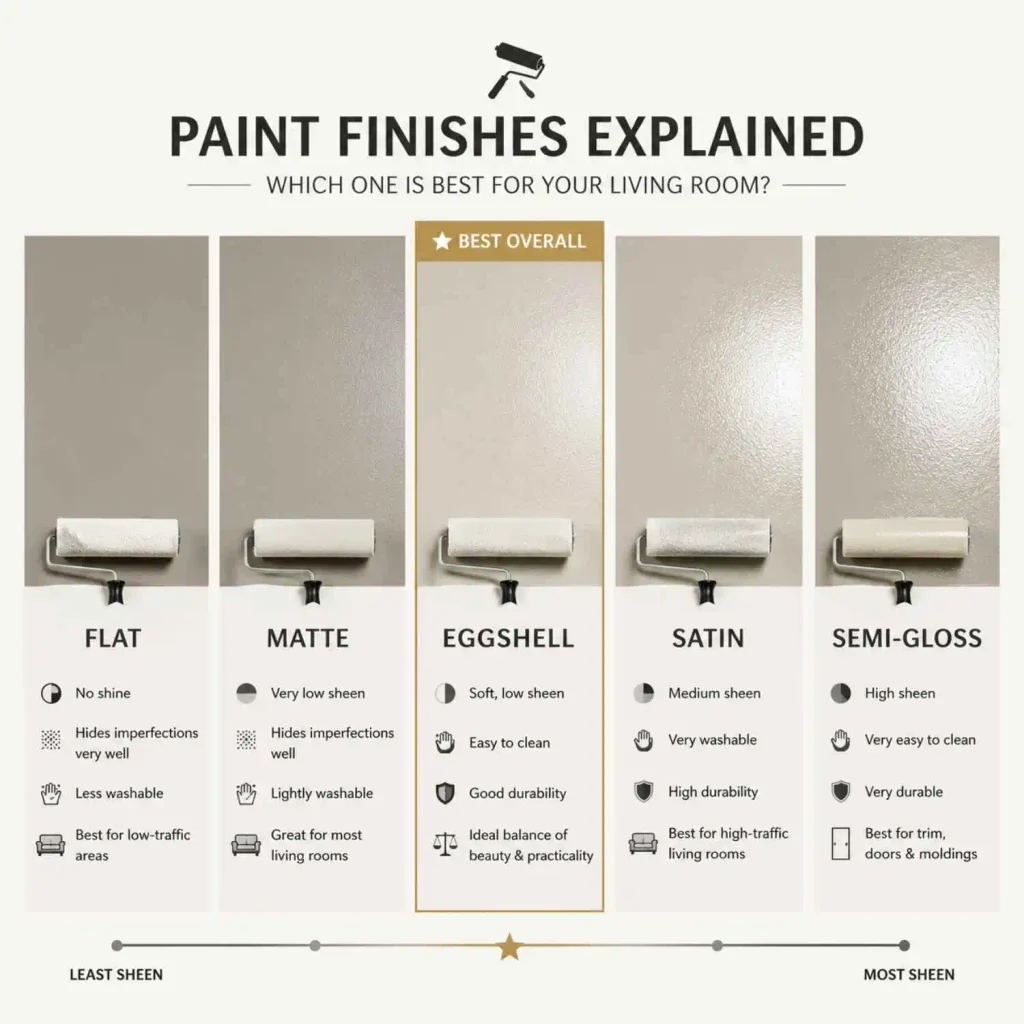
It reflects a little light without turning walls into a glare-fest, it holds up to the occasional wipe-down, and it does a reasonably good job hiding minor wall imperfections like nail holes, drywall seams, or slightly uneven texture.
That said, “eggshell for every living room” isn’t quite accurate, and treating it as a blanket rule is where a lot of paint jobs go wrong. The right finish depends on three things: how much daily wear the walls take, how much natural or artificial light hits them, and how flawless the drywall underneath actually is.
A living room with big south-facing windows, a couple of dogs, and kids doing homework on the wall (it happens) needs a tougher, more washable finish than a formal sitting room that gets used twice a month. Sheen also isn’t just about durability — it changes how color reads on the wall, since higher sheen bounces more light and can make the same paint color look a shade or two lighter or more saturated depending on the time of day.
Which Finish Is Best for a Living Room?
If there’s one finish we’d recommend defaulting to without knowing anything else about the room, it’s eggshell. It’s the middle ground that keeps most homeowners happy: enough sheen to clean fingerprints or scuffs off with a damp microfiber cloth, not so much that it highlights every dent and drywall patch.

Satin comes in a close second and is really the better call once the room sees real foot traffic — think open-concept living rooms that flow into a kitchen or hallway, where hands, shoulders, and furniture are constantly brushing the walls.
Where people go wrong is assuming “best” means the same thing for every room. A living room with older plaster walls or visible patch marks looks noticeably worse in satin or semi-gloss, since the extra sheen catches light at an angle and makes every imperfection pop.
In that case, flat or a matte-adjacent finish, even though it’s less washable, will genuinely look better on the wall than a higher-sheen paint that’s technically more durable. Durability on paper doesn’t matter much if the walls look worse the moment sunlight hits them.
Should a Living Room Be Satin or Eggshell?
This is the comparison that trips up the most people, mostly because the difference in appearance is subtle but the difference in performance isn’t. Eggshell has a soft, low-luster look, closer to the sheen of an actual eggshell, and it’s forgiving on walls that aren’t perfectly smooth.
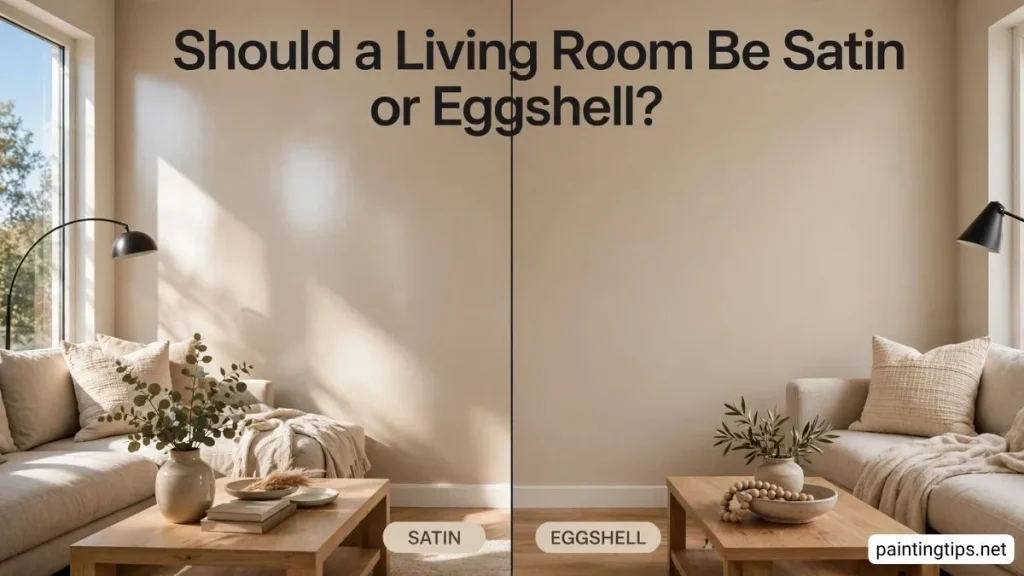
Satin sits one step up, with a noticeably smoother, slightly pearl-like sheen that reflects more light and wipes clean more easily, since the finish is less porous. This extra reflectiveness is part of why satin reads a little richer in darker, higher-contrast palettes — if you’re drawn to that look, take a peek at our modern black and grey living room ideas for a sense of how the sheen plays into it.
Our rule of thumb: eggshell for lower-traffic, more relaxed living rooms where the priority is a soft, cozy look, and satin for living rooms that double as a hallway, playroom, or high-traffic gathering space. Satin also tends to be the better pick if the room has a lot of natural light, since the added sheen helps the color stay vibrant rather than looking flat and chalky under direct sun.
The trade-off is that satin shows roller marks and touch-up patches more readily than eggshell, so application quality matters more when you go with the higher sheen. Light exposure changes the math in other rooms too — we cover a similar case in our guide to north facing bedroom paint colors, where low natural light calls for a different approach than a sun-drenched living room.
Should I Use Satin or Flat for a Living Room?
Flat paint has the least sheen of any standard interior finish, and it genuinely excels at one thing: hiding wall flaws. If the drywall has old patches, texture inconsistencies, or a less-than-perfect skim coat, flat paint will camouflage all of it in a way no other finish can.
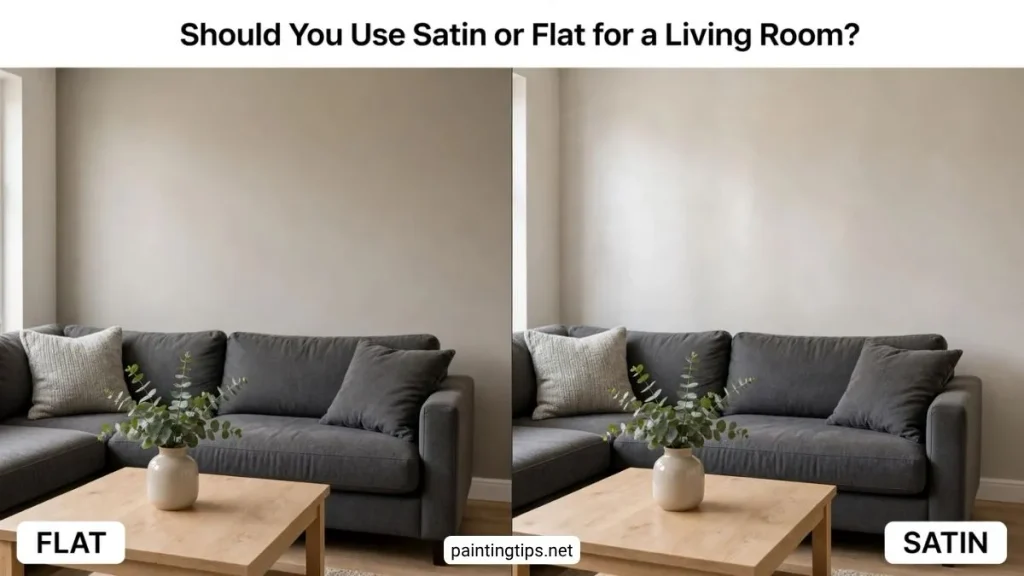
The downside is durability — flat paint is porous, which means it absorbs stains rather than letting you wipe them off, and scrubbing a flat-painted wall too hard can burnish the surface and leave a shiny patch behind.
Satin solves the durability problem but exposes more of the wall’s imperfections, so the choice really comes down to which trade-off matters more in that specific room. We’d lean flat for a formal or rarely-used living room where looks matter more than wipeability, and satin for a lived-in family room where spills, pet noses, and furniture scuffs are a regular occurrence.
Some painters split the difference with a matte finish that has slightly better scrub resistance than true flat — worth asking about if your local paint counter carries one, since it’s not always shelved separately from flat.
Whatever finish you land on, the same coat of primer and the same quality of prep work will matter more than the sheen label on the can. If you’re still weighing the product itself, not just the finish, our breakdown of what type of paint for living room walls covers that side of the decision. A well-prepped wall in flat will outlast a rushed job in satin every time.
