A shower ceiling isn’t like any other ceiling in the house, and treating it that way is usually what leads to peeling paint within a year. Here, we walk through how to properly paint a shower ceiling, break down which paints hold up best against constant steam and moisture, and list several trusted brands that get the job done.
Painting a Shower Ceiling

When it comes to ceiling painting, the shower ceiling is arguably the most demanding spot in the entire house. That’s because hot moisture from the shower rises straight up, and a large share of it lands directly on the ceiling above.
Over time, this moisture condenses into small droplets on the surface, and if those droplets aren’t wiped away with a dry cloth or pulled out through proper ventilation, they’ll slowly start to break down the paint. Hot steam is more damaging than most people expect, and it’s often surprising how quickly it can wear away a shower ceiling that was painted the same way as the rest of the house. If you want to see what this looks like in practice, we cover it in more detail in how to fix paint bubbles on ceiling.
Left unchecked, this kind of moisture exposure doesn’t just cause bubbling. It can lead to full-on peeling and even mold growth on the ceiling, and in some bathrooms, the excess humidity ends up affecting nearby surfaces too, including the bathroom vanity peeling. This is especially common in showers finished with standard ceiling or wall paint, which simply isn’t built for this kind of moisture load.
That’s why a shower ceiling calls for a different approach than the rest of your ceiling painting, one built around moisture protection rather than the usual methods. So what paint should you actually use on a shower ceiling?
What Kind of Paint Do You Use on a Shower Ceiling?

If this were any other room, or even another part of the bathroom, standard ceiling paint would likely get the job done. A shower ceiling is a different story, though standard paint can still work under the right conditions.
If you consistently run a bathroom exhaust fan to clear hot steam right after every shower, open a nearby window to let the moisture escape, or wipe down the ceiling with a dry cloth immediately afterward, regular ceiling or even wall paint can hold up reasonably well. We go into this comparison further in ceiling paint vs wall paint.
For most households, though, keeping up with that routine after every single shower isn’t realistic, which is why a dedicated shower ceiling paint makes more sense. Look for paints that are moisture-resistant, mold- and mildew-resistant, and ideally waterproof or close to it. Some of the best options for this job include:
- Zinsser Perma-White Mold & Mildew-Proof Paint — mold-resistant paint built for high-humidity spaces like showers and bathrooms.
- Benjamin Moore Aura Bath & Spa — a premium bathroom paint with strong moisture resistance and a clean matte finish.
- Sherwin-Williams Duration Home Interior Acrylic Latex — a durable acrylic paint that holds up well to moisture and wipes clean easily.
- Sherwin-Williams Emerald Interior Acrylic Latex — a higher-end interior paint built for long-term durability in humid rooms.
- BEHR Premium Plus Interior Paint — an affordable, widely available option with mildew-resistant properties.
- KILZ Mold & Mildew Resistant Primer — a protective primer that helps prevent mold before the topcoat goes on.
- PPG Diamond Interior Paint — a durable, washable interior paint with solid moisture resistance.
- Valspar Signature Interior Paint — a popular U.S. option known for good durability and mildew resistance.
- Glidden Premium Interior Paint + Primer — a budget-friendly paint with decent coverage and moisture protection.
- Rust-Oleum Zinsser Mold Killing Primer — a heavy-duty mold-control primer for areas with existing mold problems.
For more options beyond shower ceilings specifically, our [[whats the best paint for ceilings]] article covers ceiling paint more broadly.
How to Paint a Shower Ceiling
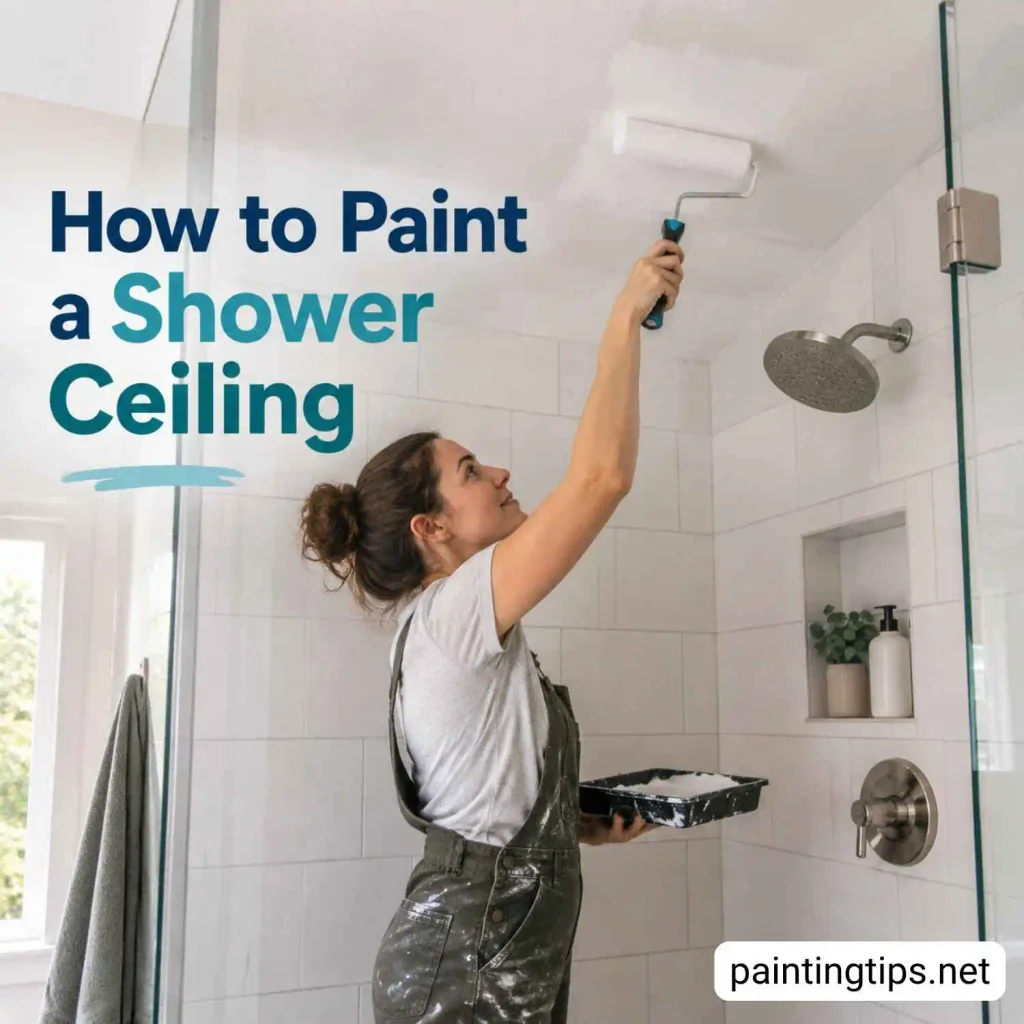
Before you paint a shower ceiling, check it carefully for peeling, moisture, and mold. Painting over a ceiling that’s still wet, damp, or showing active mold is a mistake that almost always leads to peeling again soon after. If the ceiling feels damp, give it time to dry out fully first; in colder months, a hair dryer can speed this up if you’re in a hurry.
If you spot mold, sand it away and follow up with a mold-killing spray cleaner if needed. As with moisture, don’t paint until the area has had time to dry completely.
For ceilings that have already peeled, start with a light sanding using 180 or 220-grit sandpaper. If sanding alone won’t smooth things out, apply a skim coat instead, let it dry fully, then sand it in that same 180 to 220-grit range before applying one of the moisture- and mold-resistant paints listed above.
If your ceiling has visible cracks rather than just peeling, our how to fix ceiling cracks? article walks through fixing those before you paint. Applying a quality primer four to five hours before painting also helps the topcoat adhere better and improves its long-term durability.
From here, the rest of the process follows standard ceiling painting practices. Apply two coats with at least four hours of drying time between them. We cover the remaining steps of bathroom ceiling painting in more depth in how to paint bathroom ceiling.
How Long to Wait to Use a Shower After Painting a Ceiling?
Shower ceiling paint typically dries to the touch within a few hours, but we’d recommend waiting a full day before using the shower again. That extra time lets the paint reach its full durability before it’s exposed to steam and moisture again.
