Textured walls add depth and character to a room, but that same texture makes them magnets for dust, fingerprints, and stains — especially popcorn walls, where grime settles deep into the bumps. In this guide, we’ll walk through the right way to clean textured walls, from routine dusting to tackling stubborn stains, without damaging the paint or texture underneath.
How to Clean Textured Walls
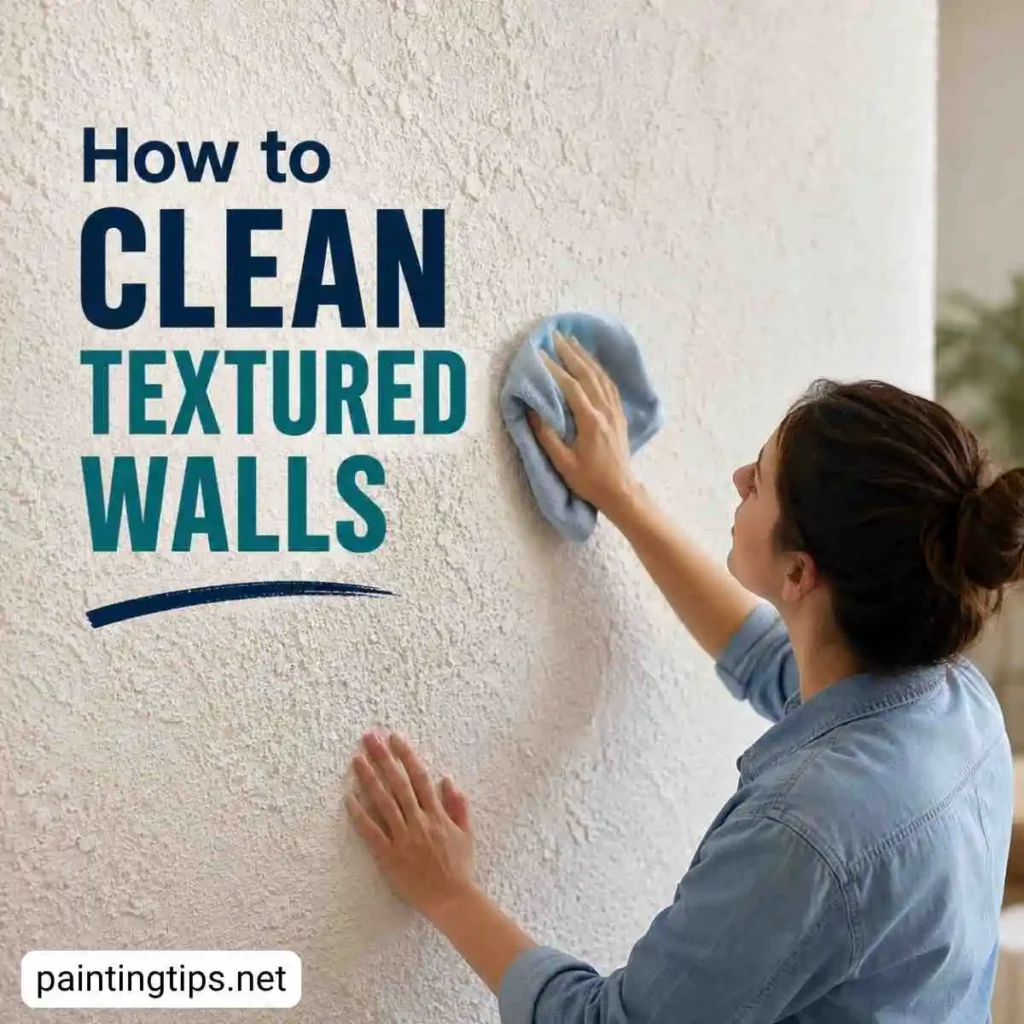
To clean textured walls without removing the paint, vacuum the surface with a soft brush attachment to lift dust, then wipe stains with a lightly damp cloth using mild soap or a baking soda paste. Avoid scrubbing or soaking the wall, since pressure and excess water are what wear down paint and texture.
Before you start cleaning a textured wall, make sure the paint on it is high quality and washable. Ordinary dust isn’t much of a concern, but if the wall has a stain, the surface should be finished with a scrub-resistant paint before you use any cleaner on it.
Textured paint collects a surprising amount of dust on its surface, and popcorn walls in particular tend to trap even more of it in their deep, uneven bumps. For everyday dust removal, a vacuum cleaner is really all you need. Attach the brush attachment to the vacuum and gently brush over the wall to lift the dust away.
Vacuuming an entire textured wall by hand is a lot of work, so it’s worth taking steps ahead of time to slow down how quickly dust builds up in the first place. Dust settles onto textured walls from the floor, the air, and nearby furniture, so keeping those sources under control makes a real difference. Vacuum the floor regularly and follow up with a damp mop. Wipe down furniture and other nearby items with a damp cloth as well.
If there’s a source of dust near your home — construction, a dusty yard, and so on — it’s best to keep your windows closed until that’s resolved, so the dust doesn’t end up back on the wall. Repainting is also one of the most effective ways to refresh a tired-looking textured wall. If that’s an option you’d like to explore, take a look at our guide on painting a textured wall. Wallpaper is another route some homeowners consider — if you’re curious whether that’s realistic, our guide on can you wallpaper over textured walls covers what to expect.
If your textured walls, or popcorn walls specifically, have stains that go beyond everyday dust, here are a few methods that can help you clean textured walls without damaging the finish.
Mild Dish Soap and Warm Water for Textured Walls
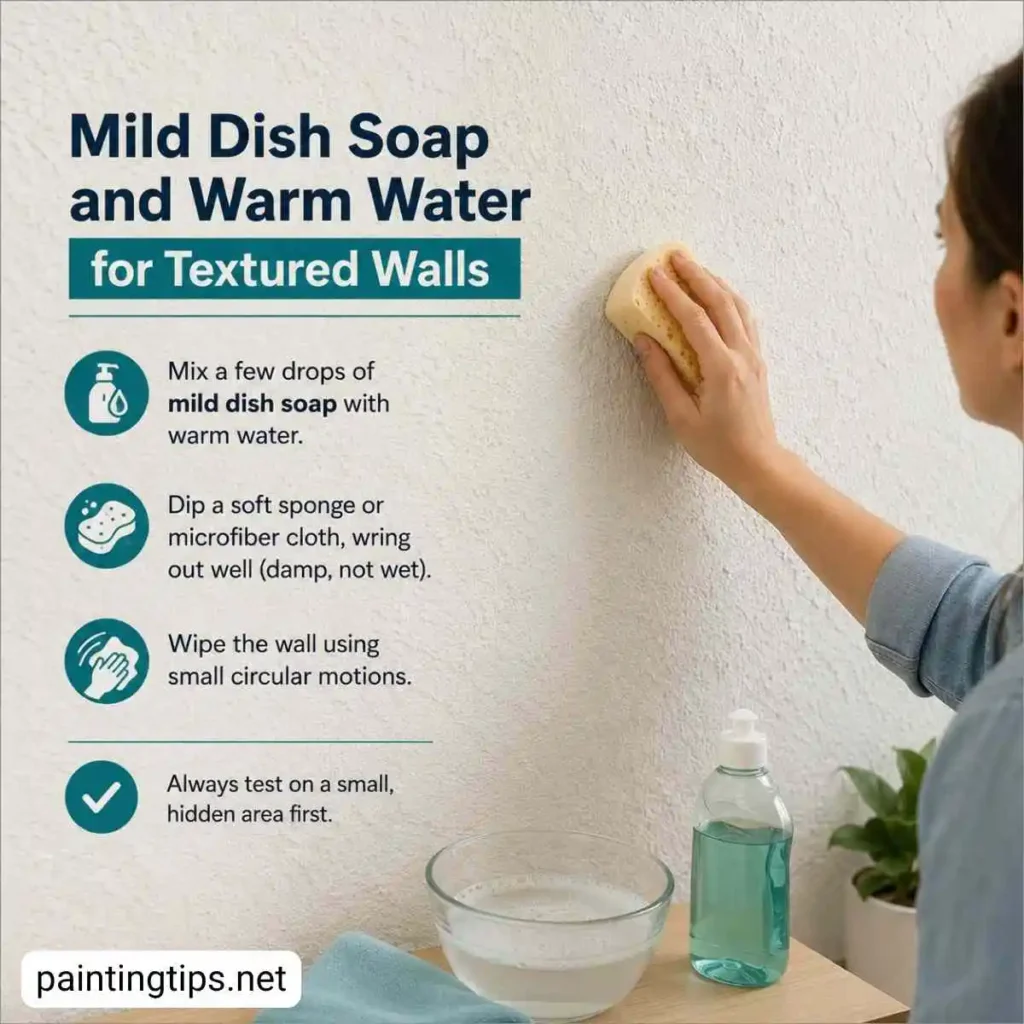
For most everyday stains — fingerprints, light grime, general grubbiness — a few drops of mild dish soap mixed into warm water is usually enough to clean textured walls. Dip a soft sponge or microfiber cloth into the solution, wring it out well so it’s damp rather than wet, and wipe the wall using small circular motions.
Excess water is the real risk here: too much moisture can soak into the texture, soften the underlying joint compound, and leave water stains behind, so it’s better to use less liquid than more. Always test the solution on a small, hidden section of wall first to confirm it won’t affect the paint color or finish.
Baking Soda Paste for Stubborn Stains on Popcorn Walls
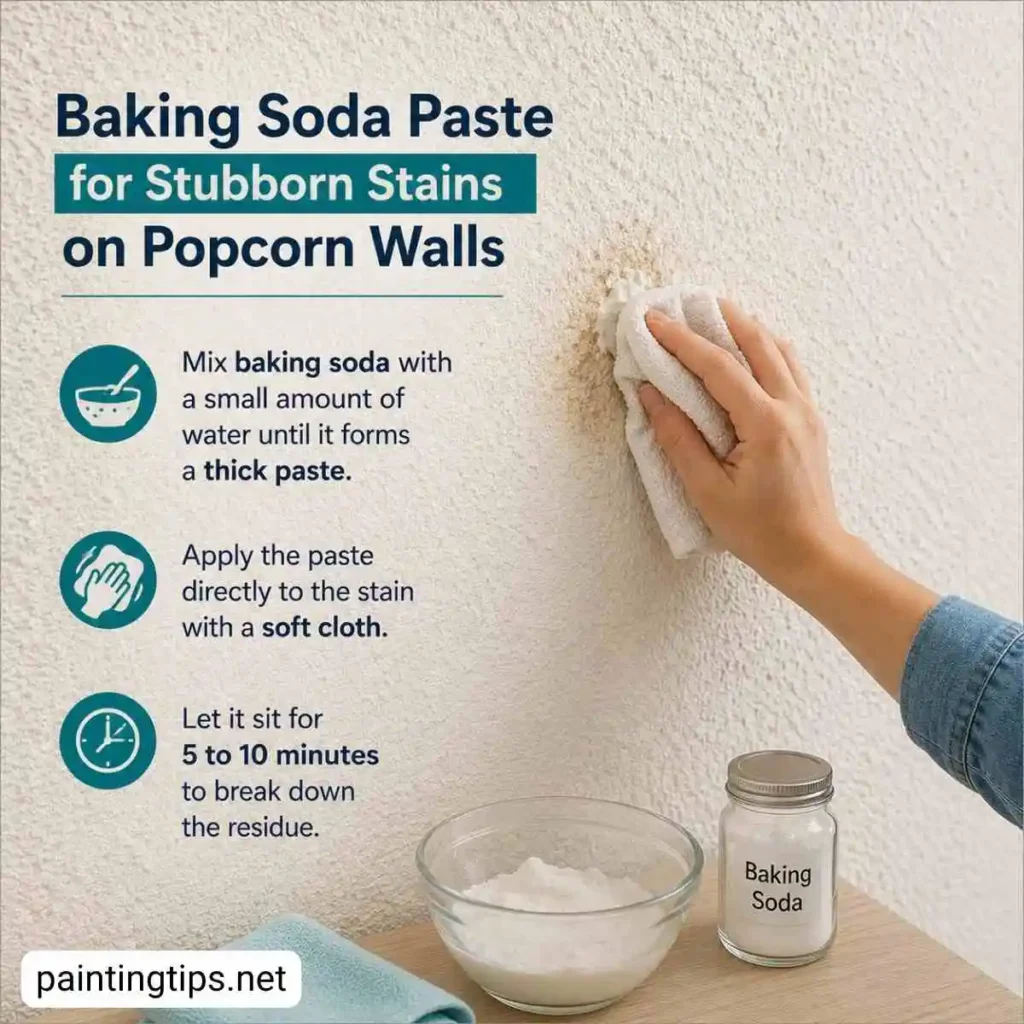
Baking soda is one of the most reliable options for stains that don’t come out with soap and water alone, and it’s gentle enough not to strip the paint. Mix baking soda with a small amount of water until it forms a thick paste, apply it directly to the stain with a soft cloth, and let it sit for five to ten minutes so it has time to break down the residue.
Afterward, wipe the area clean with a damp cloth. This method works especially well on grease marks and crayon — if crayon is the specific culprit, our guide on how to remove crayon from a wall walks through a few extra tricks for getting it off cleanly.
Magic Eraser for Scuffs and Marks on Textured Walls
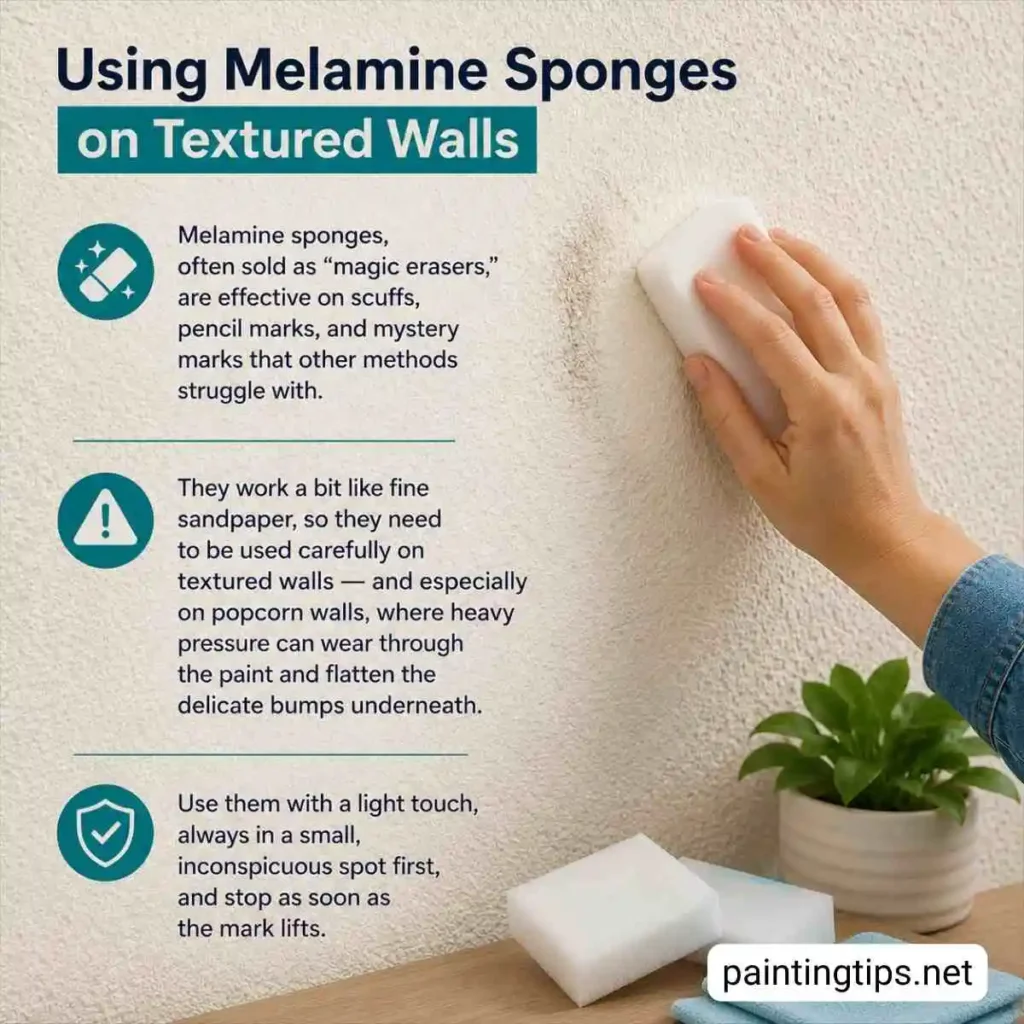
Melamine sponges, often sold as “magic erasers,” are effective on scuffs, pencil marks, and mystery marks that other methods struggle with — see our guide on how to get pencil off a wall if that’s the specific problem you’re dealing with.
That said, they work a bit like fine sandpaper, so they need to be used carefully on textured walls — and especially on popcorn walls, where heavy pressure can wear through the paint and flatten the delicate bumps underneath. Use them with a light touch, always in a small, inconspicuous spot first, and stop as soon as the mark lifts.
White Vinegar and Water for Mildew on Popcorn Walls
Mildew spots, which show up most often in bathrooms and other humid rooms, respond well to a simple vinegar solution and are common on popcorn walls near showers or tubs. Mix equal parts white vinegar and water in a spray bottle, mist it lightly over the affected area, and wipe it away with a soft cloth. Because vinegar is mild and acidic rather than harsh, it deals with mildew without breaking down the paint or the texture the way bleach can.
Blot, Don’t Scrub Your Textured Wall
Whichever method you choose, the technique matters as much as the product. Textured surfaces are more delicate than they look, especially popcorn finishes, and scrubbing back and forth can wear the texture down, leaving a flat, shiny patch that stands out more than the original stain did.
Blot the area gently, rather than rubbing, to protect both the texture and the paint while you clean textured walls the right way. This matters most with stains that smear easily, like ink — our guide on how do you get ink off the wall covers the safest way to lift it without spreading it further. And if a wall has taken so much damage over the years that cleaning no longer helps, our guide on how to sand texture off walls walks through starting fresh with a smooth surface.
How to Wash Textured Walls
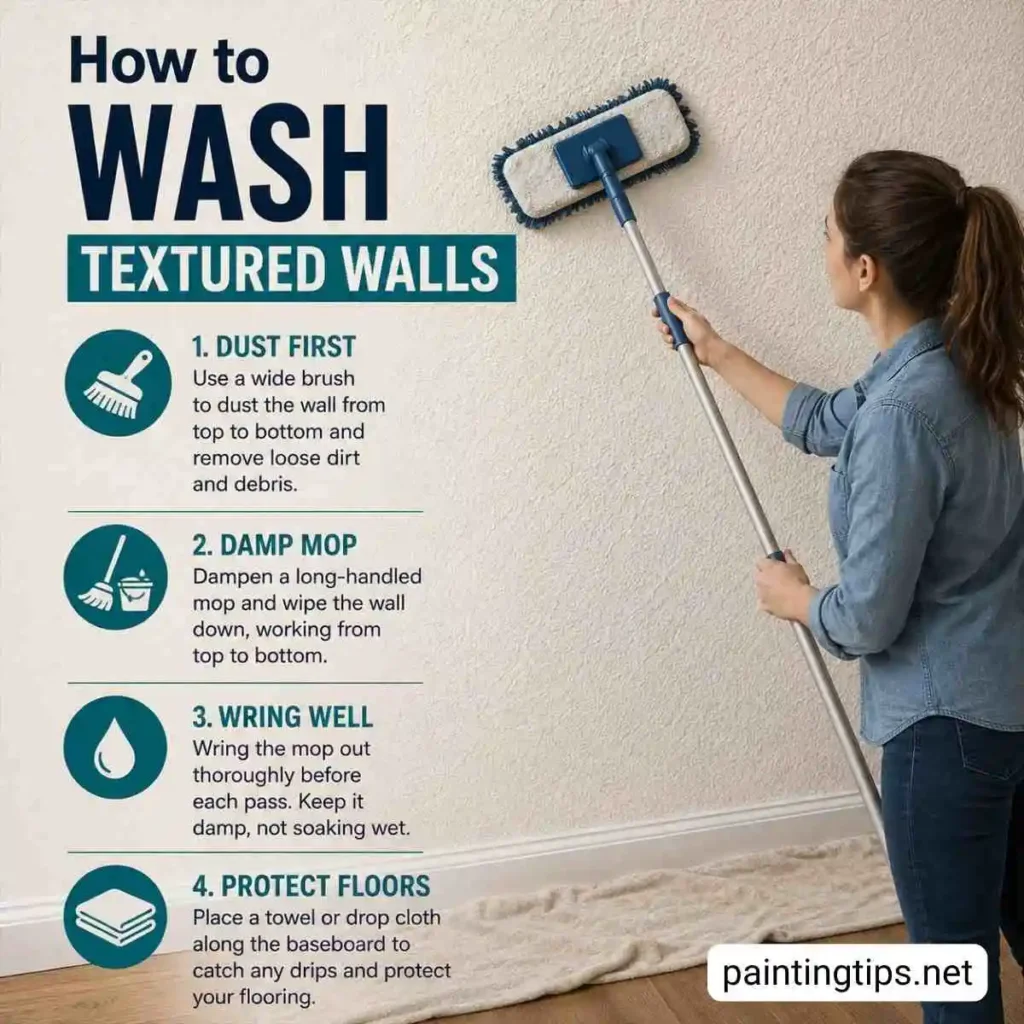
You can also wash a rough, textured wall with a long-handled wet mop, but there’s an important step to take first. Before you bring any water near the wall, dust it from top to bottom with a wide brush — the kind used to wash a car works well — to knock loose dust and debris off the surface. If you skip this step and go straight to washing, that loose dust can turn into streaks and stains once it mixes with water.
Once the wall is dusted, dampen a long-handled mop and wipe the wall down, again working from the top toward the bottom. Wring the mop out well before each pass, since a mop that’s dripping wet will let water run down toward the floor. That runoff can leave streaks on the wall as it travels down, and if it reaches a wood floor, it can damage the flooring as well. Keep the mop just damp, not soaked, and place a towel or drop cloth along the baseboard to catch any drips. For more on keeping your walls looking their best, check out our guide on how to clean walls.
