Wallpaper can completely change a room, but a textured wall changes the math. Standard rolls and adhesives are made for smooth drywall, so stucco, orange peel, and knockdown finishes cause bubbling, weak adhesion, and torn seams if the wall isn’t prepped first. Below, we cover what happens when wallpaper meets texture, which wallpaper holds up on a rough surface, how to flatten the wall enough to hang it properly, and where peel-and-stick and other wallpaper types fit in.
Can You Put Wallpaper on Textured Walls?
Yes, but rarely by just unrolling a strip and pressing it flat. Wallpaper paste is formulated to grab a smooth, absorbent surface. Once there’s real texture underneath, the paste can’t fill the low spots evenly, and every bump in the wall telegraphs straight through the paper, sometimes visibly, sometimes just as a spot where the seam won’t sit flush.
We’ve hung paper over enough rough walls to know the surface underneath matters more than the wallpaper you buy. The same principle applies to a wall that’s been painted over multiple times as it does to raw texture: whatever’s under the paper decides how the seams and surface look once it’s dry, not the wallpaper pattern itself.
Skip the prep and the results are predictable. Bubbling shows up as trapped air over the high spots, worse in a warm room where the paste dries before it fully bonds. Seams lift because the texture underneath keeps them from lying flat, paste squeezes out around raised areas as you smooth each sheet with a brush or squeegee, and tears open wherever a sharp bump catches the paper mid-hang.
Wallpapering Textured Walls
Wallpaper weight decides how much prep you actually need. A heavier non-woven or vinyl paper has enough body to bridge minor imperfections without showing them, which is why we always steer people with rough walls toward that weight class first rather than a lightweight patterned paper that will show every ridge underneath it.
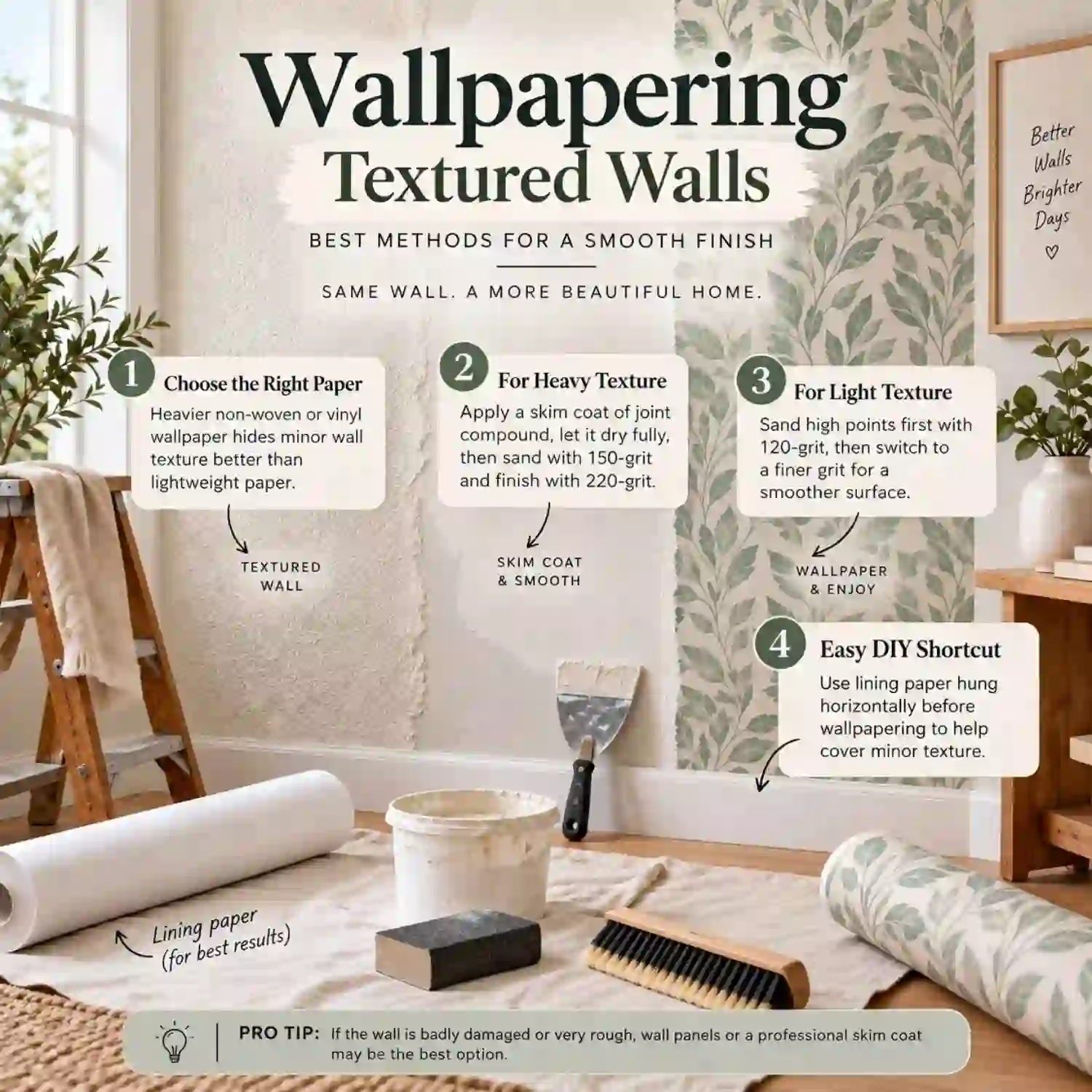
For the wall itself, a full skim coat is still the most reliable fix on heavier texture: a thin layer of joint compound troweled over the wall, left to dry fully (usually overnight, longer in humid conditions), then knocked back with 150-grit and finished with 220 for a paper-ready surface. On lighter texture, like a faint orange peel, running a pole sander over the high points with 120-grit before switching to a finer grit often gets you close enough without ever opening a bucket of mud.
Lining paper is the shortcut version of the same idea. Hang it horizontally so its seams don’t stack with the wallpaper seams going on top, let it dry, then paper straight over it. It won’t match a skim coat for flatness, but it buries minor texture fast and it’s the option we’d point a first-time DIYer toward. If what’s under the texture is actually old adhesive or paper residue rather than a factory finish, preparing walls for painting after wallpaper removal is the step to handle before any of this.
Thin wall panels, wood or plasterboard, screwed up and taped at the seams, solve texture permanently rather than just covering it, which matters if the wall has damage beyond texture. It’s the same reasoning behind our approach in how to put wallpaper on cement walls, where there’s no shortcut around getting a flat substrate first.
And if the wall’s bad enough that none of that sounds appealing, a plasterer can skim and sand it to a proper level finish in a day or two. Costs more, but it removes the guesswork of matching your prep to the wallpaper you already bought.
Can You Put Peel and Stick Wallpaper on Textured Walls
Peel and stick relies on a pressure-sensitive adhesive built for flat, smooth contact, which is exactly what a textured wall can’t give it. The backing can’t press evenly into bumps and grooves, so it lifts at the edges and corners far sooner than a pasted wallpaper would.
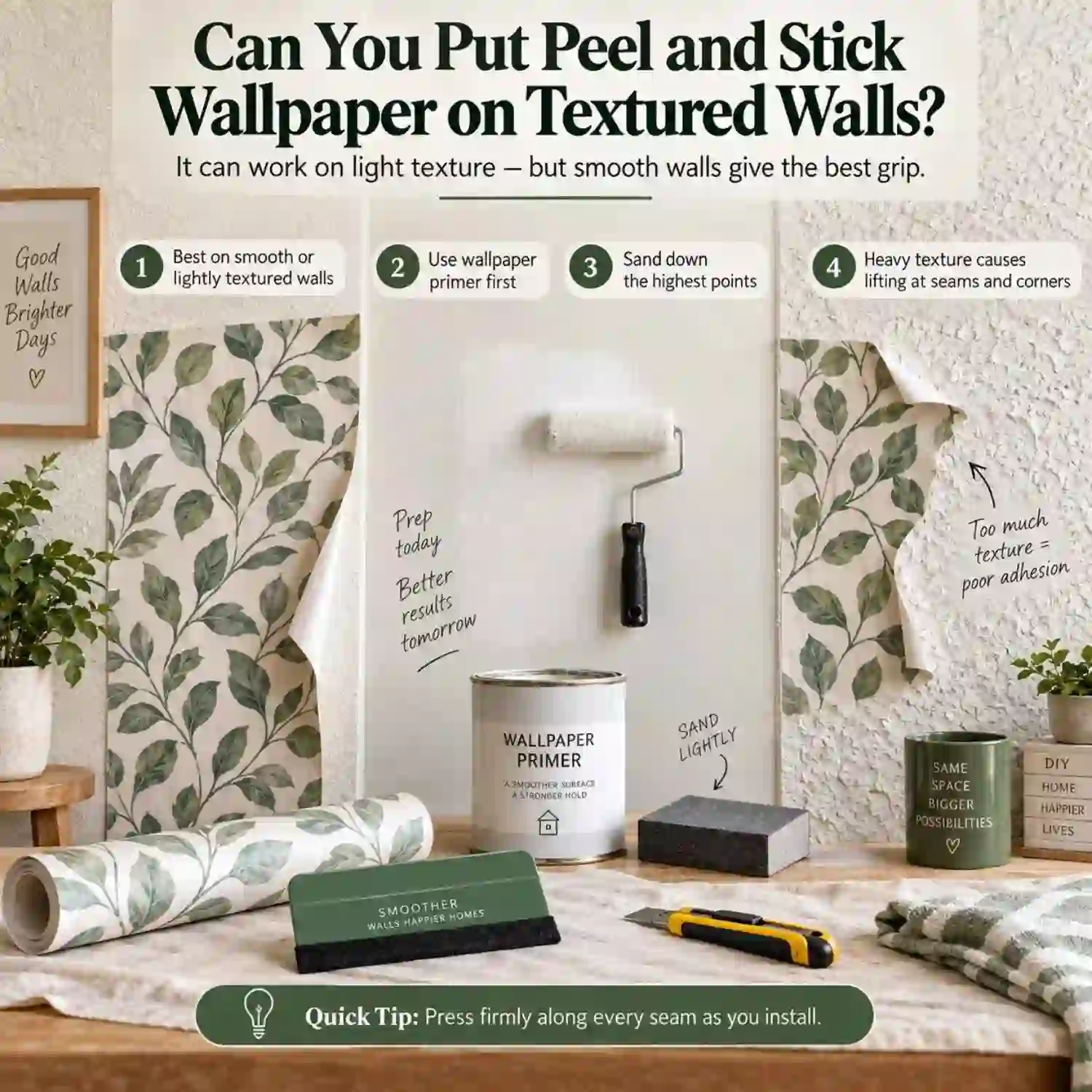
On a lightly textured wall it can hold up, especially with a coat of wallpaper primer first and firm pressure run into every seam as you go. Over stucco, popcorn, or knockdown, though, we wouldn’t trust it without smoothing the wall down first. Primer plus a quick sand of the highest points is usually enough to give the adhesive something to actually grip.
Can You Put Vinyl Wallpaper on Textured Walls?
Vinyl runs thinner than most standard wallpaper, so texture can still print through even once it’s hung. Test an offcut on the wall first and check it in raking light before committing to the whole room
Can You Put Removable Wallpaper on Textured Walls?
Removable wallpaper is a different product from peel and stick, a heavier, strippable paper meant to come off clean rather than a sticker-backed sheet, and the thicker versions handle texture better. Sanding the wall down first still helps the adhesion either way, even with a removable product.
Can You Put Wallpaper on Slightly Textured Walls?
Yes, and it’s one of the easier jobs on this list. A mid-weight wallpaper over light texture usually needs nothing more than a quick sand of the highest points.
Can You Wallpaper Over Textured Wallpaper?
If the texture is actually an old textured wallpaper rather than the wall itself, don’t paper over it. The embossing and pattern print straight through the new layer, and the old seams create the same lifting problems a textured wall does.
Strip it and deal with whatever’s underneath on its own terms, bare drywall, texture, or paint. If the wall was painted after a previous wallpaper job, can you wallpaper over painted wallpaper covers what to check before hanging anything new over it.
Can You Put Wallpaper on Bumpy Walls?
“Bumpy” and “textured” are the same search intent as far as Google’s concerned, and the fix is the same too. Thin wallpaper is the problem here specifically, air pockets form right over each raised spot, and in raking light every one of them shows.
A thicker wallpaper, or a lining paper underneath a thinner one, gives the surface enough body to sit over minor bumps without telegraphing them. A light pass with a sanding block over the worst high spots knocks off enough of the bump for the paste to bond properly, no full skim coat required.
Can You Put Wallpaper on Knockdown Walls?
Knockdown texture’s flattened, irregular peaks behave like any other heavy texture: a skim coat and sand gets the most reliable result, while a thick wallpaper can sometimes get away with less prep on a lighter knockdown finish. The flatter the wall, the better the seams sit once the paper’s up, there’s no way around that.
Can You Put Wallpaper on a Textured Ceiling?
Not worth it. Gravity works against the paper and the texture shows through regardless. If wallpaper’s the plan, removing textured ceiling material and smoothing the surface first is the step that actually matters.
