You roll out the first coat on a bright morning, and an hour later the sky turns gray. Now you’re standing there with a wet wall, a half-empty can, and no idea whether the job is ruined. Rain and fresh paint don’t mix, but how much damage it does depends on the surface, the paint, and how soon the rain arrives. Below, we explain when you can paint, how long to wait after a storm, and what to do if the weather turns on you, for walls, decks, stucco, and wood.
Can You Paint When It Rains
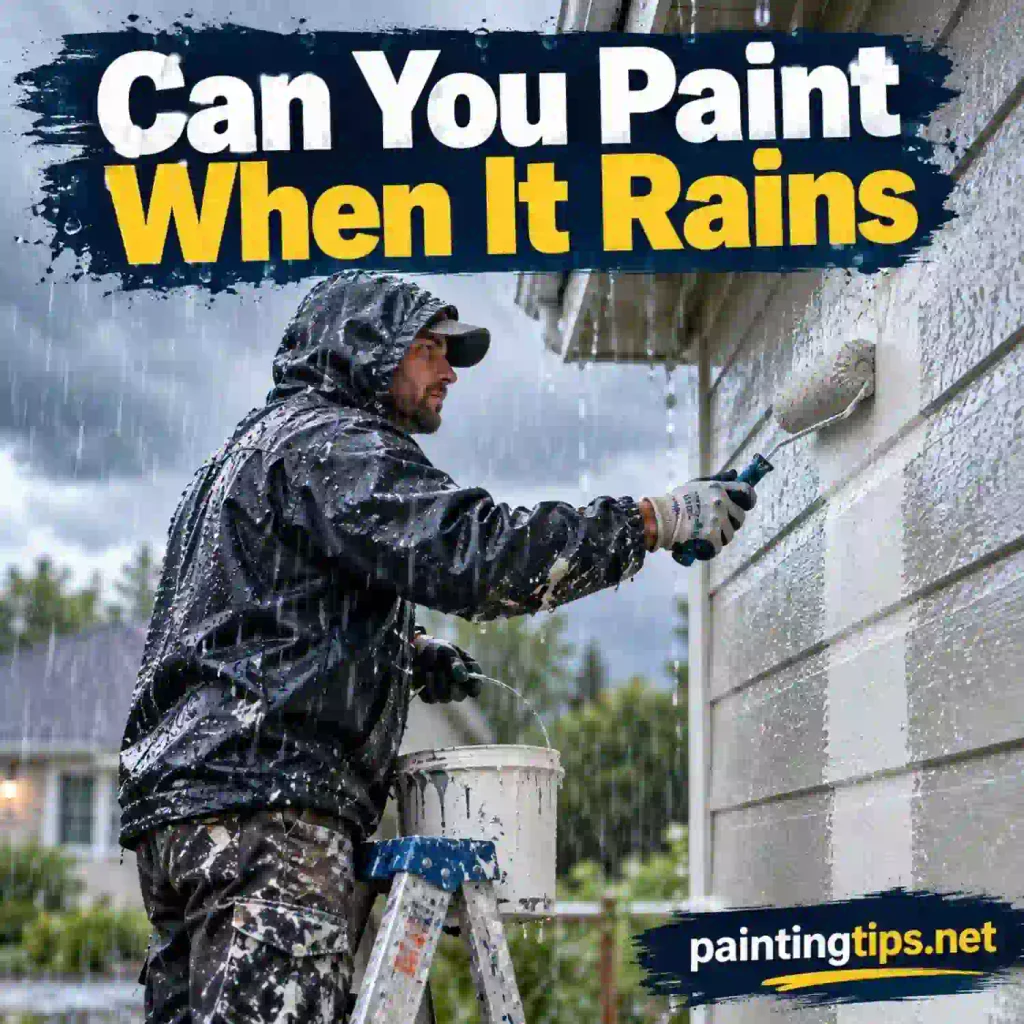
For exterior work, no. Water on the surface keeps paint from bonding, and rain falling on wet paint can wash it down the wall or leave streaks and a blotchy finish. We’ve seen that paint applied in the rain simply doesn’t hold on to the surface. Even if it seems to stick at first, it usually peels or blisters within a few months.
Interior painting is a different story, and we’ll get to that below. For now, the rule we follow on every job is simple: the surface has to be free of moisture, and the weather has to stay clear long enough for the paint to cure.
How Long Do You Need to Wait to Paint After Rain?
It depends on the surface and the weather. As a general guide, give wood siding and trim at least 24 to 48 hours of dry weather after a rain. Porous surfaces like stucco and masonry hold moisture longer, so they often need more time, especially after a heavy storm. If it has been humid, cool, or cloudy, add more time.
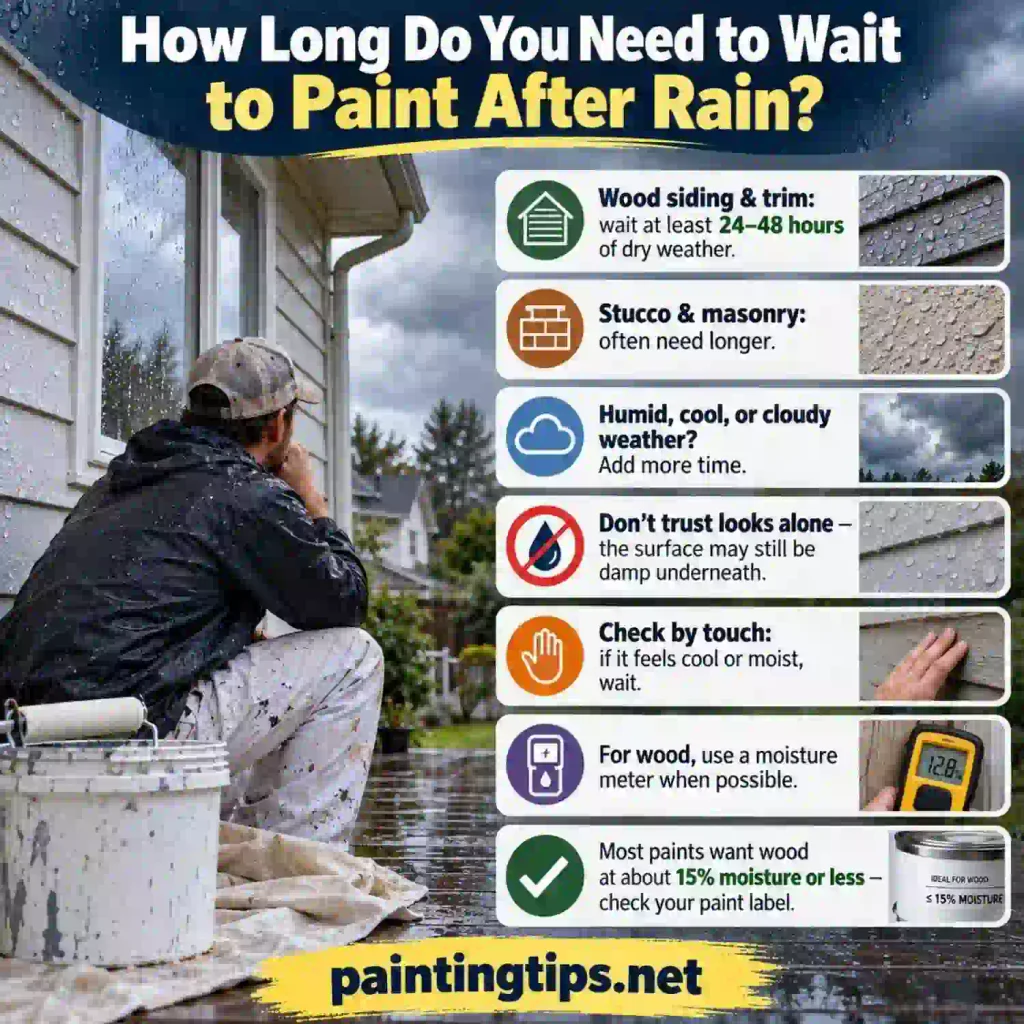
Don’t go by looks alone. A surface can look dry while the material underneath is still damp. Press your hand against it, and if you feel any coolness or moisture, wait. For wood, a moisture meter takes the guesswork out. Most paint manufacturers want wood at or below roughly 15 percent moisture, but check the label on your paint for the exact number.
Low temperatures slow the drying process, so after a rainy day in late fall, a wall that would dry in one day in summer can stay damp for two or three. If that’s your situation, we suggest reading our guide on Painting in Cold Weather before you start.
Can You Paint Outside After It Rains?
Not right away. The moment the rain stops is the worst time to start, because the surface is still holding water. Wait until it has dried out completely, then you can pick up where you left off. Paint over damp material and it will begin to peel before long.
Watch out for dew, too. A sunny afternoon can follow a rainy morning, but the surface can turn damp again at night. Start in late morning, after the sun has burned off the moisture, and stop early enough in the day that the fresh paint has time to set before evening. Sun and shade matter as well. A wall that gets full sun may be ready by the afternoon, while a shaded north-facing wall can stay damp for another day.
Also look at the forecast. You need a stretch of clear weather for the paint to set after you apply it, not just a moisture-free surface when you start. If you’re planning a full exterior project, we recommend our step-by-step guide, How to Paint a House Exterior, which covers prep, timing, and application.
What Happens If It Rains 2 Hours After Painting?
Mostly, it comes down to the temperature and the type of paint. If you painted on a warm day, there is usually nothing to worry about, because paint dries faster in the heat. When the temperature was between 68 and 95°F, a light rain two hours later is unlikely to cause a problem. A hard downpour is another matter, since it can deform the paint film and leave marks or runs.
Paint type matters too. Most water-based latex exterior paints become rain-resistant in about one to four hours. Oil-based paints cure much more slowly, and 24 hours is a good minimum before they can handle rain. The label on the can gives the exact time for your product, so check it before you start.
If rain does hit fresh paint, don’t touch it. Let it cure fully, then look it over. Minor spotting can often be fixed with a light sanding and a touch-up coat. If the paint has washed off or run, you’ll need to sand or scrape the damaged area and repaint it.
Can You Paint Inside When It Rains?
Yes, you can paint interior walls while it rains, and in most cases it’s no problem. The one catch is humidity. If it’s warm inside and wet outside, extra moisture can build up in the room, and damp air slows drying.

Look at the glass. Fogged-up windows are a sign that the room is too humid, so open a few of them a crack or turn the heat down a bit. Fresh air speeds up drying, so open a window on the far side of the room or set up a fan to keep the air moving. Just make sure the fan isn’t blowing rain or dust onto the wet paint.
Expect longer drying times on a damp day. The paint may feel dry to the touch but still need extra time before you add the next coat, so follow the recoat time on the label and add some extra when the air is humid. If the walls themselves feel clammy or the room stays steamy, you can also push the job back a few hours until the rain passes.
“If you’ve never painted a room before, we recommend our beginner-friendly guide, painting a room for dummies, which covers the basics from start to finish.”
Can You Paint Stucco After It Rains?
If the stucco is on the outside of your home, don’t paint it while it’s raining. Wet stucco won’t take paint well. Starting right after the rain stops is a mistake too. Stucco is porous and soaks up water, so it can hold moisture long after the surface looks dry.
There’s no single number of days that works every time, because drying depends on the temperature and the weather. Warm, sunny, breezy days dry stucco much faster than cool, damp ones. So check it by eye and by hand. Stucco that’s ready has an even, light color all over. Dark or patchy spots mean there’s still moisture inside, and those areas need more time. Even slight dampness can make the paint peel in a short time, so it’s better to wait an extra day than to rush.
A good masonry or elastomeric paint also helps. If you’re still choosing, our roundup of the best exterior house paints is a good place to start.
Can You Paint a Deck After It Rains?
Decks are usually built from wood that stands up well to the weather, but rain still leaves water sitting on the boards, and that keeps paint from gripping. So wait for the rain to stop first. Then wipe the surface down with a dry mop or a clean cloth, and give the boards a few more hours to let the remaining moisture evaporate.
Once the boards are free of moisture and you’re sure no more rain is coming soon, you can start painting. For more on working with different woods, you can read our articles on teak oil application and painting on bamboo wood.
What Happens If It Rains After You Paint Your Deck?
If rain hits a freshly painted deck, the water mixes with the wet paint and thins it out. The paint then runs across the surface and has a hard time sticking to the boards. Even where some of it holds, it will likely flake and peel off in a short time.
That’s true even with top-quality deck paint. No product can make up for a soaking in its first hours, so always check the forecast before you start. Balconies are just as exposed to rain as decks. If a balcony is on your list, read how to paint balcony first, so you know what the job involves before you choose a day.
Is It OK to Paint When It’s Raining Outside?
For exterior walls, it isn’t, since they’re in direct contact with water. The paint can’t bond to a wet surface, and the part that does stick won’t last.
Rain also does damage you can’t always see at first. Fresh latex paint contains additives that rise to the surface as it dries, and rain or heavy dew can wash them out unevenly. You end up with sticky, glossy streaks that are hard to remove later. Painting under an eave or porch roof doesn’t fully solve the problem either, because wind-driven rain and damp air can still reach the wall. To save yourself time and money, we don’t recommend painting your home’s exterior while it’s raining.
Can You Paint Wood After It Rains?
No matter what kind of wood it is, don’t paint while it’s raining. Even a high-quality paint will lift and fail if it goes onto wet wood.
Wood absorbs water and swells, then shrinks as it dries. If you seal that moisture under a coat of paint, it tries to escape later and pushes the paint up into blisters. That’s why a board that feels dry on top can still fail. Wait for the rain to stop, wipe off the wet areas, and let the wood dry out fully. Once it’s ready, sand off any rough, raised grain, and use a primer before painting. On knotty softwoods like pine, a stain-blocking primer also keeps the knots from bleeding through your topcoat.
Painting After Rain: Three Rules to Follow
After years on the job, we boil it down to three rules. First, the surface has to be truly moisture-free, not just dry-looking, so check it with your hand, your eyes, and a moisture meter for wood. Second, you need a clear stretch of weather after you paint, so look at the forecast and the drying times on the can before you open it. Third, give porous materials like stucco and wood the extra time they need, because they hold water longer than you’d expect. Follow these, and a day or two of waiting will save you from scraping and repainting later.
With the timing sorted, the only big choice left is color. Haven’t settled on a color yet? Read What Color Should I Paint My House Exterior? before you head to the paint store.
