The short answer is yes — but whether it actually holds up depends almost entirely on surface preparation and product choice. Skip the prep and you’ll be peeling it back off within weeks. Do it right and the result can look just as good as any other wall in the house. Here’s what you need to know before you start.
Can You Put Wallpaper on Concrete Walls?
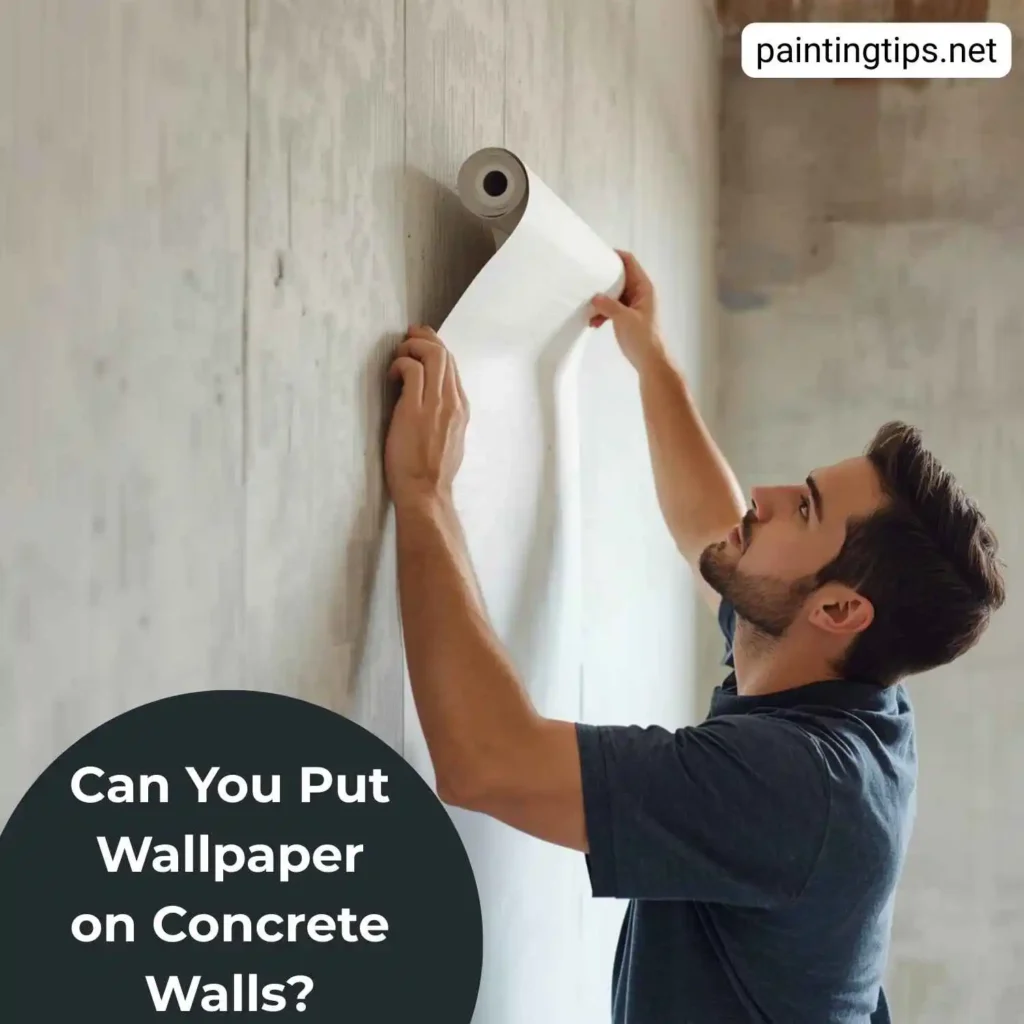
Concrete is rough, uneven, and porous — three things wallpaper hates. Air pockets form wherever the surface dips or bulges, and those spots are always the first to peel.
The wall needs to be as smooth as possible. Ideally, skim-coat it with a thin layer of joint compound before anything else. This fills pits and levels imperfections, giving the wallpaper a stable surface to bond to. If skim coating isn’t possible, sand the wall with 60–80 grit sandpaper to knock down the worst high points, then wipe it clean before priming.
Skipping prep leads to bubbling, lifting seams, and texture bleeding through the paper — and in humid spaces like basements, these problems show up fast. Struggling with a textured surface that isn’t concrete? The same principles apply — and the challenges can be just as tricky. See our full guide on Can You Put Wallpaper on Textured Walls? to find out what works and what doesn’t.
Choosing the Right Wallpaper and Adhesive
Thick wallpapers — heavy vinyl or fabric-backed options — are the right call for rough concrete. They bridge minor surface imperfections and resist the uneven curing that happens when adhesive hits a porous substrate. Thin paper-based wallpapers show every bump beneath them and tear more easily during installation.
For particularly uneven surfaces, consider hanging lining paper before your decorative wallpaper. Lining paper smooths out minor imperfections that primer and paste alone can’t fix, and it gives the top layer a more uniform surface to bond to. On concrete or cinder block walls that can’t be fully skim-coated, it’s one of the most practical steps you can take to improve the final result.
For adhesive, ready-mixed wallpaper paste is the best option. It comes pre-mixed at the right consistency, grips fast, and doesn’t require any guesswork. On porous concrete, consider double-pasting — apply paste to both the paper and the wall — to compensate for how quickly the surface absorbs moisture. Before any paste goes on, prime the wall with a wallpaper primer or diluted PVA to seal the surface and improve adhesion.
Can You Put Peel and Stick Wallpaper on Concrete Walls?
Peel and stick wallpaper works beautifully on smooth, sealed surfaces — painted drywall, glass, finished plaster. Concrete is essentially the opposite: rough, porous, and often carrying trace moisture. The self-adhesive backing can’t make full contact with an uneven surface, so it bonds only to the high points while bridging the gaps. Edges start lifting within days or weeks, and once one corner goes, the rest follows.
Moisture speeds up the failure. Concrete releases small amounts of vapor that work behind the wallpaper and slowly break down the adhesive bond.
If you want to use peel and stick on a concrete wall, apply a smooth coat of paint or plaster first to create the surface it’s designed for. Without that intermediate layer, it’s a shortcut that rarely holds. If you’re planning to paint first and wallpaper later, it’s worth knowing how that painted surface will affect your results. We cover everything in Can You Put Wallpaper Over Paint?
Can You Put Wallpaper on Cement Walls?
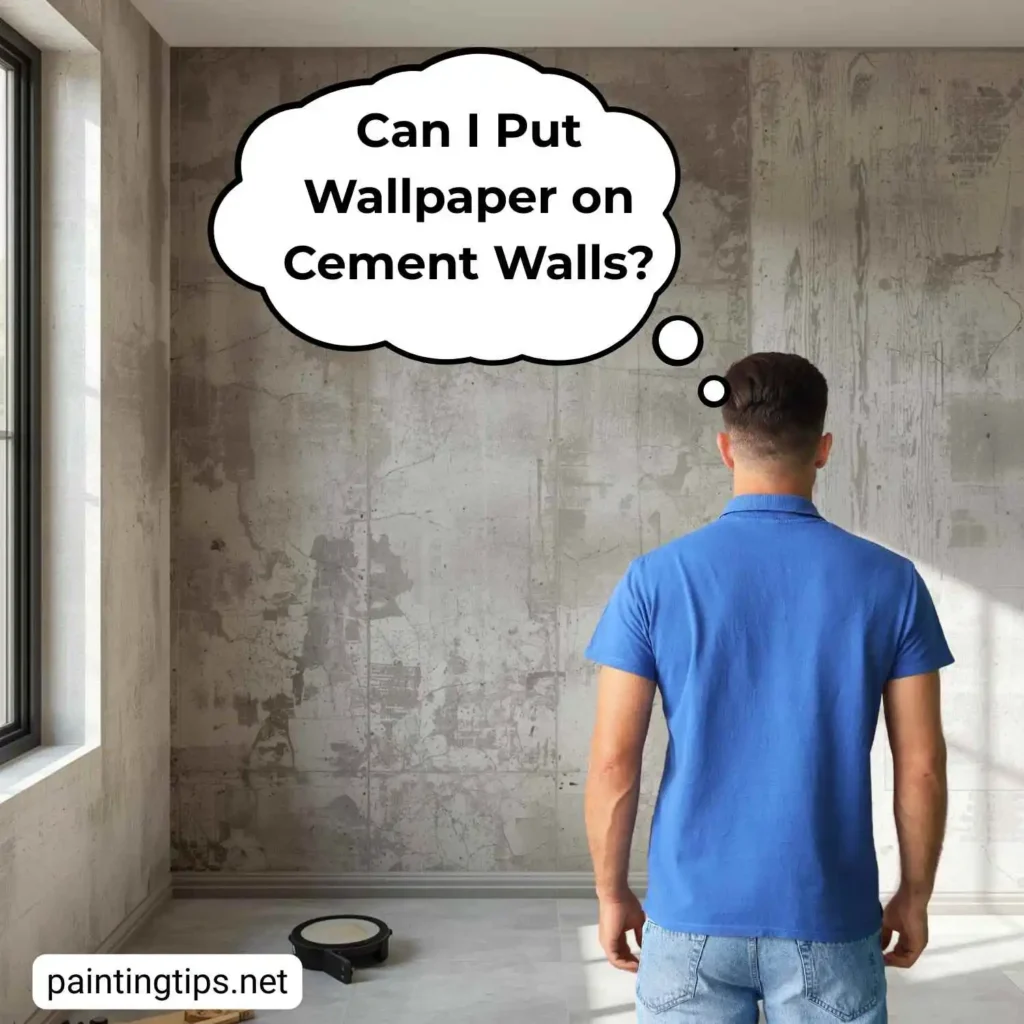
Cement walls come with one extra challenge: high alkalinity. Fresh or moisture-exposed cement has a pH that can interfere with adhesive bonding and, over time, cause wallpaper dyes to bleed or discolor.
First, check for moisture. Tape a piece of plastic sheeting to the wall and leave it for 24–48 hours. If water collects underneath, that issue needs to be resolved before any wallpaper goes up — no primer or paste will hold on a wall that’s actively releasing moisture.
Once the wall is confirmed dry, clean off any efflorescence (the chalky white deposits common on cement) with a stiff brush and diluted white vinegar. Then apply an alkali-resistant masonry primer to neutralize the surface before hanging. Use a heavy-duty ready-mixed paste, and pair it with a non-woven wallpaper rather than vinyl — especially in spaces that tend to run humid.
Vinyl doesn’t breathe, which means any residual moisture in the wall gets trapped behind the paper. Over time that trapped moisture breaks down the adhesive and creates the perfect conditions for mold. Non-woven wallpaper is vapor-permeable, so the wall can still release moisture slowly without compromising the installation. Save vinyl for cement walls in consistently dry conditions where its durability is an asset, not a liability.
Can You Put Wallpaper Over Cinder Block Walls?
Cinder block is the hardest surface of the three. Deep texture, prominent block joints, and uneven porosity all work against a clean installation. Wallpapering directly onto bare cinder block almost always ends in visible seams, patchy adhesion, and texture showing through.
The most reliable fix is to install drywall over the block first. It’s extra work, but it gives you the smooth, consistent surface that wallpaper actually needs. If drywall isn’t an option, skim-coat the block with multiple passes of joint compound — fill the joints, let each layer dry fully, sand between coats, and repeat until the texture is substantially reduced.
If you must go directly onto the block, use the thickest non-woven wallpaper you can find and load extra adhesive at the seams. The texture will still show to some degree, and the installation won’t last as long — but for utility spaces where function matters more than finish, it can work well enough.
Final Thoughts
Wallpapering concrete, cement, or cinder block walls is absolutely doable — it just demands more groundwork than a standard drywall installation. The surface you create before the wallpaper goes up matters far more than the wallpaper itself. Get the prep right, choose a thick vinyl paper, and use a quality ready-mixed paste, and there’s no reason a concrete wall can’t look just as polished as any other room in your home. Cut corners on the prep, and no amount of expensive wallpaper will save the result.
Still on the fence about whether wallpaper is the right choice for your space? Our Paint vs Wallpaper guide breaks down the pros, cons, and costs of both — so you can make the call with confidence.
FAQ
Will Wallpaper Stick to Concrete?
Yes, if the surface is properly prepped. Unprimed, rough concrete won’t hold adhesive evenly — skim coating and priming are essential steps before hanging.
How to Cover Concrete Walls Cheaply?
Masonry paint is the cheapest option. For a wallpapered look on a budget, skim-coating with joint compound and using an affordable vinyl wallpaper is more cost-effective than installing drywall.
How Do You Prep a Concrete Wall for Wallpaper?
Clean the wall, remove efflorescence, fill cracks, and sand rough spots. Apply an alkali-resistant primer, then skim-coat with joint compound if possible. Sand smooth, prime again, and hang.
