Painting a bookshelf is one of those easy upgrades that makes a huge difference in a room. With the right prep and a good paint, you can turn an old, tired bookshelf into something modern and fresh. When you do it right, the finish looks clean and smooth—it’s hard to believe it’s the same piece.
How to Paint Bookshelves

Painting a bookshelf isn’t just about changing the color—it’s about making the surface durable enough for daily use. Shelves take more abuse than walls: books slide across them, objects get stacked and shifted, and edges are constantly touched. That’s why the process leans heavily on prep (cleaning, scuff-sanding or priming slick surfaces) and on choosing paints that cure to a hard, smooth film. If you skip those steps, even a nice color will chip, show scuffs, or feel tacky under weight.
The good news is you don’t need complicated tools. With a damp cloth, the right primer for your surface (acrylic/bonding for laminate or glossy finishes), and a short-nap foam roller for flat panels plus a small synthetic brush for corners, you can get a factory-like finish at home. Thin, even coats—letting each layer dry fully—beat one thick coat every time, and a clear water-based topcoat at the end adds scratch resistance where books actually sit.
What Paint Works Best?
You’ve got a few choices when painting a bookshelf: acrylic paint, oil-based paint, or spray paint. But honestly, acrylic paint is the easiest option for painting a bookshelf. It goes on smoothly, dries fast, and doesn’t smell up the place. Multi-surface acrylic paints stick well and cover nicely, so you don’t have to fuss over multiple coats.
Do You Need to Sand a Bookshelf Before Painting?
Laminate or veneer shelves are tough to sand by hand—if you try, you’ll probably just get frustrated. A power sander helps, but for most people, sanding laminate isn’t worth the effort. If your bookshelf is already painted and has that shiny finish, just a quick scuff with 220-grit sandpaper helps the new paint stick.
Is Primer Necessary?
You don’t always need primer, but if your shelf is glossy, slick, or laminated, it’s a smart move. Primer grabs onto those tricky surfaces and gives your paint something to hold onto. Sometimes, primer even saves you from sanding at all. “For more information, read this: Is paint primer necessary?”
Which Primer Should You Use?
- If you plan to use acrylic paint, choose an acrylic primer.
- For oil-based paint, use an oil-based (alkyd) primer.
- If you are using spray paint, apply a spray primer.
For very slick or glossy surfaces, a bonding primer is the best option, as it helps paint adhere to difficult surfaces.
How to Paint a Bookshelf with Acrylic Paint
1-Clean the Surface
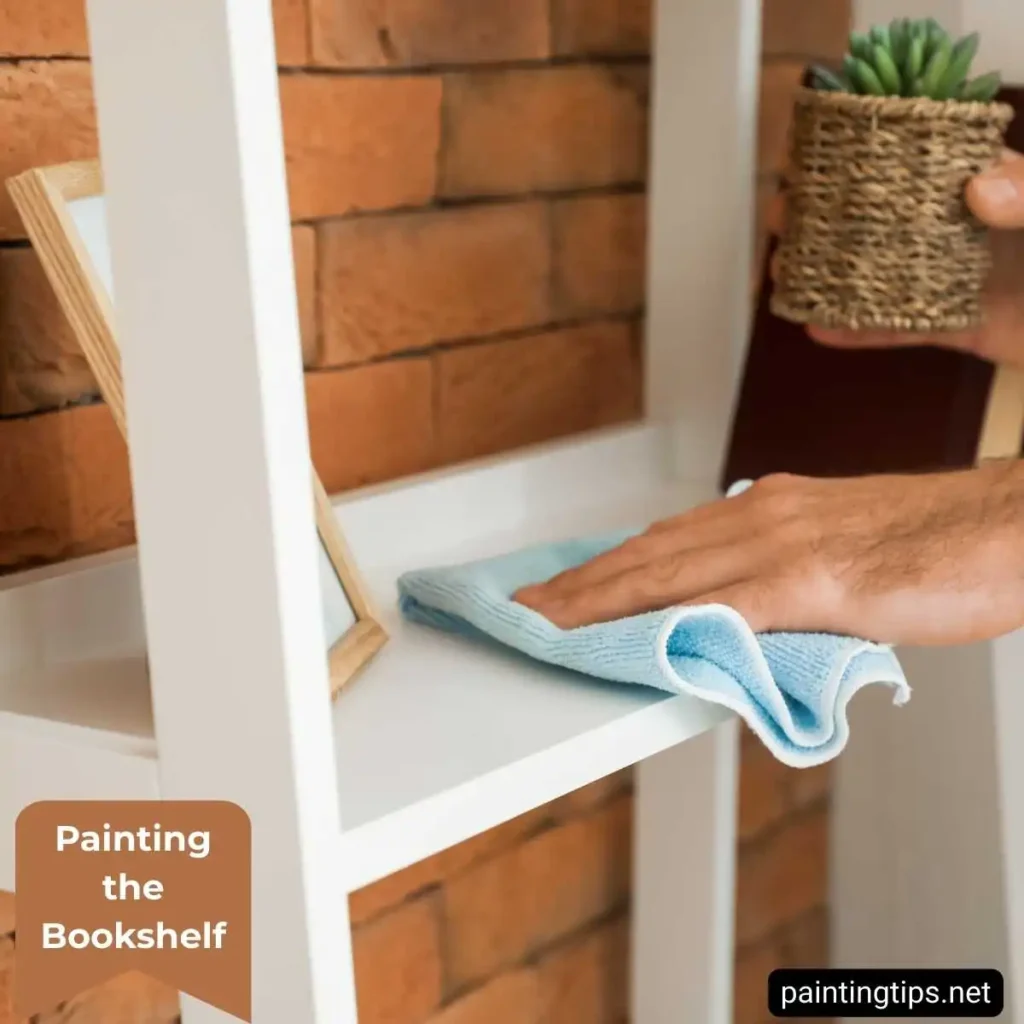
Start by wiping down the bookshelf with a damp cloth to get rid of dust and dirt. Got sticky spots? Dab on a little acetone. Let it dry completely before you move on.
2-Sand or Prime
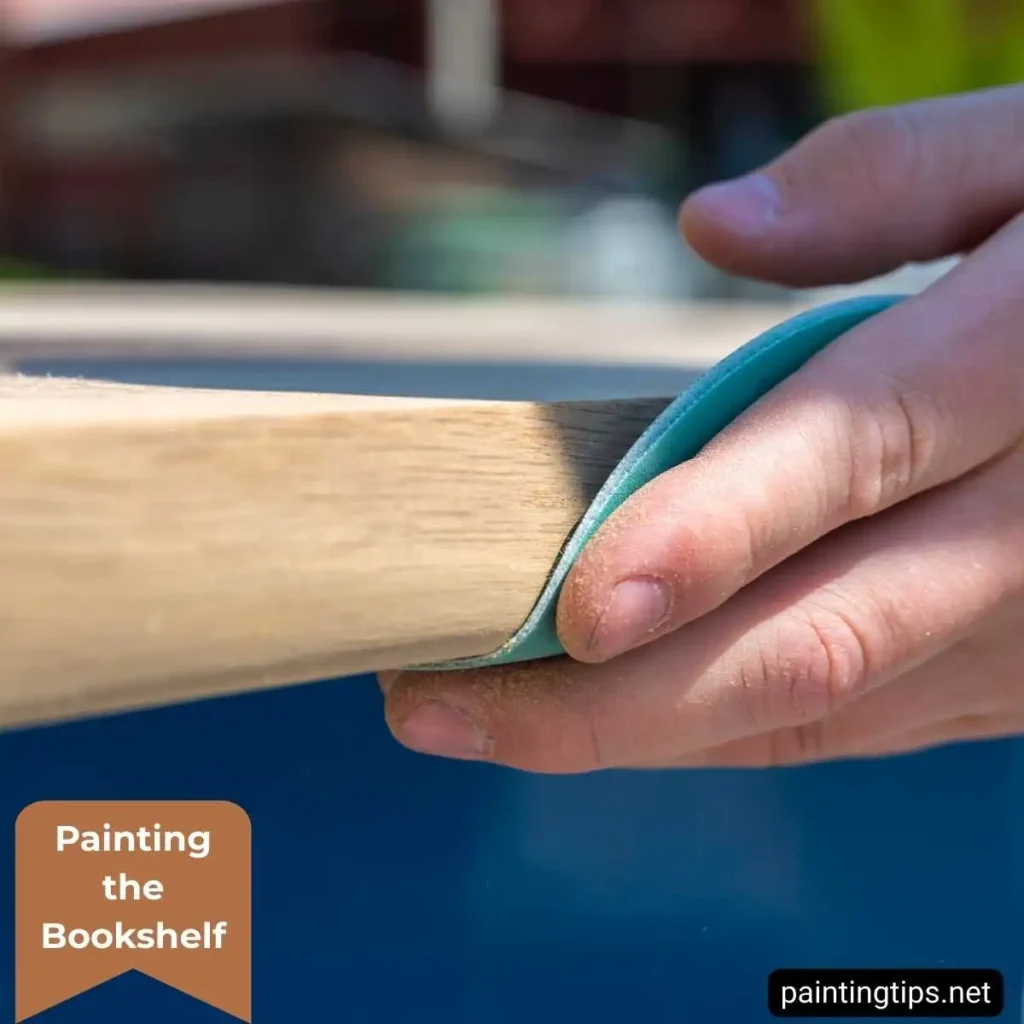
You’ve got options here. If your shelf is unfinished or looks dull, use primer. If it’s glossy, a light sanding helps. For laminate, skip the sanding—just prime it. “Related article: What does paint primer do?”
3-Let the Primer Dry
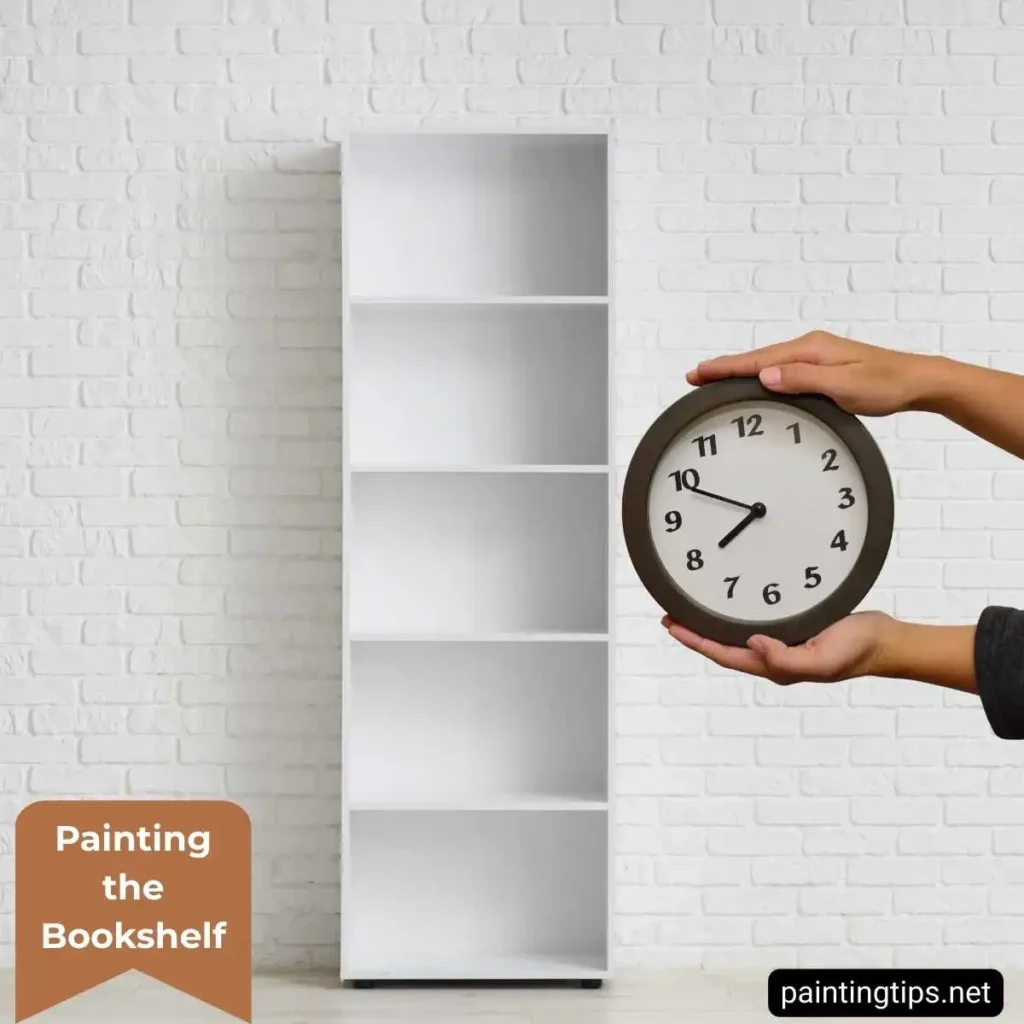
Don’t rush this step. Here’s a quick guide:
- Acrylic or bonding primer: at least 4 hours
- Oil-based primer: 24 hours
- Spray primer: about 30 minutes
4-Apply the First Coat
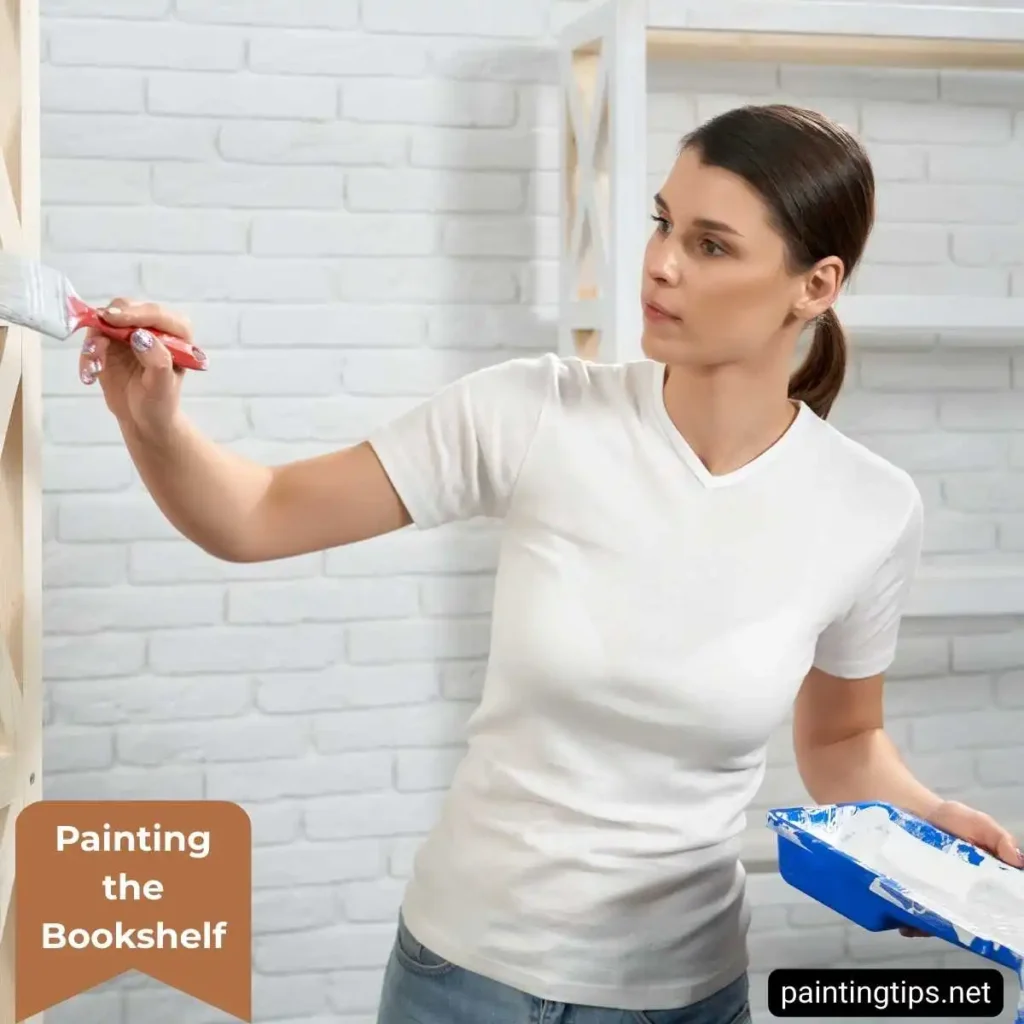
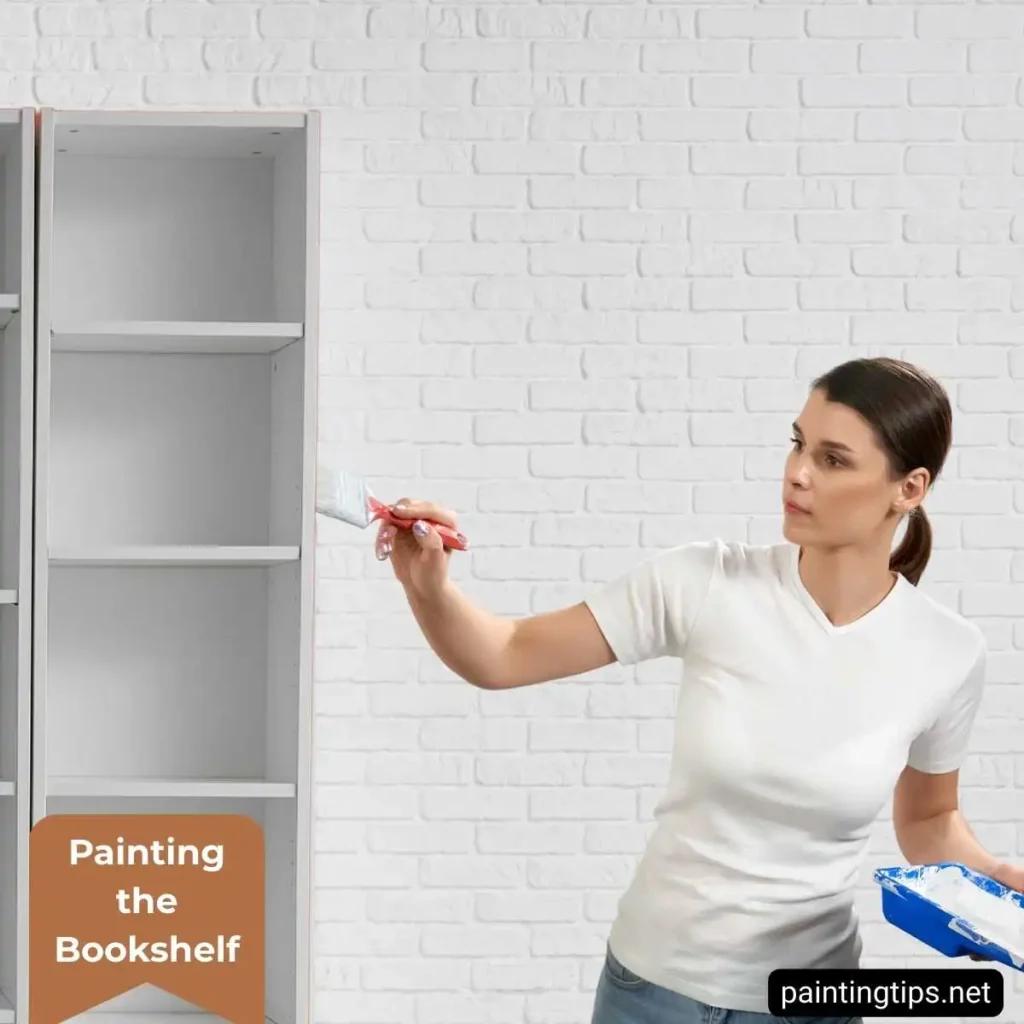
When painting a bookshelf, use a short-nap foam roller for a smooth finish. For edges and corners, switch to a small synthetic brush. Foam rollers work best for achieving a sleek, professional look.
5-Let It Dry
Patience pays off when painting a bookshelf. Always let the first coat dry completely before applying the next one. Rushing this step can cause streaks, roller marks, or peeling later on. For acrylic paint, allow at least 4 hours of drying time to ensure a smooth and durable finish.
6-Apply the Second Coat
This coat really pulls the look together. Use a fresh roller if you want to avoid marks. Once the paint cures, add a water-based clear coat to help it resist scratches. “Related article: How to avoid paint roller marks.”
Painting Supplies
- Acrylic paint (preferably multi-surface and fast-drying)
- Oil-based paint or spray paint (optional alternatives)
- Acrylic primer, oil-based primer, or spray primer (match the paint type)
- 220-grit sandpaper (for glossy surfaces)
- Power sander (for laminate surfaces, if needed)
- Damp cloth (for cleaning)
- Acetone (for heavy stains)
- Short-nap foam roller (for smooth application)
- Small synthetic-bristle brush (for edges and details)
- Protective gloves and mask
- Drop cloth or plastic sheeting to protect floors
Additional Tips
- Oil-based paint is tough and durable, but it takes forever to dry and smells strong. If you go this route, wait a full day between coats.
- Spray paint is quick and easy, just make sure you’re outside or in a spot with good airflow. Go for thin coats and wait half an hour between layers.
- That’s about it. Painting a bookshelf isn’t hard, but a little prep goes a long way. Take your time, and you’ll end up with a shelf that looks brand new.
