Choosing paint for a living room involves two separate decisions that are often confused. The first is the type of paint, which determines how the coating performs, how durable it is, and how easy it is to maintain. The second is the paint finish, which affects how much light the walls reflect and how visible surface imperfections become. Understanding the difference between these two choices makes it much easier to select a paint that both looks good and performs well over time.
What Type of Paint for Living Room Walls
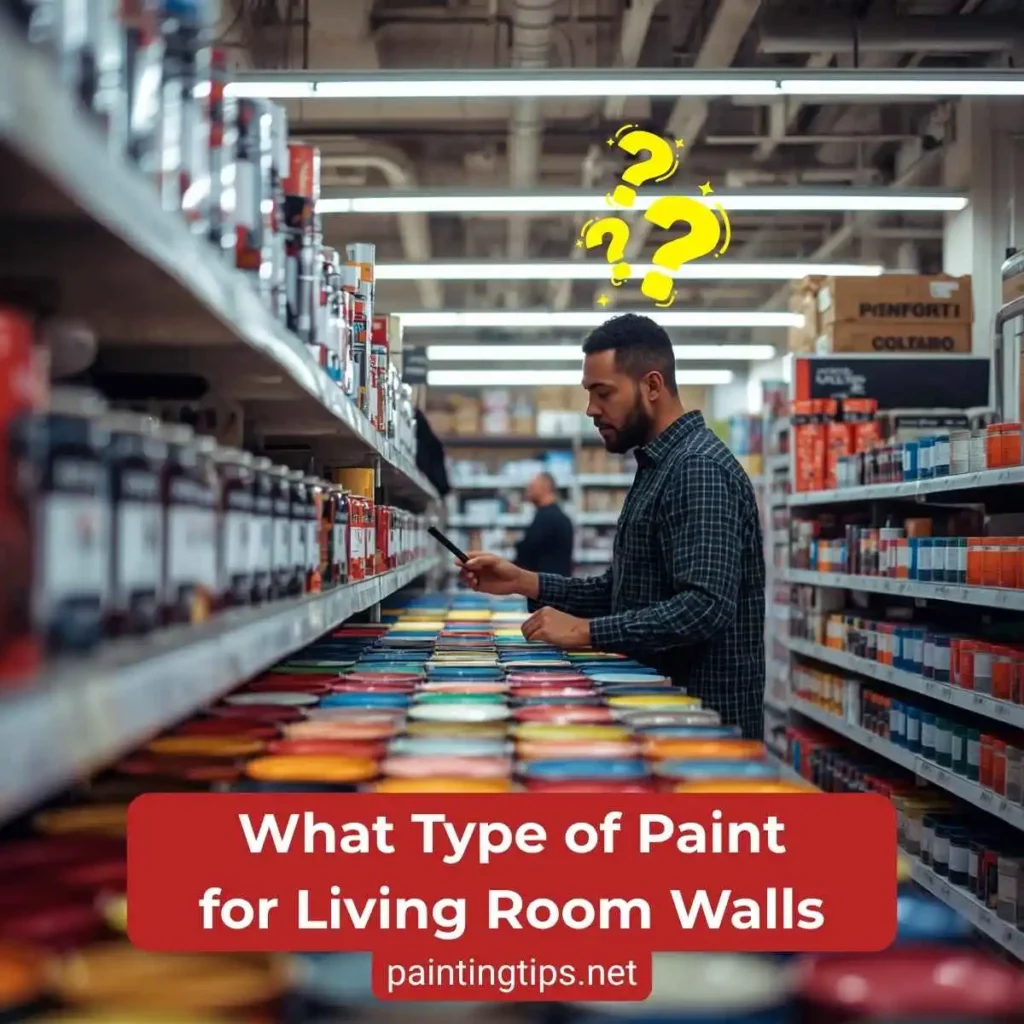
For most living rooms, water-based acrylic latex interior paint with an eggshell or satin finish is the best overall choice. It offers the combination most homeowners are looking for: durability, easy maintenance, low odor, and a finish that looks good for years without requiring much effort to maintain.
Modern acrylic latex paints dry quickly, making it possible to finish a room in a single day instead of spreading the project across an entire weekend. They’re also easy to apply with both brushes and rollers, clean up with soap and water, and are widely available in low-VOC and zero-VOC formulas. For a room where people spend several hours every day, those practical advantages matter just as much as appearance.
An eggshell or satin finish complements this type of paint perfectly. Both provide a surface that’s easier to clean than flat paint while still looking appropriate on large wall areas. That’s why professional painters recommend this combination for the vast majority of living rooms.
That doesn’t mean it’s the only option, though. Different paint types have different strengths, and the best choice ultimately depends on your walls, your budget, and how much everyday wear your living room receives. Here’s how the main paint types compare.
1-Water-Based Acrylic Latex Paint
Water-based acrylic latex paint has become the standard choice for living room walls, and it’s easy to see why. It combines the convenience of a water-based formula with the durability of acrylic resins, making it a practical option for almost every home.
Most homeowners also find it easier to apply than oil-based paint. It spreads smoothly with both brushes and rollers, dries within a few hours, and usually allows a second coat the same day. Cleanup is simple too, since everything washes up with soap and water instead of paint thinner.
A quality acrylic latex paint also resists fading, cracking, and everyday scuffs while remaining flexible enough to handle normal movement in interior walls. If you’re still deciding between the two technologies, it’s worth comparing their strengths before buying. Our guide to Oil-Based vs. Water-Based Paint explains where each type performs best and when one makes more sense than the other.
2-Vinyl Acrylic Paint
Vinyl acrylic paint is another water-based option that’s commonly used for interior walls. Instead of relying entirely on acrylic resins, it replaces part of the binder with vinyl, making it a more affordable alternative.
For living rooms that don’t receive heavy traffic, vinyl acrylic paint can be a perfectly reasonable choice. It dries quickly, has very little odor, cleans up with water, and is generally easy to apply even if it’s your first painting project.
The lower price comes with one compromise: it simply doesn’t hold up as well as acrylic latex paint. In a formal living room that sees only occasional use, that may not matter. But in a busy family room, the extra durability of acrylic latex paint is usually worth paying for.
3-100% Acrylic Paint
Think of 100% acrylic paint as the premium version of acrylic latex paint. Instead of blending acrylic with vinyl resins, it uses only acrylic binders, resulting in better durability, flexibility, and long-term color retention.
That difference becomes more noticeable over the years. It stands up better to repeated cleaning, is less likely to crack or peel, and keeps its original color longer, especially in living rooms that receive plenty of natural sunlight. Many premium interior paint lines use 100% acrylic formulations for exactly this reason.
Its biggest drawback is the higher price. Even so, many homeowners consider the added durability and longer service life well worth the extra investment, particularly if they don’t plan to repaint for many years.
4-Oil-Based Paint
Oil-based paint isn’t as common as it used to be, but it still has a few strengths that make it worth considering in certain situations.
Once fully cured, it forms a hard, smooth surface that’s highly resistant to scratches, scuffs, and everyday wear. It also provides excellent hiding power, allowing it to cover previous colors more effectively while producing a rich, uniform finish. If maximum durability is your priority, oil-based paint still has an advantage.
Those benefits come at a cost. Oil-based paint dries much more slowly than water-based paint, making brush strokes and roller marks more noticeable if the application isn’t consistent. It also has a stronger odor, requires mineral spirits for cleanup, and you’ll normally need to wait at least 24 hours before applying the next coat. If you’ve already started an oil-based painting project, you may also find our guide on How to Make Oil Paint Dry Quicker helpful for reducing drying time without damaging the finish.
Because of that, most homeowners now choose modern water-based paints for living room walls. Even so, many older homes still have oil-based paint on their walls, trim, or doors. If that’s what you’re dealing with, you don’t always have to strip everything back to bare material. This guide explains How to Paint Over Oil-Based Paint Without Sanding and when that approach is appropriate.
If you’re planning to switch to a water-based finish, it’s also worth checking whether your new paint is compatible with the existing surface. We cover that in Can You Paint Latex Over Oil, along with the preparation needed for a long-lasting result. If you’re using acrylic paint instead of standard latex, you’ll find a separate step-by-step guide on Painting Acrylic Over Oil, including the surface preparation that gives the best adhesion.
Many living rooms also include wood trim, shelving, or furniture that may need refinishing at the same time as the walls. If you’re debating whether to paint or stain those surfaces, our comparison of Oil-Based vs. Water-Based Stain explains which option is better for different types of wood projects.
Should Living Room Walls Be Flat or Satin?

The answer depends more on the condition of your walls than on the room itself. If your living room walls aren’t perfectly smooth, a flat finish has a clear advantage. Uneven plaster, minor dents, old repairs, and small surface imperfections become much less noticeable because flat paint reflects very little light. Instead of drawing attention to every bump and patch, it helps the wall look more uniform once the paint has dried. It’s also more forgiving during application, making roller marks and lap marks less noticeable than they would be with higher-sheen finishes.
Satin paint works best when the walls are already in good condition. It has a soft, subtle sheen that gives the room a cleaner and slightly richer appearance without looking overly glossy. That’s one of the main reasons satin has become one of the most popular finishes for living room walls. Many paint manufacturers recommend it because it offers one of the best balances between appearance, durability, and easy maintenance.
Satin also has practical advantages. It’s easier to wipe clean, stands up better to fingerprints and everyday scuffs, and generally keeps its appearance longer in busy living rooms. At the same time, it reflects just enough light to make colors look slightly richer and the room feel brighter without emphasizing imperfections the way semi-gloss or gloss finishes do.
In the end, don’t choose a finish simply because it’s the most popular. The condition of your walls should come first. Smooth, well-prepared walls can take advantage of satin’s subtle sheen and easy maintenance, while older or uneven walls often look better with a flat finish that hides imperfections instead of drawing attention to them.
