Black interior doors paired with white trim have become one of the most requested looks in home design over the past few years, and it’s easy to see why. The combination brings a level of drama and definition that plain white-on-white doors simply can’t match, while still keeping a home feeling bright and open. This guide walks through why the pairing works so well, which white paint colors hold up best next to black doors, how to think about hardware and finishing details, and answers to the questions homeowners ask most often before committing to the look.

Can You Have Black Interior Doors with White Trim?
Yes, and it’s one of the most reliable pairings in interior design right now. Black doors with white trim work because they lean on contrast rather than blending, which gives a room architectural weight without making it feel heavy or closed in. The white trim keeps the eye moving along the lines of the doorway, while the black door acts as a focal point that grounds the space.
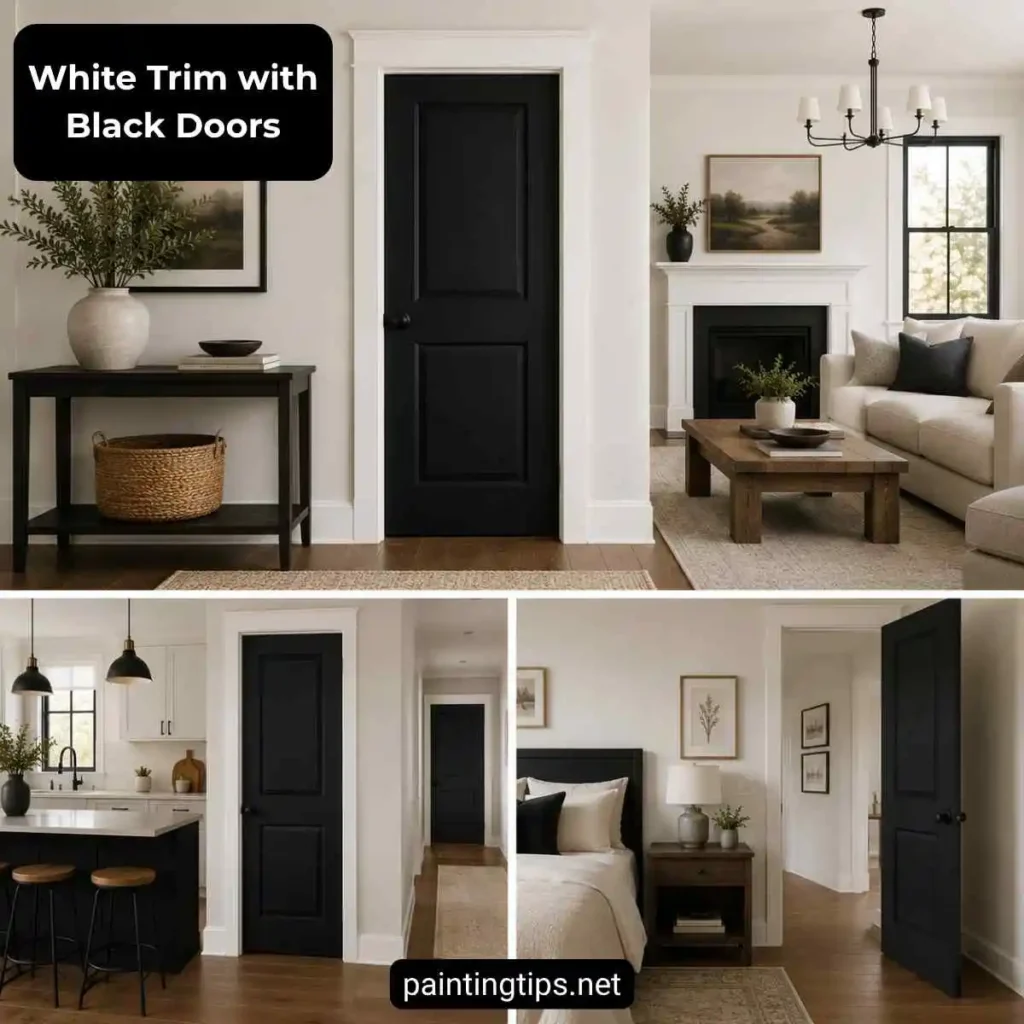
Part of the appeal is how versatile the combination is. In a farmhouse-style home, black doors read as a nod to old iron hardware and barn details. In a modern space, the same doors feel sleek and minimal. Traditional homes benefit too, since the contrast highlights crown molding, panel details, and trim profiles that might otherwise disappear into a single wall color.
The effect changes depending on what surrounds the doors. We’ve seen that homes leaning heavily on black, white, and off-white throughout their furniture and walls tend to feel curated rather than themed. Black doors work well as a repeating accent when paired with black light fixtures, black window frames, or black stair railings, since the eye starts to recognize a pattern rather than a one-off design choice.
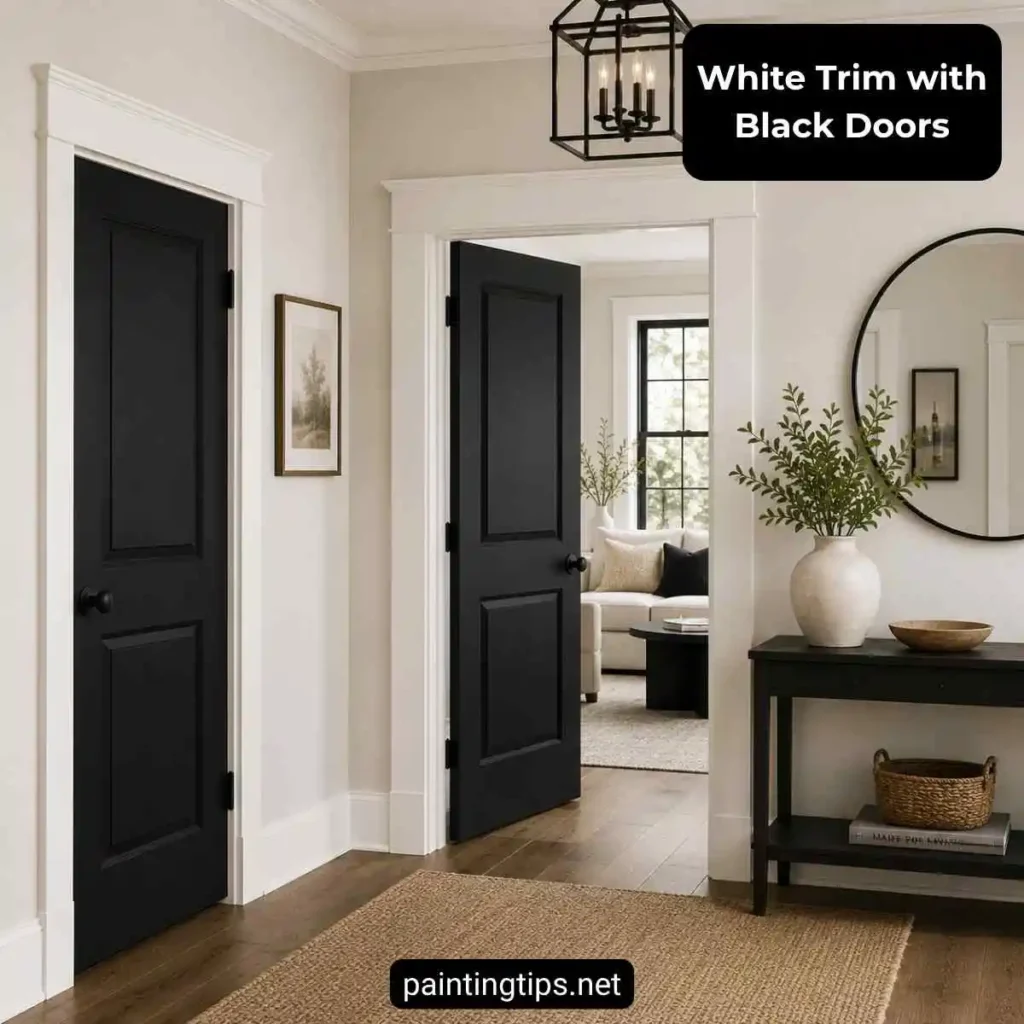
White or off-white walls give the black doors room to breathe, and off-white furniture, like a linen sofa or a cream area rug, softens the contrast so the space doesn’t feel stark or overly graphic.
A few things are worth paying attention to before painting. Rooms with limited natural light can feel smaller if too many elements go dark at once, so we usually recommend keeping walls and larger furniture pieces on the lighter side. Undertones matter as well, since a warm white trim next to a cool-toned black door can look slightly off in certain lighting. In our experience, testing samples side by side in the actual room, at different times of day, catches these mismatches before a full can of paint gets involved.
Best White Paint Colors for Black Interior Doors
Stark white isn’t the only option, and in many homes it isn’t even the best one. We’ve found that off-white paint colors often read as warmer and more livable next to black doors, especially in rooms with a lot of natural light where pure white can look almost blue or clinical by comparison. The shades below are a solid starting point, but if none of them feel quite right for your space, our full guide to off-white paint colors covers a much wider range worth exploring.
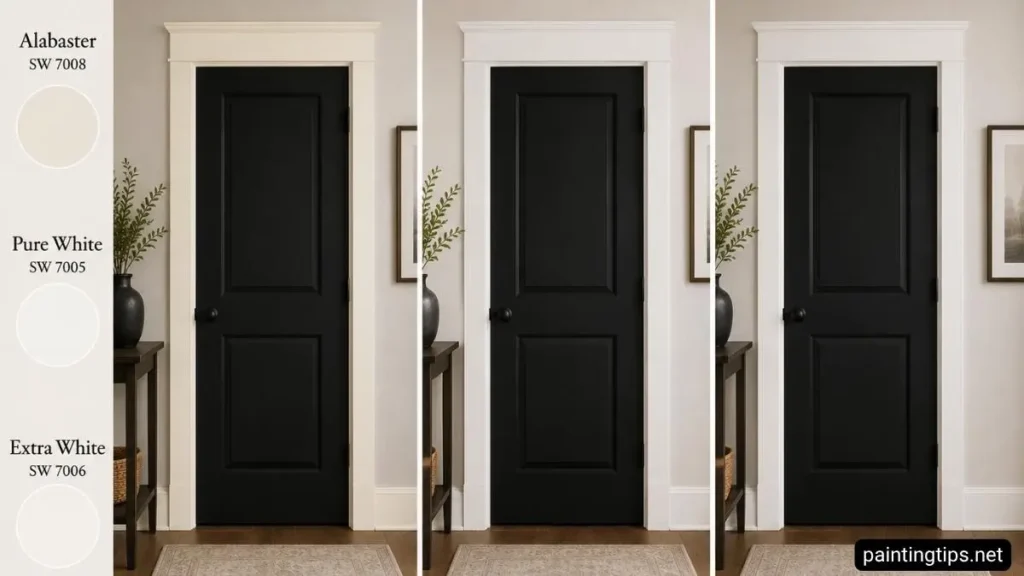
From Sherwin-Williams, Alabaster is a soft, warm off-white that has become a go-to trim color for exactly this kind of contrast, since it avoids the coldness of a true white while still reading as crisp against black. Pure White is another strong option from the same brand, offering a slightly cleaner, less yellow-toned alternative for homes with cooler color palettes.
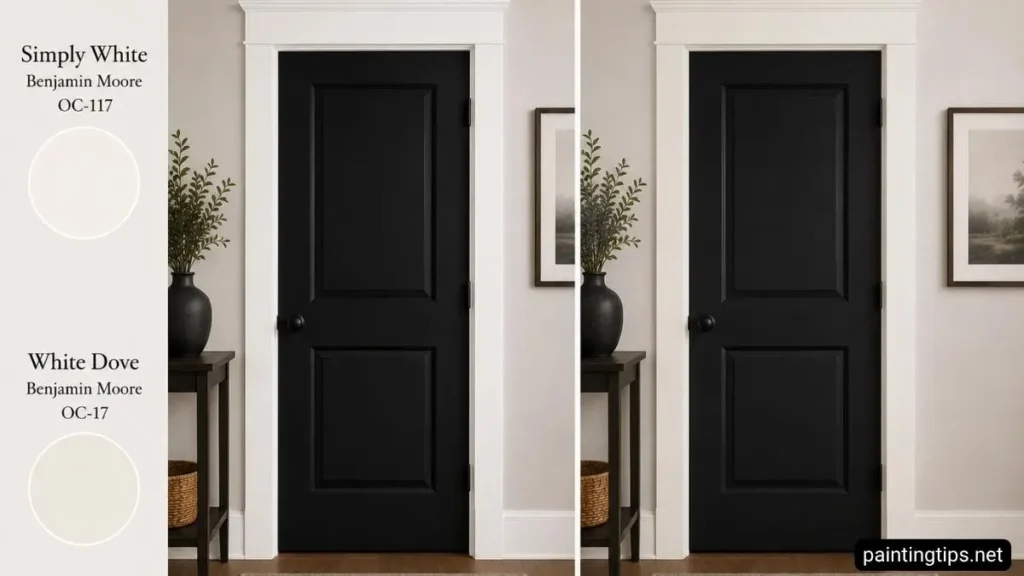
Benjamin Moore’s Simply White is a favorite for trim work because it stays neutral without leaning too warm or too cool, making it a safe pairing with almost any shade of black. White Dove is another popular choice, known for its soft, slightly warm character that works particularly well in traditional or transitional homes.
From Behr, Swiss Coffee brings a gentle cream undertone that pairs nicely with black doors in spaces with warmer wood tones or brass accents. White is Behr’s more neutral, straightforward off-white and works well as a dependable trim color when the goal is simplicity over character.
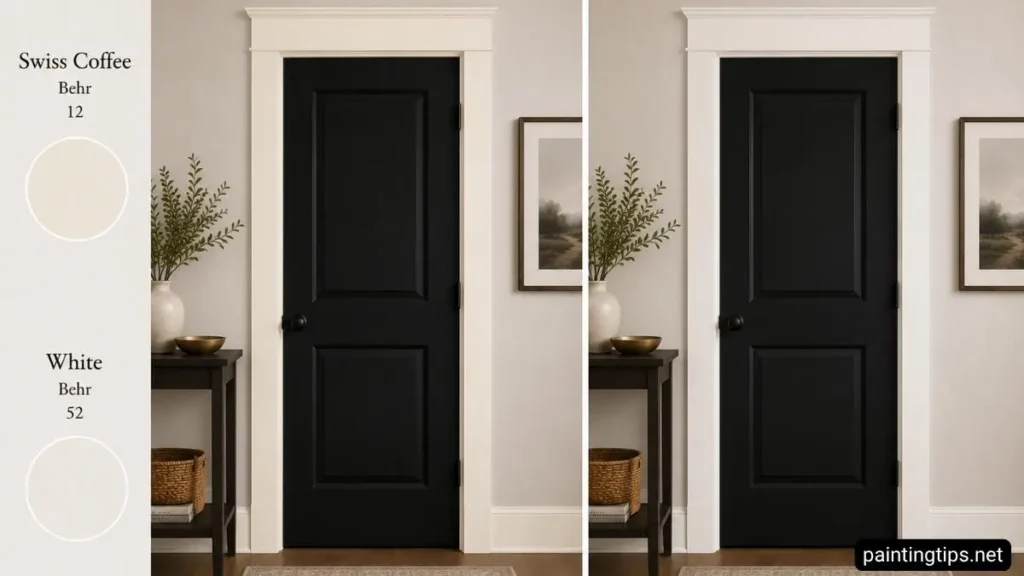
Choosing between these often comes down to the undertones already present in a room. We always suggest comparing a few samples against existing walls and flooring, rather than picking based on the name alone, since it makes a noticeable difference once the paint is actually on the wall.
Hardware and Finishing Touches
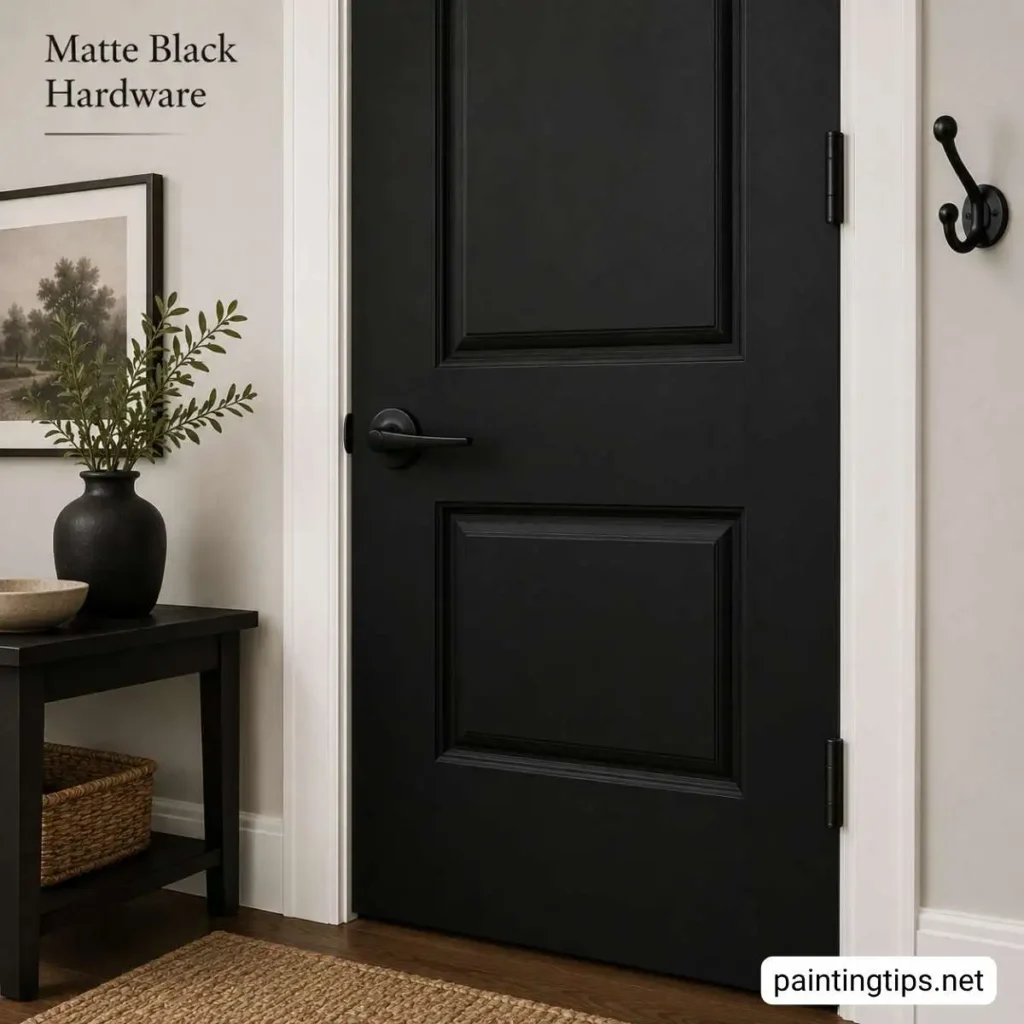
Hardware finish makes a bigger difference on black doors than on doors of almost any other color, since there’s no busy pattern or texture to distract from it. Matte black hardware is the most seamless option, allowing hinges, handles, and hooks to disappear into the door itself for a clean, monochromatic look.
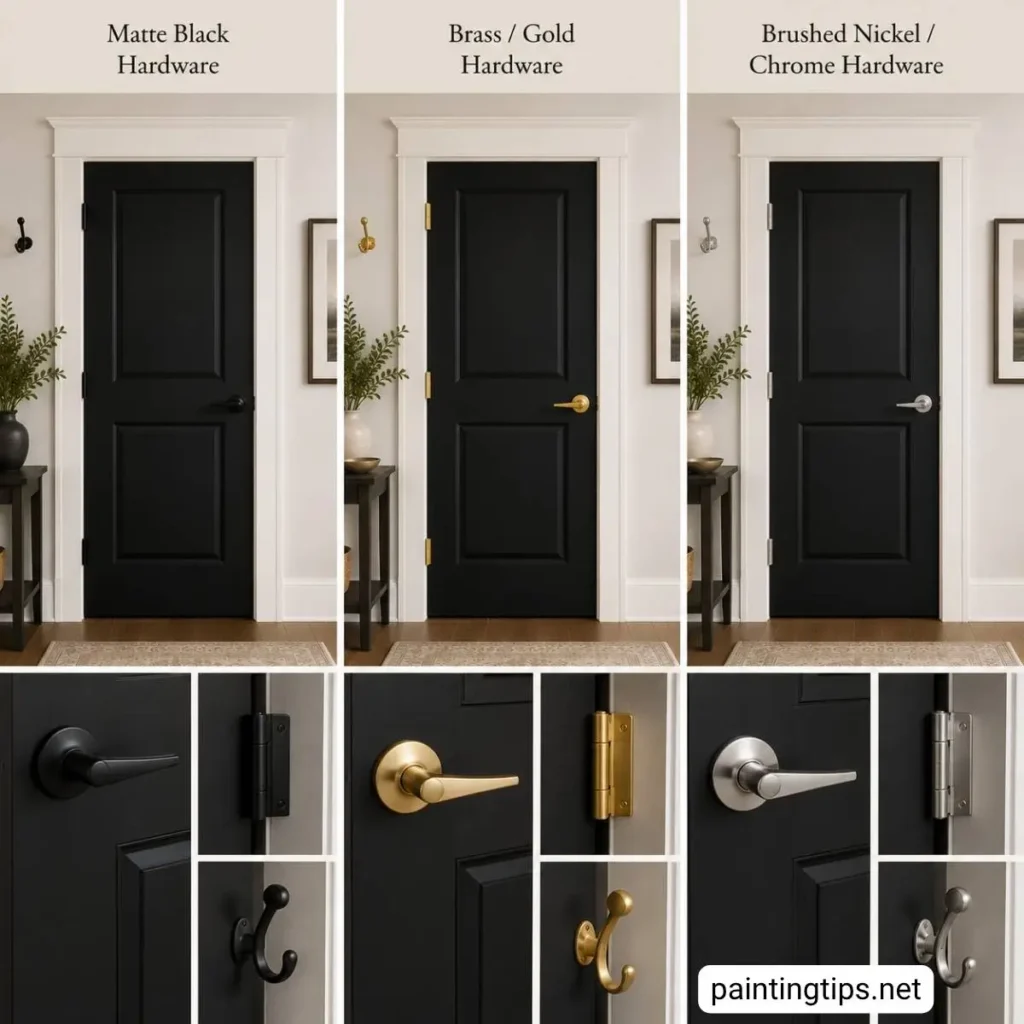
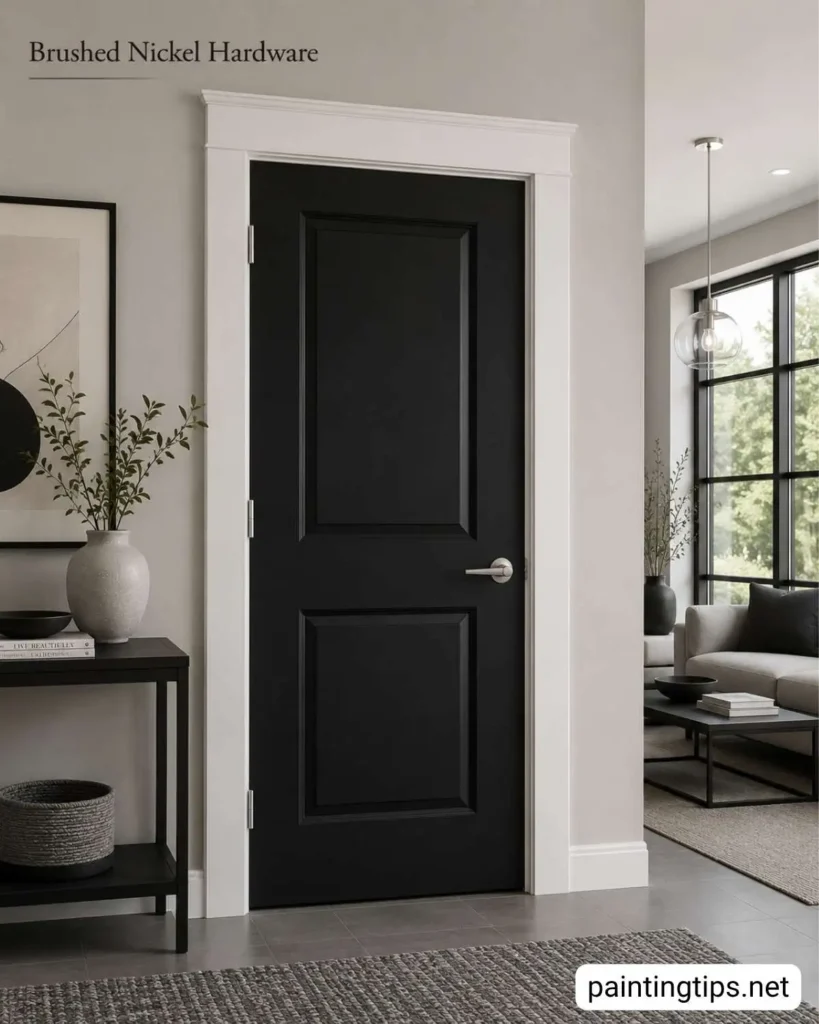
Brass or gold hardware creates a warmer, more traditional contrast and tends to stand out as a deliberate design statement rather than a background detail. Brushed nickel or chrome offers a cooler, more contemporary alternative, though it can visually compete with black more than brass does, so it works best in spaces with other cool-toned metals already present. If you already own hardware in a finish that doesn’t quite match your new door color, it’s worth knowing that can you paint cabinet hardware is a question with more flexibility than most people expect, and repainting existing pieces can save you from replacing them entirely.
Beyond hardware, the door frames themselves deserve attention. Since trim and door frames are painted separately from the door, getting a clean, sharp line between the white trim and black door is what makes the whole look feel intentional rather than sloppy. We walk through exactly how to get that line right in our guide to painting door frames, especially around corners and panel edges where paint tends to bleed.
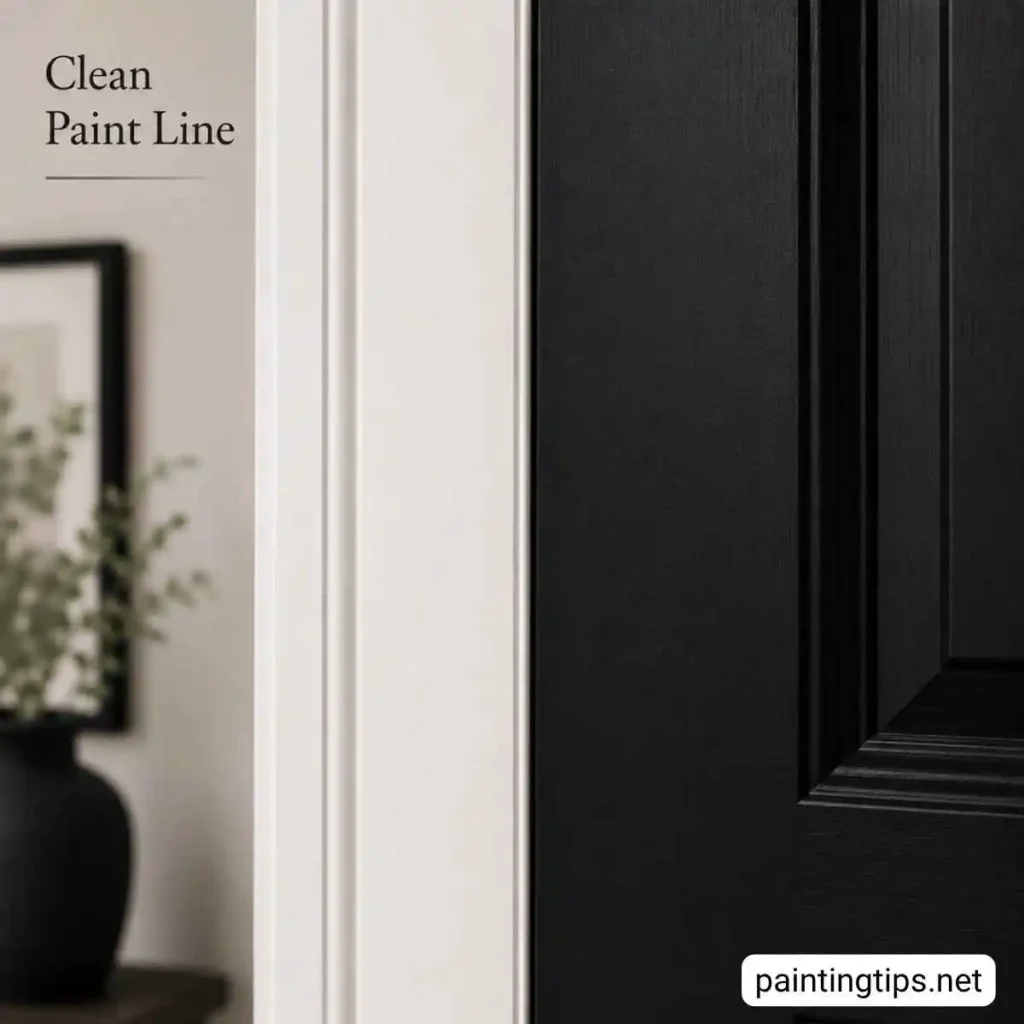
For anyone painting the doors themselves for the first time, we’ve put together a step-by-step resource on how to paint an interior door that covers prep work, priming, and drying times that make the difference between a professional-looking finish and visible brush marks.
Should Trim Be the Same Color as Doors?
Not necessarily, and in this case, definitely not. The entire appeal of black doors with white trim comes from the contrast between the two. Matching trim to the door color removes that definition and makes the doorway blend into the door itself, which flattens the visual impact. Contrast is the point here, not uniformity.
What Color Goes Well with a Black Door?
White and off-white trim are the most common choices, but black doors also pair well with soft greys, warm beiges, and deep navy walls depending on the mood of the room. Homes that prefer a cooler, more contemporary palette sometimes pair black doors with gray walls and white trim instead of an all-white backdrop, which softens the contrast slightly while keeping the same architectural effect. We cover that pairing in more detail in our piece on white trim gray walls, if a cooler look sounds like a better fit for your space.
Is White Trim Still Popular?
Yes, white trim remains one of the most popular choices in American homes, and it isn’t showing signs of going out of style. Its neutrality makes it easy to update wall colors down the road without having to repaint the trim, which is part of why it continues to outlast passing color trends.
What Colors Look Best with White Trim?
White trim is genuinely one of the most flexible design choices, since it works with nearly any wall color from soft pastels to deep, saturated tones like navy, forest green, or black. Black doors happen to be one of the more striking pairings, but white trim performs just as well against warm neutrals, muted blues, and even bold accent walls.
Black doors and white trim aren’t a passing trend so much as a pairing that keeps proving itself across different home styles and budgets. Whether you’re repainting a single hallway door or planning the look throughout your entire home, starting with the right white and a hardware finish that matches your space will carry the rest of the design. Once you’ve settled on your colors, our guides on painting door frames and how to paint an interior door will help you get a finish that looks like it was done by a professional.
