Kids and crayons are a combination that’s guaranteed to end up somewhere other than paper. If you’ve walked into a room to find your freshly painted walls turned into a canvas, you’re not alone — and the good news is that crayon marks are almost always removable without touching the paint underneath. We’ve dealt with this exact situation more times than we can count, and a few simple household products are usually all you need.
How Do You Get Crayon Off the Wall
Before you grab a sponge and start scrubbing, it’s worth taking a moment to assess what you’re working with. Not all walls and not all paints are the same, and charging in with the wrong product can leave you with a faded patch or a scuff that’s harder to fix than the original crayon mark.
First, identify your paint finish. Flat and matte paints are the most delicate — they scratch and absorb moisture easily, so harsh abrasives are off the table. Eggshell and satin finishes have a bit more durability and handle light scrubbing well. Semi-gloss and gloss paints are the most forgiving and can typically stand up to most of the methods below without any issues.
Second, test before you commit. Whatever method you choose, always try it on an inconspicuous spot — behind a door or near the baseboard — and let it dry fully before touching the visible area. What looks fine wet can sometimes reveal a dull patch once it dries.
Third, work gently. Crayon is a wax-based product, and the instinct to scrub hard usually makes things worse by spreading the crayon wax deeper into the paint surface. Light, controlled motions will get you further than brute force.
What Removes Pastel Crayons From the Wall?
Several common household products cut through crayon wax effectively: warm soapy water, baking soda paste, non-gel white toothpaste, and melamine foam erasers like Mr. Clean Magic Eraser are the most reliable starting points. For stubborn crayon marks on durable paint finishes, WD-40, mayonnaise, rubbing alcohol, and a dish soap and white vinegar solution can also break down the waxy residue without removing paint.
How to Remove Crayon From Wall Without Removing Paint
Getting crayon off the wall without removing paint comes down to two things: using the right product for your finish, and knowing what to avoid before you even pick up a cloth. A few products that seem like obvious choices can actually cause more damage than the crayon itself. Acetone and nail polish remover will strip paint on contact. Bleach-based cleaners can discolor paint and leave pale patches that are difficult to reverse.
Rough scrubbing pads or steel wool will physically abrade the finish, even on semi-gloss surfaces. Whitening toothpastes are too aggressive for most painted walls and can lift the finish along with the crayon. And never soak the wall with a dripping-wet cloth — excess moisture loosens the paint bond over time, especially on drywall. Always wring cloths out thoroughly before touching the wall.
The key to safe removal is using the gentlest effective method for your specific paint type, and never skipping the pre-test. Each method below is ordered from safest to slightly more aggressive, so start at the top and work your way down only if needed.
1-Warm, Soapy Water (Best for Fresh Marks)
This is always your first move, especially if the crayon marks are recent. Wet a soft cloth or sponge with warm — not hot — water and add a small drop of dish soap. Wring it out so it’s damp rather than dripping, then gently wipe the crayon in small circular motions. Once the mark is gone, go over the area with a clean damp cloth to pick up any soap residue, then pat dry with a soft towel right away.
Warm soapy water works best on fresh crayon marks that haven’t had time to set into the paint surface. It’s safe on virtually every finish, including flat paint, which makes it the right starting point no matter what. If the crayon mark has been on the wall for a while, you’ll likely need to move to one of the stronger options below.
2-Baking Soda Paste
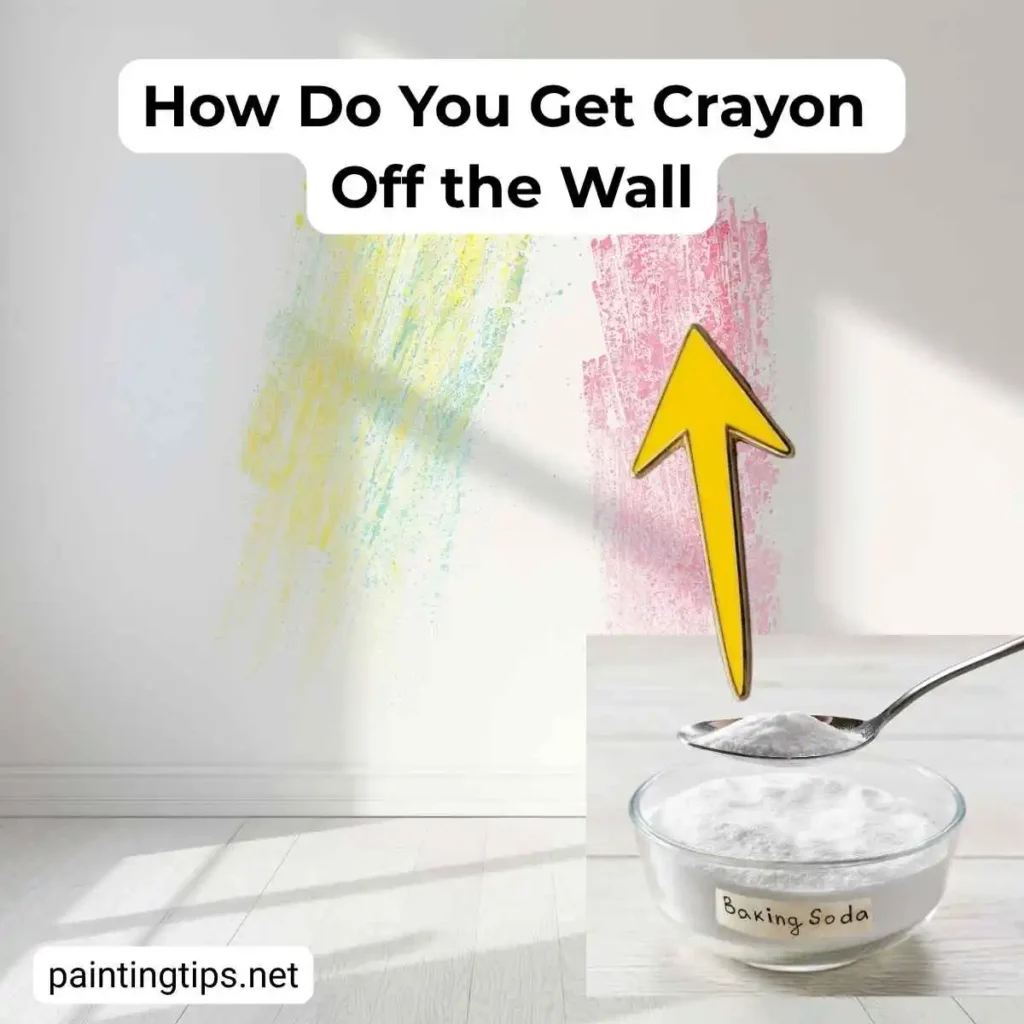
Mix two parts baking soda with one part water to form a thick paste — it should hold its shape without being crumbly. Apply a small amount to a damp cloth (not directly to the wall) and use light, circular motions over the crayon mark. Wipe clean with a damp cloth and dry the area thoroughly.
Baking soda is a mild abrasive, which means it physically lifts the crayon wax off the surface without the need for harsh chemicals. It’s effective on eggshell, satin, and semi-gloss finishes. We’d recommend skipping this one on flat or matte paint, though — even gentle abrasion can dull that finish if you’re not careful.
3-Non-Gel Toothpaste
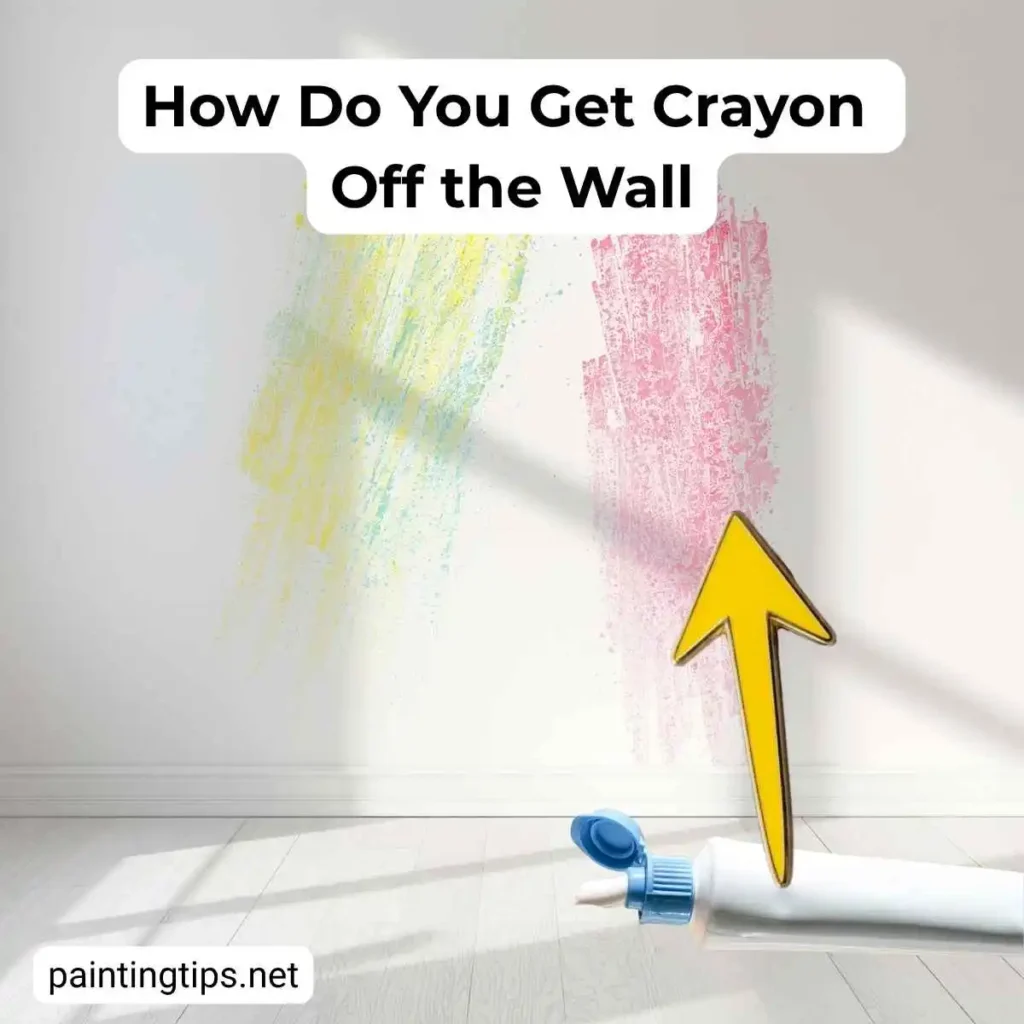
Toothpaste contains the same mild abrasive compounds found in baking soda, with the added bonus of being pre-mixed and easy to control. Apply a small pea-sized amount of plain white, non-gel toothpaste to a soft cloth or an old toothbrush and work it into the crayon mark using light circular strokes. Wipe off the residue with a damp cloth and dry the area.
The reason this works is the same reason it works on teeth: the fine abrasive particles break up and lift the waxy crayon deposit without cutting into the paint beneath. Make sure you’re using plain white toothpaste — gel formulas don’t contain the abrasive and won’t do anything useful, and whitening toothpastes can be too aggressive on painted surfaces.
4-Mr. Clean Magic Eraser
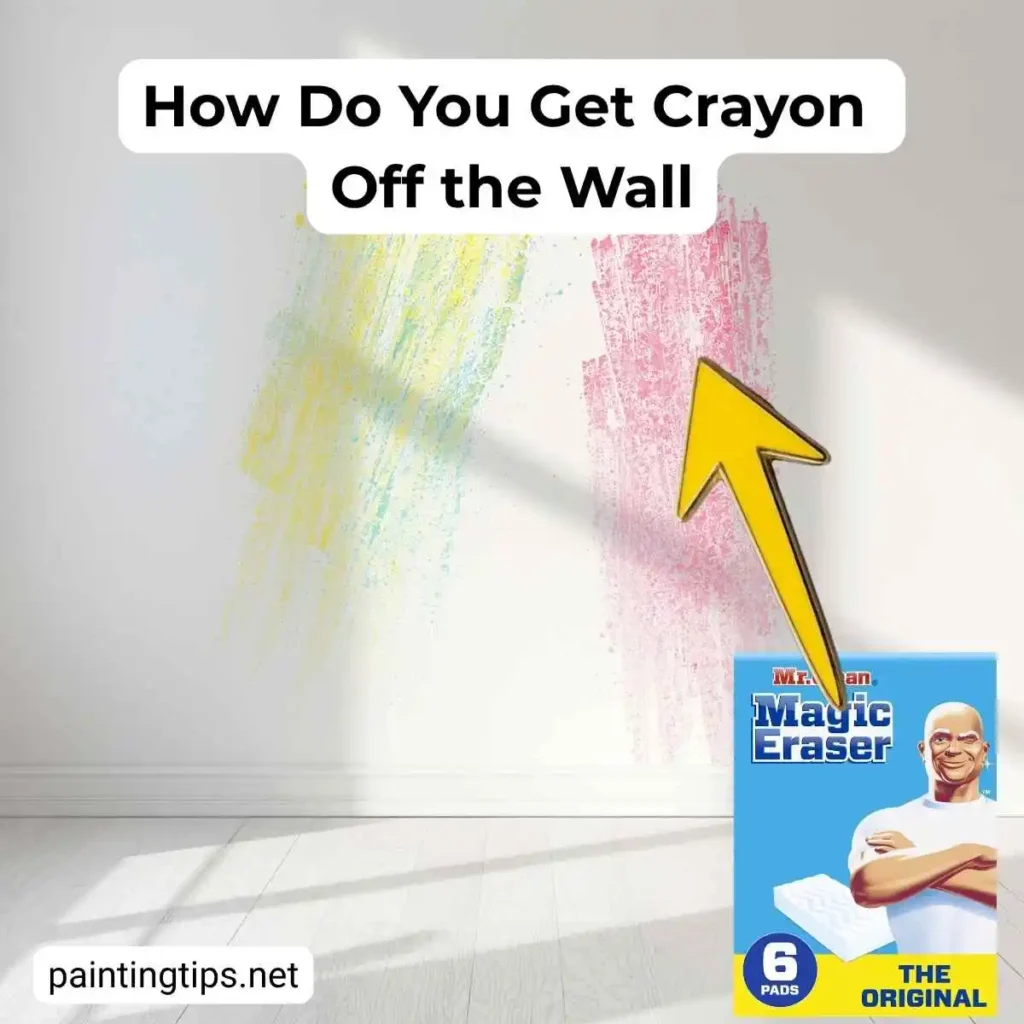
For crayon marks that haven’t responded to the gentler methods, a Magic Eraser is hard to beat. Wet it slightly, squeeze out the excess water, and rub the crayon mark with light, even pressure. The melamine foam breaks down crayon wax quickly and usually clears even old or heavily layered marks in a few passes.
It’s a fast and effective solution, but it comes with one important caveat: Magic Erasers are more abrasive than they look, and on flat or matte paint they can leave a dull, shiny patch where the surface has been slightly worn down. On semi-gloss or gloss finishes, this generally isn’t a problem. Keep the pressure light and move on once the crayon mark lifts — going back over the same spot repeatedly is where the paint finish starts to suffer.
5-WD-40
This one raised a few eyebrows when we first tried it, but the results were hard to argue with. Spray a small amount of WD-40 onto a clean cloth — never directly onto the wall — and gently rub the crayon mark. Let it sit for about 30 seconds to give the oil time to work into the crayon wax, then wipe clean. Follow up with warm soapy water to remove any oily residue, and dry the area completely.
What’s actually happening here is straightforward: WD-40 dissolves the wax binder that holds crayon pigment together, so the mark lifts off instead of smearing. It works especially well on semi-gloss and gloss finishes, and it’s particularly effective on dark or heavily layered crayon marks. Just don’t skip the soap-and-water cleanup afterward — an oily film left on the wall will attract dust and can cause problems if you ever repaint over the spot.
6-Mayonnaise
Yes, really. Bear with us on this one — mayonnaise was the last thing we expected to reach for on a job site, but the first time we tried it, it worked well enough that it’s stayed in our rotation ever since. The oil content in mayo does essentially the same job as WD-40, just at a gentler pace. Apply a small amount to the crayon mark with a soft cloth, let it sit for two to three minutes, then wipe it away and clean the area with warm soapy water. Dry the wall thoroughly when you’re done.
The sitting time is important here — don’t rush it. The oil needs a few minutes to break down the crayon wax before wiping, and skipping that wait means you’re just spreading the mark around. This method is a solid option for older crayon marks on eggshell or satin finishes where you want something milder than WD-40.
7-Rubbing Alcohol
Rubbing alcohol — isopropyl alcohol at 70% concentration or higher — is an underrated option for crayon marks on semi-gloss and gloss finishes. Dampen a cotton ball or soft cloth with rubbing alcohol and dab it onto the crayon mark, working from the outside edge inward. Let it sit for about 20 seconds, then wipe away with a clean damp cloth and dry the surface immediately.
The alcohol breaks down the pigment and wax components in the crayon without leaving any oily residue behind, which gives it an edge over WD-40 and mayonnaise when you want a clean finish with no follow-up step. That said, rubbing alcohol can dull flat and matte paints if left on too long or applied too aggressively — keep contact time short and pressure light. On eggshell finishes, test first; on semi-gloss and gloss, it’s one of the cleaner solutions in this list.
8-Dish Soap and Warm Water With White Vinegar
If plain soapy water isn’t quite cutting through an older crayon mark, adding a small splash of white vinegar to the mix gives it a bit more cleaning power without stepping up to an abrasive. Mix one cup of warm water with a few drops of dish soap and a tablespoon of white vinegar. Dampen a soft cloth with the solution, wring it out well, and work the crayon mark in small circular motions. Wipe clean with a plain damp cloth and dry thoroughly.
White vinegar is a mild acid that helps break down the waxy crayon residue and lift pigment from the paint surface, while the dish soap handles the degreasing. It’s safe on most finishes, including eggshell and satin, and sits comfortably between plain soapy water and the abrasive methods in terms of strength. It won’t tackle a thick, set-in crayon scribble on its own, but for lighter marks or as a second attempt before moving to baking soda or a Magic Eraser, it’s worth trying.
Crayon marks are rarely the only thing kids leave behind on walls. If pencil scribbles or pen ink are part of the picture too, we’ve covered both in detail — check out our guides on how to get pencil off wall and how to remove pen ink from wall for step-by-step solutions to each. For more wall and surface stain fixes, our Paint Removal category is a good place to browse.
