Acrylic paint is great for crafts and canvas, but it’s a nightmare when it lands on your favorite shirt. The trick isn’t some miracle product—it’s speed. If you get to it while it’s still wet, you’ve got a real shot; once it dries, it forms a plastic-like layer and the job gets a lot harder. Below are eight methods that actually work, using stuff you probably already have at home (plus a couple of stronger solvents for the stubborn cases). Always test on a hidden seam first, work in a ventilated area, and wash the garment right after you treat the stain.
How to Get Acrylic Paint Out of Clothes?

Acrylics are water-based, which makes them feel harmless at first, but that’s deceptive. As soon as the paint loses its water and starts to cure, the acrylic polymers link up and form a flexible plastic film that clings to fabric fibers. That’s why a fresh splatter will rinse out with a bit of soap, while a stain you discover the next morning acts like it’s been glued on.
The real difference is timing. If the paint is still wet, you can usually flush most of it out with lukewarm water and a little dish soap before it bonds. If it’s already dried, you’re no longer “washing” so much as breaking that plastic layer back down—so you need alcohol or a stronger solvent to soften it, then you wash. Either way, test whatever you’re using on an inside seam first; some dyes and synthetics (rayon, acetate, modacrylic) don’t play well with acetone or lacquer thinner, and it’s better to find that out on a hidden spot than on the front of your shirt.
If a lot of paint hit the fabric, don’t rub right away. Scrape off the excess with a spoon or the dull edge of a knife so you’re not pushing more pigment into the weave. From there, work from the gentlest option (soap, alcohol, hand sanitizer) up to the stronger stuff only if you have to, and finish with a regular wash. Don’t put the garment in the dryer until you’re sure the mark is gone—heat will set any leftover residue and make it permanent.
All the methods you need to get acrylic paint out of clothes are right here—start with the gentlest option that fits your fabric, work your way up only if you have to, and finish with a proper wash. If you act quickly and test first, even dried splatters don’t have to be permanent.
1-Dish Soap, Bar Soap And Water
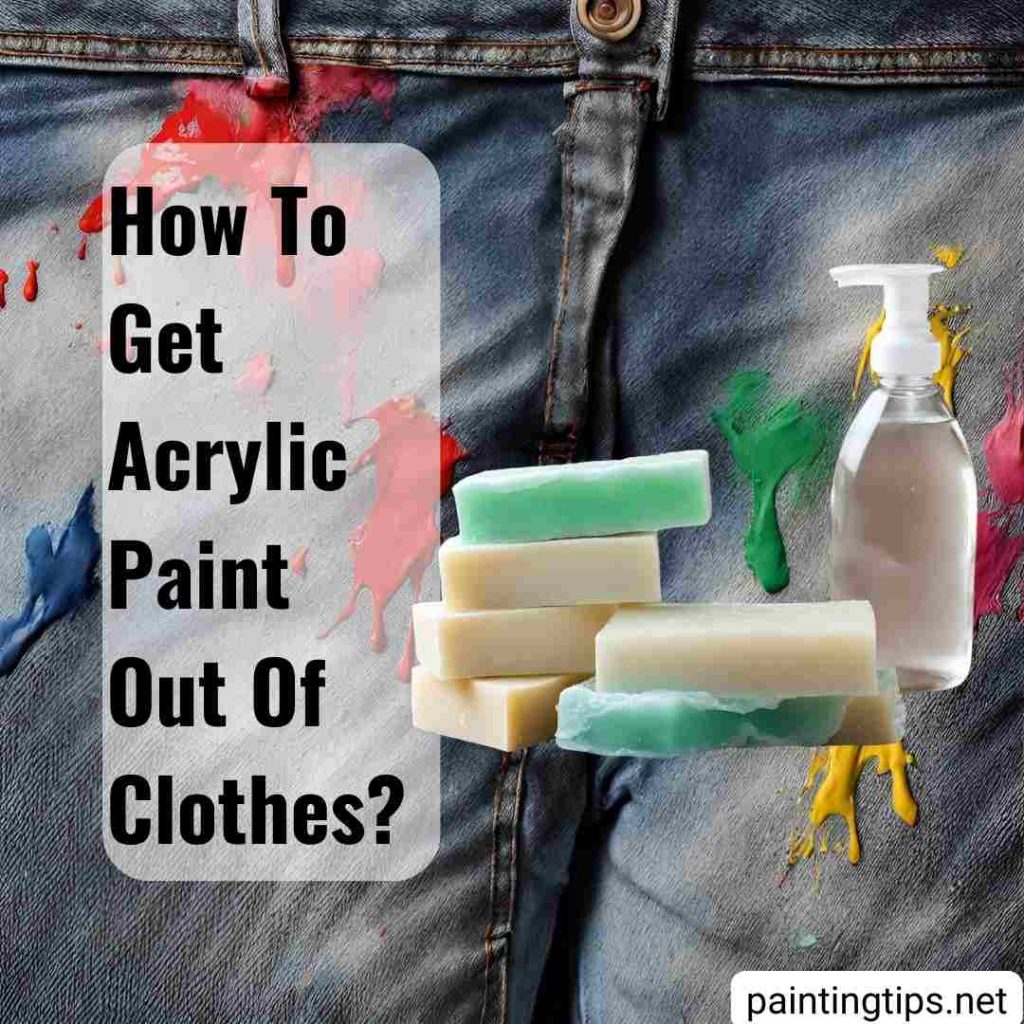
Best for fresh, still-wet paint and delicate fabrics. Wet the stained area with lukewarm water, work a few drops of dish soap (or rub a bar of plain soap) into the spot, and gently scrub with your fingers or a soft cloth. Rinse thoroughly. This works best before the paint starts to form a skin.
2-Ethyl (Rubbing) Alcohol
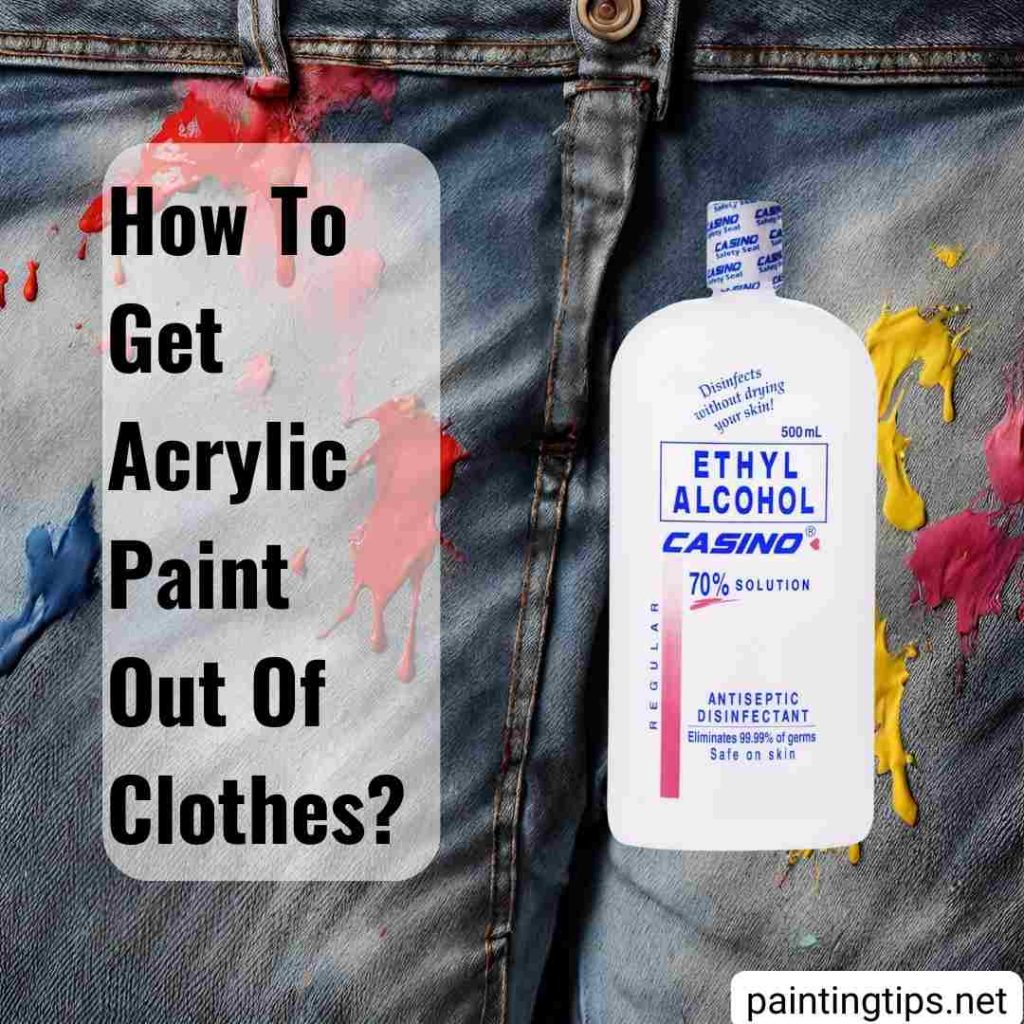
Good choice for wet or recently dried spots on cotton and polyester blends. Put a few drops of rubbing alcohol directly on the stain, let it sit 2–3 minutes to soften the paint, then blot and rub gently with a clean cloth. Skip this on acetate or triacetate—those fibers can break down.
3-Hair Spray (Alcohol-Based)
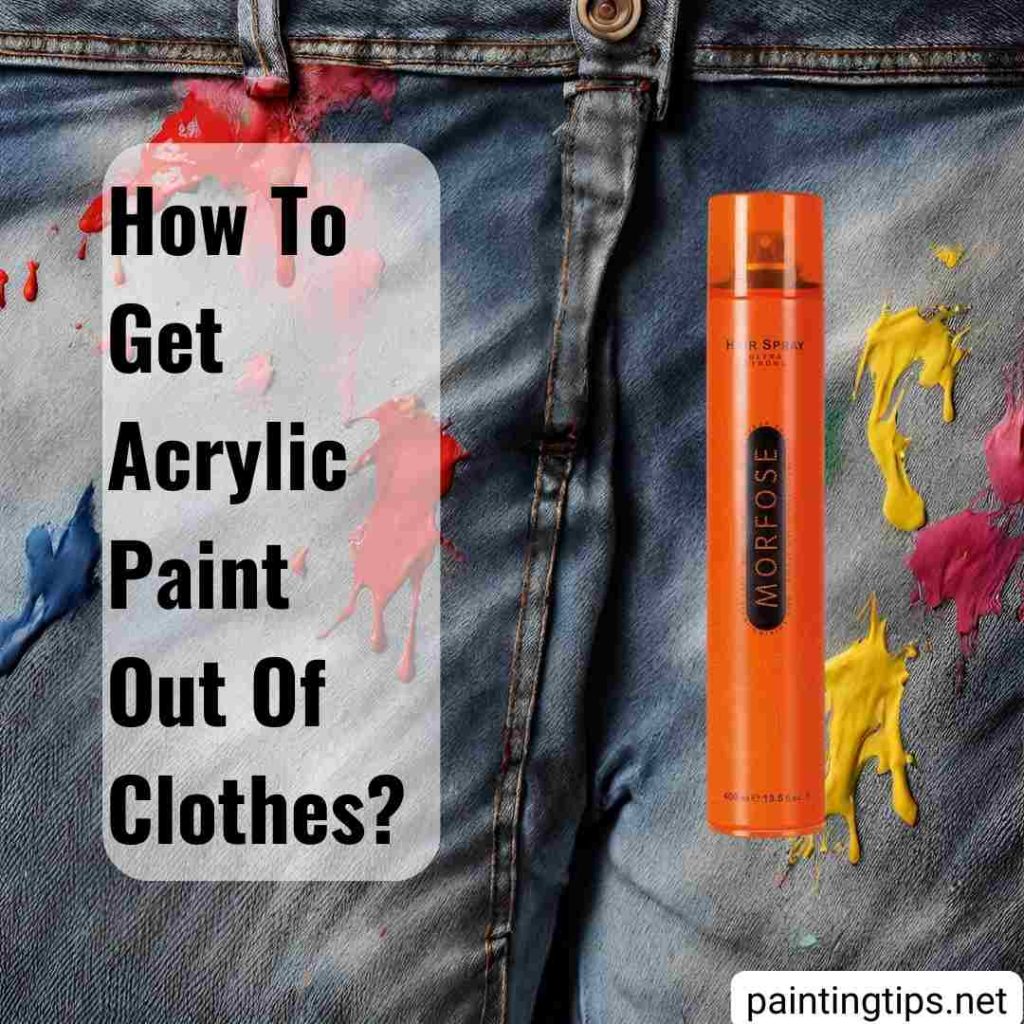
Use this for small splatters when you don’t have straight alcohol handy. Older, alcohol-heavy formulas work because the alcohol breaks down the acrylic. Spray until the area is damp, wait about a minute, then blot and rub with a cloth. If your hair spray is labeled “alcohol-free,” use rubbing alcohol instead.
4-Cologne
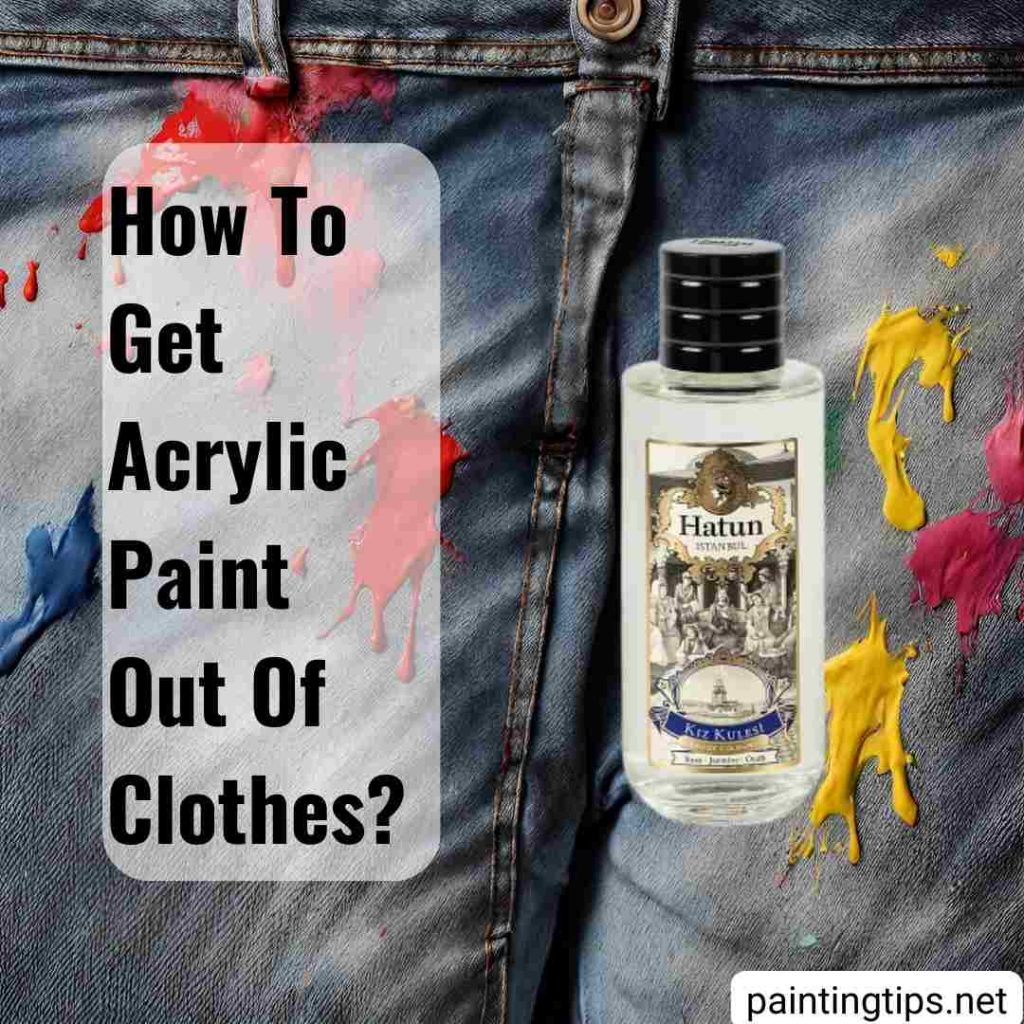
Works well on tiny, fresh spots on light-colored fabric. Dab some onto a clean cloth (don’t pour directly on the garment), then rub the stain in small circles. It’s weaker than straight alcohol, so it only helps with small marks, and the fragrance/dyes can leave a faint ring on dark fabrics—test first.
5-General-Purpose Spray Stain Remover
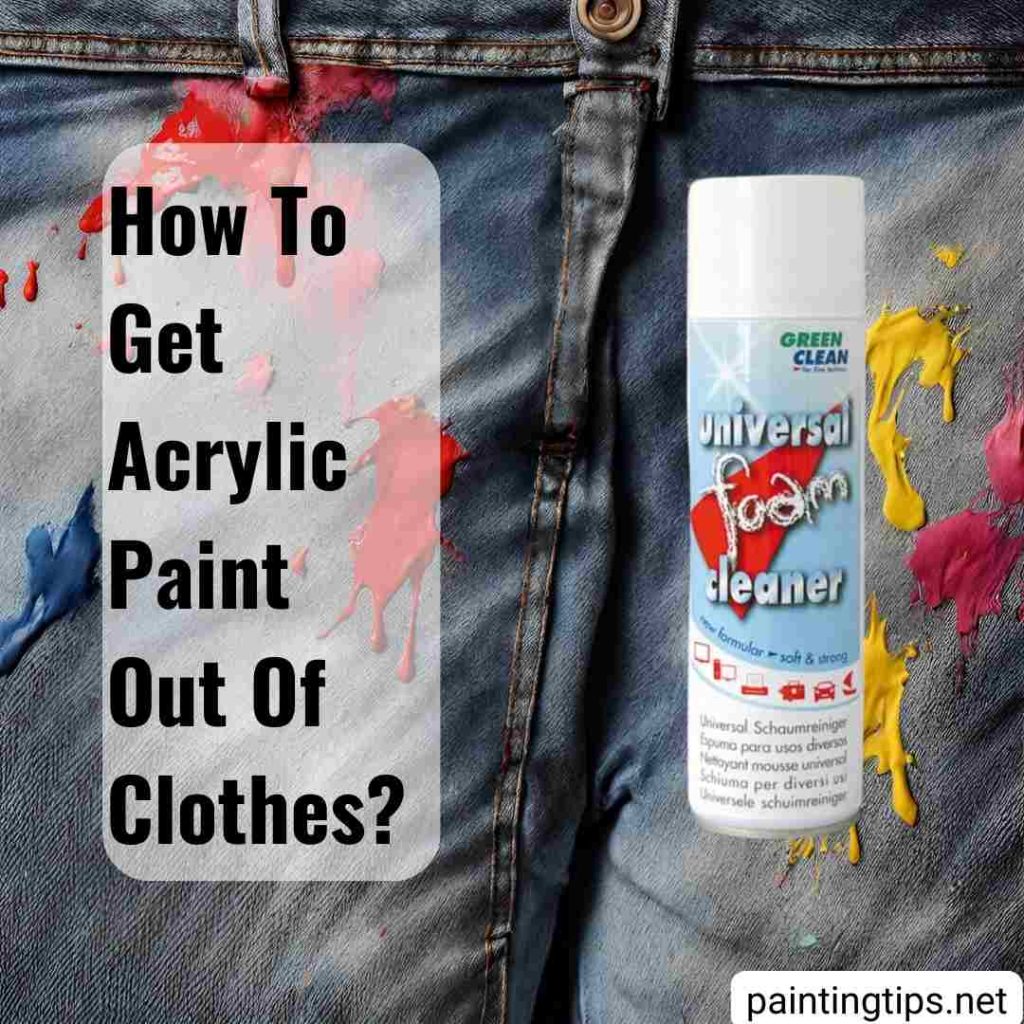
Best for dried-in splatters on durable items like T-shirts, jeans, and canvas. Most sprays contain alcohol and surfactants, which help penetrate the stain. Saturate the spot, let it sit 5–10 minutes, then wipe with a cloth. Avoid delicate silks without a patch test.
6-Acetone (Nail Polish Remover)
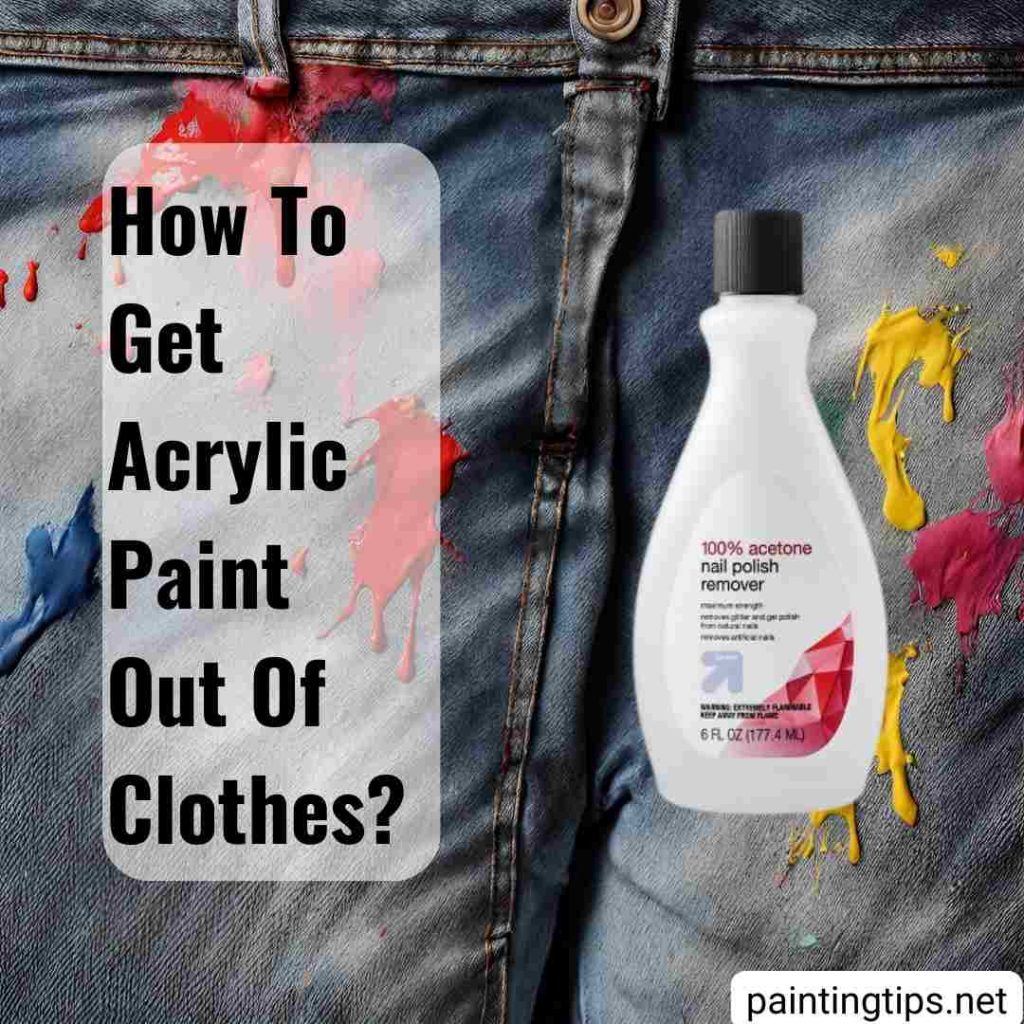
Best for tough, dried paint on sturdy fabrics like denim or heavy cotton. Dampen a cloth or cotton pad with acetone and dab (don’t soak) the stain, working from the outside in. Wear gloves and work in a ventilated area. Keep it away from synthetics like rayon, acetate, or modacrylic—acetone can dissolve those fibers.
4-Synthetic Thinner
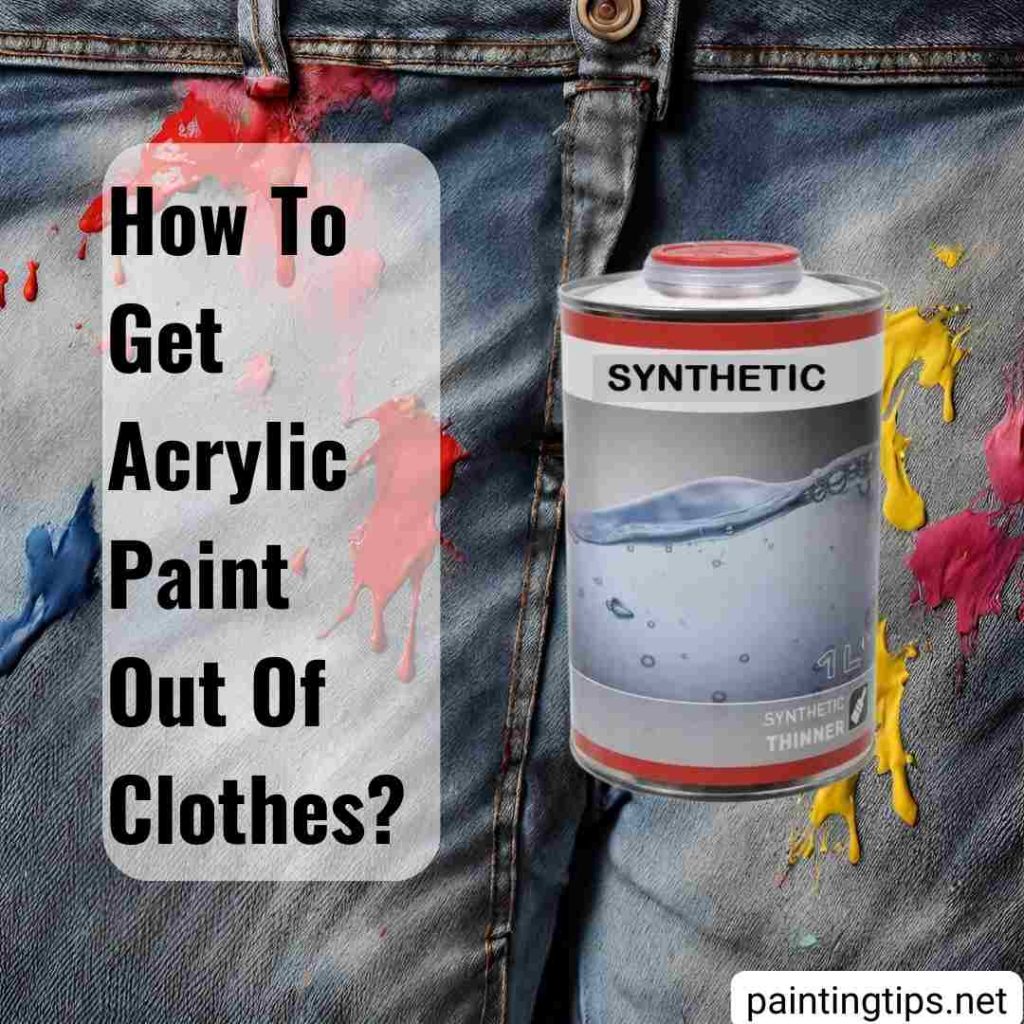
Best for set-in paint on fabrics where acetone is too harsh. Synthetic thinner is actually made for thinning oil-based paints, but it’s less aggressive than lacquer thinner and does a good job of softening dried acrylic without attacking the fibers as quickly. Dampen a clean cloth with a small amount, then press and rub the stain in gentle circular motions; you’ll see the paint start to loosen. Do a hidden-spot test first—some dyes will bleed, and ventilation (plus gloves) is still a good idea. “Related article: How to use enamel paint?”
5-Cellulosic (Lacquer) Thinner
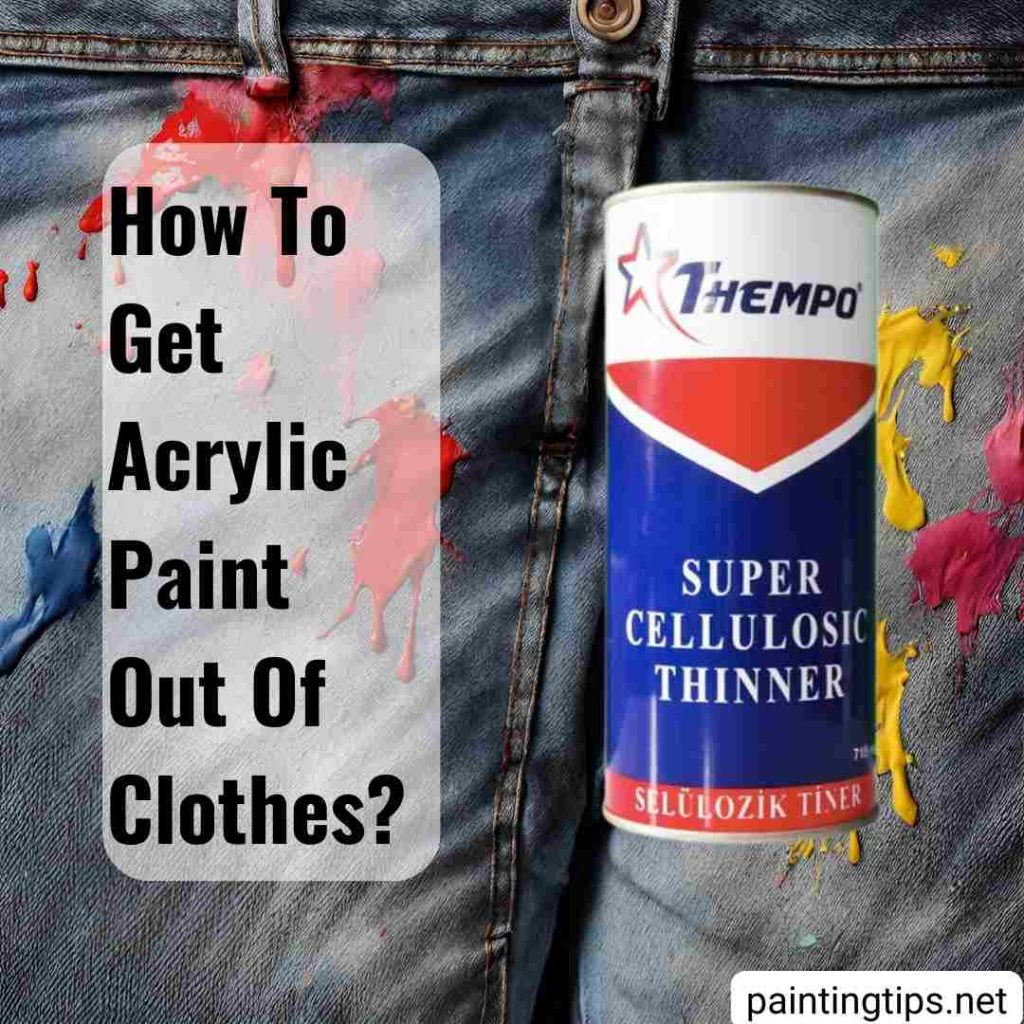
Best as a last resort on tough fabrics when everything else failed. Dampen a cloth, work the stain in small circles, and stop as soon as the paint lifts, then wash the garment. It can damage fibers and strip color, so use it sparingly, with gloves, and in a well-ventilated space.
Quick tips: Scrape off excess paint with a dull knife or spoon before you start. Treat wet paint if you can. After any method, run a regular wash cycle (check the care label). Don’t tumble-dry until you’re sure the stain is gone—heat can set any leftover residue.
Quick Tips That Make a Difference
- If a lot of paint spilled, scrape off the excess with a dull knife or a spoon before you start.
- Treat the stain while it’s still wet if you can; dried paint is much harder to lift.
- After any treatment, run the garment through a regular wash cycle (check the care label for temperature). Don’t tumble-dry until you’re sure the stain is gone; heat can set any leftover residue.
- Patch-test every product on an inside seam first. If the fabric changes color or texture, stop and pick a gentler method.
FAQ
How do you get dried acrylic paint out of fabric?
Scrape off the surface layer, then apply a strong solvent—acetone for sturdy cotton or denim; synthetic or lacquer thinner for more delicate cases. Let it soften the paint (2–5 min), blot and rub gently, then wash. It may take two rounds.
Will acrylic paint wash off clothes?
Wet paint often does with soap and water. Once it dries and cures into plastic, normal washing won’t remove it—you need alcohol or a solvent first.
What removes acrylic paint?
Fresh: dish soap and water. Dried: rubbing alcohol, alcohol-based hair spray, acetone, synthetic thinner, or lacquer thinner. Always patch-test.
Can hand sanitizer remove acrylic paint from clothes?
Yes if it’s alcohol-based (60%+ alcohol). Work a small amount into the spot, let it sit a minute, then blot and rub. It’s similar to using rubbing alcohol.
Is acrylic paint on clothes permanent?
Not necessarily. If you treat it quickly, it’s removable. If it dries and cures (especially after heat or time), it can become permanent on many fabrics.
Will dried acrylic paint come out in the wash?
No—regular laundry won’t lift cured acrylic. You need to pre-treat with alcohol or a solvent before washing.
