Agreeable Gray is one of the most popular greige paint colors from Sherwin-Williams, but the trim color you pair with it plays a critical role in the final result. Trim can make Agreeable Gray feel brighter, warmer, more modern, or more defined depending on the level of contrast. In this guide, we compare the most effective trim colors using real interior examples, including white, off-white, charcoal, navy blue, bronze, cream, and light gray.
What Is the Best Trim Color for Agreeable Gray?

Choosing the best trim color for Agreeable Gray depends on the level of contrast and overall mood you want to create. Because Agreeable Gray has balanced warm and cool undertones, it works well with both crisp whites and deeper accent trims. The trim color can make the walls feel brighter and cleaner or create a more defined and dramatic appearance.
White and off-white trim colors are the most common choices because they keep the look timeless and balanced. However, darker trim colors can add depth and highlight architectural details more strongly. The right option depends on whether you want a soft transition or a more noticeable frame around the walls.
Agreeable Gray and White Trim
White trim brings clarity to Agreeable Gray and helps define its true character. Because Agreeable Gray sits in the middle of warm and cool tones, white trim creates gentle separation and prevents the wall color from looking flat. This contrast makes architectural details appear sharper while keeping the overall look calm and balanced rather than dramatic.
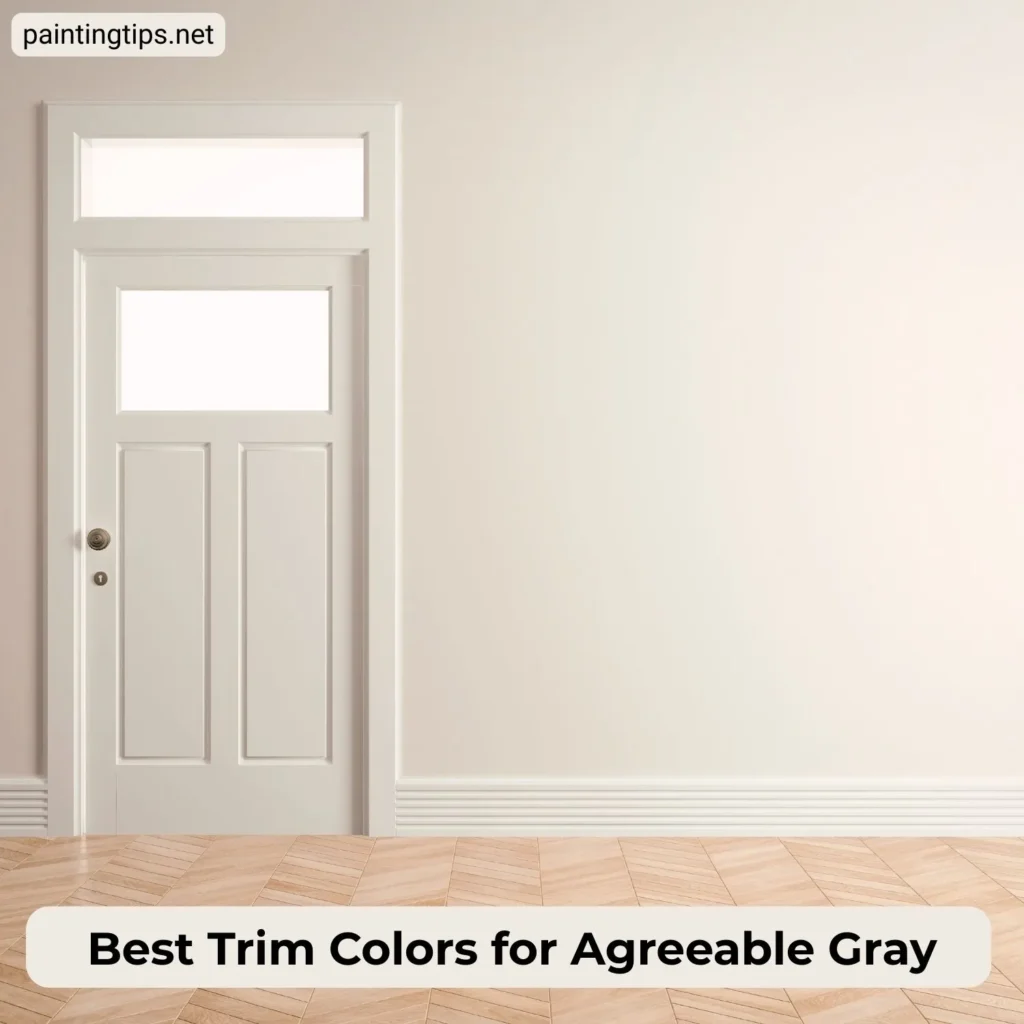
This pairing also increases the sense of brightness in the room. White trim reflects more light than darker trim colors, which makes Agreeable Gray feel slightly lighter and fresher on the wall. The result is a clean and timeless appearance that works well in both modern and classic interiors. For this reason, neutral whites frequently recommended by Sherwin-Williams are often used to achieve a consistent and natural transition.
Agreeable Gray and Off-White Trim
Off-white trim creates a softer and more relaxed transition than pure white, which works beautifully with Agreeable Gray’s warm greige base. This combination feels warmer, more inviting, and less contrast-heavy, making it ideal for cozy living rooms, bedrooms, and traditional interiors. Off-white trim also prevents the space from feeling too sharp or clinical while still providing enough separation to define trim details. Recommended off-white trim colors:
- Shoji White (SW 7042)
- White Duck (SW 7010)
- Natural Choice (SW 7011)
- Creamy (SW 7012)
- Alabaster (SW 7008)
“You can explore more options in our Best Off-White Paint Colors by Top Brands guide.”

Agreeable Gray and Black Trim
Black trim creates one of the boldest and most defined contrasts possible with Agreeable Gray. Because Agreeable Gray sits in the mid-tone range, black provides a strong visual boundary that immediately highlights trim elements. This makes baseboards, doors, and window frames stand out with clarity and precision.

Another effect of Agreeable Gray and black trim is the sense of structure it brings to a space. Black trim acts like a visual frame, organizing the room and emphasizing architectural details. This combination works especially well in modern interiors where strong contrast is part of the design.
Agreeable Gray and Charcoal Trim
Charcoal trim offers a softer alternative to black while still providing noticeable contrast. This deep gray tone separates trim from the wall without feeling overly sharp. As a result, architectural details become more visible while maintaining a cohesive and balanced look.

Agreeable gray and charcoal trim works especially well because both colors share neutral undertones. This creates contrast without visual conflict. Popular examples include Iron Ore and Peppercorn, which are often used when a modern but balanced finish is desired.
Agreeable Gray and Navy Blue Trim
Navy blue trim introduces contrast while adding richness and depth. Unlike black, navy feels slightly softer, which makes the contrast appear more refined. This allows trim to stand out while keeping the overall design balanced.

Agreeable gray and navy trim also enhances the visual depth of the room. Navy adds color variation while still maintaining harmony with Agreeable Gray. Shades such as Naval and In the Navy are commonly used to create a designer-inspired look.
Agreeable Gray and Bronze Trim
Bronze trim creates a warm and grounded contrast that complements Agreeable Gray’s beige undertones. This makes trim feel integrated rather than sharply separated. The result is a rich and intentional appearance.

Agreeable gray and bronze trim also adds visual weight, which helps anchor the walls. Colors such as Urbane Bronze are frequently used in modern farmhouse and luxury interiors where warmth and contrast are both important.
Agreeable Gray and Light Gray Trim
Light gray trim creates a subtle, tonal contrast that feels smooth and understated. Instead of sharply outlining the walls, it produces a softer transition that keeps the overall palette cohesive.
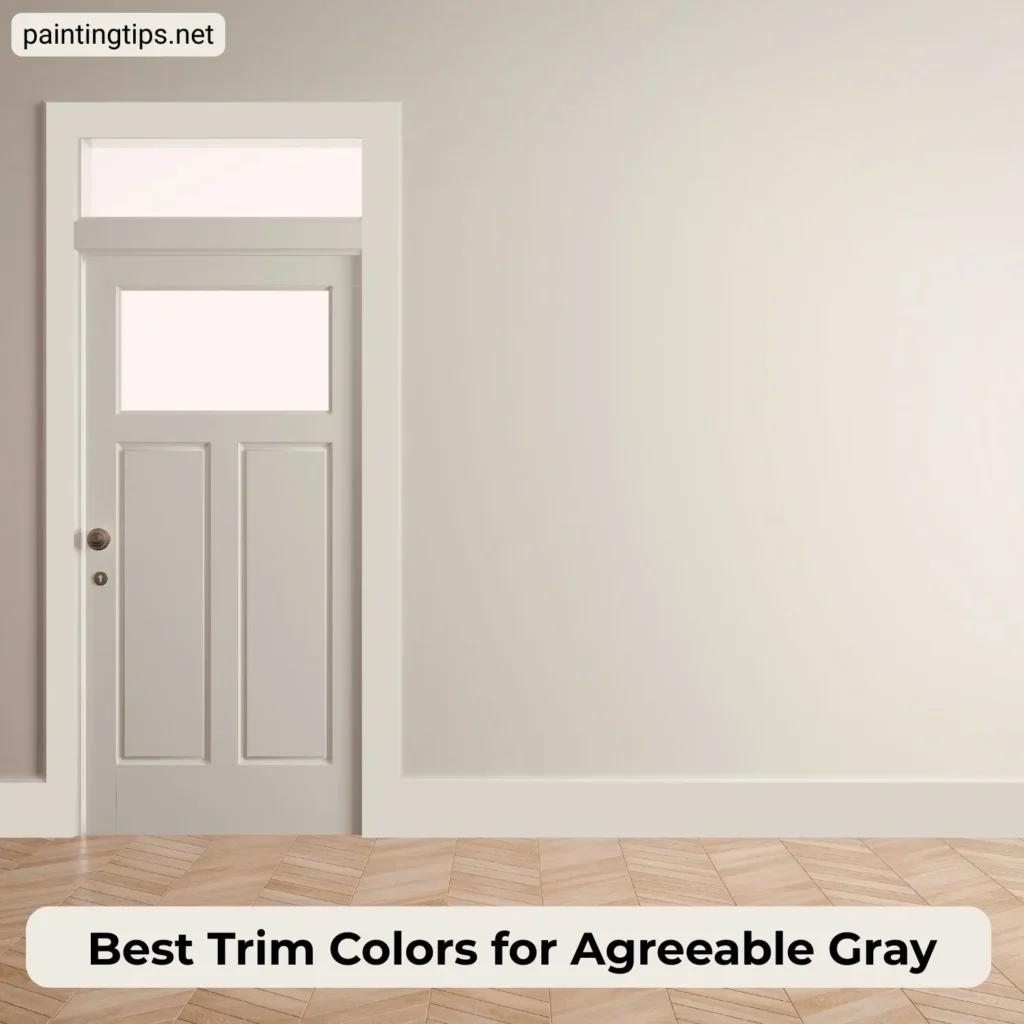
Agreeable gray and light gray trim works especially well in minimalist interiors. Colors such as Repose Gray and Mindful Gray provide enough variation to define trim while maintaining a calm and modern appearance.
Agreeable Gray and Cream Trim
Cream trim creates a softer and more traditional transition, but shade selection is critical. Lighter cream tones can blend too closely with Agreeable Gray, reducing contrast and making trim less noticeable.

Darker cream shades perform better because they provide more separation. Colors like Creamy and Steamed Milk create a warmer outline while still maintaining harmony. However, cream trim works best in traditional interiors rather than modern spaces.
Colors to Avoid with Agreeable Gray Trim
Very yellow cream tones should be avoided because they can make Agreeable Gray appear muddy. Dark cream tones may also make trim look aged rather than clean. Trim colors that are too close in tone often reduce definition, which weakens the overall effect.
Professional Interior Designer Recommendation
Interior designers most often recommend white trim with Agreeable Gray because it creates the clearest and most balanced contrast. This combination keeps the wall color neutral and prevents it from appearing too warm or too dull.
For more modern interiors, darker trim colors such as black or charcoal are frequently used to create stronger definition. These options highlight architectural details and add visual depth.
Softer alternatives like light gray provide contrast while maintaining a subtle and cohesive look. Cream and beige trim, on the other hand, are typically reserved for traditional interiors where a warmer and less defined transition is preferred.
Because lighting conditions can significantly affect how Agreeable Gray appears, testing trim samples in the actual room is always recommended before making a final decision. If you want to explore similar shades, our light grey paint colors guide includes options that work in a similar way.
