If you rent, hate patching holes, or have a wall with orange peel, knockdown or heavy stucco that makes tape and strips fall off, this guide is for you. We cover how to hang pictures on textured walls without nails, the methods that actually hold, a few extra ways to hang things without drilling, and honest answers about adhesive strips, double-sided tape, and hooks that don’t require drilling holes in the wall.
How to Hang Pictures on Textured Walls Without Nail
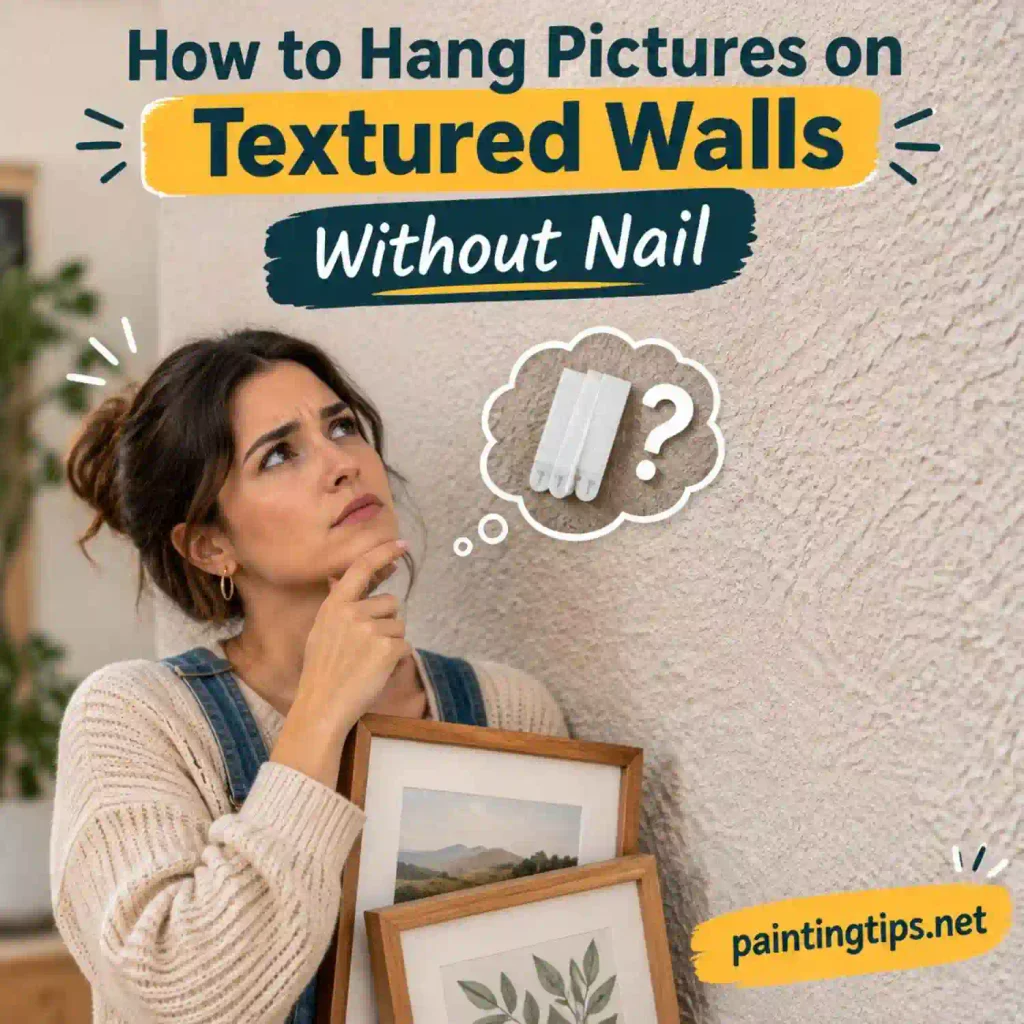
Adhesives need a smooth surface, and a textured wall gives tape, strips and stick-on hooks only a few tiny contact points. On flat paint they can also pull the finish off when you remove them. So the dependable way to hang pictures on a textured wall without nails is to let something other than the wall carry the weight: the floor, the ceiling, a piece of furniture or a freestanding panel.
If the texture itself is the real problem and you’re thinking about getting rid of it first, we recommend reading our guide on sanding textured walls before painting. Otherwise, here are the methods we trust.
1. Floor-to-Ceiling Tension Hanging System
A tension pole runs from floor to ceiling and stays put by pressure alone, so the wall never gets involved. Adjustable arms or hooks on the pole hold your pictures, and you can slide the whole thing across the room when you rearrange. It’s a handy way to hang things in a rental, where tape and nails are off the table.
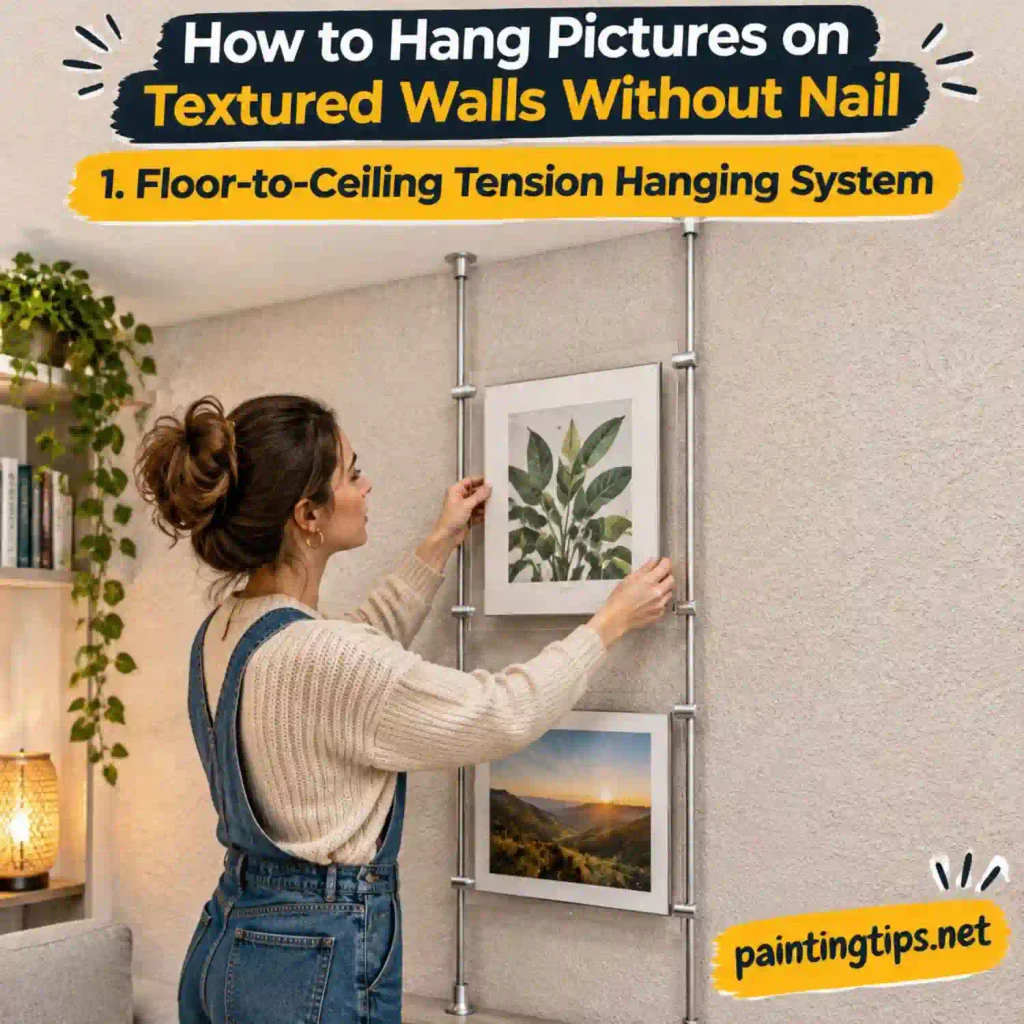
The top pad needs a solid, reasonably flat spot on the ceiling. If you have a popcorn ceiling, we suggest reading how to cover up popcorn ceiling first, because a bumpy ceiling makes the pole less stable, and a flat board under the cap helps. Check the weight limit on the product too.
2. Leaning Art on a Console, Dresser or Shelf
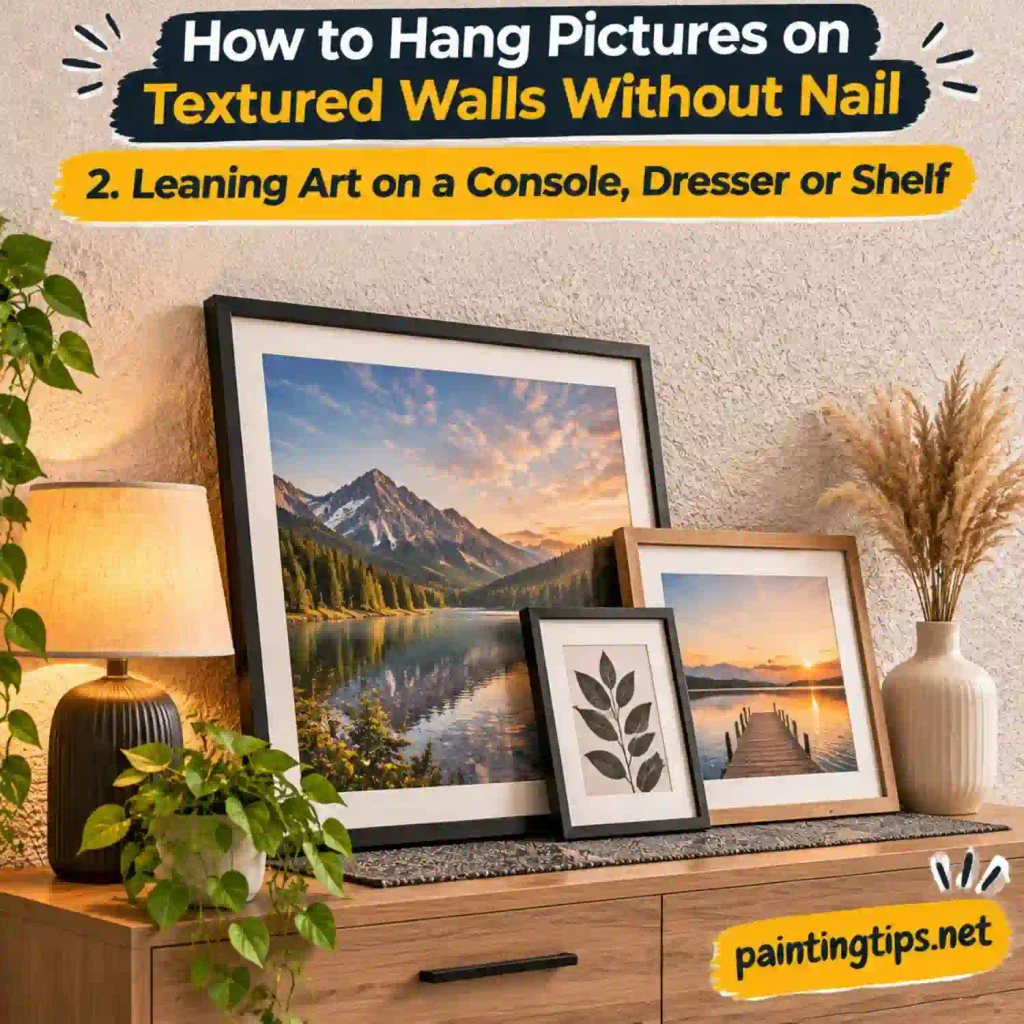
The simplest option is to skip hanging altogether. Stand the picture on a console, dresser, sideboard or low bookcase and lean it back against the wall: no tape, no tools, no marks. A thin non-slip pad under the bottom edge keeps it from creeping, and a big frame at the back with smaller ones in front gives the arrangement some depth. Keep it away from spots where kids or pets could knock it over.
3. Floor Easel or Freestanding Picture Stand
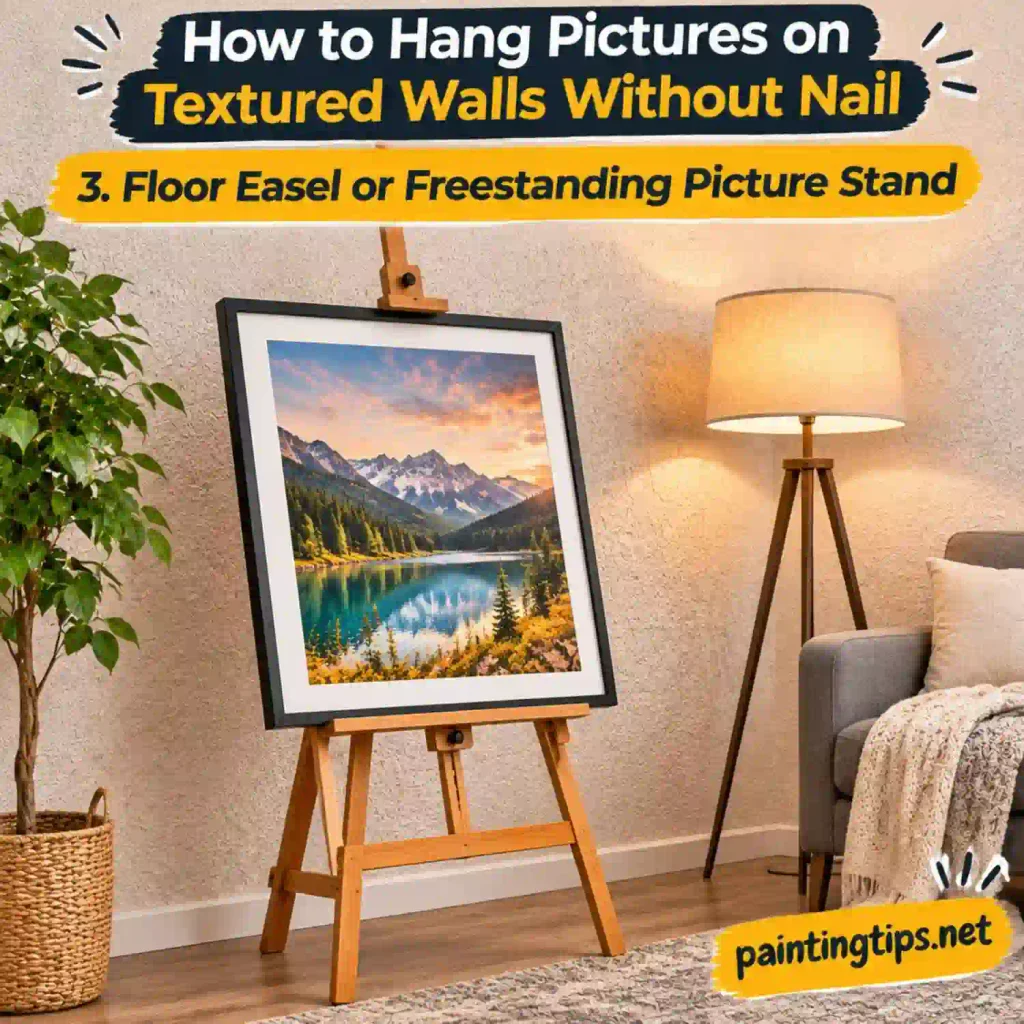
Large canvases are the hardest pictures to hang on texture, and an easel sidesteps the problem because the floor carries the weight. A wooden tripod or a metal stand both work. Pick one with a wide, stable base before you think about looks, and check that its rated height and weight cover your piece.
4. Ceiling-Mounted Picture Rail or Hanging Track
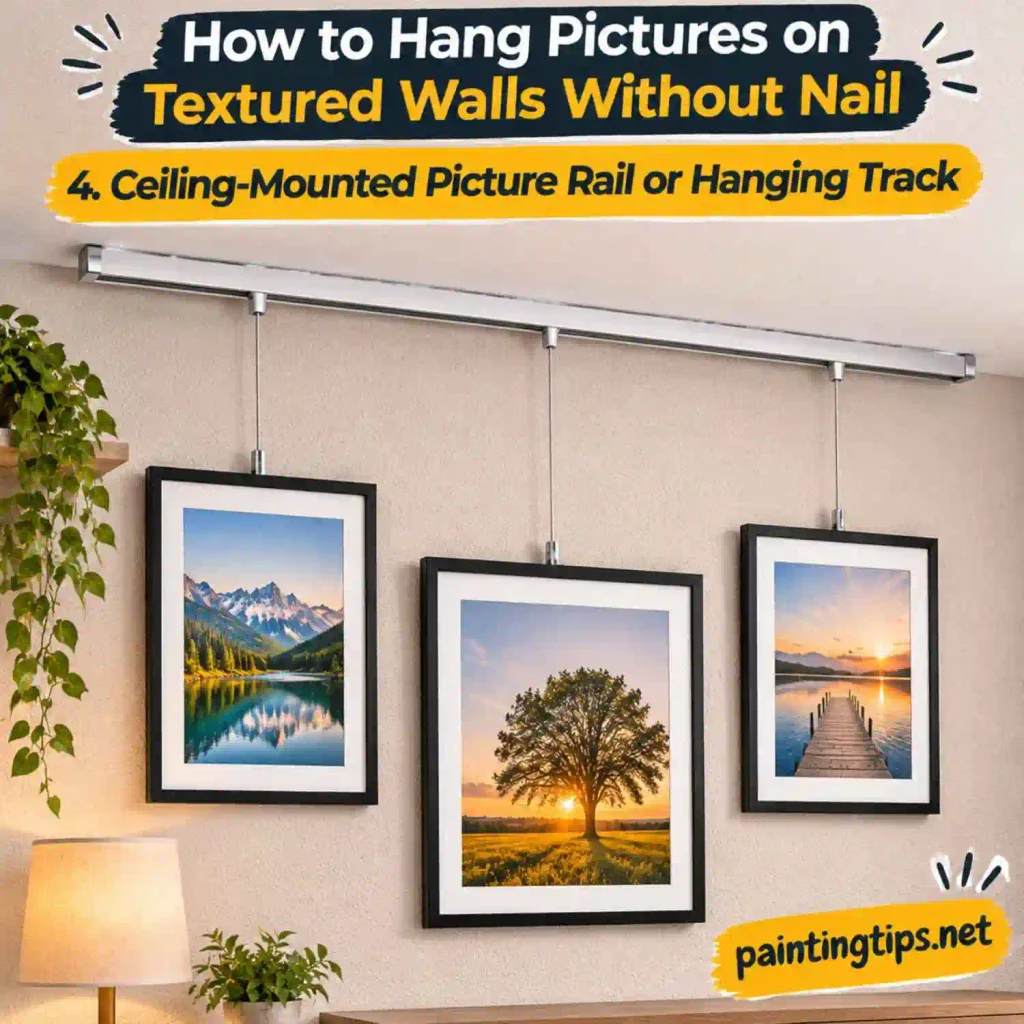
This is the gallery setup: a rail along the ceiling with cables or cords dropping down and a hook on each one. You can hang several pictures at different heights and move any of them in seconds. The rail does screw into a joist or ceiling anchors, so it’s nail-free for the wall but not for the ceiling. We’d only use it in a home you own or with your landlord’s permission.
The ceiling needs to be flat where the rail mounts. If a textured ceiling is in the way, read how to remove textured ceilings before you install anything.
5. Freestanding Decorative Panel or Display Board
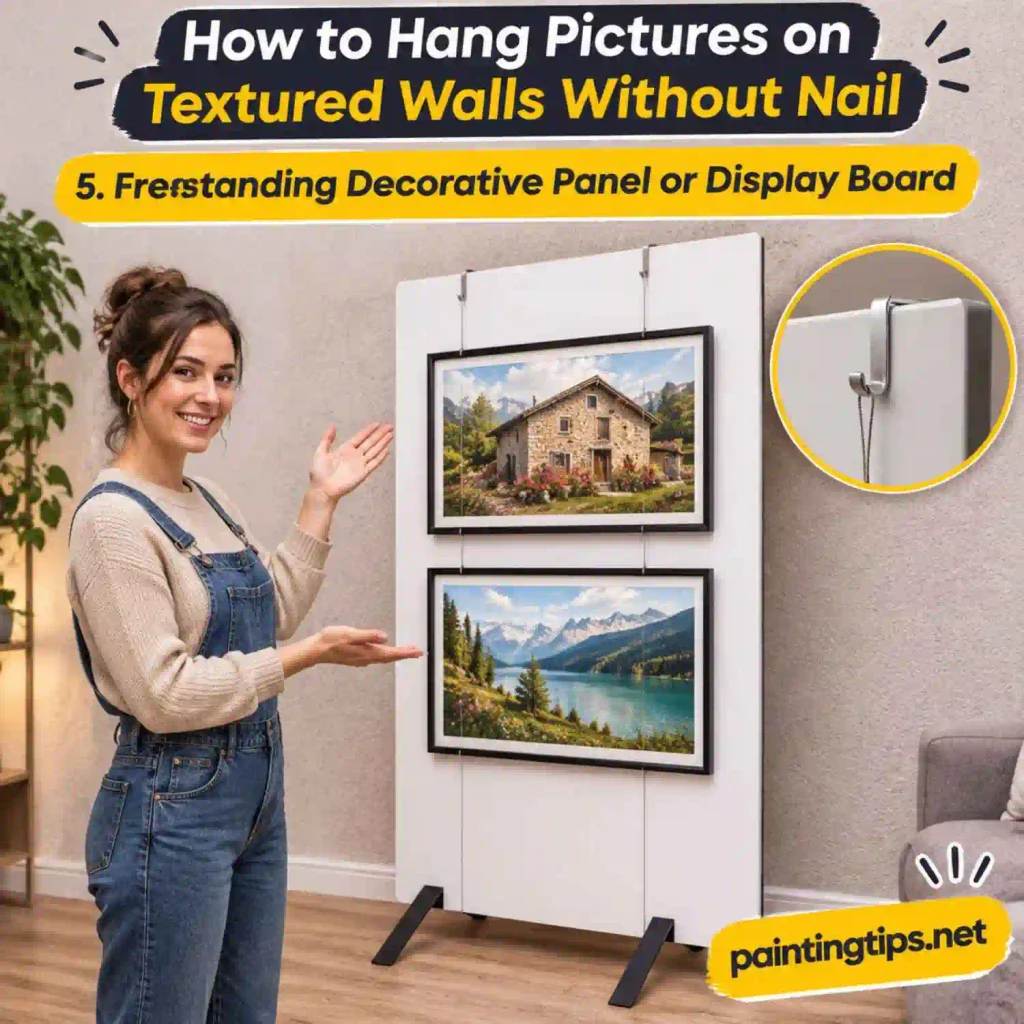
The texture is the problem, so cover it with something smooth. A wooden or metal panel in front of the wall gives you a flat surface, and regular hooks, clips and hangers work on it just as they would on any smooth wall. Lean the panel against the wall or stand it on legs. Painted wood, pegboard, cork and metal grid panels all work, and you can finish the panel to match your room.
6. Picture Rail Molding and Molding Hooks
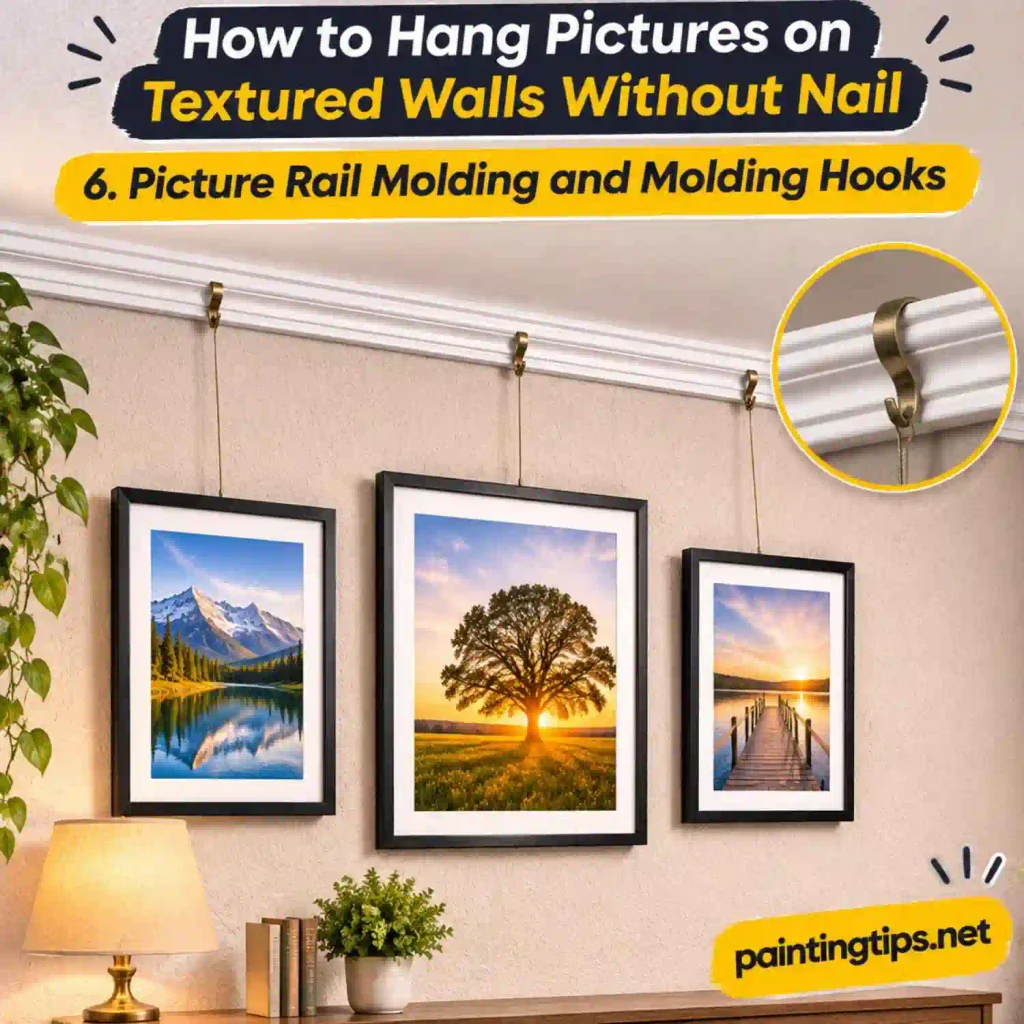
If your home already has picture rail, hooks that slip over the top of the rail let a cord or wire drop down to each picture, and nothing touches the textured wall. Crown molding can work too if the hooks fit over it and it’s firmly attached. Either way, the molding carries all the weight, so skip this method if it’s loose or you’re not sure what’s behind it.
7. Decorative Ladder as a Display
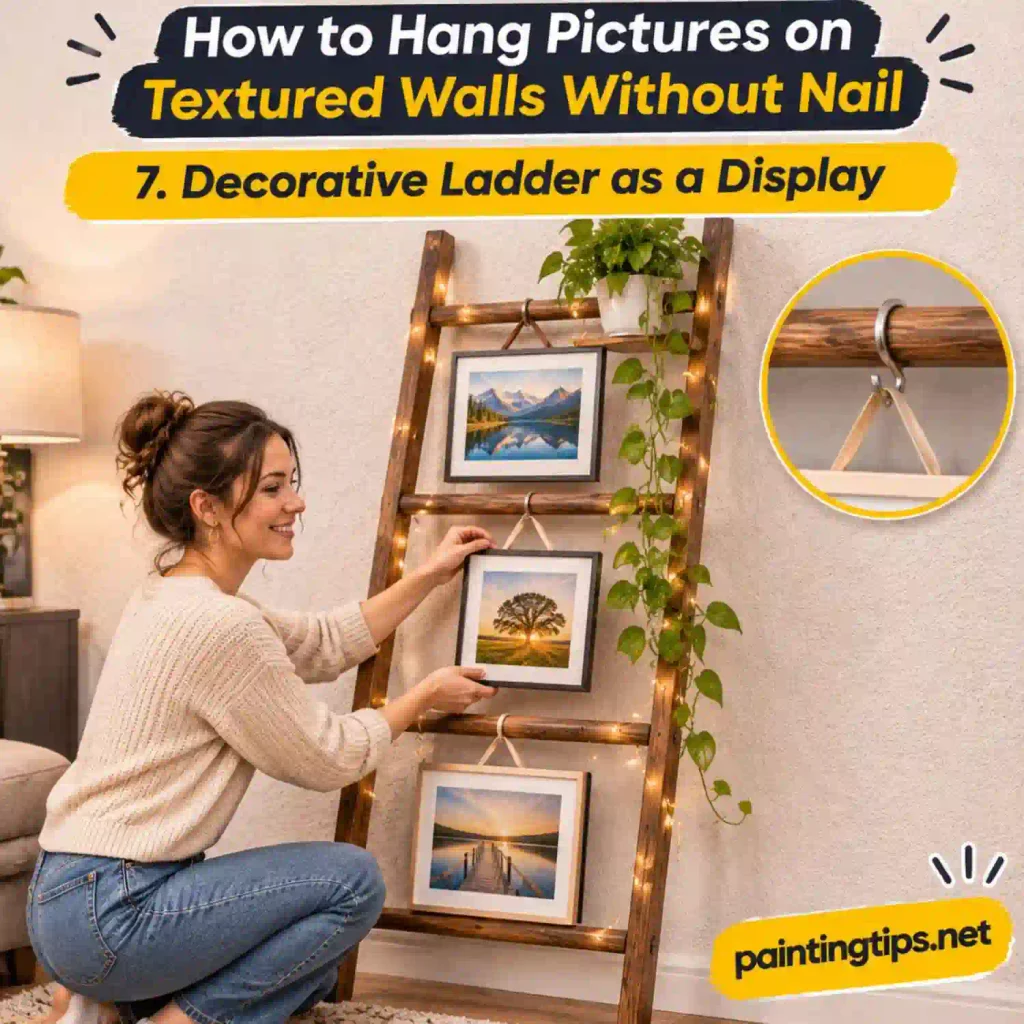
Got a stack of small frames and no wall you’re willing to use? A decorative ladder leaning against the wall turns each rung into a place to hang or rest things like small frames, prints and a light mirror. S-hooks or ribbon take care of the hanging pieces. Keep the load light and balanced, put the heaviest frames low, and make sure the feet grip the floor.
8. Folding Screen or Room Divider Gallery
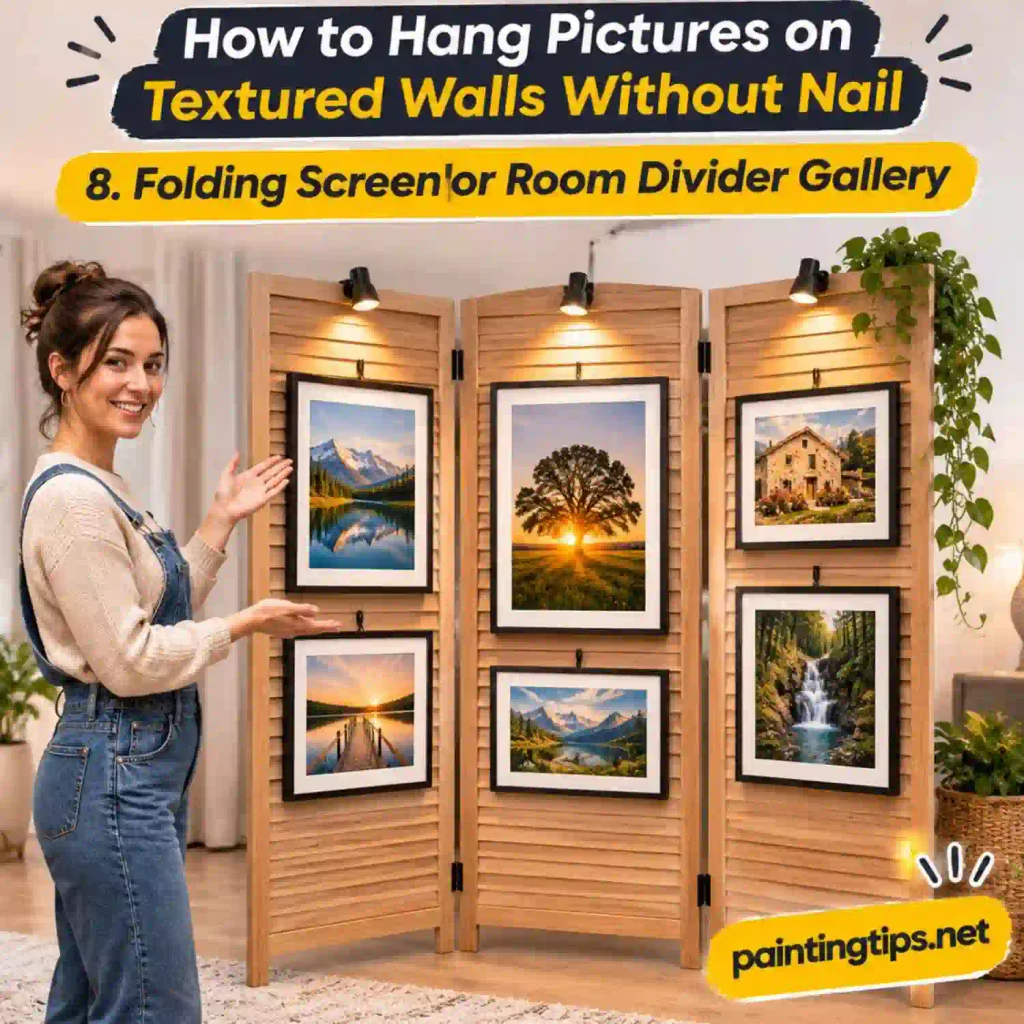
Studio apartment, home office, or a bedroom you share with a desk? A folding screen can double as a movable gallery wall. Its panels stand on their own, so you can hang lightweight pictures, photos or fabric art on it without tape, nails or any contact with the wall. Pick a screen with smooth, sturdy panels and keep the pieces light so it doesn’t wobble.
What Is the Best Way to Hang Pictures on a Textured Wall?
It depends on your situation. In a rental where you can’t touch the walls or ceiling, lean the picture on furniture or use an easel or a floor-to-ceiling tension pole. If you own the place or have permission, a ceiling rail gives you the most flexibility. For a heavy piece you can drill into, a screw with the right anchor beats any adhesive on a textured wall.
How Can I Hang Photos on My Wall Without Using Nails?
Photos weigh very little, so you don’t need anything heavy-duty. Clip them to a cord or wire hung from a ceiling rail or a molding hook, pin them to a freestanding corkboard or display panel, or rest them on a shelf or console. None of these touch the wall.
How to Hang Things on Textured Walls Without Drilling?
Move the load off the wall and onto something else. The floor can carry it (an easel or a tension pole), the ceiling can carry it (a hanging rail), or a structure that’s already there can carry it, such as picture rail molding or a piece of furniture. These are picture hangers that don’t require drilling holes in the wall, and they work for mirrors and small frame groupings too, not only single pictures.
What Are the Best Wall Hooks That Don’t Require Nails?
Over-the-door hooks and molding hooks are the best nail-free choices because they hang from something solid instead of sticking to the wall. Adhesive hooks and no-nail picture hangers work on smooth walls for light items like keys, a small wreath or a light frame, but on texture we’d keep them to the lightest loads.
Does Anything Stick to Textured Walls?
Yes, on smooth, clean surfaces. Double-sided tape and adhesive strips bond well to smooth, clean walls, but on textured walls they only hold temporarily. The bumps leave most of the adhesive with nothing to grip, and rough textures like heavy stucco or popcorn make it worse. Stronger adhesives also take more paint with them when you remove them.
Will Command Strips Hold on Textured Walls?
Not reliably. Strips are made for smooth, clean, flat surfaces, and texture cuts the contact area a lot. On a very light texture they can hold a small, light frame for a while, but on anything bumpy they tend to let go, sometimes slowly and sometimes all at once. If you try adhesive strips anyway, look for heavier-duty versions, stay well under the weight rating and test with something light first.
What Are Some Good Adhesive Strips for Textured Walls?
The best choice is a heavy-duty removable strip or mounting tape, used only for a light frame on a mild texture like light orange peel. Stay well under the weight rating on the package, because those ratings assume ideal conditions and a textured wall is not one. Here are four options and what each one is rated to carry:
- Command strips: Rated to hold roughly 5 to 7 kg (about 11 to 15 lb). They’re the best known removable option, and the easiest to take off when you’re done.
- Gorilla Invisible Hold Mounting Tape: One roll carries up to 6.8 kg (about 15 lb). The clear tape is a good fit for frames where you don’t want the strip to show.
- 3M Double Sided Tape: Carries about 2 kg per square inch (roughly 4.4 lb). That adds up quickly on a wide strip, but it’s a permanent-style tape, so it’s the one most likely to damage paint on removal.
- tesa Powerstrips Deco Double-Sided Tape for Light Decorations: Holds up to 1 kg (about 2.2 lb). It’s meant for small, light pieces like a small print or a lightweight frame.
Can Double-Sided Tape Be Used on Textured Walls?
It can, but only for a while. No matter how strong the tape is, we’ve seen double-sided tape come off textured walls after some time. It needs full contact with a smooth surface, and on a textured wall most of it never touches. Tapes also leave residue and can strip paint. If you must use one, test a hidden spot first and keep it to something very light.
Are Command Strips Better Than Nails?
Yes, if your walls are flat. Strips mean no drilling, and on a flat wall they can come off without leaving a mark. The paint has to be clean and in good shape, though, because strips on dusty, chalky or flaking paint can pull it off. For textured walls, heavy frames and mirrors, a nail or screw with the right anchor holds better, and a small hole is easier to patch than a patch of peeled paint. If you can’t make a hole, use one of the nail-free methods above.
