White trim against gray walls works because it does something most color combinations don’t: it defines the architecture of a room—baseboards, door casings, window frames—without introducing color. Whether you’re working with light gray or dark gray, in a living room, bedroom, or kitchen, the same principles apply. But the shade of gray and the choice of white matter more than most people realize, and getting them wrong is more common than it should be. This guide covers what actually works and what to avoid.
Gray Walls White Trim

White trim works with gray walls for a reason that goes beyond aesthetics: it creates visual structure. Every room has architecture—baseboards, door casings, window frames, crown molding—and white trim makes that architecture visible and intentional. Against gray walls, white trim draws the eye around the perimeter of the room, defining its proportions and making the space feel more finished than it would with trim painted to match the wall.
The contrast level between the gray and the white is what drives the overall feel. A soft, warm gray against a cream-white trim produces a gentle, layered effect that reads as sophisticated without being stark. A cool mid-tone gray against bright white trim is crisper and more contemporary. A deep charcoal against pure white trim is the most dramatic version of the combination—the contrast is strong enough to make the architecture of the room a genuine design feature rather than a background detail.
Gray is also one of the few wall colors that works equally well with warm whites and cool whites, provided the undertone matching is considered. A warm gray with brown or yellow undertones paired with a stark cool white trim can create a subtle but persistent tension. Match warm gray to warm white, cool gray to cool white, and the combination will feel cohesive rather than slightly off in ways that are hard to identify but easy to feel.
Light Gray Walls White Trim Living Room
A light gray wall with white trim in a living room creates one of the most versatile and broadly appealing interiors available. The combination is light enough to feel open and welcoming, defined enough to feel finished, and neutral enough to work with almost any furniture color or style. It’s the starting point that gives you the most flexibility for everything that comes after—sofa color, rug choice, accent colors—without constraining any of those decisions.
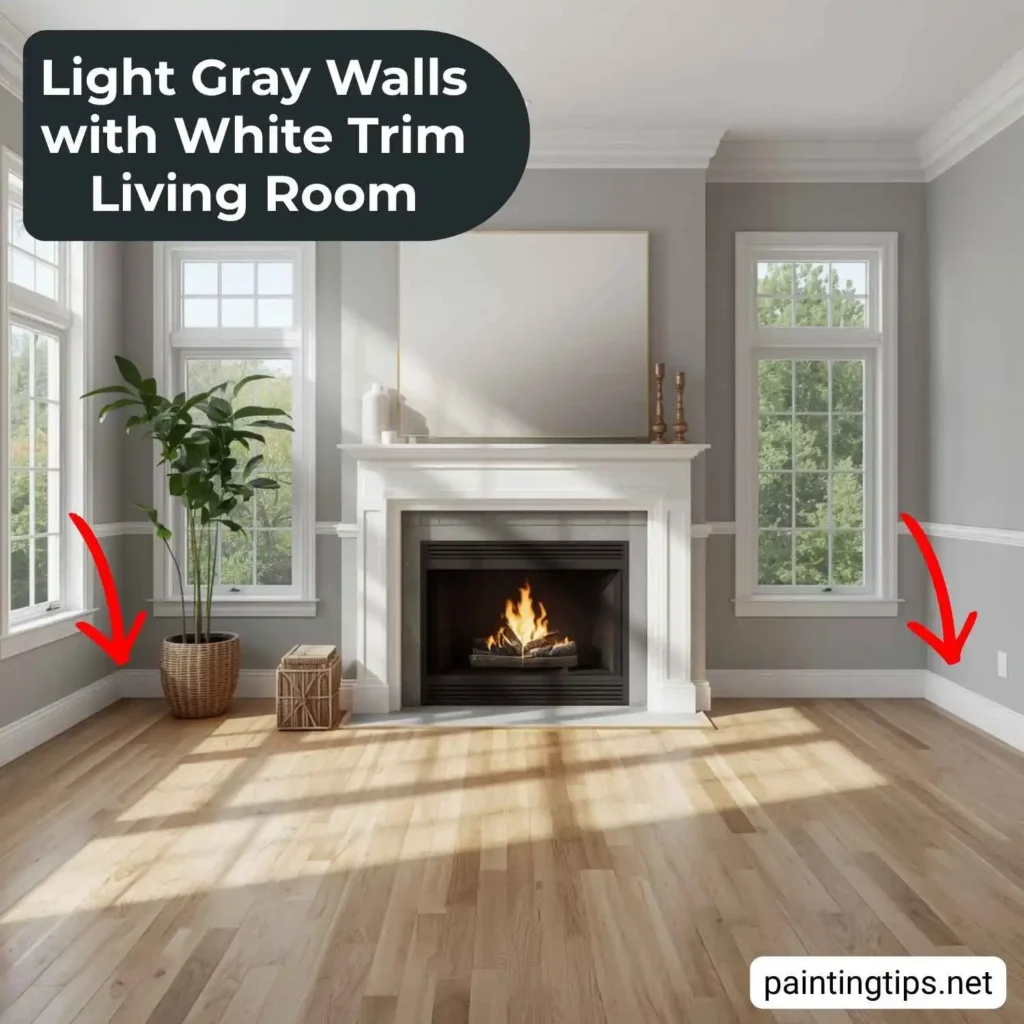
The white trim in a living room context does specific work. Baseboards anchor the floor visually, door casings frame the entry points of the room, and crown molding—where it exists—connects wall and ceiling in a way that makes the room’s proportions feel intentional. Against light gray, all of these elements read clearly without creating strong contrast that could feel busy in a space designed for relaxation.

For furniture, warm tones work particularly well against light gray walls with white trim—cognac leather, warm wood, camel upholstery, and natural fiber rugs all add warmth that the gray and white palette itself doesn’t supply. The trim handles the architecture; the furniture handles the warmth. “If you’re still deciding on a specific shade, our guide on light gray paint colors covers the most popular options and how they perform in different light conditions.”
Gray Walls White Trim Bedroom
In a bedroom, gray walls with white trim create a calm, finished atmosphere that suits the purpose of the space. The gray recedes as a quiet backdrop while the white trim defines the room’s structure without adding visual noise. It’s a combination that feels complete without demanding attention—which is exactly what a bedroom should do.

Shade selection matters more in a bedroom than in other rooms because bedrooms typically receive less natural light and rely more heavily on artificial lighting. Light to mid-tone grays work best in bedrooms for this reason—they maintain a sense of openness even in lower light conditions. Dark gray bedrooms with white trim can work beautifully in rooms with good natural light and considered lighting design, but in a poorly lit bedroom, the combination can feel heavy and enclosed.

White trim in a bedroom frames the windows—which matters more in a sleeping space than anywhere else in the house. Clean white window casings against gray walls make the windows a deliberate feature and help the room feel more considered. Pair with warm-toned wood furniture, layered textiles, and warm lighting to prevent the gray and white combination from reading as cool and clinical in a space designed for rest.
Gray Walls White Trim Kitchen
A kitchen with gray walls and white trim is a combination that has held its appeal across multiple design trends, which is a reliable indicator of its staying power. Gray walls provide a sophisticated backdrop for stainless steel appliances, marble or stone countertops, and both white and wood-toned cabinetry. White trim defines the room’s architecture—around windows, doors, and any built-in features—and keeps the space feeling clean and finished.

The practical consideration in a kitchen is that gray walls show less dirt and scuffing than white walls, which makes them a more livable choice in a high-traffic, high-use space. White trim in a kitchen is more vulnerable to marks at contact points—around door handles, along baseboards—and benefits from a semi-gloss or gloss finish that wipes clean more easily than the flat or matte finish appropriate for walls.

Light to mid-tone gray works best in most kitchens because kitchens typically have less wall space than other rooms—cabinetry covers much of the wall surface—and lighter grays keep the remaining wall area from feeling heavy. Dark gray kitchen walls with white trim work well in larger kitchens with good natural light and a more dramatic design direction.
Dark Gray Walls White Trim
Dark gray walls with white trim is the most dramatic and committed version of this combination, and when executed correctly, it produces a result that few other color pairings can match. The contrast between deep gray walls and bright white trim is strong enough to make the architecture of the room—the baseboards, casings, crown molding—a genuine design feature rather than a background element.
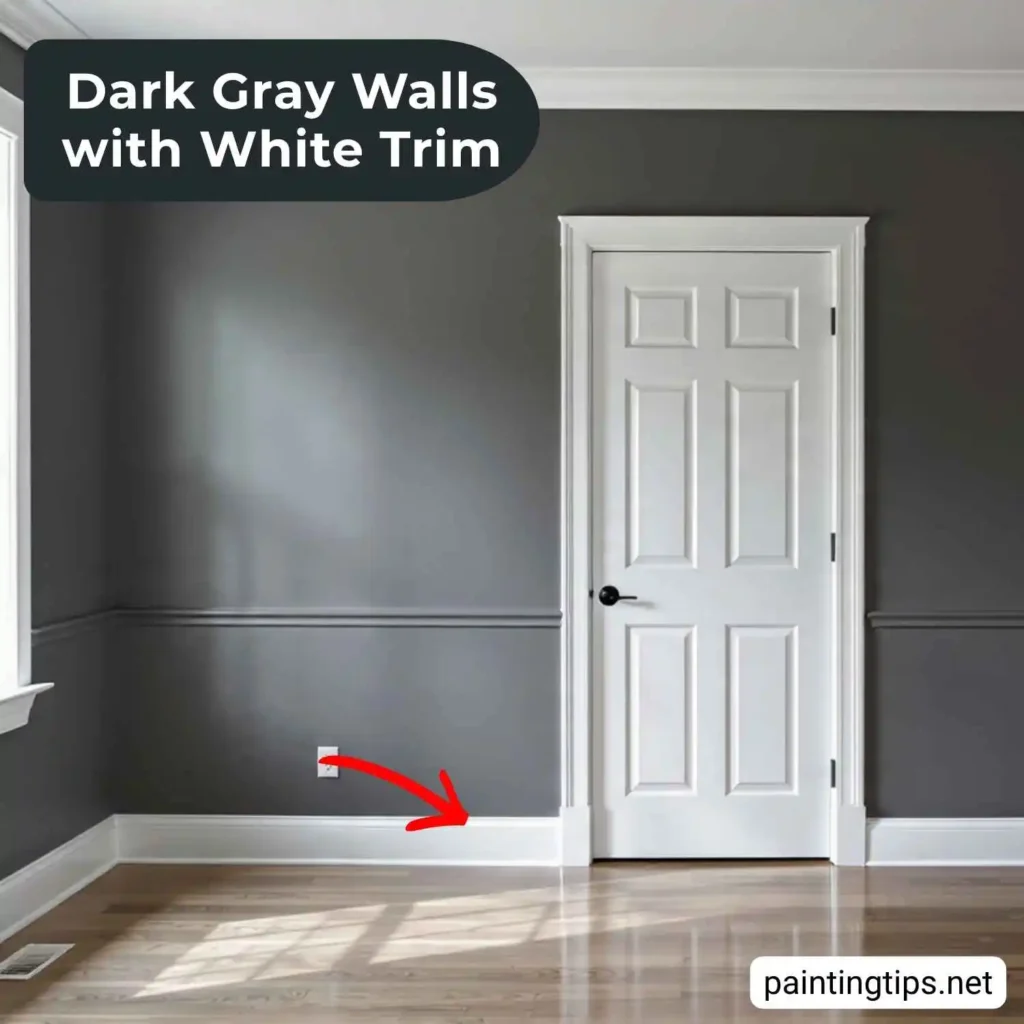
Lighting is the critical variable. Dark gray walls absorb light rather than reflecting it, which means the combination works best in rooms with generous natural light or a well-planned artificial lighting scheme. A dark gray room with inadequate lighting will feel heavy and enclosed regardless of how well the trim is executed. In a well-lit room, the same combination feels rich, sophisticated, and considered.

Warm accent colors are essential in a dark gray room with white trim. The stark contrast of the palette needs something to prevent it from feeling cold—warm brass or gold fixtures, timber furniture, textured textiles in warm tones, and a warm-toned rug all soften the combination without compromising its impact.
Light Gray Walls White Trim
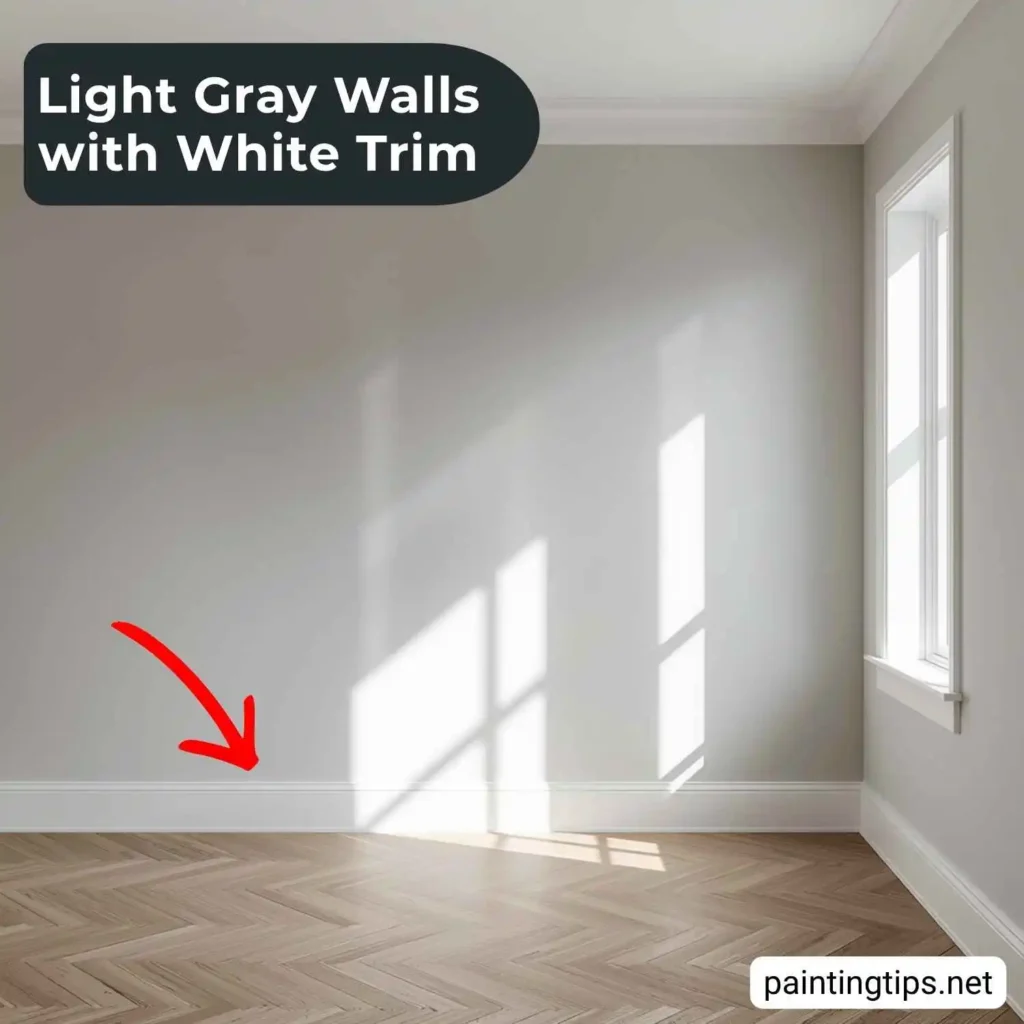
Light gray walls with white trim is the most accessible and widely used version of the combination. The contrast is gentle enough to feel soft rather than stark, which makes it suitable for rooms where a quieter, more understated atmosphere is the goal. It’s also the most forgiving version in terms of lighting—light gray walls reflect enough light to maintain a sense of openness even in rooms that don’t receive direct natural light.

The risk with light gray and white is that the combination can feel flat if the contrast between wall and trim isn’t sufficient. Very pale gray walls against off-white trim can blend together to the point where the trim loses its defining role. Ensure there’s enough tonal difference between the wall and trim colors that the architecture reads clearly. If the gray is very light, a brighter or purer white for the trim maintains the contrast the combination needs to work.
Which Shades of Gray Work with White Trim?
The short answer is that all shades of gray work with white trim—but each produces a different room. The shade determines whether the combination reads as airy and soft, clean and contemporary, or dramatic and bold.
Light grays—those in the pale to mid-tone range with minimal saturation—create the most understated version of the combination. The contrast between a light gray wall and white trim is gentle enough that the trim defines the architecture without dominating it. These shades work in rooms where you want the furniture and textiles to carry the design and the walls to recede quietly. Popular light grays like Agreeable Gray, Repose Gray, and Pale Oak sit in this range and are widely used precisely because they’re forgiving and versatile.
Mid-tone grays sharpen the contrast and give the combination more presence. The white trim becomes a more deliberate design element at this level—it reads clearly as a choice rather than a default. These shades work well in living rooms and bedrooms where you want the room to feel considered and complete without committing to a dark or saturated wall color.
Dark grays—charcoal, slate, near-black—produce the most dramatic version of the combination. Against deep gray walls, white trim becomes the brightest element in the room, creating a graphic contrast that references both traditional paneled interiors and contemporary high-contrast design. This is the most committed version of the combination and the one that requires the most attention to lighting.
Warm grays—those with beige, taupe, or yellow undertones—pair best with warm whites that share similar undertones. Cool grays—those with blue or green undertones—pair most naturally with bright or slightly cool whites. Matching undertones across wall and trim is the single most reliable way to make any gray and white combination feel intentional. “For more detail on two of the most popular light gray options, our guide on Edgecomb Gray vs Pale Oak breaks down how each performs against white trim and in different light conditions.”
Which White Works Best for the Trim?
Not all whites perform equally against gray walls, and the wrong white can undermine a combination that should work well.
Bright white—pure, high-contrast white with no discernible undertone—creates the crispest separation between wall and trim. It works best with cool to mid-tone grays where the clean, sharp contrast reads as contemporary and deliberate. Against warm grays, bright white can pull slightly cool and create an undertone mismatch that makes both colors look slightly wrong.
Off-white and warm white—whites with cream, yellow, or slightly warm undertones—pair best with warm grays. They create a softer contrast that feels layered and sophisticated rather than stark. Benjamin Moore White Dove, Sherwin-Williams Alabaster, and Behr Swiss Coffee are popular trim whites in this category that work well against warm gray walls.
Bright white trim on warm gray walls is the most common undertone mistake in gray and white interiors. The fix is simple—test the trim color against the wall color in the actual room under the actual lighting before committing. What looks like a clean white in isolation can read as slightly blue or purple against a warm gray wall, and that tension is visible every time you look at the room. “If you’re considering a cooler gray, our guide on Benjamin Moore Distant Gray covers how it performs with different trim whites.”
Trim Colors That Don’t Work with Gray Walls
Not every trim color flatters gray walls, and the wrong choice can undermine an otherwise well-considered room.
Trim in a very similar shade to the wall is the most common mistake. When wall and trim read as the same tone, the trim loses its defining role entirely—the architecture of the room disappears and the space feels flat and unfinished. There needs to be enough contrast between the two for the trim to read as a deliberate element rather than an afterthought.
Warm yellow or heavily cream-toned trim against a cool gray wall creates an undertone clash that’s subtle but persistent. The yellow pulls in one direction, the cool gray in another, and the room never quite settles. The reverse is equally problematic—a stark cool white trim against a warm greige wall can read as slightly blue or purple in certain light conditions, making both colors look slightly wrong.
Bright, saturated trim colors—deep red, cobalt blue, strong green—compete with gray walls rather than complementing them. Gray is a receding color that works best with trim that either contrasts cleanly or blends quietly. A saturated trim color introduces a third competing element that the palette can’t absorb without looking busy.
Brown or wood-toned trim paint—as opposed to natural wood—against gray walls can feel dated and heavy. Natural wood trim works well with gray walls because the grain and variation add warmth organically. Painted brown trim lacks that quality and tends to look muddy against gray rather than warm. “For colors that do work, our guide on accent color for gray covers the best options for bringing warmth and personality into a gray and white room.”
Frequently Asked Questions
Below are answers to the most common questions about gray walls and white trim. For anything not covered here, feel free to use the comments section.
Does White Trim Go with Gray Walls?
Yes, and it’s one of the most reliable combinations in interior design. White trim defines the architecture of a room—baseboards, door casings, window frames—and creates a clean visual boundary against gray walls. The combination works across all shades of gray and suits almost every interior style, from traditional to contemporary.
What White Should I Use for Trim on Gray Walls?
Match the undertone of the white to the undertone of the gray. Warm grays pair best with warm whites like Benjamin Moore White Dove, Sherwin-Williams Alabaster, or Behr Swiss Coffee. Cool grays pair best with bright or slightly cool whites. Testing the trim color against the wall color in the actual room under actual lighting is essential before committing.
What Shade of Gray Works Best with White Trim?
All shades work, but they produce different results. Light gray creates a soft, understated combination that suits bedrooms and living rooms where a quiet atmosphere is the goal. Mid-tone gray sharpens the contrast and gives the combination more presence. Dark gray creates the most dramatic version—strong contrast that makes the room’s architecture a genuine design feature. The right shade depends on the room, the light, and the atmosphere you’re working toward.
Is Gray and White a Good Color Combination for a Living Room?
It’s one of the most consistently successful combinations for living rooms. Gray walls provide a sophisticated backdrop that works with almost any furniture color, while white trim keeps the room feeling finished and defined. The combination is versatile enough to suit traditional, transitional, and contemporary interiors and neutral enough to accommodate significant changes in furniture and accessories without needing to repaint.
What Color Furniture Works Best with Gray Walls and White Trim?
Warm-toned furniture performs best—cognac leather, warm wood, camel and tan upholstery, and natural fiber textiles all add warmth that the gray and white palette itself doesn’t supply. White and off-white furniture creates a cohesive, light-toned interior but needs warm accents to prevent the room from feeling cold. Dark furniture in navy, forest green, or charcoal creates strong contrast against lighter gray walls. Avoid furniture in a very similar gray to the walls—it disappears into the background and the room loses definition. “For a full breakdown of furniture colors and combinations, our guide on what color furniture goes with gray walls covers every option in detail.”
Does Gray and White Make a Room Look Bigger?
Light gray walls with white trim can make a room feel larger and more open, particularly in rooms with limited natural light where white walls might feel stark. The white trim enhances the perception of space by defining the boundaries of the room clearly, and light gray walls reflect enough light to maintain openness without the clinical quality that stark white walls can produce. Dark gray walls have the opposite effect—they make a room feel more intimate and enclosed, which can be a deliberate design choice in the right space.
