A white house leaves the front door color almost entirely up to you, and that freedom is what makes the choice so hard. This is the one spot on a white exterior where you can go classic, cozy, or a little daring, so here is how gray, red, black, blue, green, yellow, teal, and natural wood doors look against white siding, how shutters change the picture, and which questions come up most often.
Front Door Color for White House
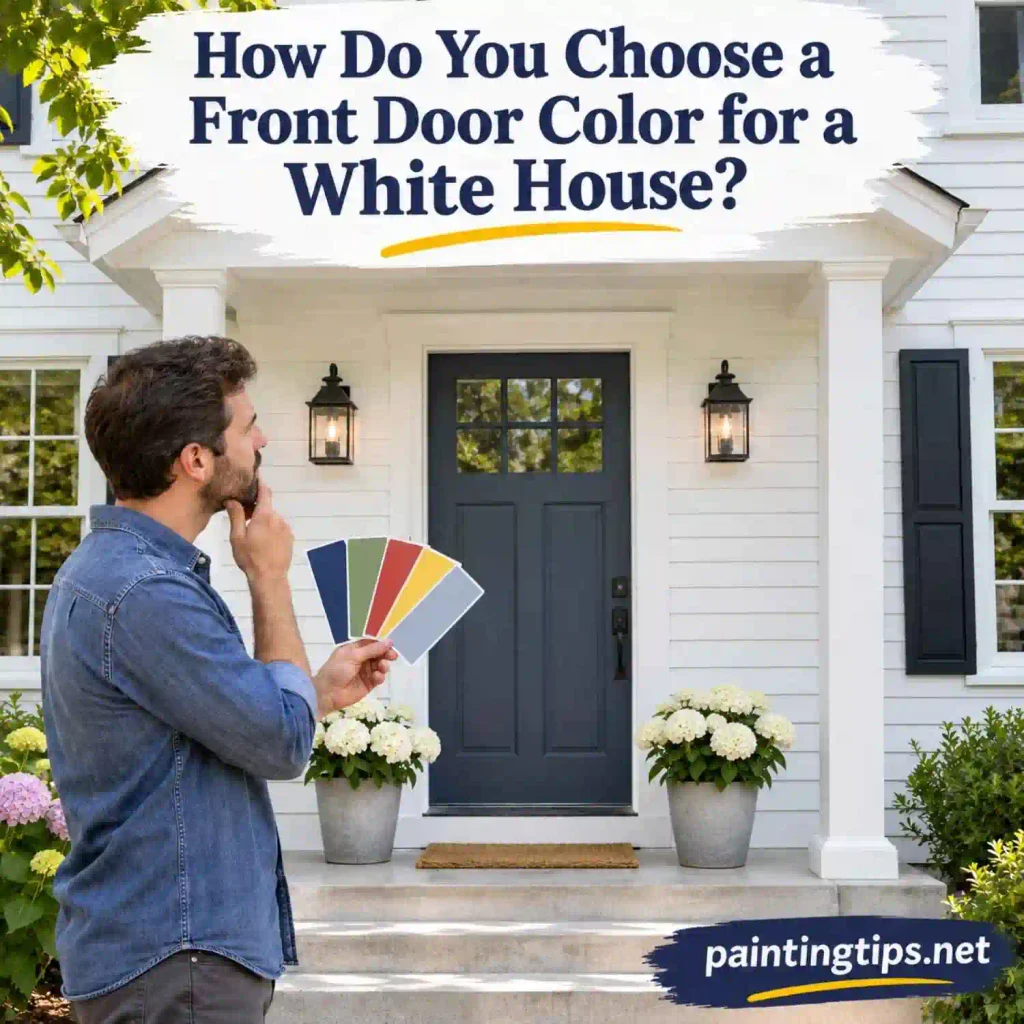
Three things narrow the choice quickly. First, look at the undertone of your white. A creamy, warm white goes well with warm doors like brick red or olive green, while a crisp, bluish white suits navy, charcoal, and true black. Second, remember that the roof, brick, and porch floor are staying put, so your exterior door color has to work with them. Third, consider the style of the house, since a colonial, a farmhouse, and a modern build each carry color differently. Our guide to best exterior house paints is a helpful place to start if you haven’t chosen a product yet.
Before you commit to any of the door colors for white house exteriors below, paint a large sample on the exterior front door itself and look at it in the morning and again at dusk. With that done, here is how each popular color changes the look of a white exterior, starting with the quietest one.
Gray Front Door White House
Gray is the low-key choice. On a white house, a gray door looks modern and calm without making a statement about it. Charcoal gives you most of the contrast of black with a softer edge, while a mid-tone gray with a hint of blue or green looks more relaxed and works well with natural stone or a gray roof.
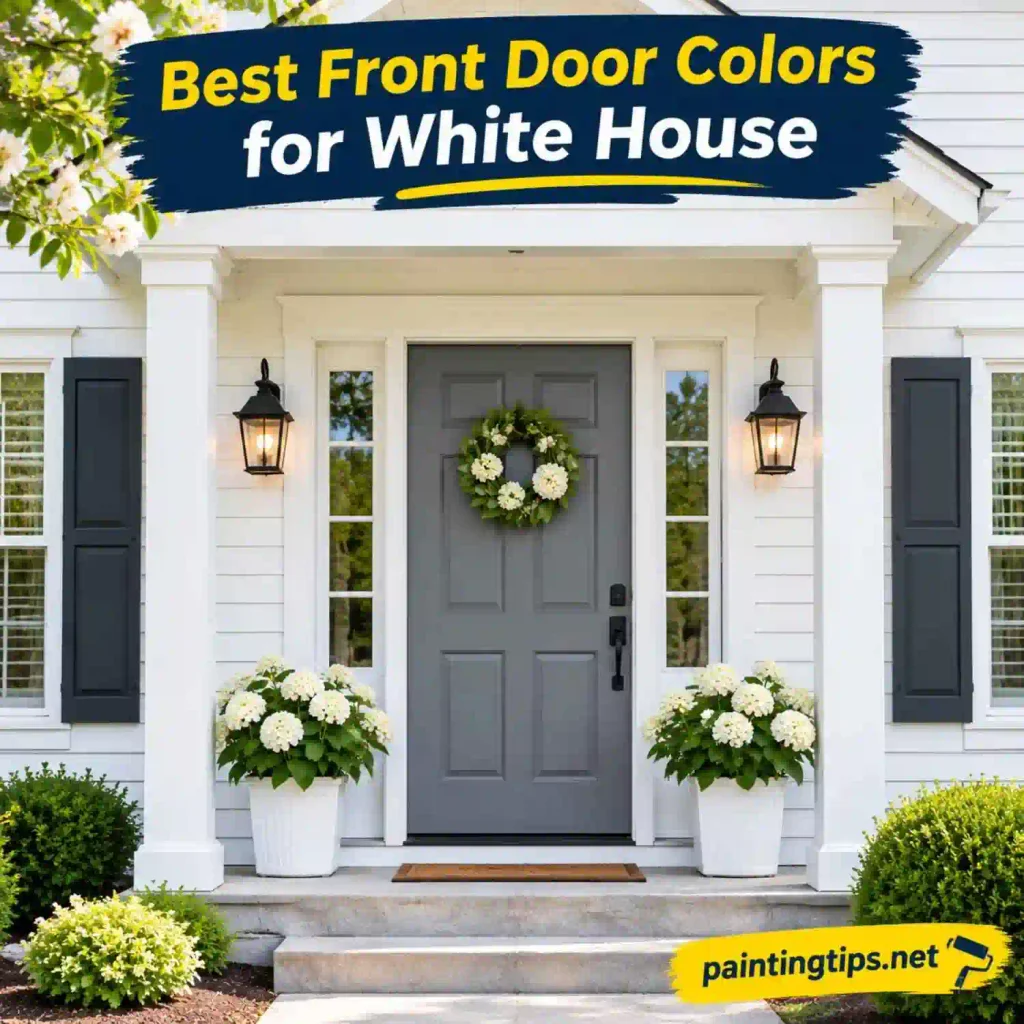
Pale grays are the risky ones. Next to bright white trim they can look faded, as if the paint has weathered. Go darker than your first instinct and you’ll usually be happier with the result.
Red Front Door White House
A red door on white siding pulls the eye straight to the entry and makes a plain exterior feel finished, which is why it has stayed popular for generations. Brick and barn reds have a little brown in them and feel traditional, while true cherry reds feel brighter and more energetic. Cranberry and burgundy lean more formal and suit stately, symmetrical homes.

Red pigments tend to fade sooner than most, so choose a paint with good UV protection and expect a touch-up in a few years if the door gets direct sun.
Black Front Door White House
If you want maximum contrast, black is the answer. A black front door on a white house looks formal and timeless, and it makes brass, bronze, and nickel hardware stand out. It fits colonial, farmhouse, and modern styles equally well.

Black does have a few quirks. Dust, pollen, and water spots show more readily than on lighter colors, and a dark door absorbs heat, so if it gets all-day sun, check the manufacturer’s recommendations. Brush marks and drips also show more. If you’re repainting a door that’s already hanging, our walkthrough on how to repaint a front door without removing it is worth reading first, especially before you tackle a dark color.
Blue Front Door White House
Blue lets a white house show some personality without losing its calm. Navy is the polished option, nearly black from the street and clearly blue up close. Mid-blues feel breezy and coastal, and grayed blues give off a soft, cottage look.

Saturated, bright blues belong on contemporary homes or on streets where bold colors are already common. On a traditional house, a blue with a little gray in it is far easier to live with year after year.
Green Front Door White House
Green ties a white house to the yard. Forest and hunter greens feel traditional and look especially good with brick, while sage and olive feel easygoing and a little more current. A green door also looks great with potted plants and climbing vines around it.

Yellow-based greens flatter a warm white, while blue-based ones like spruce sit better on a cool white. Lime and kelly greens usually overpower a white exterior.
Yellow Front Door White House
A yellow door on a white house works like a small spot of sunshine. Butter yellow is friendly and quiet, while mustard and golden tones feel richer and more unusual.

Yellow is the hardest color on this list to judge from a chip. It can look slightly green in shade and noticeably brighter in direct sun, and it often needs an extra coat or two to cover evenly.
Teal Front Door White House
Teal sits between blue and green, which makes it a good pick when you can’t choose between them. A slightly gray teal looks sophisticated and a bit unexpected, while a brighter turquoise gives a beachy, playful feel. Because it has some blue and some green in it, it often works with a wider range of roof and landscaping colors than either one alone.

Teal front door also looks natural next to terracotta pots and warm wood, which makes the entry easy to style.
Navy Blue Front Door White House
On a white house, a navy door looks almost black from the street, but walk up to the porch and the blue comes through. From the street it reads almost black, and up close it shows a deep blue that feels softer and friendlier than true black. On a white house, it gives you the same crisp contrast with a little more warmth, which is why it suits colonial, Cape Cod, and coastal homes so well.
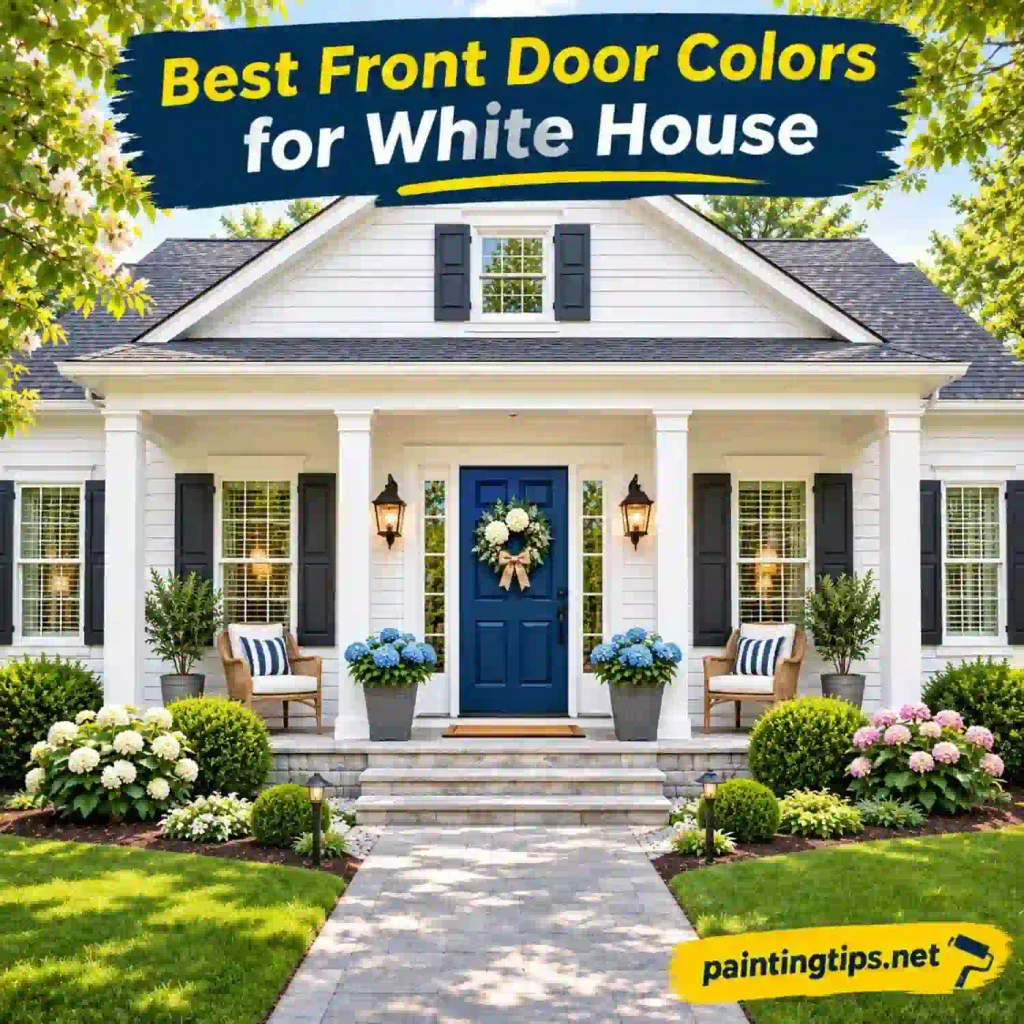
The shade of navy matters more than most people expect. A navy with a touch of gray or black in it looks classic and settled, while one that leans toward purple can feel off next to a creamy white. If your siding is a warm white, choose a navy that stays close to true blue. Polished nickel or matte black hardware keeps the entry looking clean, and a door in a satin or semi-gloss finish will show the color best.
Navy also changes with the light. Under a porch roof or in shade, it can look nearly black, while in open daylight the blue comes forward. It tends to be a bit more forgiving than black when it comes to dust and water spots, which makes it a practical pick for a busy entry.
Natural Wood Front Door White House
Not every door needs paint. A stained wood door on a white house looks warm and high-end, especially in mahogany, walnut, or a medium oak, and it looks great alongside black shutters.
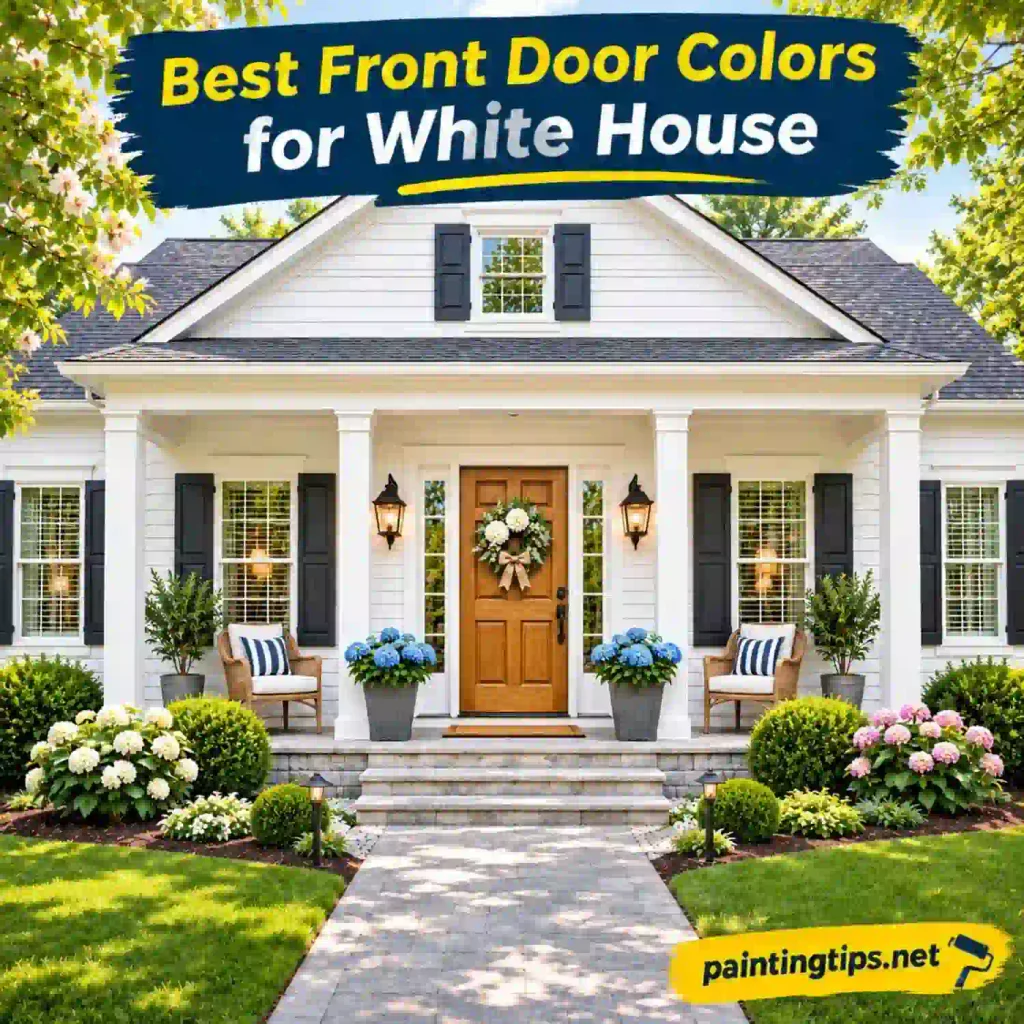
The catch is upkeep. A stained or clear-coated door takes more punishment from the weather than a painted one and needs fresh coats from time to time.
Door and Shutter Colors for White House
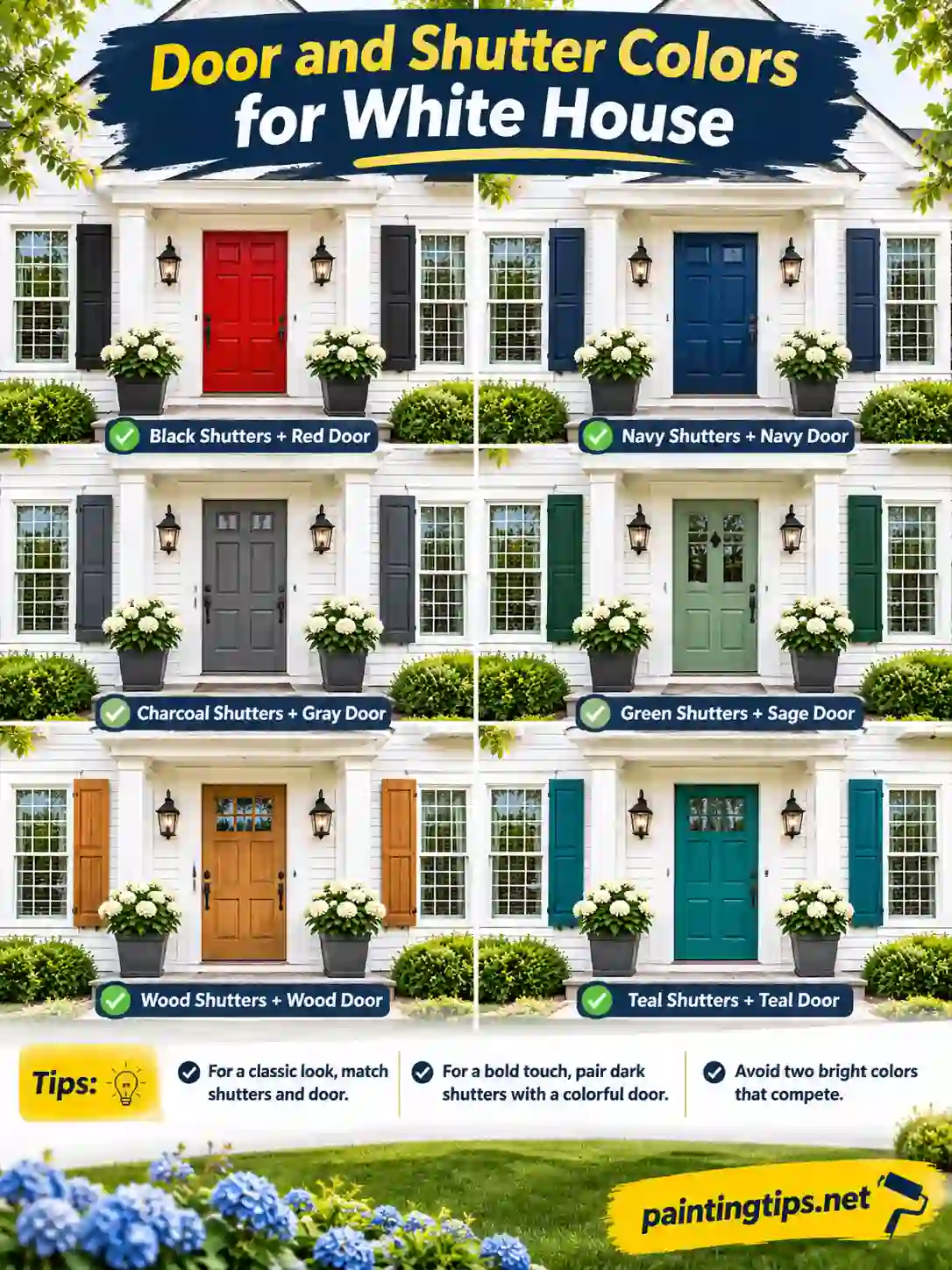
Shutters frame the windows and the front door of a white house marks the entry, so your white house door color and the shutters have to look like they belong together. Three combinations tend to work. The first pairs dark neutral shutters, such as black, charcoal, or navy, with a more colorful door. The second matches the door and shutters, which looks clean and fits formal designs. The third uses two related shades, like a dark green shutter with a lighter sage door.
The combination to avoid is two different bright colors competing for attention. On white siding, one of the two should always stay quiet.
Best Door Color for White House with Black Shutters
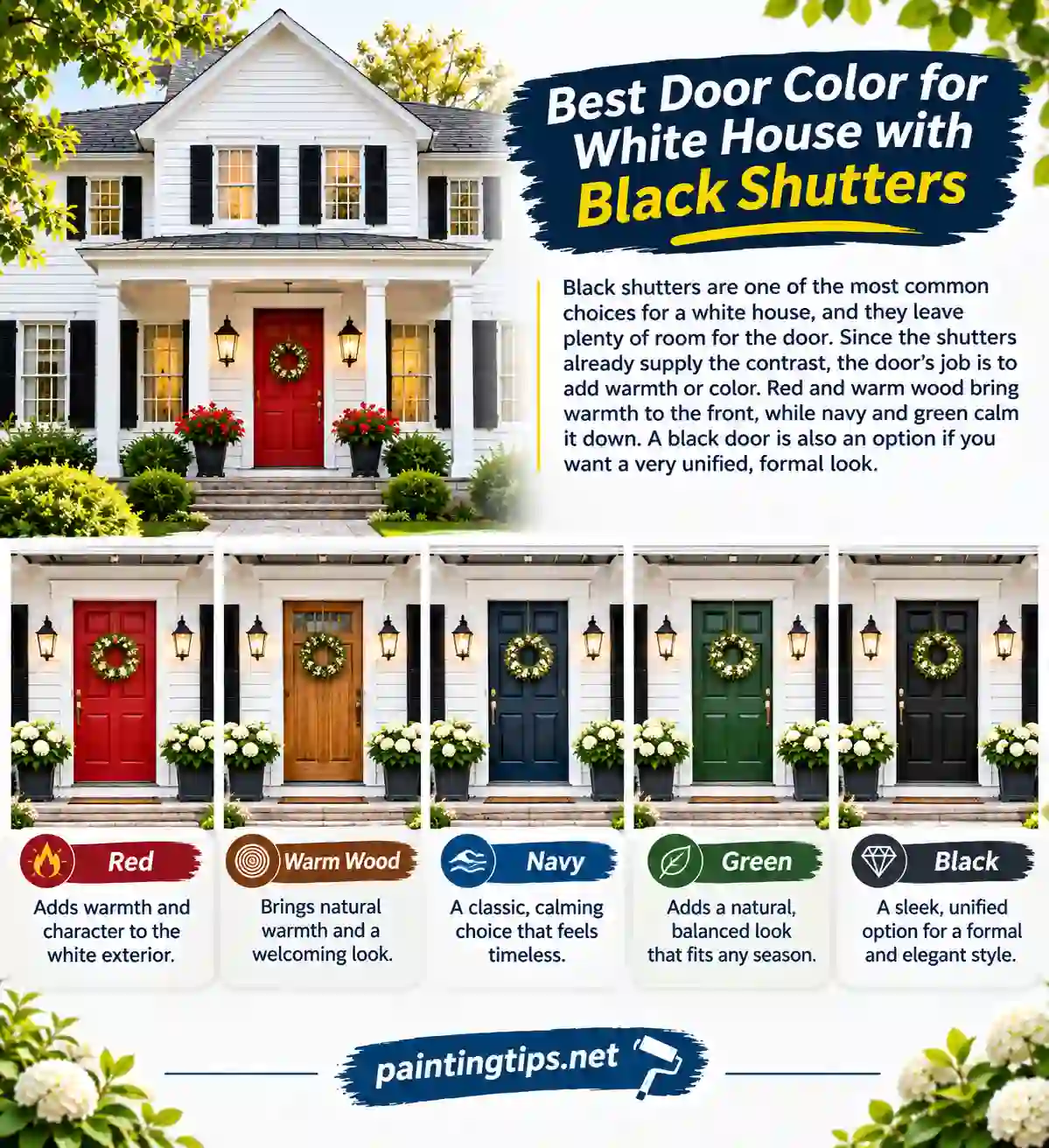
Black shutters are one of the most common choices for a white house, and they leave plenty of room for the door. Since the shutters already supply the contrast, the door’s job is to add warmth or color. Red and warm wood bring warmth to the front, while navy and green calm it down. A black door is also an option if you want a very unified, formal look.
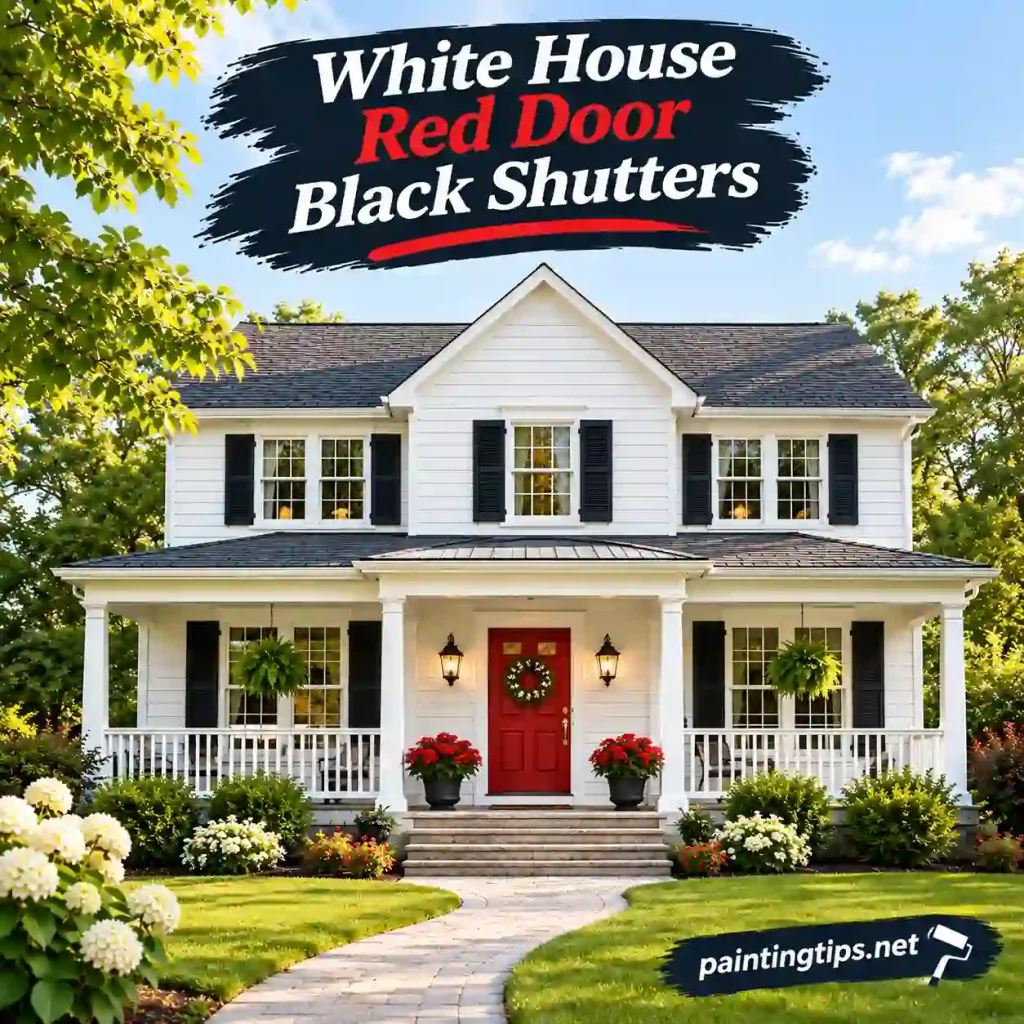
White House Red Door Black Shutters
This is the combination most people picture when they think of a classic American home. The white siding is the backdrop, the black shutters give structure, and the red door tells visitors where to go. A red with a little brown in it keeps the scheme warm instead of harsh. Oil-rubbed bronze or aged brass hardware finishes the front nicely.
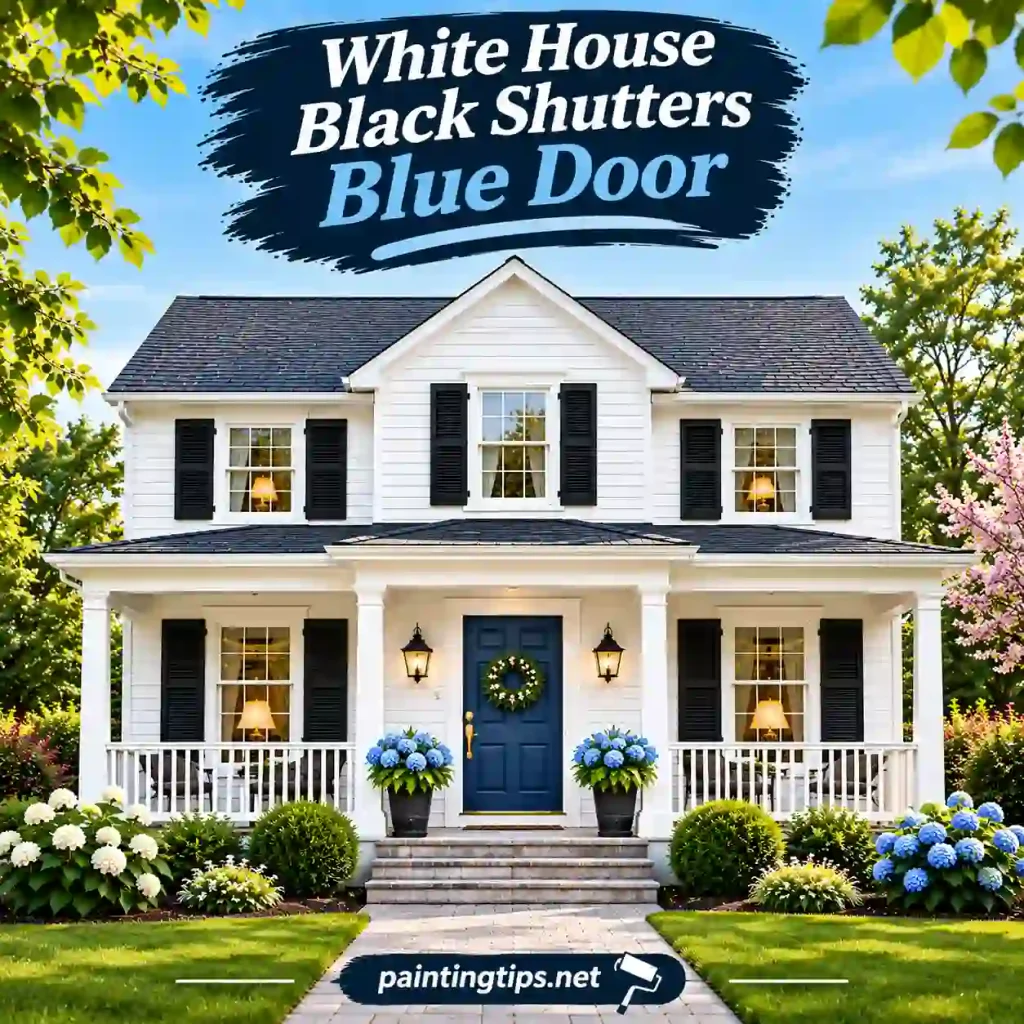
White House Black Shutters Blue Door
Swapping red for blue makes the same black-and-white scheme feel gentler. A navy door looks tailored and almost works as a second neutral, while a grayed medium blue feels relaxed and suits cottage and coastal homes. It’s also an easy pick for a street full of loud colors, since it quiets things down without looking dull.
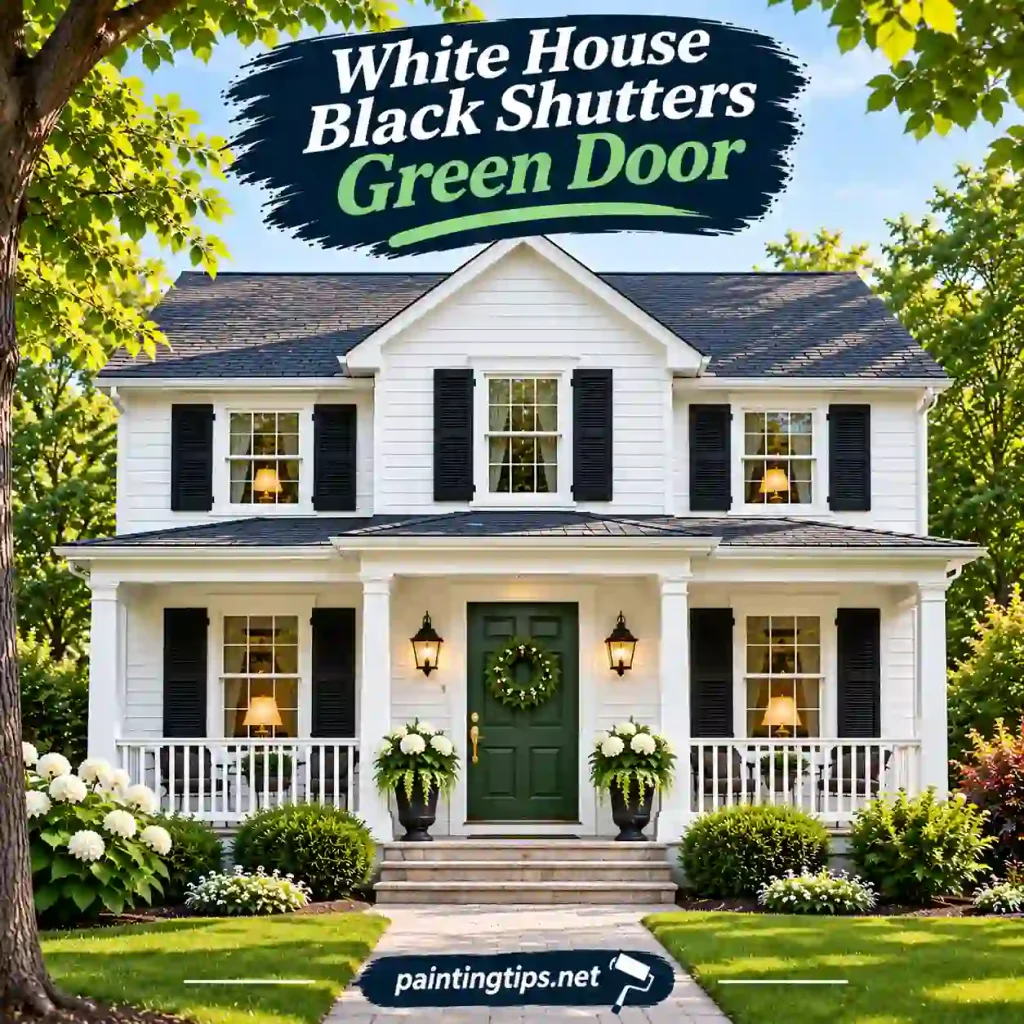
White House Black Shutters Green Door
Green with black shutters looks grounded and natural, as though the house has been there for decades. Hunter green and olive are the safest picks, because they sit close enough to black to look planned and still read clearly as green in daylight. This pairing is especially good on lots with mature trees and shrubs, where the door seems to pick up the color of the yard. A couple of planters or a simple wreath at the entry will make the green stand out even more.
What Color Front Door Looks Good on a White House?
Because a white exterior is neutral, the answer often depends on the style of the house. Colonial and traditional homes look best with black or navy. Farmhouses suit warm wood or a muted green. Cottages and coastal homes can carry softer blues and teals. Modern houses take well to charcoal or a single confident color. Wherever your house falls, the best door colors for white house exteriors are the ones that match its style and its surroundings.
What Are the Three Colors Not to Paint Your Front Door?
Nothing is forbidden, but after years of painting houses, three types of colors cause the most regret on a white exterior. The first is white, cream, and pale beige, which blend into the siding and leave the entry looking flat, as if the door was forgotten. The second is dull, in-between tones like khaki, tan, and washed-out brown, which add neither contrast nor character and tend to look like a leftover color. The third is neon and electric shades such as hot pink, lime, and bright orange, which overpower a white house and clash with plants and neighboring homes.
If your house is in an HOA community, check the approved color list before you buy any paint.
What Are the Top 5 Front Door Colors?
For white houses, the five that come up most often are black, navy, red, green, and natural wood. Each one has enough visual weight to stand up to white siding, but they do different jobs. Black makes the front look formal, navy does the same with a friendlier tone, and red is the quickest way to add energy. Green connects the door to the landscaping, and natural wood adds warmth and texture without any paint at all. Charcoal gray and soft yellow sit just behind them for homeowners who want something less predictable.
Should the Front Door Be Lighter or Darker Than the House?
On a white house, the door is almost always darker, since white is already as light as it gets. A darker door defines the entry and gives the eye a place to land, which is why most of the popular choices sit at the darker end of the range.
A lighter door can still work if it’s a clearly defined color, such as soft blue or butter yellow. It works best when a covered porch already gives the entry some shadow and shape. If you can’t decide, choose the darker option.
Once the door color is settled, you may want to look at the rest of the exterior. Our article on how to paint exterior house walks through the full project from prep to final coat, and our garage door paint schemes ideas show how to keep the garage door in step with the new entry.
