A dirty microwave doesn’t need expensive products. Here we cover the easiest ways of cleaning the microwave with vinegar, lemon, baking soda, and dish soap (plus a word on why we skip salt), then the harder cases like burnt food, bad smells, mold, and heavy grease, and we end with answers to the questions people ask most.
How to Clean Microwave
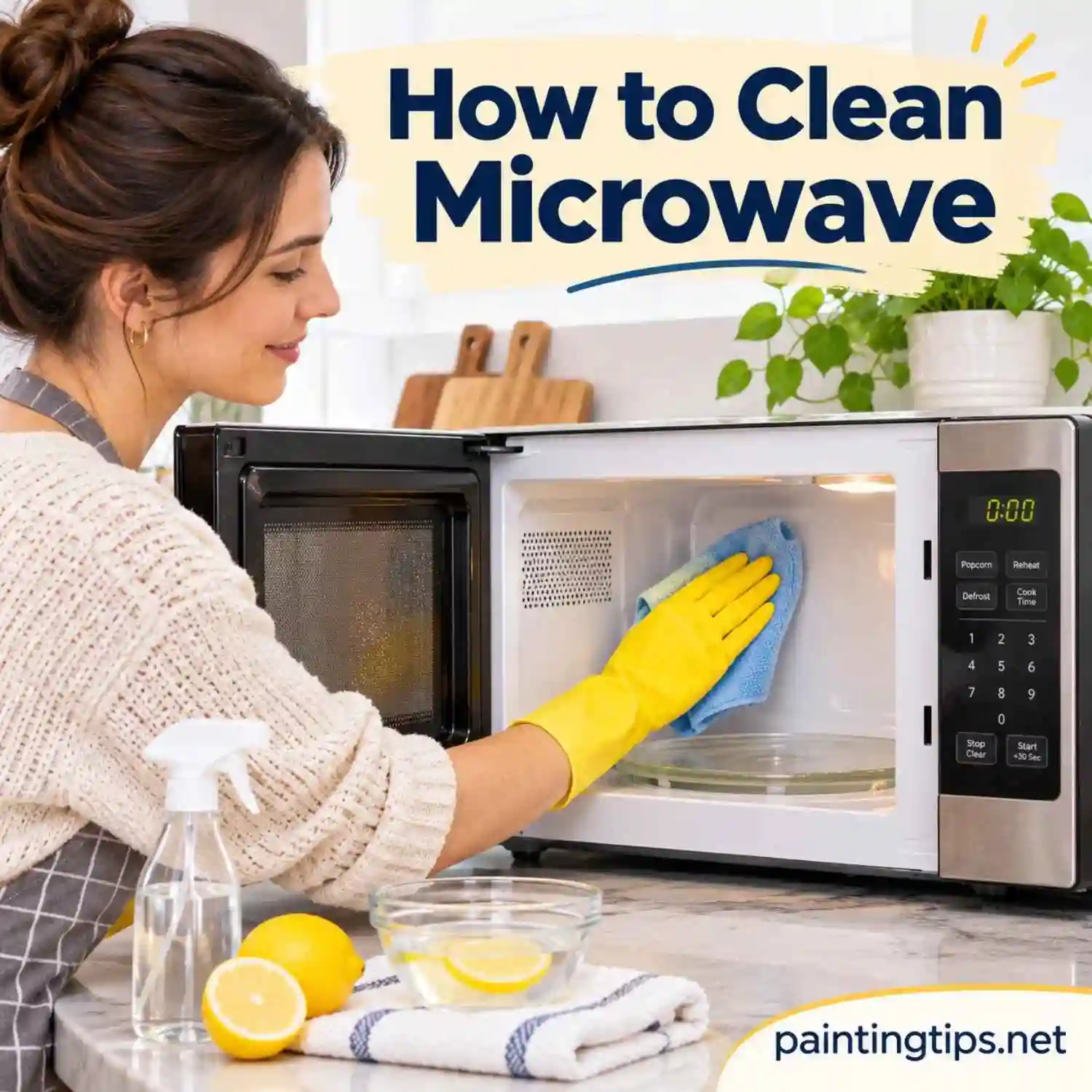
Almost everything on this page comes down to steam. Heat a bowl of water and the steam settles on the walls and ceiling, softening dried grease and food splatters until a damp cloth can lift them. The scratching happens when people go at a dry, baked-on spot with a sponge, so when we clean a microwave we let the steam work first and wipe second.
Take the glass turntable and the roller ring out before you begin and wash them in hot soapy water like any other dish. The bowl has to be microwave-safe, never metal, and the microwave should never run empty. Roughly speaking, vinegar or lemon steam covers the walls and ceiling every week or two, dish soap handles spills, the door, and the seal, and baking soda is for the occasional stubborn spot in a dirty microwave. If yours gets used several times a day, a quick wipe after a messy meal saves you a long session later.
How to Clean a Microwave with Vinegar
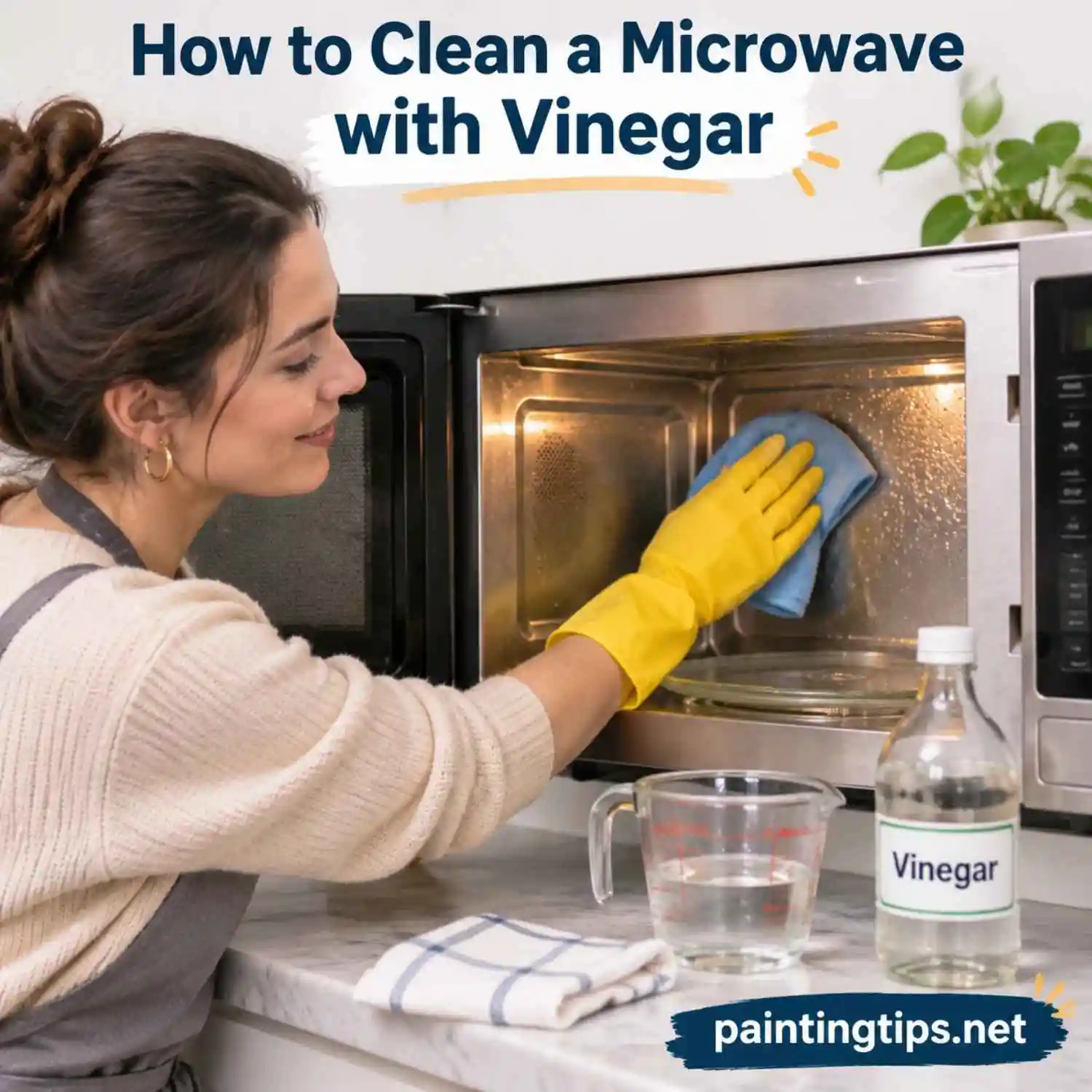
This is the method most people search for, and it earns that spot. White vinegar is cheap, it cuts grease well, and it takes the edge off lingering smells. Stir 2 tablespoons into a cup of water in a microwave-safe bowl and run it for 3 to 5 minutes, until the water boils and the window fogs over. Leave the door shut for another 5 minutes, then lift the bowl out with oven mitts and wipe the ceiling, walls, and floor with a damp cloth.
Vinegar is the one we’d pick for greasy walls and the ceiling, and every week or two is plenty for a normal household. The smell is sharp while it steams, so prop the door open afterward and let the microwave air out.
How to Clean Microwave with Lemon

Lemon does the same steaming job but leaves the kitchen smelling like lemons instead of salad dressing, which is the main reason to choose it. Use half a cup of water and the juice of half a lemon, and drop the squeezed half into the bowl too. It needs a few minutes in the microwave and a short rest before you wipe, just like the vinegar version.
It’s a milder option than vinegar, so it suits fresh splatters and light buildup best. It’s also what we reach for after reheating fish, curry, or anything else that leaves a smell behind.
How to Clean Microwave with Baking Soda

Baking soda is the one to grab when steam leaves a crusty spot behind. It’s a mild abrasive, so it lifts dried food without the damage a scouring pad would do. Steam the microwave first so the spot has softened, then put a pinch on a damp sponge and work it in small circles with very little pressure. Wipe with a clean damp cloth until the powder is gone, since any leftover film dries white and chalky.
Keep it to the stuck-on bits rather than the whole interior, and don’t pour it loose onto the floor of the microwave, where it can find its way into the vents.
How to Clean Microwave with Dish Soap

For everyday cleaning, dish soap is the easiest of all. A few drops in warm water and a soft cloth wrung out until it’s barely damp let you wipe the ceiling, walls, floor, and inside of the door in a couple of minutes. A second pass with a cloth dampened in plain water takes off the soap, and a dry towel finishes it.
It’s also what we use on the door seal and the turntable, since that’s where grease collects, and the sink handles a turntable better than the microwave does. Do it after any spill and once a week as a general wipe.
How to Clean Microwave with Salt
Salt shows up in a lot of cleaning tips, but we’d skip it for a microwave, and there are three reasons why. The first is corrosion and rust. Salty water vapor or leftover salt can oxidize the metal parts inside the microwave and, over time, the painted surfaces as well. The second is scratching, since salt crystals are hard enough to mar an enamel or painted interior and wear down its protective layer. The third is that salt doesn’t evaporate along with the water, so it adds nothing to the steam, and on its own it won’t soften dried grease or food stains. Baking soda on a damp sponge is the gentler way to deal with a stubborn spot, so that’s what we’d reach for instead.
How to Clean a Microwave Naturally
Cleaning naturally is less about a recipe and more about a habit. A lemon, a bottle of white vinegar, a box of baking soda, and dish soap already in the kitchen cover just about every mess a microwave produces. The routine that works best is a quick wipe right after a spill, a steam session once a week or so, and baking soda only for whatever is left.
The catch is patience. Milder ingredients take more time on old, baked-on buildup, so a really neglected microwave may need the steam twice before it gives up. If it still won’t budge, a stronger product is fine, but try the second round first.
How to Clean a Microwave with Lemon and Vinegar
People often wonder whether mixing the two cleans better. The steam and the vinegar do most of the work and the lemon mostly softens the smell, so this is the version for anyone bothered by a sharp vinegar odor. Use half a cup of water, 2 tablespoons of white vinegar, and the juice of half a lemon with the squeezed half left in the bowl, then follow the same timing as the vinegar method. It makes a good weekly clean when grease has started to build up in the microwave.
How to Clean a Microwave Without Scrubbing
The inside of a microwave has a painted or coated finish, and after years of working with coatings we’ve seen how fast rough pads wear one down. Once the finish is scratched it holds grime better than it did when it was smooth, which is how a dirty microwave ends up needing more scrubbing every time.
What replaces the scrubbing is time and a soft cloth. Once the steam has done its job, microfiber or a soft sponge takes off most of the film in one pass. A spot that stays can be loosened with a damp paper towel laid over it for 30 seconds in the microwave, followed by a minute’s rest and a gentle wipe. Anything still stuck gets another round of steam rather than more pressure.
How to Clean Microwave After Burning Food
Burnt popcorn, oatmeal that boiled over, a potato left in too long: everyone has done one of these. What helps most is acting while the mess is manageable, so open the door, let the microwave cool for a few minutes, and pick out the big burnt pieces with your hand or a soft spatula.
Run a bowl of lemon or vinegar water for 5 minutes and let it stand closed for a full 10, since burnt residue needs longer to soften than a normal splatter. Then wipe the walls and treat any leftover carbon spots with a pinch of baking soda on a damp sponge. The turntable and ring go in the sink with hot soapy water. If you ever see flames or heavy smoke, keep the door shut, stop the microwave, and unplug it if that’s safe. The smell is its own problem, and the last section deals with it.
How to Clean a Very Dirty Microwave
When a dirty microwave has months of buildup, one pass won’t be enough, so work in rounds. Start with a longer steam than usual, 5 minutes of vinegar or lemon water followed by a 10-minute wait, and wipe off whatever has loosened. Repeat if you need to, and save baking soda on a damp sponge for what remains.
If that still isn’t enough, a store-bought microwave cleaner or degreaser can help. Pick one that’s clearly labeled for the inside of a microwave, follow the label, and check your manual, since manufacturers sometimes list products to avoid. Some cleaners are meant to go on the cloth rather than the walls, so read before you spray. Afterward, wipe the interior a couple of times with a damp cloth and leave the door open so no chemical smell or residue stays behind. Keep sprays away from the vents and the control panel.
Heavy grease rarely stays inside, either. If the cabinet above or beside the microwave has picked up a sticky film, we’d recommend our post on how to clean a greasy kitchen cabinets before you start on it.
How to Clean a Moldy Microwave
Mold in a microwave is rare, but it can show up when food residue sits for a long time in a closed, damp space, and it shouldn’t be ignored. Unplug the unit, open a window or run a fan so you aren’t breathing in spores, and wash the turntable and ring in hot soapy water.
Wipe the moldy areas in one direction with a cloth dampened with warm soapy water or a vinegar and water mix, so you don’t spread it around. Run a vinegar steam afterward, wipe the inside again with a clean damp cloth, dry everything well, and leave the door open for a few hours. Throw the cloth away or wash it hot. If the mold keeps returning, or the coating inside is peeling or rusting, cleaning the microwave won’t fix it. A damaged interior isn’t worth using, and replacing the unit is the safer call.
How to Clean a Stinky Microwave
Odors come from food oils and residue that soak into the interior and the rubber seal, so covering them up never lasts. Run lemon or vinegar water for 5 minutes, give it 5 more behind the closed door, and then go over the walls, ceiling, floor, and especially the seal and edges, where grease collects. The turntable and ring get washed separately, and an hour with the door open lets everything dry out.
For a smell that hangs on, put a small bowl of baking soda or a few lemon slices inside overnight with the door shut, and take it out before the next use. If it keeps coming back, something is still hiding in there, and a flashlight along the door edges and vent area usually finds it.
How to Safely Clean a Microwave
Cleaning a microwave is low-risk work, but a few careless moves can leave you with a steam burn or a ruined interior. Unplug the microwave before wiping by hand, since the steam step is the only part that needs power. Hot bowls and steam can burn, so wait a minute before opening the door and use oven mitts. Water can also get very hot without visibly bubbling, so don’t overheat it, and let the bowl settle for a minute before you take it out.
Stick to microwave-safe containers, never metal, and skip steel wool, rough pads, and harsh powders that scratch the coating. Spray the cloth instead of the microwave so liquid stays out of the vents and controls, and never mix cleaning products. Bleach in particular should never be combined with vinegar or other cleaners. And don’t skip the door seal, because grease builds up along the edges and a dirty seal holds odors.
How to Get Rid of Burnt Smell in Microwave
A burnt smell can hang around for days, and it won’t leave until the residue itself is gone, so begin with the cleanup from the burnt food section. After that, lemon slices or a splash of vinegar in the steaming bowl help neutralize what’s left in the air. Wipe the inside afterward, paying extra attention to the ceiling and the door seal.
To pull out what’s left, set a bowl of used coffee grounds inside for a few hours, or a small bowl of baking soda overnight, with the door closed. If the smell survives a couple of rounds, check under the turntable, the roller ring track, and around the door seal. A smell almost always means something is still in there.
How to Clean Microwave Without Vinegar
Some people can’t stand the smell, and some simply have none in the house. Either way you have plenty of options, and the right one depends on the mess. For grease, warm water with dish soap on a soft cloth does the job. For dried spots, use baking soda on a damp sponge. For smells, go with lemon steam, or a bowl of baking soda left overnight.
Even plain water steam works on fresh messes, and a microwave-safe commercial cleaner is there for the tough jobs. Whichever you choose, rinse off any soap or powder at the end.
What Is the Best Way to Clean the Inside of a Microwave?
Steam is the easiest and most reliable. Heat a bowl of water with lemon juice or white vinegar for 3 to 5 minutes, keep the door closed for 5 minutes, and wipe the inside with a damp cloth. It’s gentle and cheap, and it handles most everyday messes, even a fairly dirty microwave, without any scrubbing.
What Not to Clean a Microwave With?
Skip steel wool, rough scouring pads, and abrasive powders, because they scratch the coating inside. Don’t mix bleach with other cleaners, don’t spray liquid into the vents or control panel, and never put metal containers in. Most manufacturers also advise against heavy-duty oven cleaners in a microwave, so check your manual before trying one.
Do You Need to Clean a Microwave Before Using It?
With a brand-new microwave, a quick wipe with a damp cloth and a wash of the turntable removes any dust from the factory or shipping, and it’s worth reading the manual that came with it. A used one deserves a full clean before the first use, especially if you don’t know what was heated in it.
Does Water and Vinegar Clean a Microwave?
It does. Heated water and vinegar make steam that loosens grease and food residue and helps with odors. The steam only softens the dirt, though, so you still have to wipe the inside afterward for the microwave to come out clean.
What Cleaner Is Safe to Use Inside a Microwave?
At home, water, lemon, white vinegar, mild dish soap, and baking soda are all fine when you use them sensibly and rinse them away. For store-bought cleaners, pick one that says on the label it’s safe for microwave interiors, and follow the directions exactly.
What Is the Best Microwave Degreaser?
There isn’t one best product, because it depends on the microwave and how dirty it is. The simplest degreaser is warm water with a few drops of dish soap, since dish soap exists to cut grease. If you want a commercial one, look for a degreaser labeled microwave-safe and rinse the surfaces well afterward.
Can I Use Baking Soda to Clean a Microwave?
In small amounts, yes. A little on a damp sponge, rubbed gently on dried or stained spots and wiped off with a clean damp cloth, is a good fit. Avoid pouring it loose into the microwave, and keep it out of the vents.
Can I Use Dish Soap to Clean a Microwave?
Dish soap is one of the safest choices. A few drops in warm water on a soft, well-wrung cloth cleans the interior, door, and seal. Wipe again with plain water so no soap film stays behind, and never let the cloth drip near the vents.
One last thing for the rest of the kitchen. While you have the cloths out, the wood cabinets around the microwave collect steam and splatter too, and wood doesn’t like too much water, so we’d recommend reading our post on wood cabinet cleaning before you wipe them down.
