Got paint on your beautiful wood table? Whether it’s a tiny speck or a big spill, don’t stress! This guide will show you how to effectively get paint off your wood table, tackling everything from minor stains to completely stripping existing paint for a fresh start. The trick really comes down to your table’s finish; a raw, unfinished table will react super differently compared to one that’s painted or laminated. This guide will walk you through the best methods, ensuring you can restore your table without causing any extra damage.
How to Get Paint Off a Wood Table

When paint lands on your wood table, the first thing to figure out is the wood type and its finish. This is super important because it guides your choices. Understanding these differences is key to picking the most effective (and least harmful) removal method.
Always start by gently scraping off any wet or dried excess paint. Grab a plastic spatula or even an old credit card – definitely avoid metal tools, they can scratch the wood! If the paint is fresh, a simple wipe with a damp cloth might be all you need.
A quick heads-up: if you’re dealing with any strong chemicals, make sure you’re in a well-ventilated area, like outdoors or with windows wide open. And always, always wear protective gear – gloves and eye protection are non-negotiable!
Before you go all-in, always test your chosen method on a hidden spot. Maybe the underside of the table or a leg that’s not usually seen. This way, you can be sure it won’t strip the original finish or mess with the wood’s color. The golden rule is to start gentle and only move to stronger stuff if you absolutely have to.
Removing Paint Stains from a Raw Wood Table
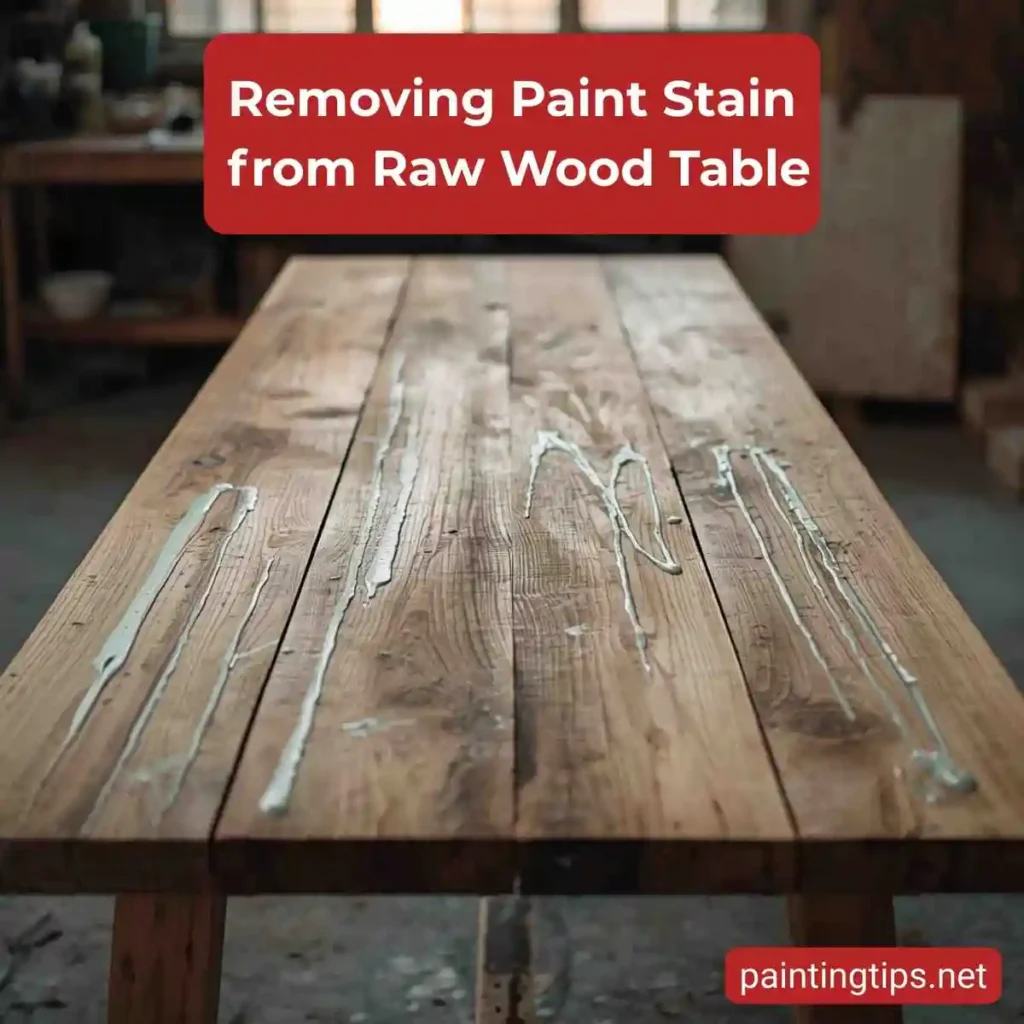
Got an unfinished, raw wood table? Paint tends to soak into the grain pretty quickly here. This can make removal a bit trickier than with sealed surfaces.
First, carefully scrape off any surface paint with a plastic putty knife. Once most of it’s gone, you’ll probably need to sand the affected area. Start with a medium-grit sandpaper (around 100-120 grit) to really get that embedded paint out. Remember to sand with the wood grain to avoid unwanted scratches.
After the paint is gone, switch to a finer-grit sandpaper (150-220 grit) to smooth everything out. Then, grab a tack cloth and wipe the area clean to remove all the dust. Your wood is now exposed and ready for a fresh finish; you can stain, paint, or varnish it to match its original look or give it a whole new vibe.
If your table is a dining table and you’re thinking about repainting it from scratch, our detailed guide on How to Paint a Wooden Dining Table will walk you through the whole process.
How to Remove Paint Stains from a Painted Table?
Dealing with paint on a table that’s already painted? This calls for a really light touch. Your main goal is to get rid of the new paint without messing up the original finish.
Start by carefully scraping off as much dried paint as you can with a plastic scraper, being super gentle. For fresh paint, a simple mix of warm water and a few drops of dish soap on a damp cloth can work. Don’t drench it!
For those more stubborn, dried stains, you’ve got a few options. Try making a paste with baking soda and a few drops of white vinegar. Apply it, let it sit for 5-10 minutes, then gently scrub with a soft brush or cloth.
Mineral spirits are also pretty useful. They’re less aggressive than paint thinner and can often soften dried latex or oil-based paint without harming the underlying finish. Apply a small amount to a clean cloth and gently dab at the paint stain. Let it sit for a minute, then gently rub. Always test a small, hidden spot first!
For acrylic or stubborn latex paint, denatured alcohol or even non-acetone nail polish remover can be effective. Again, apply sparingly to a cloth and gently rub. These can be a bit harsh, so that test spot is super important. If you accidentally damage the table’s original paint, a quick touch-up or repaint can usually fix it right up.
How to Remove Paint Stains from a Laminate Table
Good news: laminated surfaces are usually tougher and easier to clean than raw or painted wood. That protective top layer helps a lot! This means you can often use stronger cleaners without as much worry.
First, carefully scrape off any thick, dried paint with a plastic or even a metal spatula, using gentle pressure. The aim is to get rid of that top layer of paint.
Next, grab some acetone (pure acetone is more effective than nail polish remover for this). Apply a small amount to a clean cloth, dab the stained area, and let it sit for a few minutes to soften the paint. While laminated surfaces are pretty resistant, too much acetone for too long can sometimes dull the finish, so work in small sections and wipe thoroughly.
After the paint softens, gently rub the area with the cloth, using circular motions. The paint should start coming right off! You might need to repeat this if the stain is big or extra stubborn.
Another solid option after scraping is paint thinner. Moisten a clean cloth with it and wipe the table in circular motions. Paint thinner is fantastic for breaking down oil-based and some latex paints. Just make sure you have good ventilation when you’re using it.
For really extensive or stubborn paint spills on a laminated table, a chemical paint stripper might be your last resort. Use it exactly as the manufacturer instructs. Usually, you spread a thick layer over the paint and let it sit for 15-30 minutes, or until the paint starts bubbling. Then, use a metal spatula to carefully lift off the softened paint and stripper. Finish by wiping the surface thoroughly with a clean, damp cloth to remove any residue, maybe even using a general-purpose cleaner to get rid of all chemical traces.
How to Strip Paint Off a Wood Table
If you’re not just removing a stain, but want to completely strip the existing finish (paint or varnish) from your wood table to give it a fresh start, you’ll need a more in-depth approach. This usually means chemical paint strippers, and it’s a bigger job, but it gives you a perfectly clean, bare wood surface.
First, get your workspace ready. Pick a well-ventilated spot, like outdoors or in a garage with the windows wide open. Cover the floor with a large drop cloth, an old sheet, or flattened cardboard to protect it. Safety first: chemical-resistant gloves, safety glasses, and a respirator mask are an absolute must, especially with strong strippers.
Gather your tools: a natural-bristle paintbrush, a plastic or metal putty knife/scraper, steel wool, and containers.
Now, for applying the stripper: always read and follow the manufacturer’s instructions. They’ll tell you how long to wait. Pour the stripper into a metal or glass container (never plastic!). Use your natural-bristle brush to apply a thick, even layer over a manageable section of the table. Don’t spread it too thin; you want it to sit there and really soak in.
Let the stripper do its magic for the recommended time (usually 15-30 minutes, sometimes longer). You’ll often see the paint start to bubble, wrinkle, or soften – that’s your sign it’s ready! Just try not to let the stripper dry out on the surface.
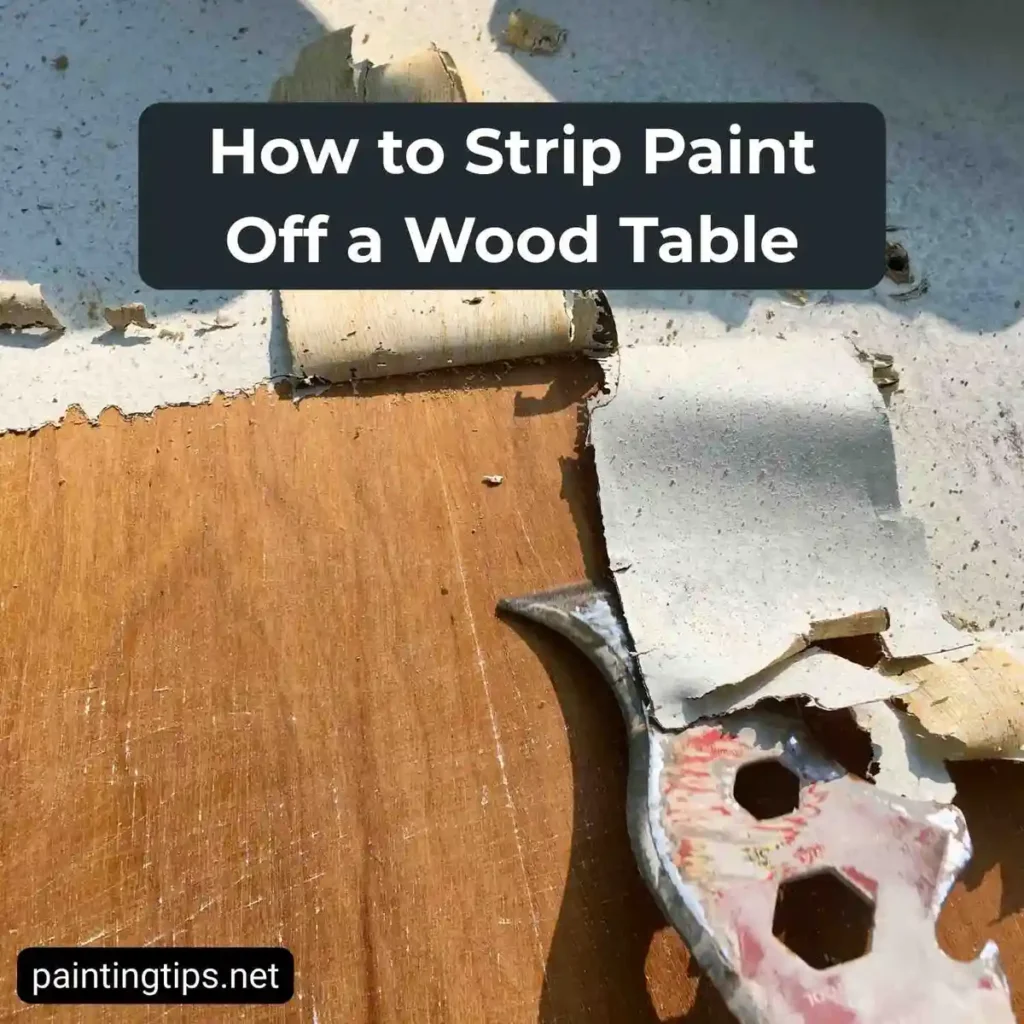
Time to remove the softened paint. Use your putty knife or scraper to gently push the softened paint and stripper off the wood. Work with the wood grain when you can, and be careful not to gouge the wood. If you hit any stubborn spots, just reapply a little more stripper and let it sit for a few more minutes before scraping again. For tricky corners or carvings, a stiff scrub brush or steel wool can really help get into those nooks and crannies.
After scraping off all the paint, you’ll have some stripper residue left behind. Many strippers need a specific neutralizing agent, often mineral spirits or water; check your product’s instructions for this!
Thoroughly wash the entire table surface with the recommended neutralizer and a clean cloth or fine-grade steel wool. If you’re using a water-based neutralizer, rinse the table thoroughly and let it dry completely.
Once the wood is totally dry, give it a light sanding with fine-grit sandpaper (like 220-grit). This smooths out any little imperfections and opens up the wood grain, making it perfect for a new finish. Sand with the grain until it feels super smooth. Finally, wipe the entire surface with a tack cloth to get rid of all that sanding dust before you apply your new stain, paint, or varnish.
If your table happens to be a coffee table and you’re ready to give it a whole new look, check out our guide on Coffee Table Painting for step-by-step tips on getting a flawless finish.
Can I Use a Heat Gun to Remove Paint from a Wood Table?
Yes, you can use a heat gun to remove paint from a wood table, especially when you’re dealing with multiple old layers. Work in a well-ventilated area, keep the gun moving, and avoid scorching the wood or inhaling fumes.
My Table Has a Really Old, Thick Layer of Paint. What’s the Best Method?
For a really old, thick layer of paint, the best method is usually a chemical paint stripper. Apply it as directed, let the finish bubble, then scrape and neutralize. A heat gun followed by scraping and sanding can also work if you prefer a mechanical approach.
After Stripping, How Do I Get the Wood Ready for a New Finish?
After stripping, let the wood dry completely, then sand the entire surface with fine-grit sandpaper (around 220-grit) to smooth imperfections and open the grain. Wipe away all dust with a tack cloth so the wood is ready for your new finish.
How to Remove Dried Acrylic Paint from a Wood Table?
To remove dried acrylic paint from a wood table, try rubbing alcohol or a baking soda and vinegar paste. Dab it on, let it sit a few minutes, then gently rub with a soft cloth. Always test in a hidden spot first so you don’t affect the existing finish.
What Is the Best Way to Strip Old Paint from a Wood Table?
The best way to strip old paint from a wood table is typically a chemical paint stripper: apply a thick, even layer, wait until the paint bubbles, then scrape, neutralize, and clean. For extremely thick, stubborn layers, start with a heat gun before stripping, but use caution.
What Removes Oil-Based Paint from a Wooden Table?
Mineral spirits are often what removes oil-based paint from a wooden table without being too aggressive on the underlying finish. For tougher, dried spots, use paint thinner or a dedicated paint stripper, and always test in an inconspicuous area first.
