Anyone who has painted with alkyd enamel knows the moment: you glance down and there’s a streak of oil-based paint across your knuckles, and soap and water do absolutely nothing. Water-based paint rinses off in seconds, but oil-based paint clings to skin, settles under your fingernails, and gets harder to remove the longer it sits. Getting oil-based paint off skin doesn’t take harsh chemicals, though. Most of the time you can clean oil-based paint off hands with cooking oil and a squirt of dish soap. The steps below start with the gentlest method and work up to the last-resort options, so you only go as far as you need to.
How to Remove Oil Based Paint From Skin
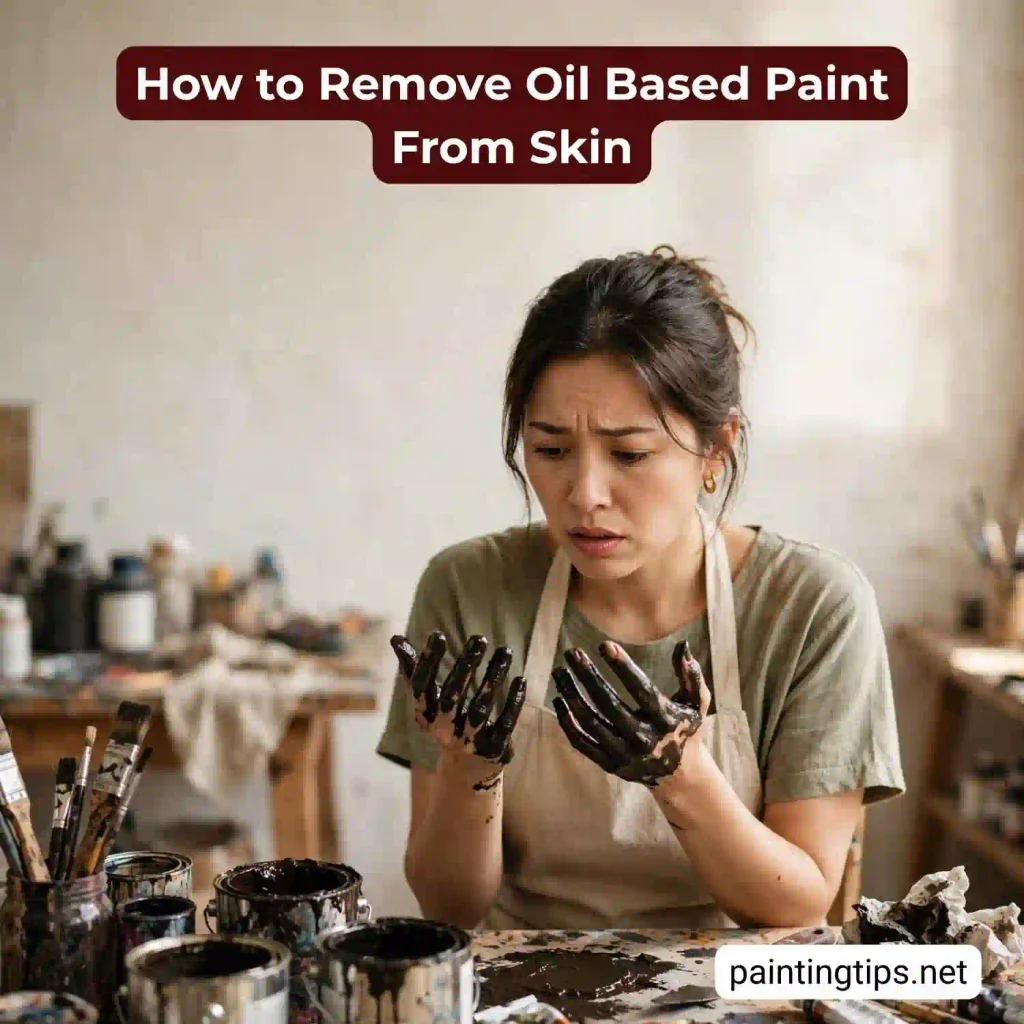
Oil-based paint dissolves in oils and solvents, not water, which is why washing your hands just smears it around. The best way to remove oil-based paint from skin is to loosen it with oil first and wash it off second. Removing oil-based paint from hands goes much faster when you follow that order. If you’re not sure which kind of paint you got on yourself, our article on oil or water based paint can help you tell the two apart, since water-based paint doesn’t need any of the steps below.
Timing matters too. Fresh oil paint comes off in a couple of minutes, while oil paint that has set for a few hours can take several rounds. Don’t scrub hard or pick at it, because that irritates your skin and rarely speeds anything up. If a thin stain is still there after you’ve cleaned up, it will fade gradually as your skin sheds over the following days.
Work somewhere with fresh air, especially once you get to step 3, and keep solvents away from open flames, pilot lights, and cigarettes.
1. Loosen the Paint With Cooking Oil, Baby Oil, or Petroleum Jelly
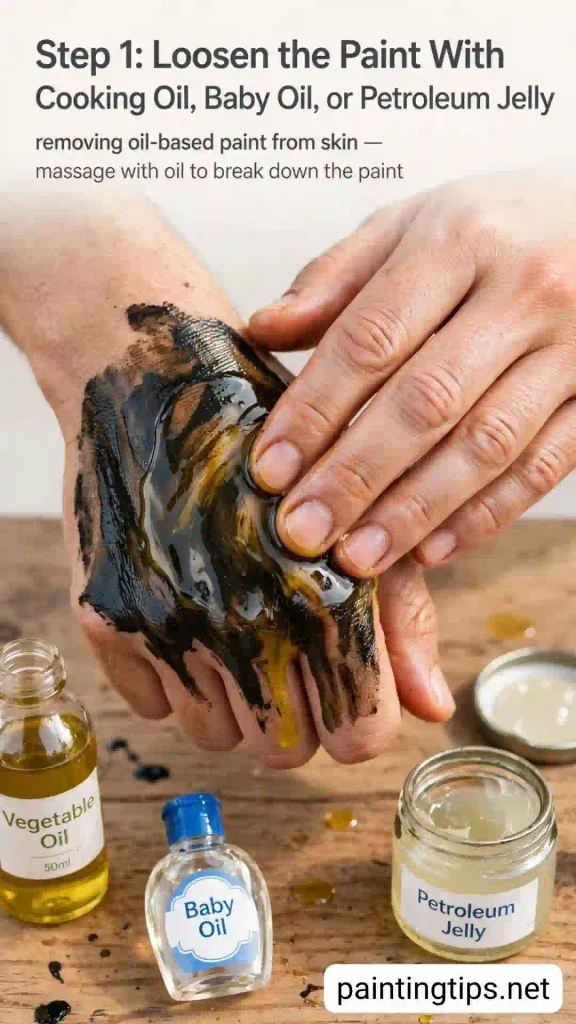
Start here, even if your hands look like a disaster. Vegetable oil, olive oil, baby oil (mineral oil with fragrance added), and petroleum jelly all work the same way. The oil blends into the paint and softens it until it lets go of your skin.
Pour a generous amount into your palm and massage it into the oil paint for two to three minutes, working around the nails too. Wipe it off with a paper towel or an old rag, and you’ll see the oil paint come away with the oil. If the oil paint has dried, let the oil sit for five to ten minutes before rubbing, and repeat as needed.
This is much gentler on your skin than any solvent, which is why it goes first. It’s also the safest option for kids and for anyone with sensitive skin.
2. Wash With Dish Soap or a Heavy-Duty Hand Cleaner
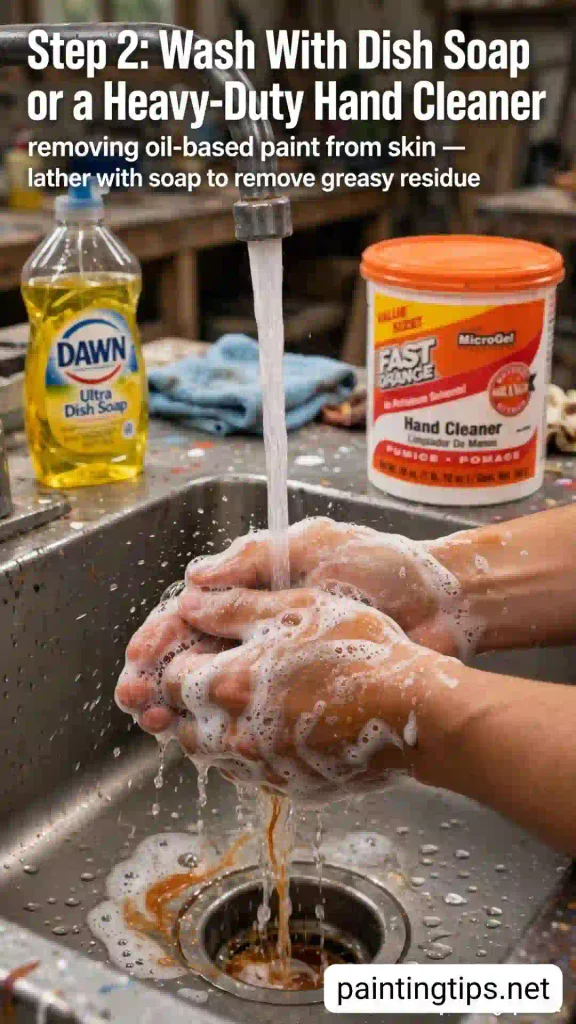
Now you have a greasy film of oil and oil paint residue, and regular hand soap won’t cut it. Dish soap will, since it’s made to break up grease. Squeeze a few drops onto dry hands (water dilutes it), work up a lather, and rinse with warm water.
If you paint often, keep a tub of heavy-duty hand cleaner in your tool bag. Gojo, Fast Orange, and Goop are built for exactly this. Citrus-based cleaners are often gentler than solvents, though the limonene in them bothers some people’s skin, so stop if you feel burning.
For oil paint under the nails, use a soft nail brush and plenty of soap. A toothpick can pick out the stubborn bits, as long as you don’t dig into the skin underneath.
3. Use a Little Mineral Spirits if Paint Remains
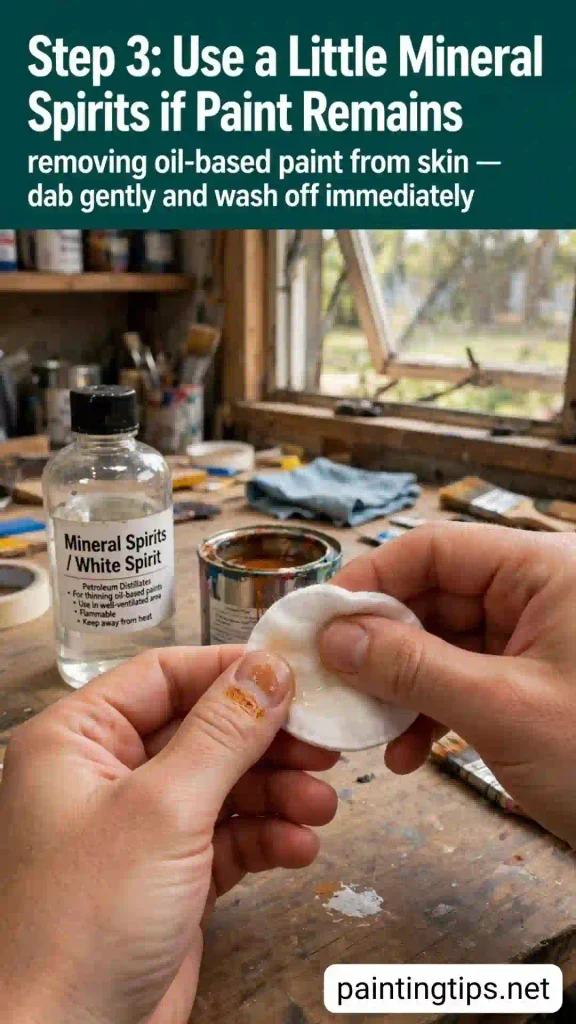
If a patch survives steps 1 and 2, mineral spirits is the next thing to try. In the US, “paint thinner” usually means mineral spirits (white spirit in some other countries), the same solvent you’d use to clean brushes. Odorless mineral spirits is a bit easier to work with, but it’s not harmless either.
We’ve used thinners for years, and they do get the paint off. They also leave skin dry, tight, and sometimes cracked, which is why we treat them as a last step and never a first move.
Dampen a corner of a clean rag or a cotton pad with a small amount, dab the oil paint, and rub gently until it softens. Keep contact short, then wash right away with dish soap and warm water. Mineral spirits strips the natural oils from your skin and can be absorbed through it, so don’t soak your hands, don’t use it on cuts or cracked skin, and don’t grab it for every little spot.
One safety note before you toss your rags. Rags soaked with oil-based paint, stain, or varnish can heat up as the finish cures and, in the worst case, catch fire on their own. Solvent-soaked rags are a different problem, because the vapors ignite easily. Either way, lay the rags flat outdoors to dry, or drop them in a metal can filled with water before throwing them out.
Not sure how mineral spirits, lacquer thinner, and the other thinners compare? Our article Can thinners remove paint? breaks down the differences.
4. Acetone and Lacquer Thinner (Not Recommended)
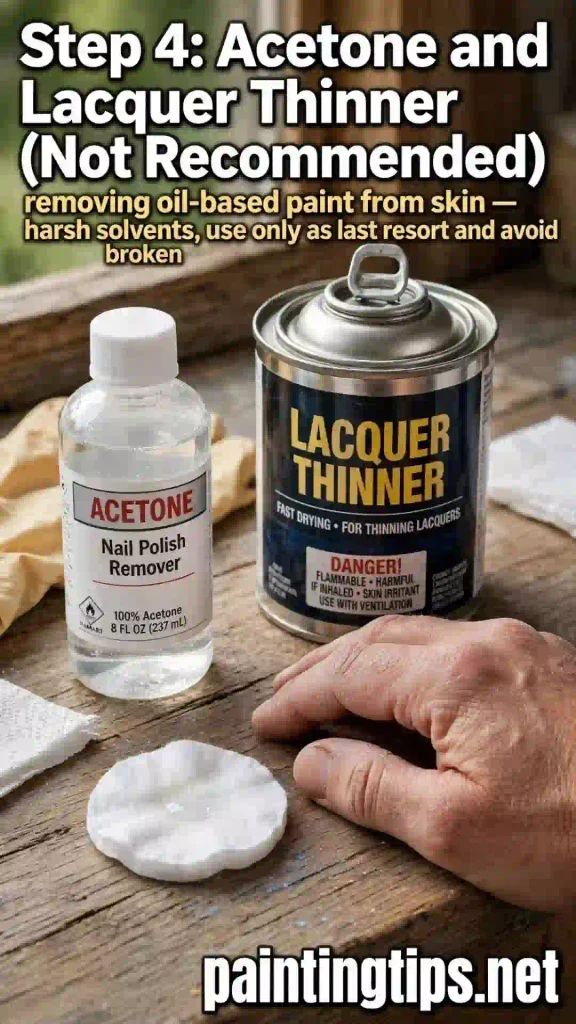
Plenty of sites recommend these, and yes, they soften oil paint. But they’re much harsher than mineral spirits. Acetone, the active ingredient in many nail polish removers, dries out skin fast and can leave your hands cracked and sore. Lacquer thinner is worse. It’s a blend of strong solvents, often including toluene, and it doesn’t belong on skin.
If you’re truly out of options, put a tiny amount of acetone on a cotton pad, touch only the painted spot, and wash it off right away. Never use either one on broken skin, near your eyes, or in a closed room. If steps 1 through 3 didn’t work, another round of oil and a bit more patience is usually the better trade.
5. Moisturize Your Hands Afterward
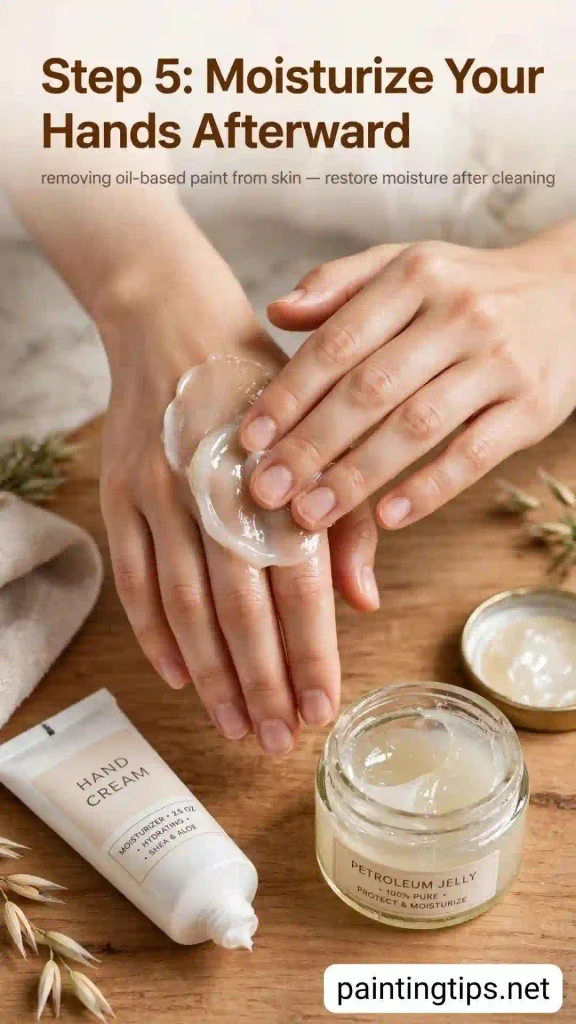
After the oil, soap, and maybe a little solvent, your skin needs some care. Dry your hands and rub in a good hand cream, then add a second coat before bed if they still feel tight. Hands already cracked from work do better with a thick ointment or plain petroleum jelly than a light lotion.
What Not to Use
Gasoline and kerosene come up a lot in old advice, and you should skip both. Gasoline is highly flammable, contains benzene (a known carcinogen), and badly irritates skin. Rubbing alcohol and cologne only dissolve a thin, fresh smear of oil paint, and they dry your hands out along the way, so oil or dish soap will do a better job. Bleach and general household cleaners won’t dissolve the oil paint at all, and they can burn your skin.
When to Get Help
Most oil paint on skin is just a nuisance. But if your skin turns red, blistered, or very painful after using a solvent, rinse the area with plenty of water and see a doctor if it doesn’t calm down. If solvent gets in your eyes, flush them with water for at least 15 minutes. If someone swallows paint thinner or any solvent, call Poison Control at 1-800-222-1222 right away.
Final Tips
When you’re removing oil paint from your skin, start gentle and only step up if you have to. Oil first, then dish soap or a hand cleaner, and mineral spirits only for what’s left. Skip the gasoline, be very careful with acetone and lacquer thinner, and finish with moisturizer every time so your hands don’t crack after a long job.
Prevention beats cleanup, though. Wear nitrile gloves (thicker ones if you’ll be around mineral spirits, since thin disposable pairs don’t hold up to solvents for long), and rub a little barrier cream or petroleum jelly around your nails before you start. If oil paint does land on you, wipe it with oil right away, before it sets. Painters often keep a bottle of baby oil or a tub of hand cleaner in the truck for exactly this reason. If it got on your clothes too, don’t let it dry there either, because our guide on how to remove oil based paint from clothes covers what works on fabric.
Once your hands are clean, your brushes are next. Our step-by-step guide How to clean an oil-based paint brush shows how to get them ready for the next job.
