Thinking about refreshing your interior? The big question many homeowners ask is: paint or wallpaper? While both options can give your walls a fresh new look, they each come with their own pros and cons. In this guide, we’ll take a deep dive into the paint vs wallpaper debate so you can decide what’s right for your home, your budget, and your lifestyle.
Paint or Wallpaper?
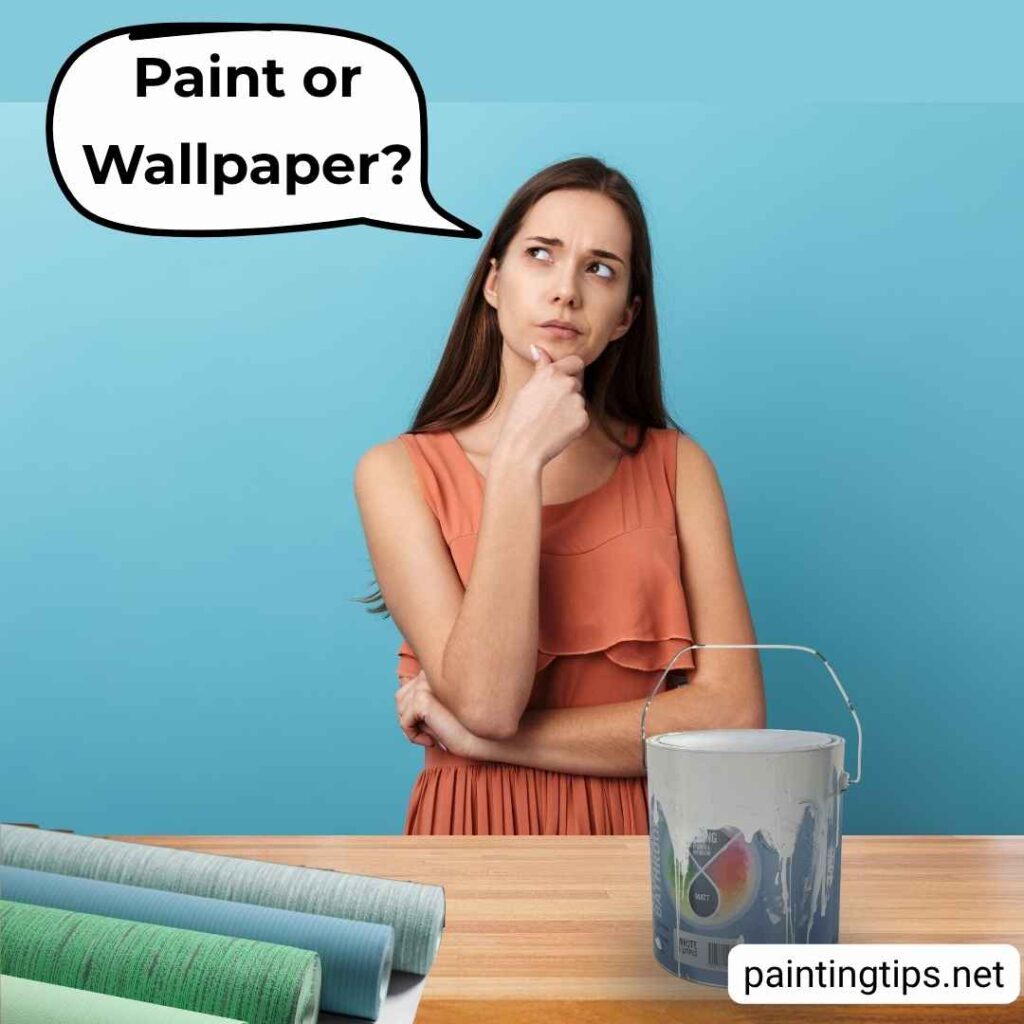
This isn’t just a style call. It shapes how often you’ll be redoing the walls, how much cleaning paint or wallpaper will ask of you along the way, and whether a humid bathroom or a sunny living room is even a good candidate for wallpaper over paint in the first place.
The right choice also isn’t the same for every room in the house. A guest bathroom and a home office put very different demands on a wall, so whether paint or wallpaper makes more sense in one room rarely carries over cleanly to the other. That’s really what the breakdown below comes down to — cost, upkeep, and how paint and wallpaper each behave once they’re actually living on your wall day to day.
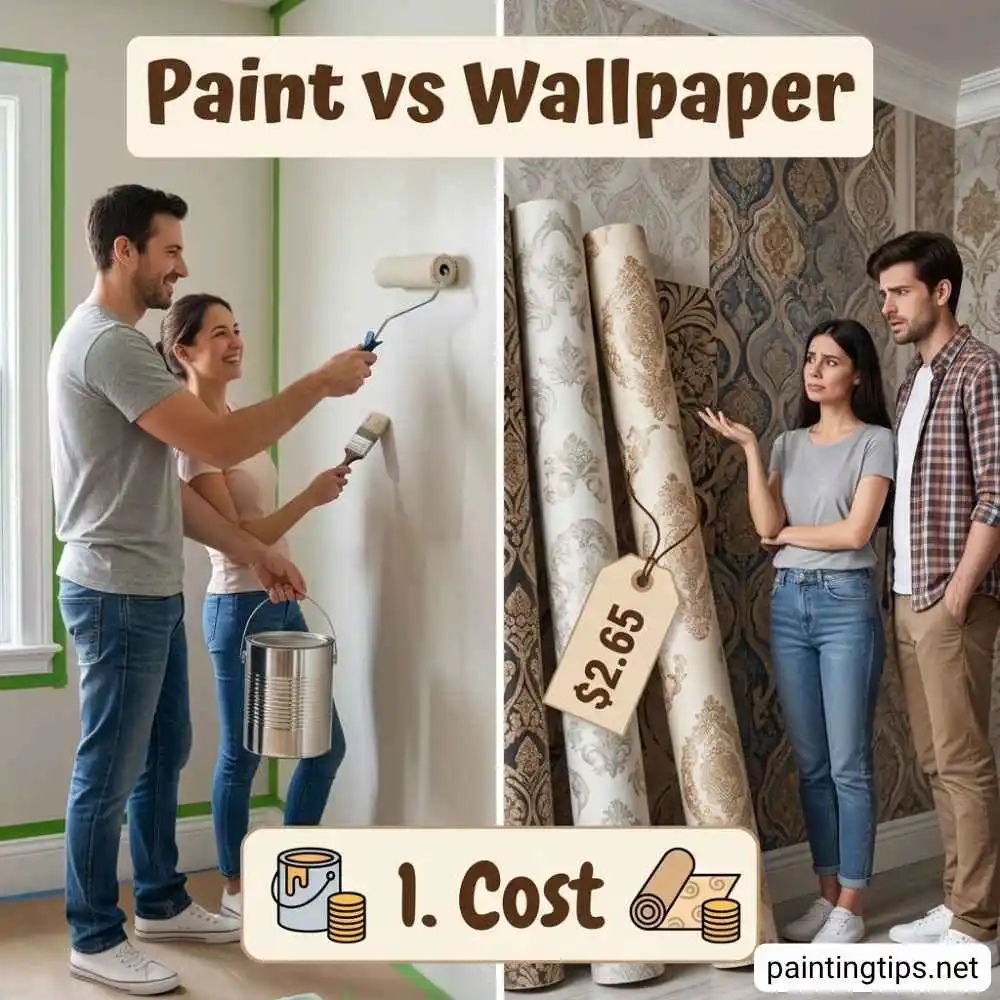
1. Cost
A gallon of paint covers a lot of wall for not much money, and most people can roll it on themselves over a weekend. Wallpaper gets pricier fast — designer rolls alone can cost more than an entire room’s worth of paint, and once you factor in a professional for anything with a pattern that needs to line up, the gap widens even more.
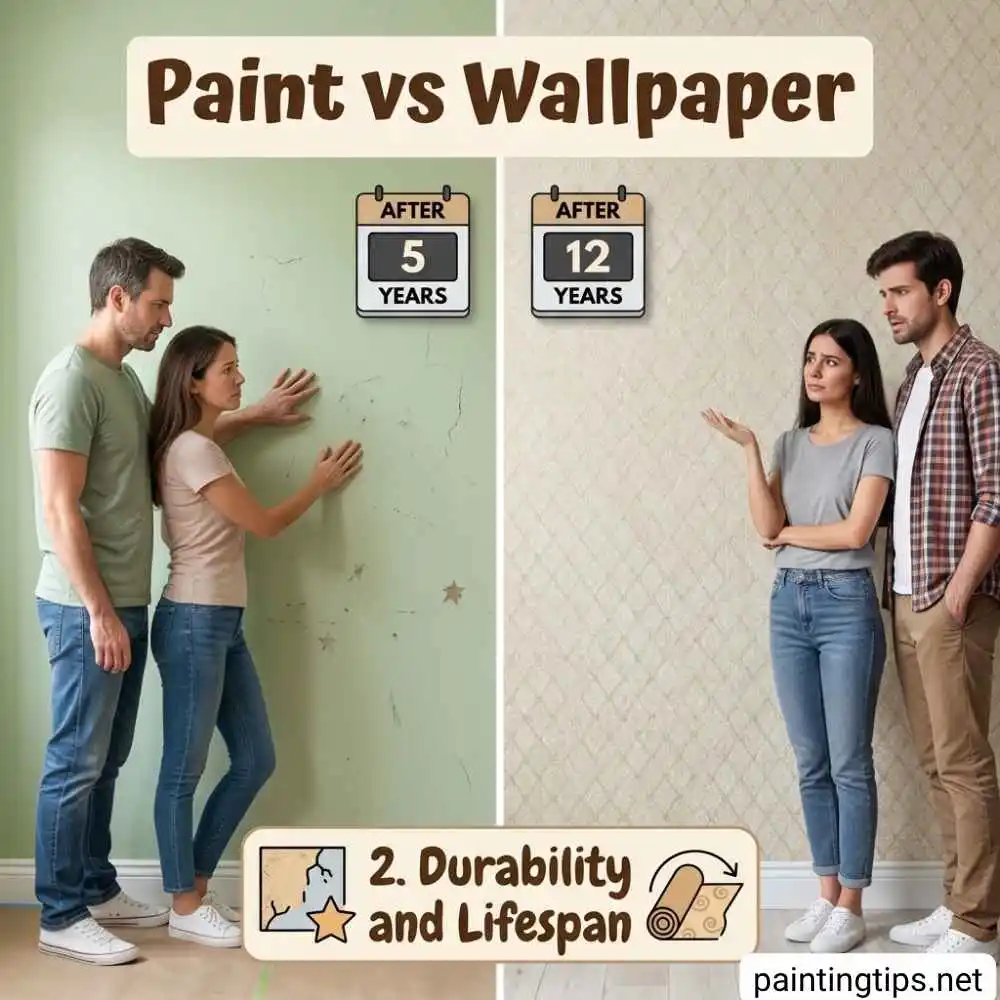
2. Durability and Lifespan
Paint fades, scuffs, and starts looking tired after three to seven years in most homes. Good wallpaper can go the distance for well over a decade without needing a second look. If you’re the type who repaints every few years anyway for a new color, this trade-off might not matter much to you. If you’d rather set it and forget it, that longer lifespan is where wallpaper pulls ahead.
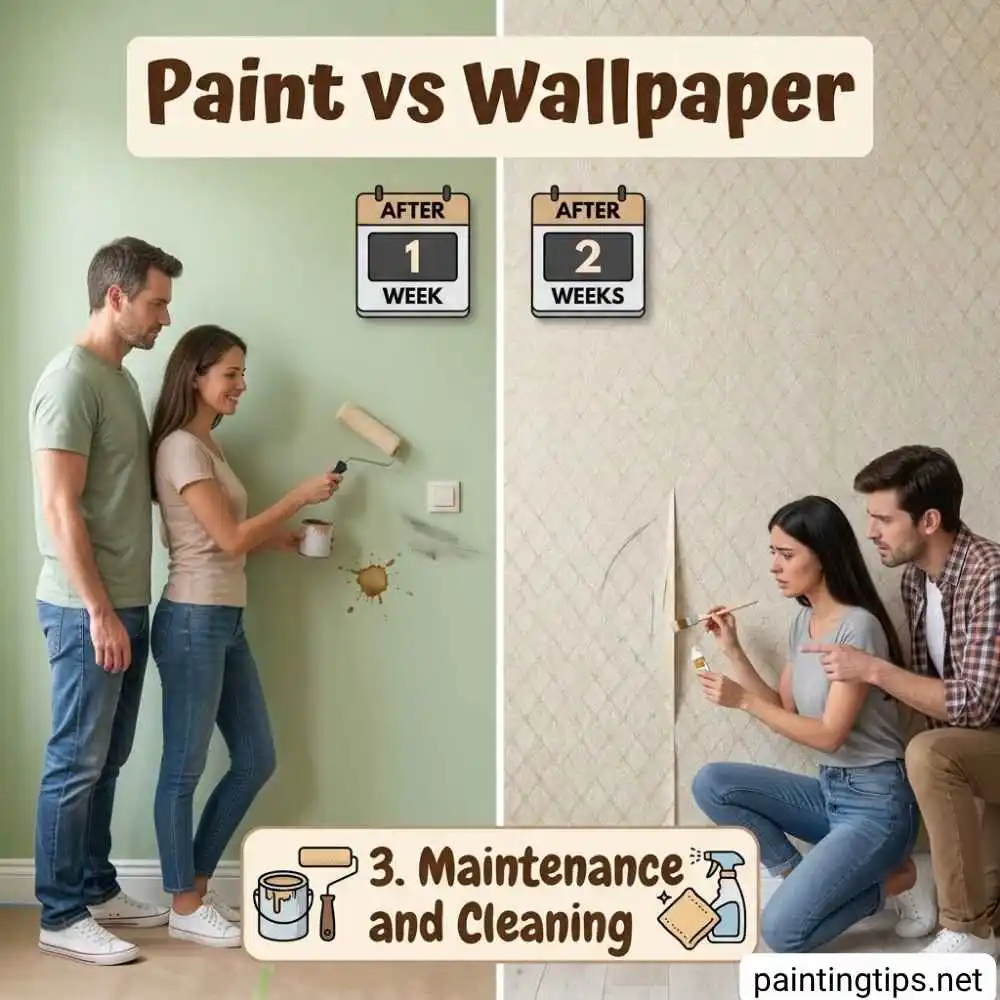
3. Maintenance and Cleaning
A scraped wall or a coffee splash on paint is a five-minute fix with a small brush and leftover paint. Wallpaper isn’t as forgiving — plenty of finishes can’t be scrubbed without the pattern lifting or the seams peeling back, so it takes a lighter touch to keep clean.
4. Installation and Removal
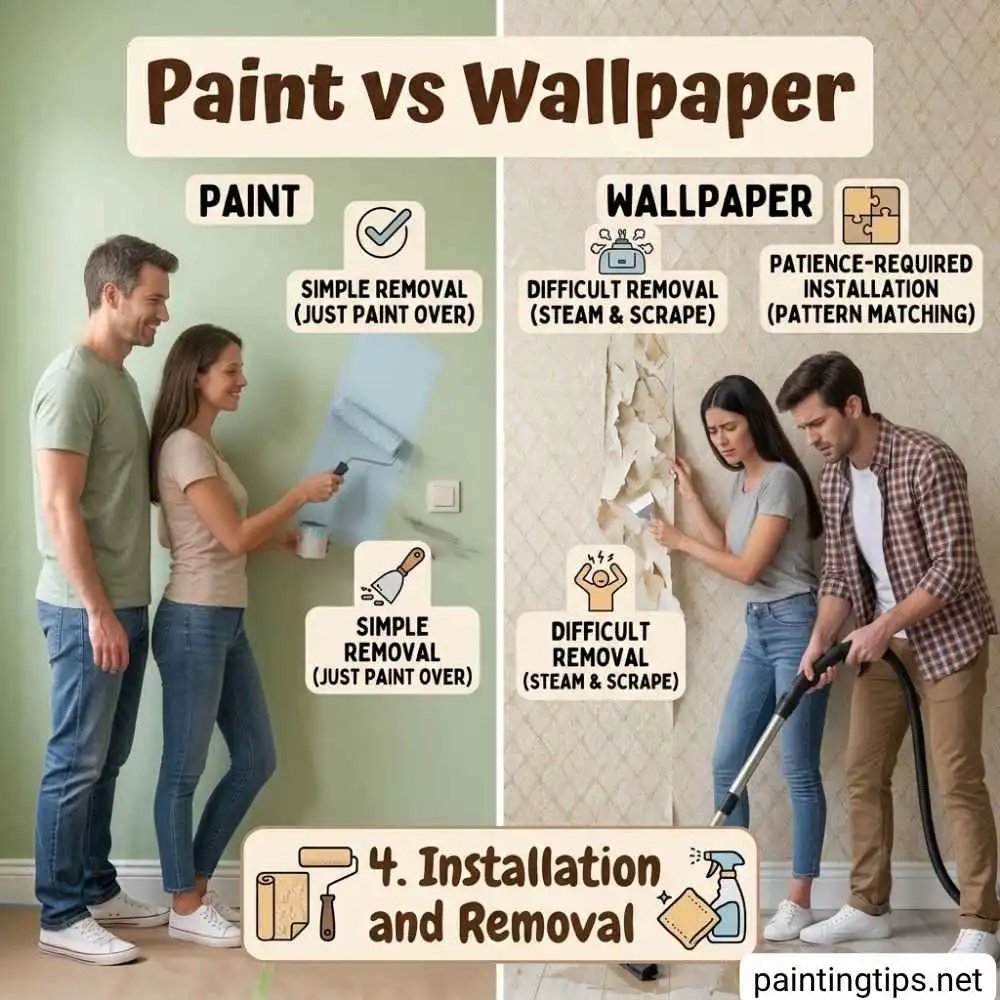
Putting up paint is quick. Taking it down when you’re tired of the color is even quicker — you just paint over it. Wallpaper is the opposite on both ends: hanging wallpaper well takes patience and a steady hand, and pulling it down later can turn into a weekend project involving a steamer and a lot of scraping. If you’re trying to figure out whether one material can go over the other, Can You Put Wallpaper Over Paint? covers what actually works, and Can You Paint Over Wallpaper? It walks through the reverse. Once the old paper is off the wall, Preparing Walls for Painting After Wallpaper Removal is worth a read before you grab a roller.
5. Moisture and Humidity Resistance
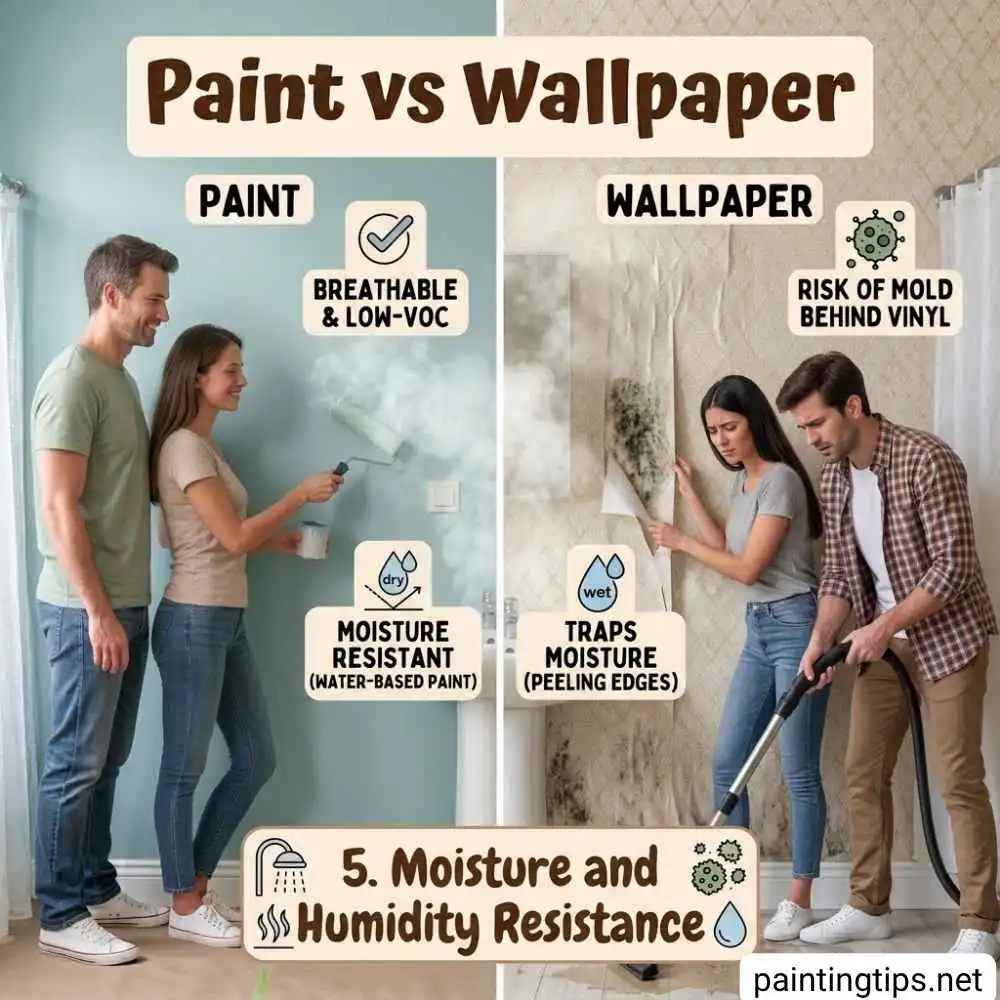
Water-based, low-VOC paint breathes with the wall and doesn’t give moisture anywhere to hide. Vinyl wallpaper can do the opposite — trap moisture behind it in a humid room, which is exactly how you end up with peeling edges or mold nobody notices until it’s a problem. Bathrooms are the room where this matters most, and our guide on Can You Put Wallpaper in a Bathroom: breaks down which products actually survive the steam.
6. Design Impact and Covering Imperfections
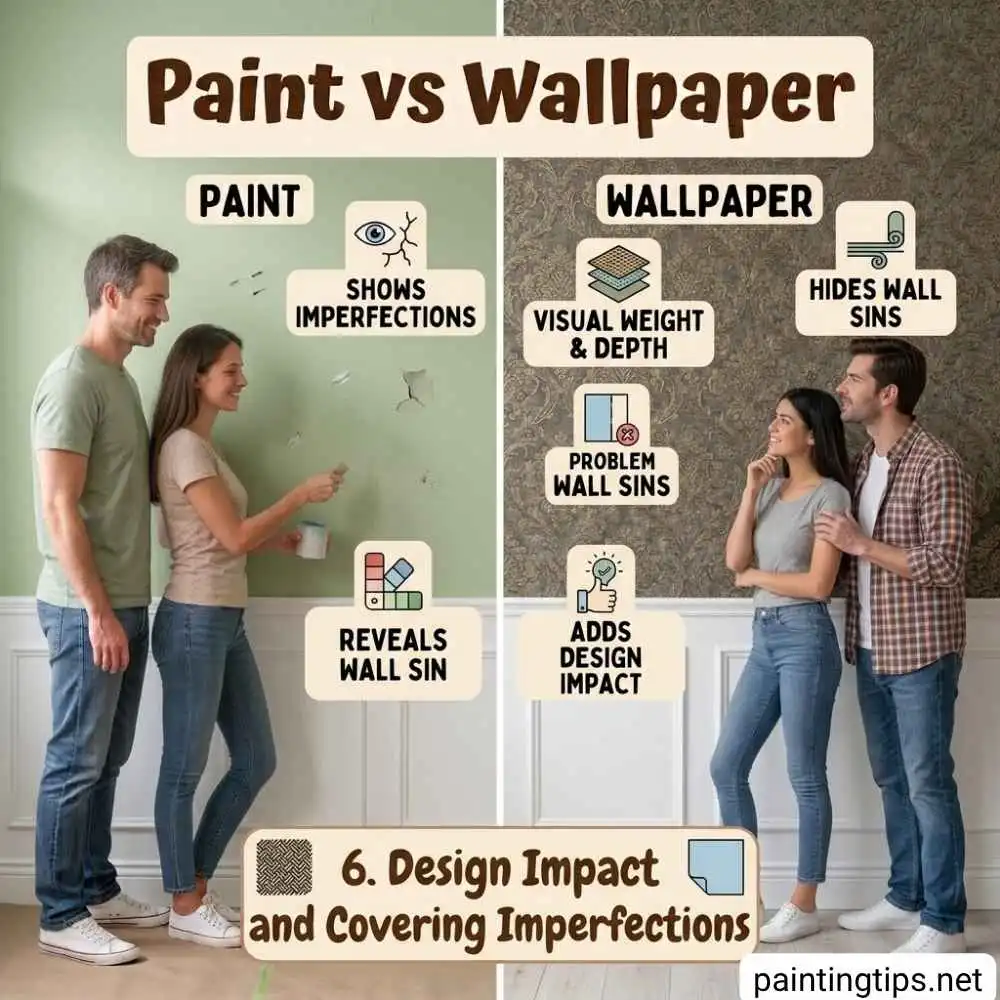
There’s no faking the depth a good wallpaper pattern adds to a room — paint just can’t do it, no matter how good the color. Wallpaper also hides a multitude of sins on an older or slightly uneven wall in a way flat paint never will, since paint tends to show every dent and crack rather than cover it.
7. Best Use Cases
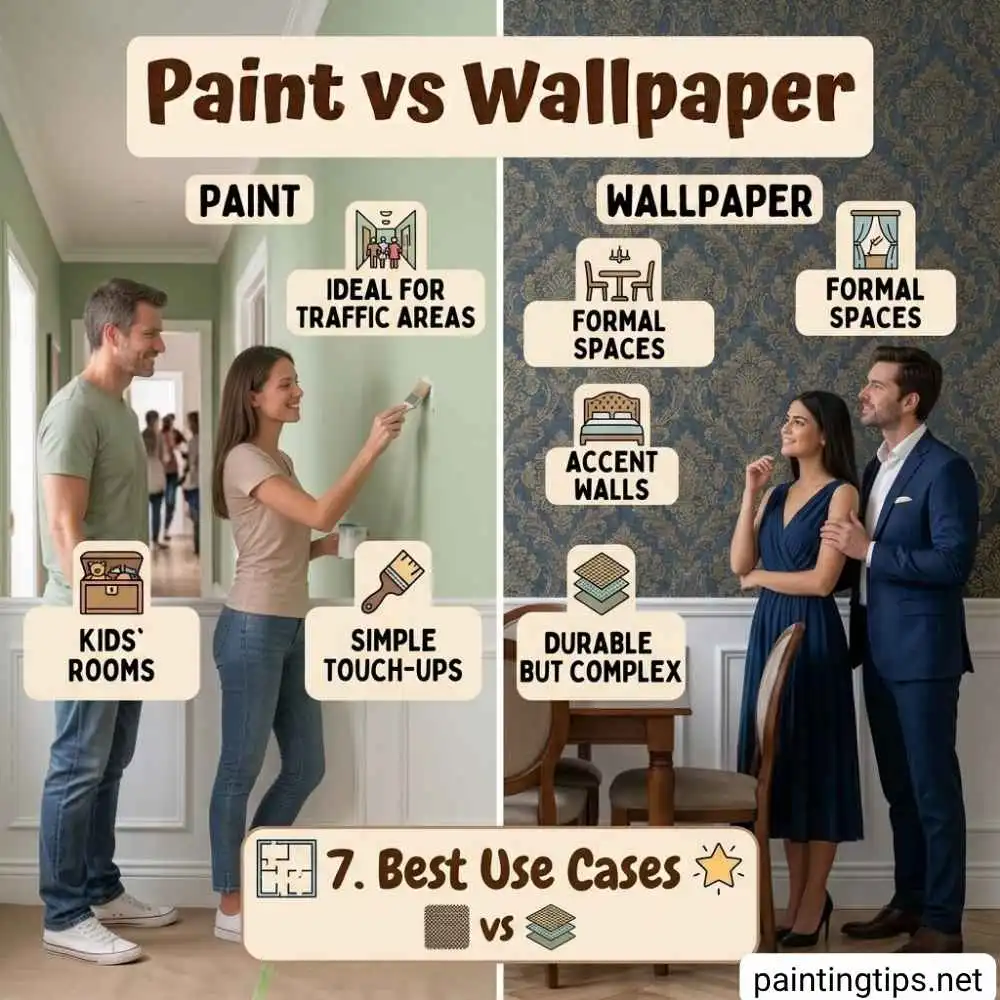
Hallways, kids’ rooms, kitchens — anywhere that takes a beating — paint is the practical answer because touch-ups are so easy. Save wallpaper for the rooms that don’t see daily wear and tear: a dining room, a formal living room, or one accent wall in the bedroom where wallpaper can just sit there and look good.
If budget and flexibility matter most to you, paint is the safer call every time. If you want a room with more visual weight and you’re fine with the extra work up front, wallpaper is worth the trade-off — especially used sparingly, on one wall rather than four.
Is It Better to Paint or Do Wallpaper?
Think about how the room gets used before anything else. A hallway or a kid’s bathroom needs to survive daily wear, so paint is the sensible pick there. A dining room or a reading nook that mostly just needs to look good is a much better candidate for wallpaper, since it won’t be taking the same abuse.
Is Wallpaper Still In 2026?
Very much so, just in a smaller footprint than it used to have. Peel-and-stick options, botanical prints, and textured papers are all over accent walls right now, and the shift has been toward using wallpaper in small doses rather than papering an entire room top to bottom.
Why Is Wallpaper No Longer Popular?
It’s not that people stopped liking how it looks — full-room wallpaper fell out of favor because of the cost, the hassle of removing it down the line, and a broader move toward paint colors that are easy to swap out whenever a trend changes. Add in the mold and moisture risk in humid climates, and paint became the default for bathrooms and kitchens specifically.
Which Is Best, Wall Paint or Wallpaper?
If you’re thinking about resale, most agents will tell you neutral paint is the safer bet — it appeals to more buyers and doesn’t need to be undone before a sale. If you’re staying put for a while and want a room that feels distinct, wallpaper on one wall does more for the character of a space than paint ever will.
Is Paint Better Than Wallpaper?
For renters, families with young kids, or anyone who repaints every few years anyway, paint is the more livable option — it’s cheap to fix and doesn’t punish you for changing your mind. Wallpaper isn’t inferior, it’s just built for people who want to commit to a look and keep it for a while.
Why Do People Use Wallpaper Instead Of Paint?
Usually it comes down to wanting something paint can’t give a room — a pattern, a texture, a sense that more thought went into the wall than just picking a color off a swatch. Wallpaper is also a genuinely good fix for a wall with a few imperfections, which is part of why it shows up so often in older homes.
What Are The Disadvantages Of Wallpaper?
Cost is the first hurdle, followed by the labor on both ends — hanging wallpaper takes skill, and removing it later takes patience. Vinyl types can trap moisture in humid rooms, which is how mold and peeling get started, and a lot of finishes just aren’t washable, so wallpaper isn’t the best pick for a busy kitchen or a bathroom that sees a lot of steam.
Related Reading
- Can You Wallpaper Over Painted Wallpaper?
- Can You Put Wallpaper on Concrete, Cement, Cinder Block Walls?
- Can You Wallpaper Over Tile? Top Adhesives
- Can You Wallpaper Over Paneling? Plastic and Wood Panels
- Can You Put Wallpaper On Glass and Windows?
- Can You Put Wallpaper on Textured Walls?
- Can You Wallpaper on Top of Wallpaper? Pros and Cons
- Can You Put Wallpaper on Plywood? Here’s How to Apply It
- Can You Put Wallpaper on Metal? A Complete Guide
