Most people spend hours choosing a paint color and about thirty seconds thinking about finish. That’s a mistake we’ve watched play out countless times in over twenty years of working in the paint and decorating industry. The wrong sheen turns a beautiful color choice into walls that smear, trim that disappears, or a room that never quite feels right under the light. This guide covers every paint finish type and sheen level in practical terms — what each one does, where it belongs, and how to combine them so every surface in a room works together.
Paint Finishes (Types of Paint Sheens)
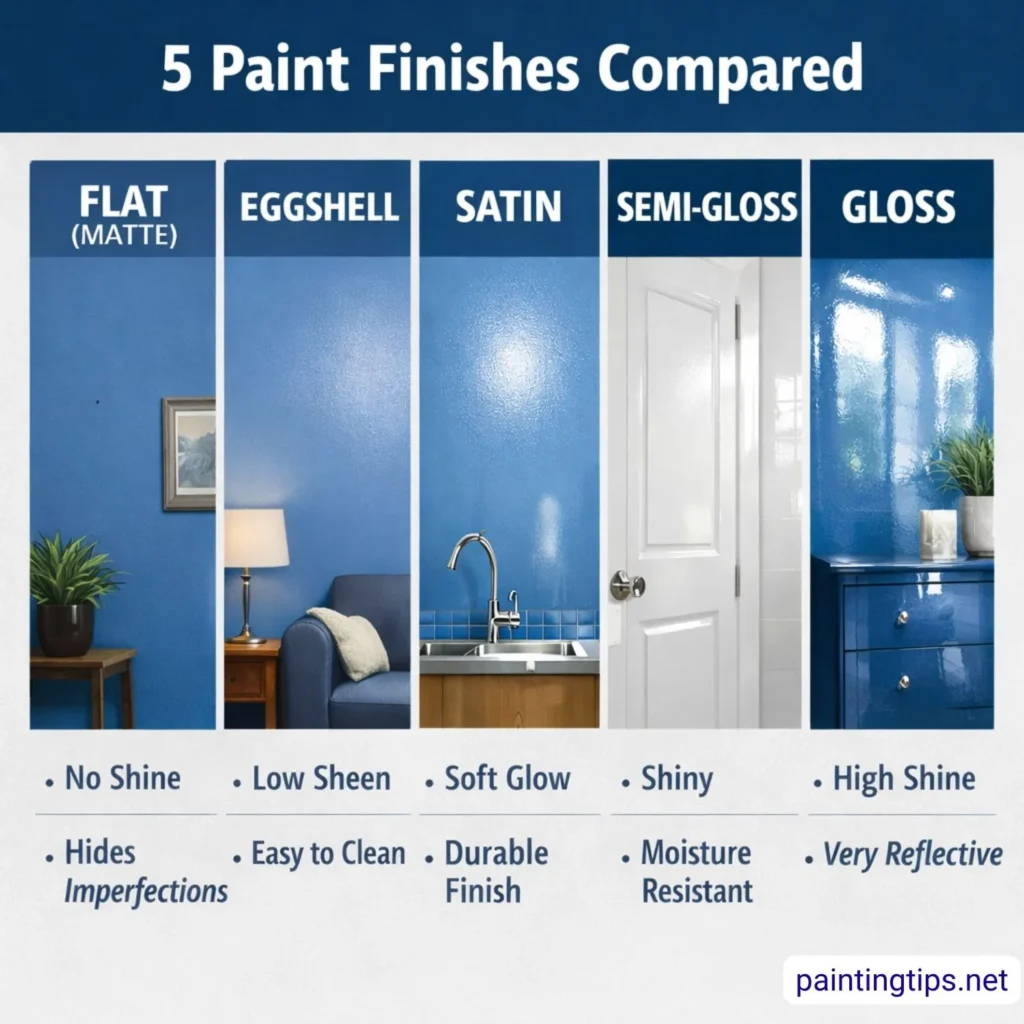
Paint finish refers to the surface quality of dried paint — specifically, how much light it reflects. But sheen is more than a cosmetic preference. It determines how washable your walls will be, how much texture or patchwork shows through, and how the color reads under different lighting conditions throughout the day.
The five primary paint finishes — Flat, Eggshell, Satin, Semi-Gloss, and Gloss — form a progression from zero reflectivity to near-mirror surfaces. As sheen increases, so does moisture resistance and durability. But higher sheen also means that surface imperfections, roller marks, and uneven patches become far more visible once the paint cures. That trade-off sits at the heart of every finish decision.
Sheen does something to a room that color alone can’t. Matte walls absorb light and settle a space — pile in some linen cushions, a wool rug, a few natural wood pieces, and the whole thing feels genuinely cohesive. Bring satin or semi-gloss into the trim and suddenly the architecture of the room has an edge to it. That contrast is what separates a room that feels designed from one that just feels painted.
Light will change your finish choice more than you’d expect — and it’s caught out plenty of our clients over the years. A north-facing room already pulls cool, and a higher sheen on those walls pushes it further in that direction. We’ve seen semi-gloss walls in south-facing rooms create a glare by mid-afternoon that made the space genuinely unpleasant to sit in. The finish you choose has to work with the room as it actually is: the direction it faces, how it’s used day to day, and how the light shifts from morning through to evening.
What Is Paint Sheen?
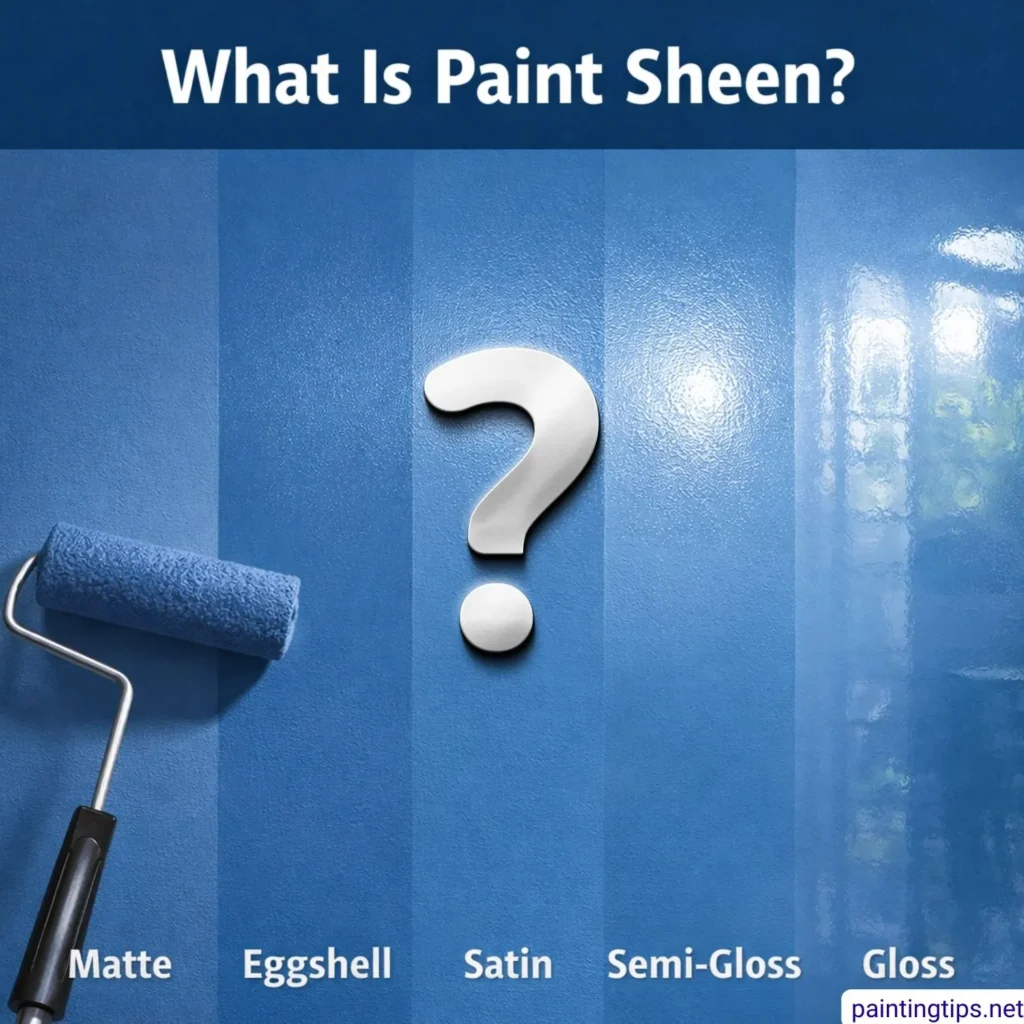
Paint sheen is the measurable amount of light that reflects from a dried paint surface. It runs on a scale from zero — a completely flat, light-absorbing surface — to over ninety percent, which is the near-mirror reflectivity of a high-gloss finish.
Technically, sheen comes down to the balance between binders and pigments in the paint formula. Higher binder concentration produces a denser paint film that reflects more light. Higher pigment volume concentration results in flatter finishes that scatter light and better conceal surface irregularities. This is why flat paint hides wall flaws so effectively, while gloss exposes every single one.
From a practical standpoint, sheen determines three things: how easy the surface is to clean, how resistant it is to moisture, and how much of the underlying texture becomes visible under light. Lower sheens soften a wall’s appearance and are forgiving of imperfect surfaces. Higher sheens sharpen everything — the color, the details, and any flaws that weren’t properly addressed in prep.
Sheen is aesthetic and functional in equal measure — ignore either side and it shows. We’ve had clients fall in love with flat paint in a child’s room, and within six months they’re calling us back to repaint because no finish on earth survives a crayon wall-to-wall. We’ve also had clients insist on gloss over drywall that wasn’t properly prepped — the finished wall looked like it was lit from below, every ridge and patch line on full display. The finish doesn’t lie. Neither does the surface underneath it.
Types of Paint Sheens
There are five main types of paint sheens used in residential and commercial interiors. Together they form the foundational list of paint finishes that most manufacturers build their product lines around. Each level represents a carefully calibrated balance between concealment and durability — and moving up the scale in either direction has real consequences for how the painted surface performs over time.
The table below compares all five primary finish types across the factors that matter most in practice. Sheen percentages are based on 60-degree gloss meter readings and may vary slightly between brands and product lines.
| Finish Type | Sheen Level | Best Used On | Washability | Moisture Resistance | Hides Imperfections |
| Flat / Matte | 0–5% | Ceilings, low-traffic rooms | Low | Poor | Excellent |
| Eggshell | 10–25% | Living rooms, hallways, bedrooms | Moderate | Fair | Good |
| Satin | 26–40% | Kitchens, bathrooms, kids’ rooms | Good | Good | Moderate |
| Semi-Gloss | 41–70% | Trim, doors, cabinets, bath ceilings | Very Good | Very Good | Low |
| Gloss / High-Gloss | 71–90%+ | Decorative millwork, furniture, doors | Excellent | Excellent | Very Low |
Flat (Matte) Finish — Where Low-Sheen Paint Works Best
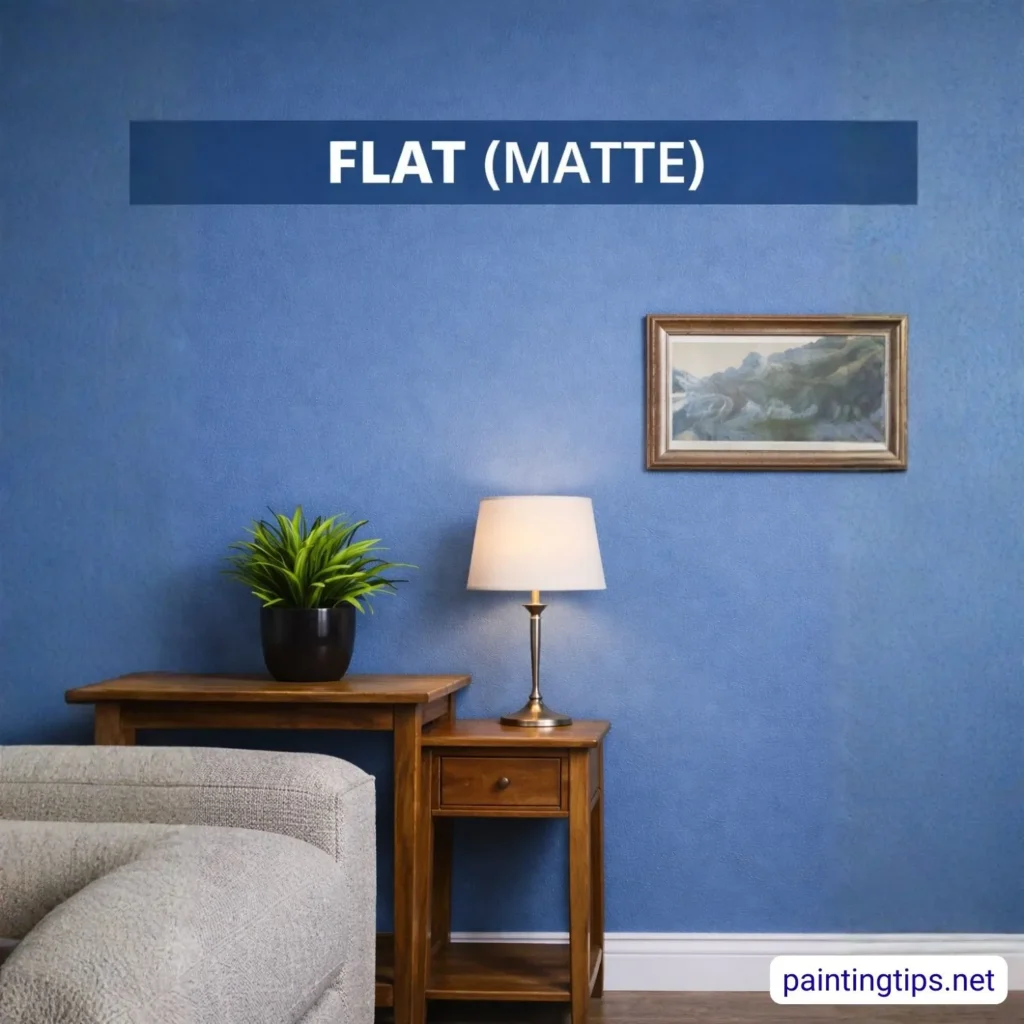
Flat paint absorbs light rather than reflecting it, which gives walls a velvety, uniform appearance with no shine whatsoever. More importantly for practical purposes, it does a better job of hiding surface imperfections than any other finish — making it the go-to choice when walls have texture variation, patchwork, or drywall seams that you’d rather not advertise.
In older homes or in rooms that have seen a lot of repairs, flat paint can genuinely be the most sensible finish on the wall. Apply eggshell or satin to a roughly textured surface and every bump catches the light. Apply flat and those same imperfections largely disappear.
The trade-off is durability. Flat surfaces don’t hold up well to scrubbing — clean them too aggressively and you’ll end up with shiny, rubbed patches that look worse than the original stain. Modern flat formulations have improved significantly, and some are now marketed as washable, but flat still doesn’t belong anywhere that sees regular contact, moisture, or heavy use.
Best used on: Ceilings, adult bedrooms, home offices, formal living rooms, and any low-traffic wall surface. Avoid in kitchens, bathrooms, hallways, and children’s rooms.
Eggshell Paint Finish — The Most Popular Interior Wall Finish
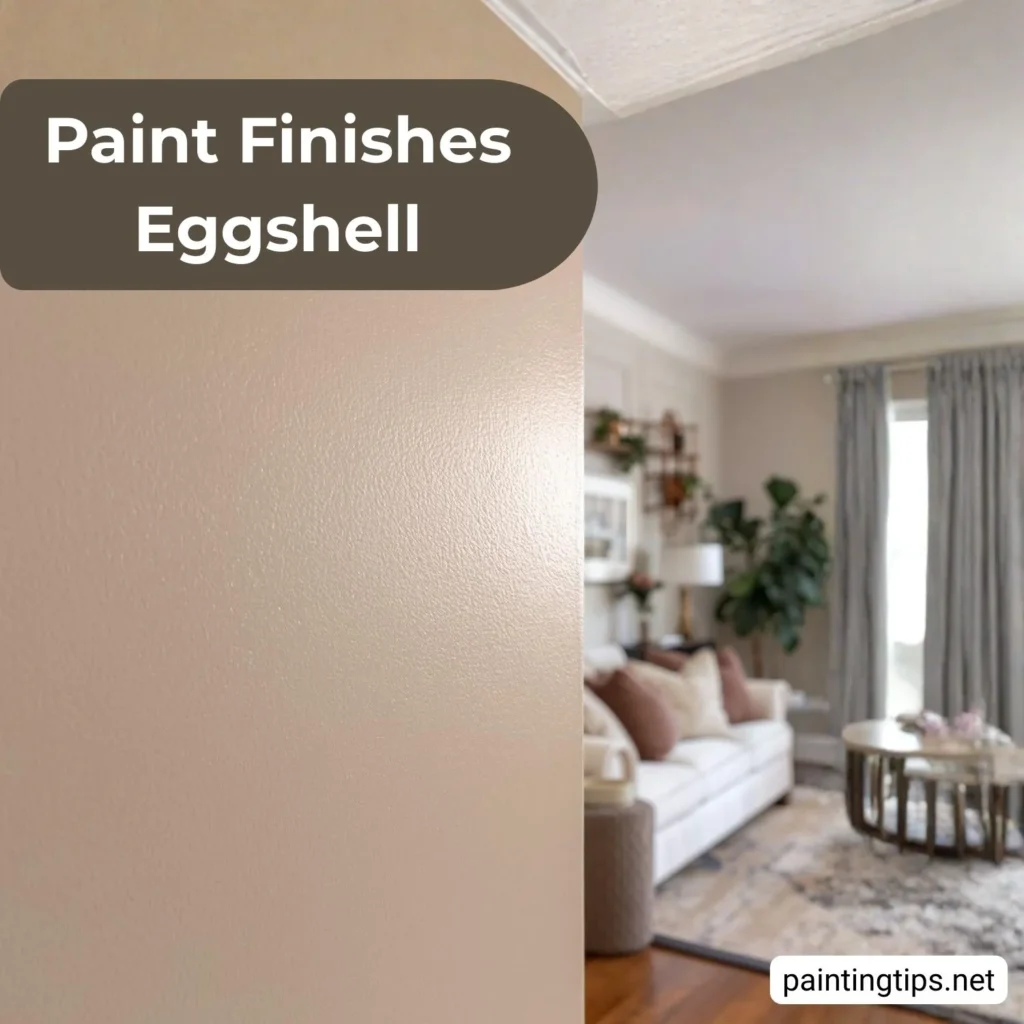
Eggshell takes its name from the shell it resembles — smooth, with just a faint, barely-there sheen that you notice more at certain angles than others. That subtlety is exactly what makes it so widely used.
It’s the most common interior wall finish in American homes, and for good reason. Eggshell offers enough durability for everyday life without creating noticeable shine or highlighting imperfections. It wipes down with a damp cloth for minor marks and scuffs, while still maintaining the soft, matte-adjacent appearance that most people picture when they imagine painted walls.
Where eggshell falls short is under aggressive cleaning. Scrub too hard or use harsh cleaning products and the sheen will lift, leaving a dulled patch that stands out against the surrounding wall. For surfaces that need regular deep cleaning, satin is the smarter choice.
Best used on: Living rooms, dining rooms, bedrooms, open-plan spaces, and hallways. If you’re looking for a single default finish for interior walls throughout a home, eggshell is almost always the right starting point.
Satin Finish — The Right Choice for Kitchen Walls and High-Traffic Areas
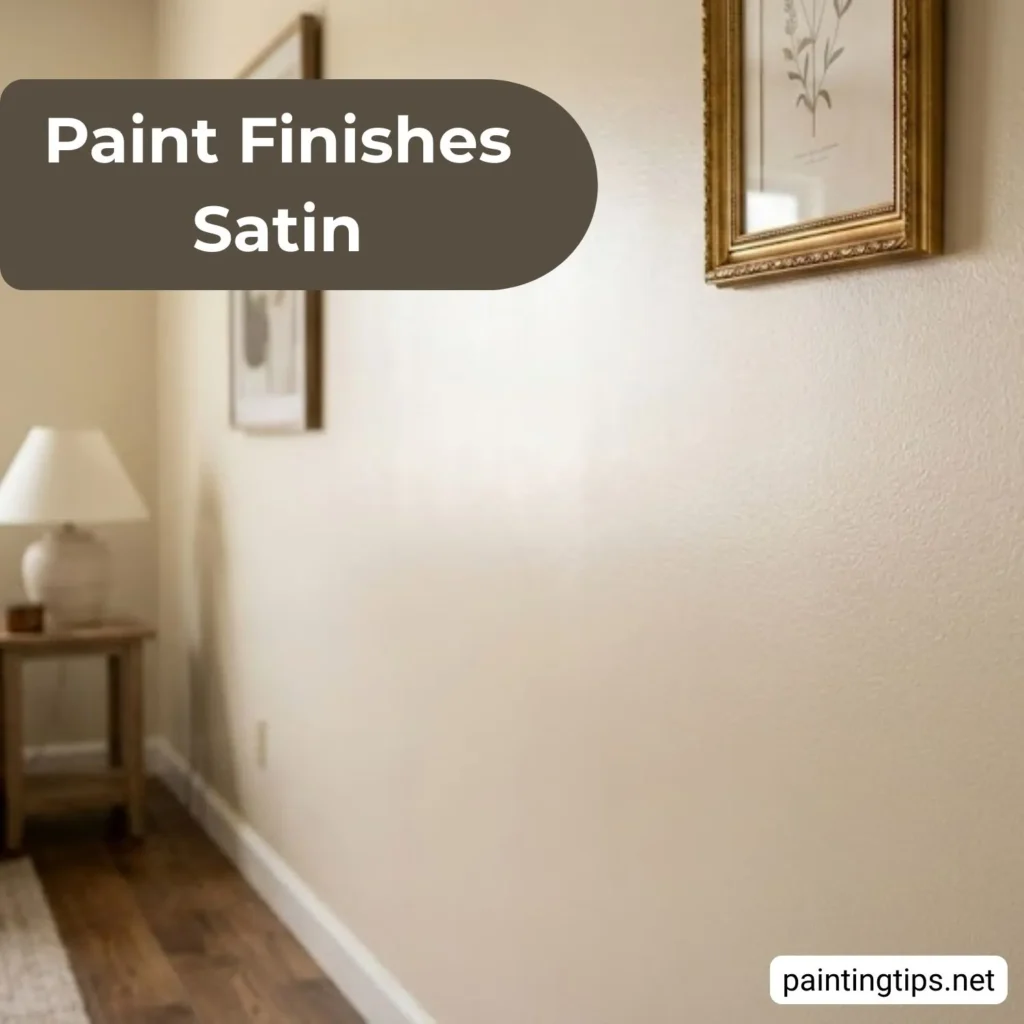
Satin sits between eggshell and semi-gloss, and in that middle ground it earns its keep in the rooms that take the most punishment. Its slightly higher reflectivity translates directly into better moisture resistance and improved cleanability — both of which matter considerably in kitchens, bathrooms, and children’s rooms.
The difference between eggshell and satin may seem subtle on a paint chip, but on a wall it becomes clear over time. Satin surfaces hold up better to repeated wiping, handle humidity without deteriorating, and resist staining more effectively. That’s why we recommend satin as the default wall finish anywhere that sees daily wear.
One thing to keep in mind: satin is less forgiving during application. Brush marks and lap lines are more visible on a satin finish than on eggshell, which means technique and paint quality both matter more. Surface preparation also becomes increasingly important — imperfections that eggshell would partially absorb will be more apparent under satin’s reflective surface.
Best used on: Kitchen walls, bathroom walls, children’s bedrooms, playrooms, laundry rooms, and any surface that needs regular cleaning. Also works well for bedroom walls when a slightly more refined look is desired. Want to know the best type of paint for bedroom walls? Check out our complete guide on paint finishes and types of paint sheens.
Semi-Gloss Finish — The Classic Choice for Trim, Doors, and Woodwork
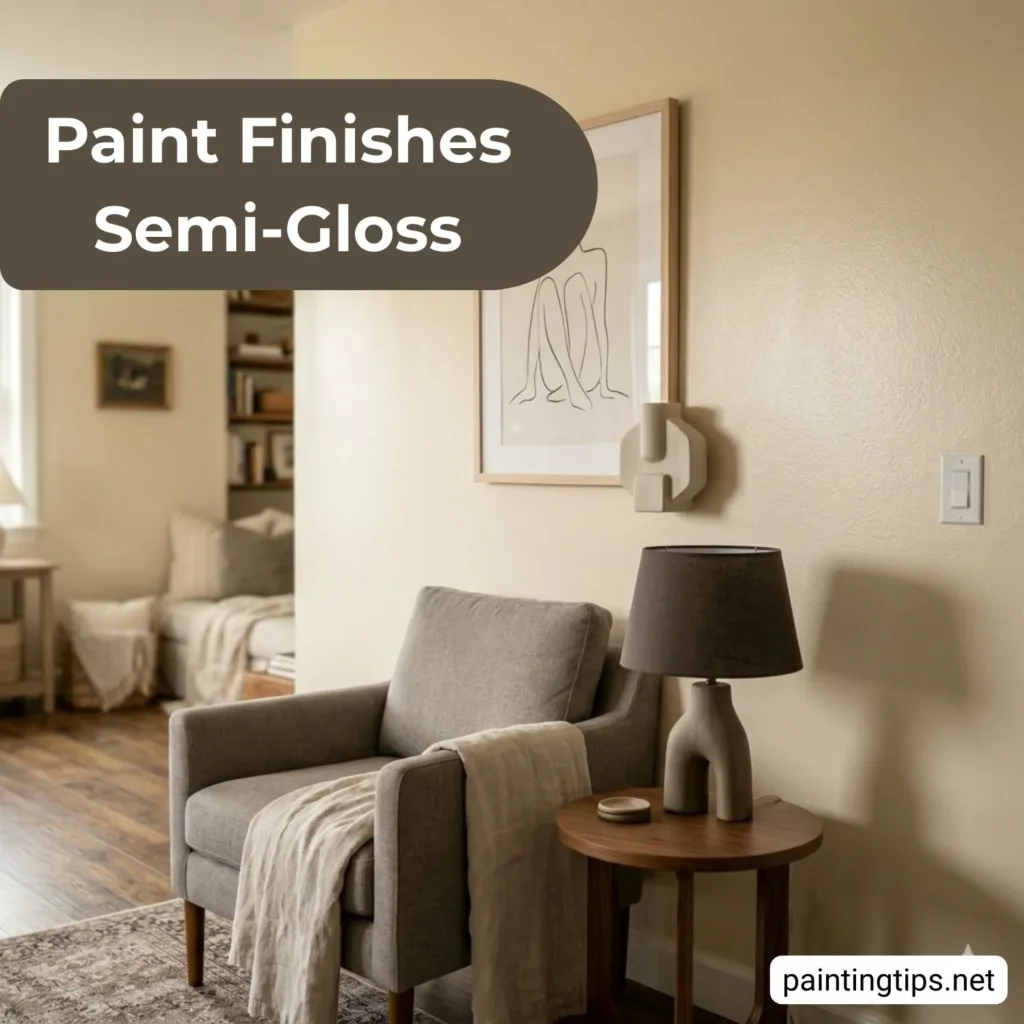
Semi-gloss is where finish stops being just about walls and starts being about architecture. For decades, semi-gloss has been the default finish for trim, baseboards, door casings, crown molding, and cabinetry — and that standard hasn’t changed because it works.
The reflectivity of semi-gloss creates a clear visual separation between walls and woodwork. When you apply eggshell to the walls and semi-gloss to the trim, the slight difference in sheen catches the eye in just the right way — the trim registers as distinct, intentional detail rather than blending into the flat field of the wall.
In moisture-prone areas, semi-gloss is largely unmatched. Bathroom doors and window frames, kitchen cabinet faces, utility room woodwork — in all of these locations the durable, nearly waterproof surface of semi-gloss handles humidity, cleaning, and physical contact in a way that no lower-sheen finish can sustain over time.
The limitation of semi-gloss is the same as any high-sheen finish: it will expose inadequate surface preparation. A dent that flat paint would absorb becomes a shadow with semi-gloss on it. Sanding, priming, and proper patching before painting are not optional at this sheen level. To learn more about the differences between matte and semi-gloss finishes, check out our full guide.
Best used on: All interior trim and molding, doors and door frames, window casings, kitchen cabinet exteriors, bathroom ceilings, wainscoting, and any architectural woodwork that benefits from visual definition.
Gloss Finish — Maximum Durability and Decorative Impact
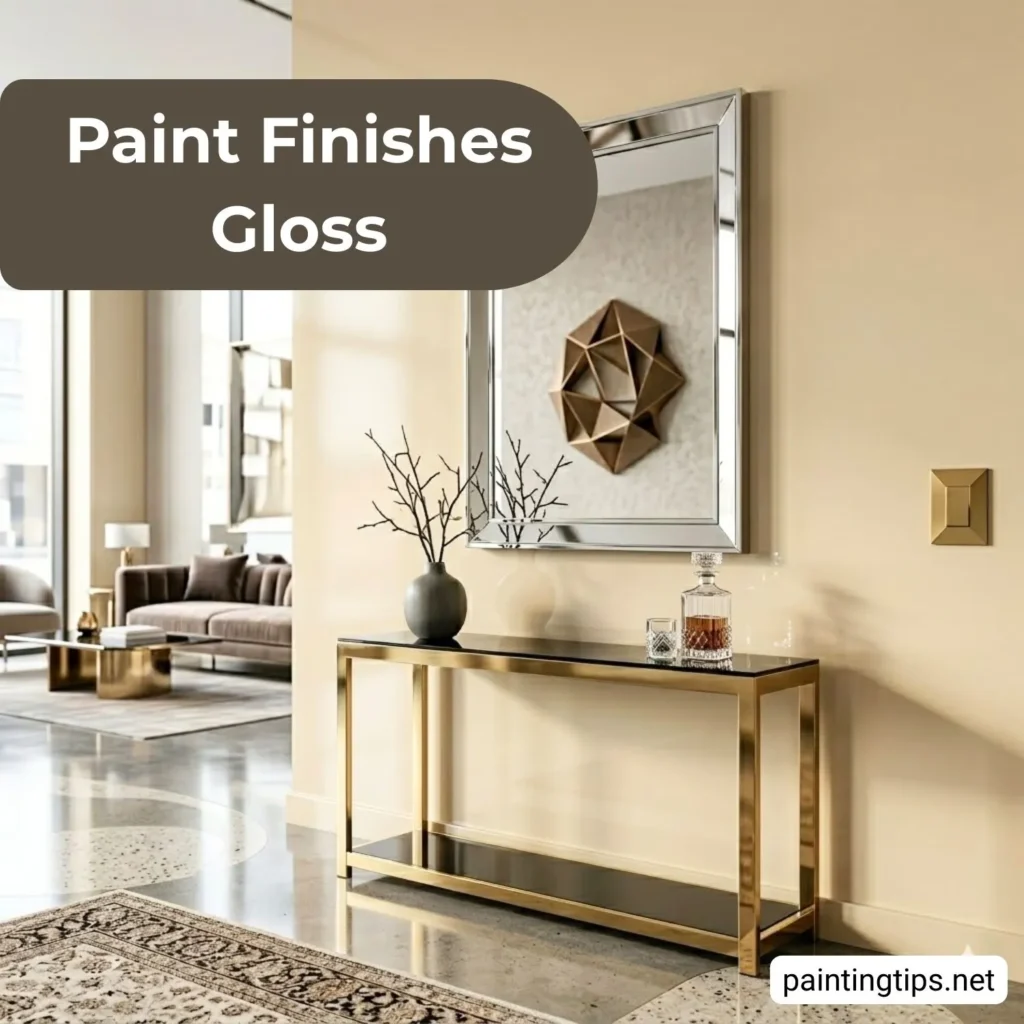
Gloss is the highest sheen among the five primary finish types, and it behaves accordingly. Its surface is dense, hard, and highly reflective — capable of withstanding more abuse than any other interior finish, but also completely unforgiving of anything that happens before or during application.
Applied to the right surface with proper preparation, gloss creates an effect unlike anything else. Colors deepen noticeably. Light bounces off architectural details in ways that give a space genuine drama. A front door in a rich, high-gloss color makes an impression that a satin version of the same color simply cannot match.
But gloss demands preparation that most people underestimate. The surface needs to be smooth — not just clean, but genuinely smooth. Fine sanding between coats, a proper primer, and another round of sanding before the finish coat are standard practice, not optional extras. Skip those steps and every brush mark, every bit of surface texture, and every previous repair will be preserved in high-definition on the finished wall.
Best used on: Exterior and interior front doors, built-in cabinetry and bookshelves, decorative millwork, kitchen island cabinets, and specific architectural accents where you want maximum visual impact. Rarely appropriate for full-wall application.
What’s the Most Popular Paint Sheen?
Eggshell is the most widely used interior wall finish in the United States, and that position has been consistent for years. Its appeal comes down to balance: it looks close to matte, performs significantly better than flat in terms of cleanability, and works across virtually every interior style and color palette.
For trim and woodwork, semi-gloss holds the same dominant position. It’s been the standard choice for baseboards, casings, and doors for generations of painters, and for good reason — its combination of moisture resistance, durability, and the clean contrast it creates against lower-sheen walls continues to earn that default status.
That said, defaults are starting points, not rules. The right sheen is always the one that fits the specific room, surface, and use case — and in some situations that means stepping outside the standard combination entirely.
How to Combine Different Paint Sheens in the Same Room
Professional painters rarely use a single finish throughout a room. Every surface has a different function, a different exposure to wear and moisture, and a different relationship to the architecture around it. Treating them all the same produces walls that feel undifferentiated — technically fine, but lacking the visual depth that well-considered finish work creates.
Here are the most effective combinations we’ve used across different room types and design styles.
Classic and Most Versatile: Eggshell Walls + Semi-Gloss Trim
This is the combination that underpins most traditional and transitional interiors, and it earns that status by working reliably in almost any setting. Walls in eggshell, all trim and woodwork in semi-gloss. The sheen difference between the two is noticeable without being dramatic — it draws the eye to the architecture of the room in a subtle, purposeful way.
It also makes practical sense. The walls, which see less direct contact and cleaning, get a finish calibrated for appearance. The trim, which takes the most physical contact and is easiest to wipe down, gets a finish calibrated for durability. Both surfaces are doing exactly what they should.
Modern and Minimal: Flat Walls + Satin Trim
In high-ceilinged, spare, minimalist spaces — Scandinavian interiors, Japanese-influenced design, or simply very pared-back contemporary rooms — the contrast between flat walls and satin trim works beautifully. The walls nearly disappear into the background while the trim details register as quiet, refined punctuation rather than bold architectural statements.
This combination works particularly well when trim and walls are the same color or very close to it. The sheen difference does the work that a color difference would normally do, producing a subtle tonal variation that reads as intentional sophistication rather than a failed attempt at contrast.
Elegant and Layered: Velvet or Pearl Walls + Gloss Details
Dining rooms, entrance halls, and formal living spaces sometimes call for something beyond the standard eggshell-and-semi-gloss formula. Velvet or pearl-finish walls paired with gloss on architectural details — door casings, crown molding, built-in surround — creates a layered effect where light plays differently across every surface in the room.
This combination requires more care in execution. The color palette needs to be controlled, surface preparation must be meticulous (especially for the gloss elements), and the overall effect can tip into excess if pushed too far. Done well, though, it’s the kind of finish work that defines a room.
Practical and Durable: Satin Walls + Semi-Gloss Trim (Kitchens and Bathrooms)
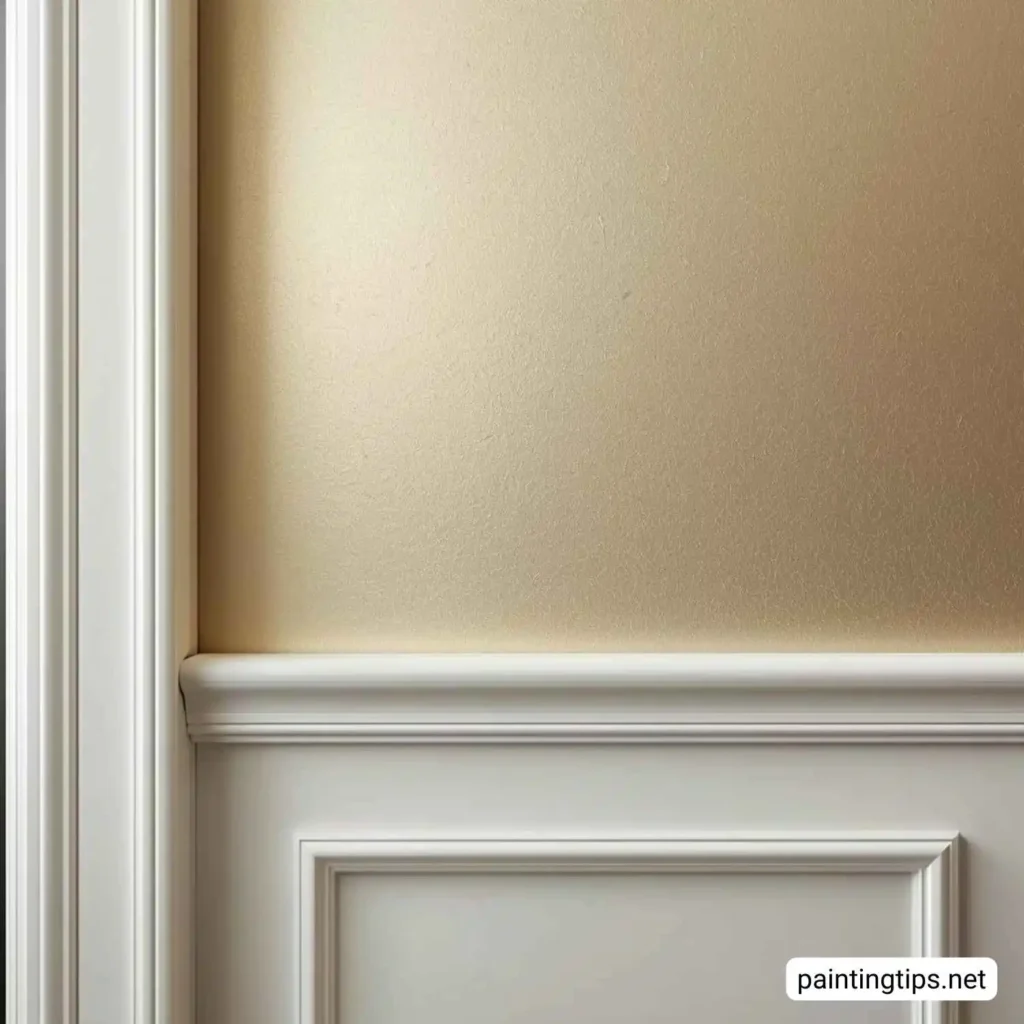
In rooms that take a daily beating — kitchens, bathrooms, laundry rooms, mudrooms — both the walls and the trim need finishes that can handle moisture, cleaning products, and physical contact without deteriorating. Satin walls and semi-gloss trim meet that standard comfortably.
The contrast between satin and semi-gloss is more subtle than eggshell and semi-gloss, which suits the utilitarian nature of these spaces. The look is clean and cohesive without drawing attention to itself — which is exactly what you want in a room where function comes first.
Additional Paint Sheens and Their Uses
Beyond the five core finish types, a number of paint manufacturers — particularly in the premium and decorative segment — offer additional sheen options that sit between the main categories or bring genuinely distinct visual qualities to a wall surface. These aren’t just marketing variations. In the right application, they open up possibilities that the standard five don’t fully cover.
| Pearl | Soft, luminous glow | Accent walls, dining rooms | Sherwin-Williams Pearl Enamel, Farrow & Ball, Behr Marquee |
| High-Gloss | Mirror-like, maximum shine | Cabinets, furniture, statement doors | SW ProClassic, Benjamin Moore Advance, Behr Premium Ultra |
| Medium Lustre | Subtle sheen, refined look | Decorative panels, accent details | Farrow & Ball Modern Emulsion, Dulux Soft Sheen |
| Low-Lustre | Barely-there shine, near-matte | Bedrooms, ceilings | Benjamin Moore Natura Low Lustre, Dulux Low Lustre Matt |
| Velvet | Tactile, velvety depth | Living rooms, hallways, feature walls | Farrow & Ball Modern Emulsion Velvet, Behr Velvet Touch |
Pearl Finish — A Subtle Luminosity That Changes With the Light
Pearl finish sits between eggshell and satin in terms of reflectivity, but its visual quality is its own thing. It has a soft, iridescent quality — the kind of gentle glow that shifts slightly depending on the angle of the light and whether that light is natural or artificial. In a dining room lit by evening candlelight or a pendant fixture, pearl walls can look extraordinary.
It’s a finish that rewards deliberate use. Feature walls, formal rooms, and spaces where you want a sense of luxury without resorting to gloss are where pearl earns its place. Sherwin-Williams Pearl Enamel and Farrow & Ball’s Estate range offer reliable options in this category.
High-Gloss Finish — When Maximum Impact and Maximum Durability Are Both Required
Standard gloss and high-gloss differ primarily in their reflectivity ceiling — high-gloss pushes further toward mirror territory. In cabinet painting and furniture refinishing, high-gloss is often the specified finish precisely because its near-flawless surface rewards the meticulous preparation required to achieve it.
For anyone considering high-gloss, surface preparation is everything. Any scratch, ridge, or brush mark will be visible in the finished surface with complete clarity. The standard process — sand, prime, sand again, apply finish — needs to be followed without shortcuts. Benjamin Moore Advance and Sherwin-Williams ProClassic High Gloss are among the most consistently used products in this finish category.
Velvet Finish — Color Depth That Standard Finishes Can’t Replicate
Velvet finish occupies an interesting space between eggshell and satin. The surface has a slightly tactile quality — it genuinely feels different under the hand — and it holds color in a way that brings unusual richness to darker shades. A deep navy or forest green in a velvet finish will read more saturated and complex than the same color in eggshell.
It’s a finish worth considering for rooms where you want the color to do real work — formal sitting rooms, studies, and spaces where a more enveloping, atmospheric quality is the goal. Farrow & Ball’s Modern Emulsion and Behr Velvet Touch are the most frequently recommended in this category.
Medium Lustre and Low-Lustre — Precision Sheen for Specific Situations
These two categories appear most often in British and European paint brand terminology. Low-lustre sits between flat and eggshell — useful for bedrooms and ceilings where you want slightly more depth than flat provides without introducing any visible sheen. Medium lustre lands between satin and semi-gloss, offering a refined alternative for decorative wall panels and accent surfaces where standard satin feels slightly too flat and semi-gloss slightly too assertive.
Farrow & Ball and Dulux both offer strong options across these categories, and the distinctions between them become genuinely meaningful once you’re working at a level of interior refinement where the difference between a 30% and a 45% gloss reading actually matters.
Frequently Asked Questions
What’s the Most Popular Paint Sheen?
Eggshell is the most popular interior wall finish in the United States by a significant margin. Its widespread use reflects its versatility — it offers moderate washability, maintains a soft appearance that suits both traditional and contemporary interiors, and works across nearly every color and room type. For trim and doors, semi-gloss continues to be the dominant standard, valued for its durability, moisture resistance, and the clean visual contrast it creates against lower-sheen walls.
What Are the Five Types of Paint Finishes?
The five primary paint finishes are Flat, Eggshell, Satin, Semi-Gloss, and Gloss. Think of them as a single sliding scale rather than five separate categories. At one end, flat paint hides everything — imperfections, patches, uneven texture — but wipe it down too many times and it starts to show that too. At the other end, gloss is essentially indestructible and will outlast everything else in the room, but it demands a surface that’s been prepared properly, because it won’t hide a thing. Eggshell, satin, and semi-gloss sit between those two extremes, and between them they cover the vast majority of what you’ll actually need in a home.
What Are the Sheen Levels of Paint in Order?
Lowest to highest: Flat, Eggshell, Satin, Semi-Gloss, Gloss. That’s the core of it. Some manufacturers slice the scale more finely — a Low-Lustre that sits just above flat, a Pearl that lands between eggshell and satin, a Medium Lustre tucked between satin and semi-gloss, and a High-Gloss that pushes beyond standard gloss territory.
What Are the Five Types of Paint Finishes for Wood?
Satin, semi-gloss, and gloss are the recommended finish types for wood surfaces including trim, doors, window casings, and cabinetry. Wood takes more physical contact and is more vulnerable to moisture than wall surfaces, and these finishes provide the durable, cleanable surface film that wood needs. Eggshell can work on low-contact decorative wood elements. Flat is not recommended on wood at all. For kitchen cabinets specifically, a common professional approach is satin on cabinet bodies with semi-gloss or gloss on door and drawer fronts — the faces take the most handling and benefit from a more durable finish.
How Many Types of Paint Finishes Are There?
Five primary paint finishes are recognized across most manufacturers: Flat, Eggshell, Satin, Semi-Gloss, and Gloss. In practice, premium brands extend this with additional options — Pearl, Velvet, Low-Lustre, Medium Lustre, and High-Gloss among them. So while the answer is technically five, a well-stocked paint store will often present ten or more distinct finish designations. All of them, however, map back to the same underlying scale.
What Are Paint Sheen Levels?
Paint sheen levels describe how much light reflects from a painted and fully cured surface. They’re measured by gloss meters at standardized angles (typically 60 degrees) and expressed as a percentage. Sheen level directly influences three practical outcomes: how easily the surface cleans, how resistant it is to moisture, and how visible underlying surface texture becomes under light. Lower sheen levels prioritize concealment and a softer appearance; higher sheen levels prioritize durability and cleanability at the cost of exposing imperfections more readily.
Which Paint Finish Is Best for a Bedroom?
For most bedrooms, eggshell is the right choice. It’s soft enough to create a calm, restful atmosphere, durable enough for the light cleaning that a bedroom wall occasionally needs, and it performs well under both natural and artificial light. Flat is worth considering if you’re dealing with textured or imperfect walls and want the most forgiving surface possible. For a more refined look in a master bedroom, low-lustre or velvet can be worth exploring. Higher sheens — satin and above — tend to introduce more reflectivity than most people want in a bedroom setting.
