A bathroom vanity takes more abuse than almost any other piece of furniture in the house. Steam, splashes, and constant humidity wear it down in ways a bedroom dresser never has to deal with, and sooner or later that shows up as peeling paint or lifting laminate. Below, we’ll walk through why that happens and how to fix peeling paint and peeling laminate on a bathroom vanity, whichever one you’re dealing with.
Bathroom Vanity Peeling?
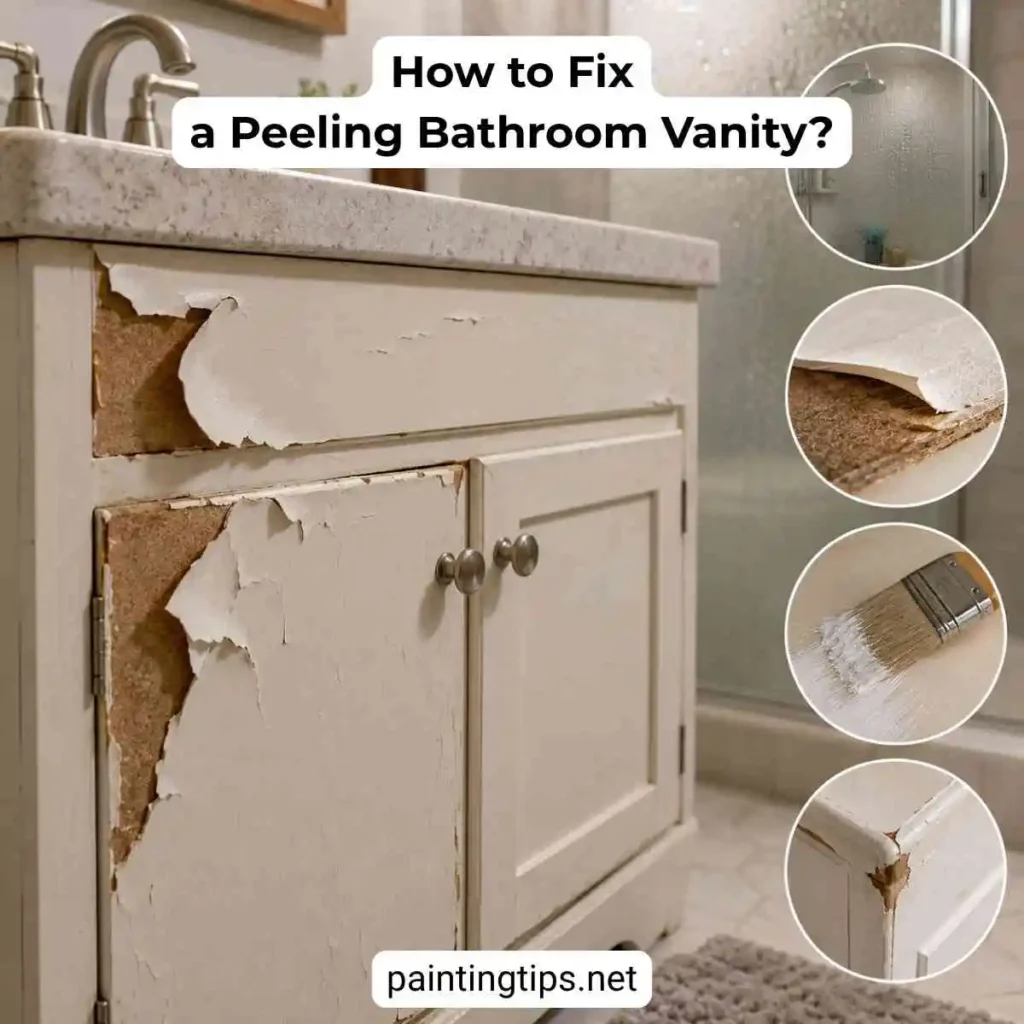
When the paint or laminate on a bathroom vanity starts peeling, a handful of causes are usually behind it. The biggest one by far is hot water steam. Every shower sends a wave of moisture into the air, and over time that moisture works its way into the wood grain and the adhesive layers beneath the finish.
Add to that a vanity that’s simply reached the end of its useful life, and the paint begins to deform while laminate edges start lifting away from the cabinet underneath.
If you recently painted a bathroom vanity without prepping the surface the right way, that mistake alone can cause new paint to start peeling within weeks. Whatever the exact cause turns out to be, any vanity sitting in a humid bathroom is at constant risk.
That’s why it’s worth acting the moment you spot a small peel in the paint or laminate instead of waiting for it to spread. Catching it early is what keeps a minor touch-up from turning into a full refinish.
How to Fix a Peeling Bathroom Vanity?
The right fix depends on whether it’s the paint that’s coming up, the laminate, or both. Here’s how we’d approach each one.
If Your Bathroom Vanity Paint Is Peeling
A small paint peel is sometimes trickier to deal with than paint that’s failed across the whole surface, mostly because finding an exact color match for a touch-up isn’t always easy. If you still have leftover paint in the original shade, the fix is straightforward: lightly sand the damaged spot to knock down any loose edges, wipe away the dust, and repaint just that section with a primer coat first so the new paint actually holds.
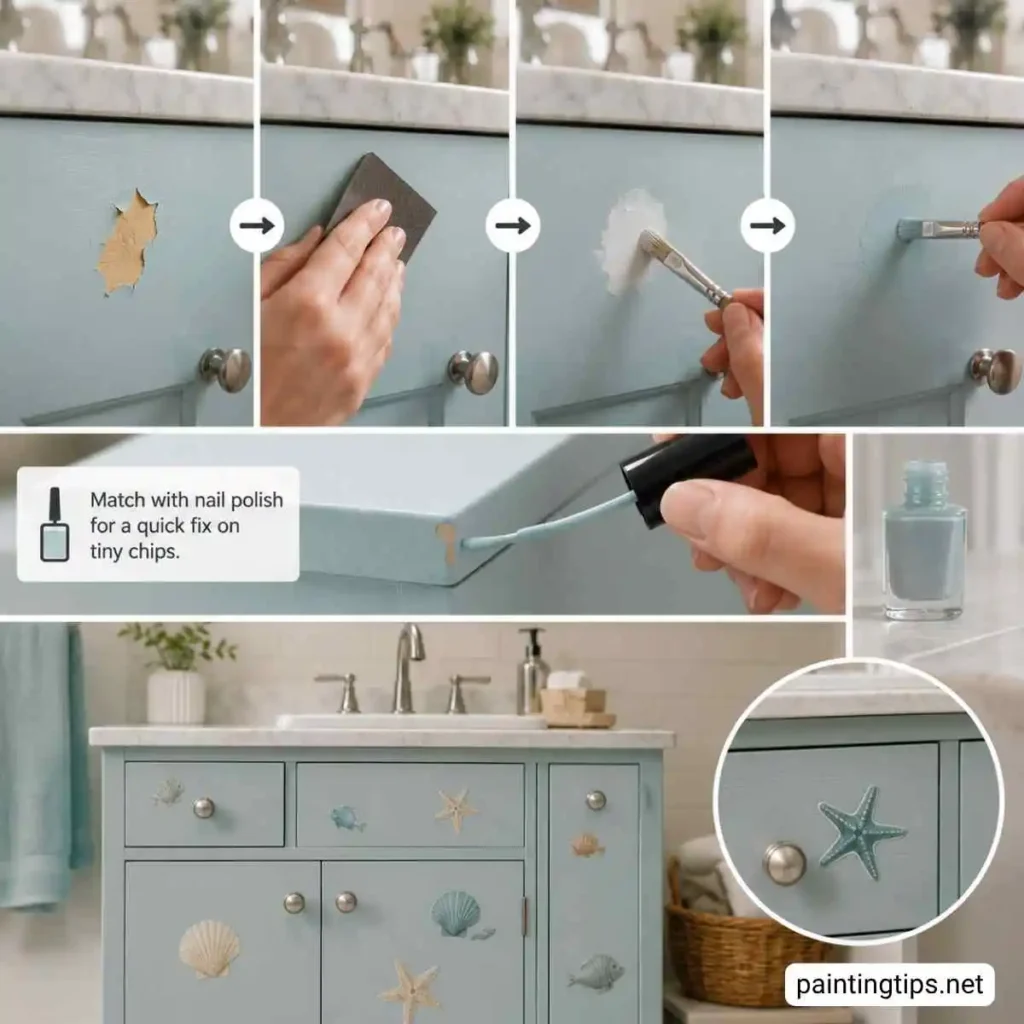
For a truly tiny chip, a matching nail polish can seal the spot before it has a chance to spread, which is one of several quick fixes we walk through in our guide on how to fix peeling paint in a bathroom.
When color-matching feels like a losing battle, covering the spot with a small decorative sticker is a solid workaround. High-quality vinyl stickers shaped like seashells, starfish, or fish tend to fit right in with a bathroom theme. To keep it from looking like an obvious patch, add a few of the same stickers to other spots on the vanity so the whole thing reads as a design choice rather than damage control.
If Your Bathroom Vanity Laminate Is Peeling
Laminate is bonded to a vanity with a specialized adhesive, and bathroom humidity is exactly what breaks that bond down over time, usually starting at the edges and seams. When laminate starts lifting at a corner, a cyanoacrylate adhesive, better known as super glue, does a solid job of reattaching it. A strong general-purpose adhesive works too, as long as it’s rated to hold up against heat and steam. A glue that softens in a warm, humid bathroom will just fail again in a few months.
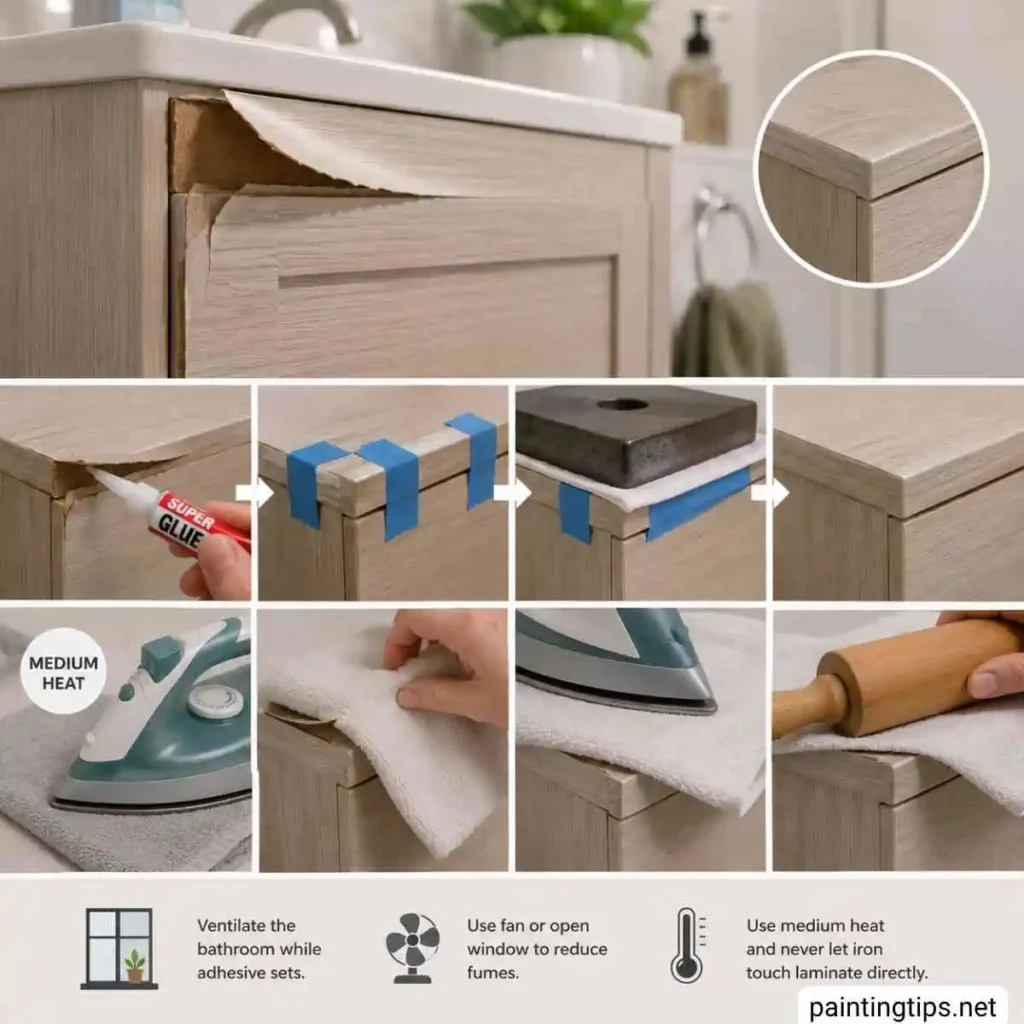
While the adhesive sets, tape the laminate down temporarily, or clamp it with a flat, heavy object, so it bonds flat instead of curling back up at the edge. Cyanoacrylate adhesives put off strong fumes as they cure, so it’s worth cracking the bathroom window or running the fan while the glue sets.
There’s a second repair method fewer people know about, and it involves nothing more than a household iron. Many vanities are laminated with a heat-activated adhesive that was originally pressed on with heat in the first place, which means running a hot iron over the lifted section can reactivate that original glue and reseal the laminate on the spot.
Set the iron to a medium heat, since too much can scorch the laminate or the veneer underneath, and never let the iron touch the laminate directly. Lay a towel or a thin cloth over the area first, apply the heat through that layer for ten to fifteen seconds, then press the section flat with a rolling pin or a flat block of wood while it cools.
Can a Bathroom Vanity Be Refaced?
Once the lifted laminate is glued back down and any gouges or gaps are filled in with acrylic wood filler, a full reface becomes a realistic option rather than a stretch. High-quality peel-and-stick wallpaper has improved a lot in recent years and can give a worn vanity a completely fresh surface without the cost of a full replacement. Before going this route, it’s worth checking whether wallpaper works in a bathroom, since not every wallpaper is built to handle the steam and splashes a vanity deals with daily.
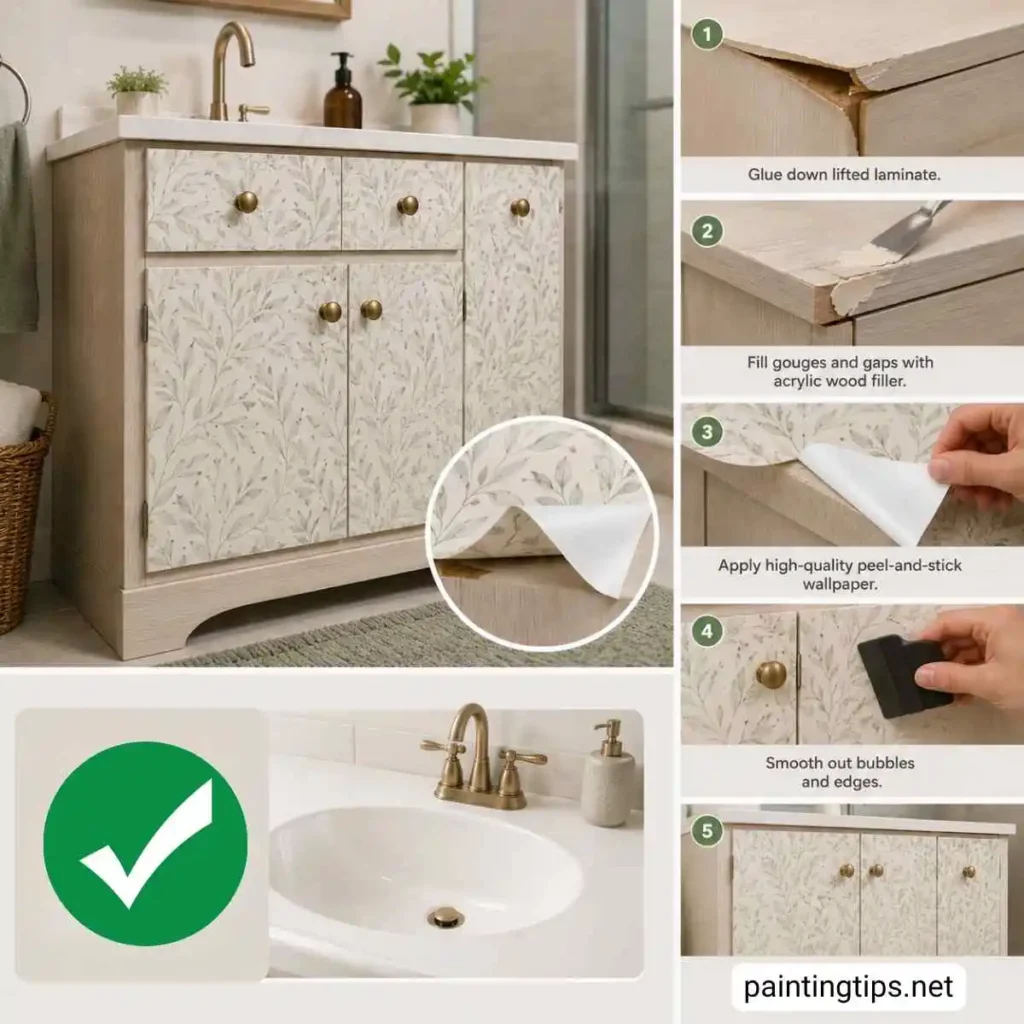
While the vanity cabinet is getting all the attention, it’s also a good time to check the sink sitting on top of it, since porcelain shows wear too. Our guide on how to paint a porcelain sink covers that side of the project if it needs some care as well.
Keeping Bathroom Humidity in Check
At the end of the day, heat and humidity are the real threat, both to the furniture in a bathroom and to whatever paint or laminate covers it. Every hot shower fills the room with moisture that settles onto wood surfaces, softens adhesive bonds, and slowly breaks down paint film from the inside out.
Because of that, ventilating the bathroom right after a shower matters just as much as any repair you make to the vanity itself. Opening the bathroom window and door for a few minutes after showering, or running an exhaust fan, keeps that moisture from settling into the vanity in the first place, and it’s one of the simplest habits for keeping peeling from coming back.
