Ceiling paint vs wall paint is a common comparison for homeowners planning an interior project. Although both are used indoors, they are formulated for different performance purposes. The difference between ceiling and wall paint lies in their viscosity, sheen level, durability, and overall finish behavior under light and daily use. In this article, we explain all the key differences between ceiling paint and wall paint in detail.
Ceiling Paint vs Wall Paint
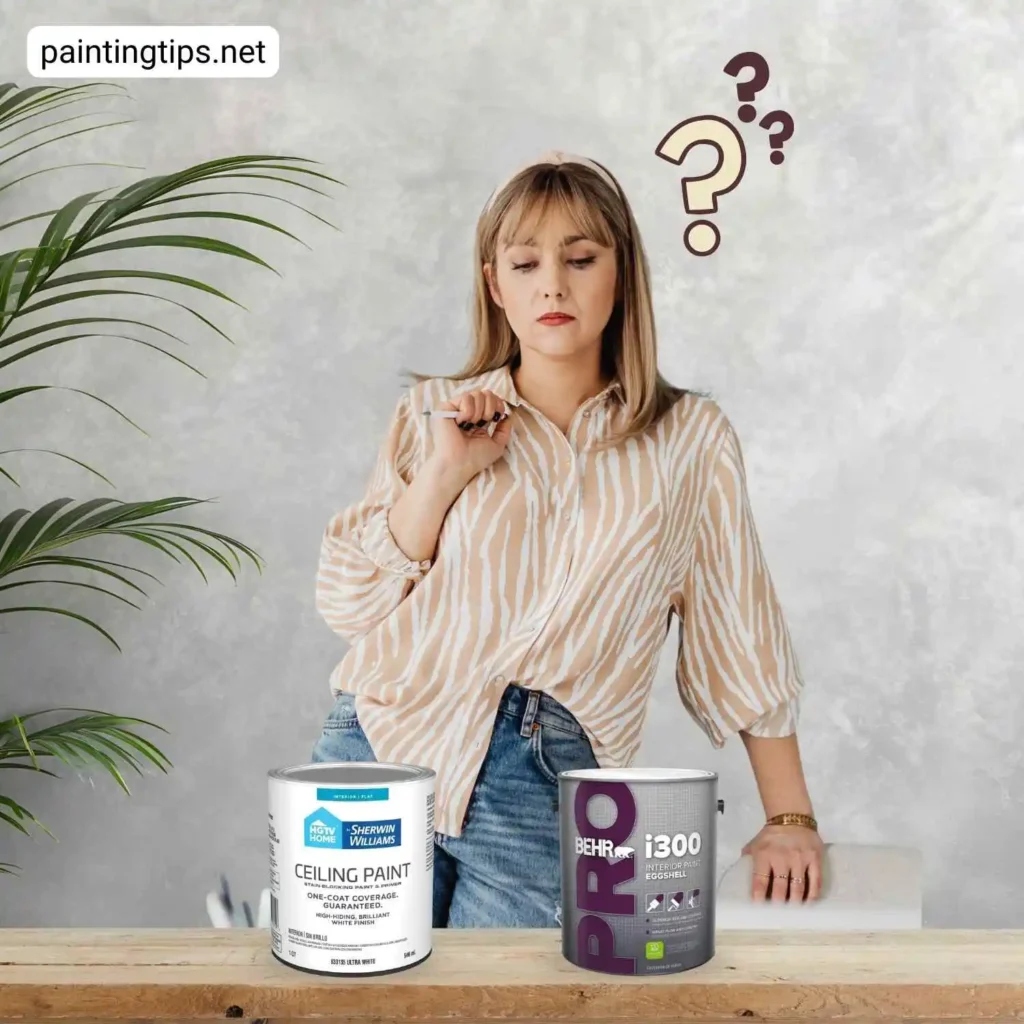
Start by thinking about what each surface deals with. Walls take a lot of abuse: people touch them, furniture gets pushed against them, and they get dirty from kids and pets. You also end up cleaning walls fairly often.
Ceilings, on the other hand, mostly just need to look smooth and fade into the background—they aren’t touched or cleaned nearly as much. So, what’s the real difference between ceiling and wall paint?
1-Viscosity
Wall paint is generally thicker, which helps it stick to vertical surfaces and cover up marks or old paint colors in fewer coats. This thickness also helps you achieve a smooth, even look on your walls.
Ceiling paint is specifically formulated to make painting overhead easier. It’s not always as thick, but it’s designed to roll on without creating a mess or dripping everywhere. It doesn’t need to stand up to the same wear and tear as wall paint.
2-Sheen
One of the most noticeable differences between ceiling and wall paint is the finish. Wall paints are available in a range of sheens—matte, eggshell, satin, or semi-gloss—so you can choose how shiny and how easy to clean you want your walls to be. Paint with an eggshell or satin finish, for example, provides a subtle glow and is easier to wipe down.
“If you’re unsure which finish performs better in different spaces, see our detailed comparison of Matte vs Semi-Gloss, where we break down durability, light reflection, and maintenance differences.”
Most ceiling paints come in flat or ultra-matte finishes. This is intentional because a flat ceiling hides imperfections and prevents light from reflecting off bumps or roller marks. You don’t want your ceiling drawing attention, so a non-reflective finish is best.
3-Coverage
Wall paint usually offers better coverage and goes further per gallon, thanks to higher pigment content—especially with quality brands. This makes it easier to cover dark colors or stains.
Ceiling paint can sometimes be less effective at covering unless you go for premium options. In fact, some high-end ceiling paints outperform budget wall paints when it comes to coverage, so always read the label and choose carefully.
4-Durability
Wall paints are made to last. They’re formulated to handle regular scrubbing, cleaning, and all the bumps and scuffs that come with everyday life. Most are advertised as washable and do a good job holding up over time.
Ceiling paint doesn’t need to be as tough, since ceilings rarely get touched or cleaned. If you use ceiling paint on a wall, don’t expect it to withstand cleaning or resist marks for long.
“If durability and washability are your priority, you may also want to read our detailed guide on Which Paint Is Best for Interior Walls, where we compare finishes, formulations, and performance factors in depth.”
5-Drip Resistance
Both types of paint can drip if not applied correctly, but many ceiling paints are designed to be more resistant to drips and splatters, which is helpful when working overhead. Still, the key to avoiding messes is to use the proper roller, don’t overload it, and follow instructions. Most drips are caused by user error, not the paint itself.
Ultimately, understanding the difference between ceiling and wall paint—and using each type where it belongs—will save you time, reduce frustration, and give you a more professional and lasting result. If you want your newly painted room to look its best for years to come, choosing the right paint for each surface is essential.
6-Scrubbability
Scrubbability is an important factor when comparing ceiling paint vs wall paint. It measures how well the paint holds up to repeated cleaning. With wall paints—especially those with satin or semi-gloss finishes—you get better durability against scrubbing because they use stronger binders and create a tougher finish. That means color, shine, and texture last longer, even after frequent cleaning.
Ceiling paint, on the other hand, especially the flat types, isn’t made for heavy-duty cleaning. If you scrub it too much, you may end up with shiny patches or visible streaks. To get the most out of any paint, always read the label and follow the maintenance instructions. Proper prep and care really do affect how long your paint job lasts, no matter if you’re using ceiling or wall paint.
“To avoid surface damage or sheen inconsistency during cleaning, see our detailed guide on How to Clean Walls Without Leaving Streaks.”
Can They Be Used Interchangeably?
When looking at the difference between ceiling and wall paint, you might wonder if you can swap them. In certain situations, you can. For example, if you want to reduce glare, using flat wall paint on the ceiling can help. Or, if your walls don’t get much wear, ceiling paint could work in a pinch. “For a more detailed technical evaluation of application risks, finish behavior, and long-term performance, see our full article: Can You Use Wall Paint on Ceiling?”
However, there are trade-offs. Wall paint on ceilings can highlight imperfections due to its higher sheen, while ceiling paint on walls won’t handle cleaning or daily wear as well. So, while swapping is possible, it’s important to understand what you’re sacrificing in terms of performance and durability.
“If you’ve decided to use ceiling paint but are unsure which product to choose, read our detailed guide on “Best Ceiling Paints: How to Choose the Right One” where we explain what to look for in terms of coverage, finish, and performance.”
