If you’re searching how to get spray paint out of concrete, you’re in the right place. Spray paint looks great on a canvas, not so much on your driveway, patio, or that cement garden goose you forgot to cover. The good news is that concrete and cement are basically the same problem for cleaning purposes—cement is the binder inside concrete, and paint sinks into the tiny pores of both. The steps below will help you clean the surface without damaging the slab.
How to Get Spray Paint Out of Concrete
First, understand what you’re dealing with. Concrete (and any cement-based surface) is porous—think of it like a hard sponge with microscopic tunnels. When spray paint lands, the solvents carry pigment deep into those capillaries, so wiping the top layer isn’t enough. You have to break the bond and flush the pigment out of the pores.
Second, match the method to the situation. Fresh overspray that’s still tacky is far easier to lift than a tag that’s baked in the sun for months. Also consider where the surface is: a garage floor can handle stronger chemicals, while a decorative cement statue or indoor basement slab needs gentler options to avoid etching or discoloration. Always test in a small corner first, and work in a ventilated area with gloves and eye protection—especially when you’re using solvents like acetone or paint thinner.
A high-pressure washer can quickly remove fresh paint from concrete; a paint stripper or graffiti remover can scrape off dried stains; TSP or a heavy-duty degreaser can remove fine residues; an angle grinder can remove stubborn stains; a heat gun can soften thick drips; and household items like acetone or a baking soda-vinegar paste can help remove light and fresh spray marks. Below, we explain step by step how to use each method; this way, you can choose the one that suits your situation and remove the paint from your concrete.
1-Pressure Washer
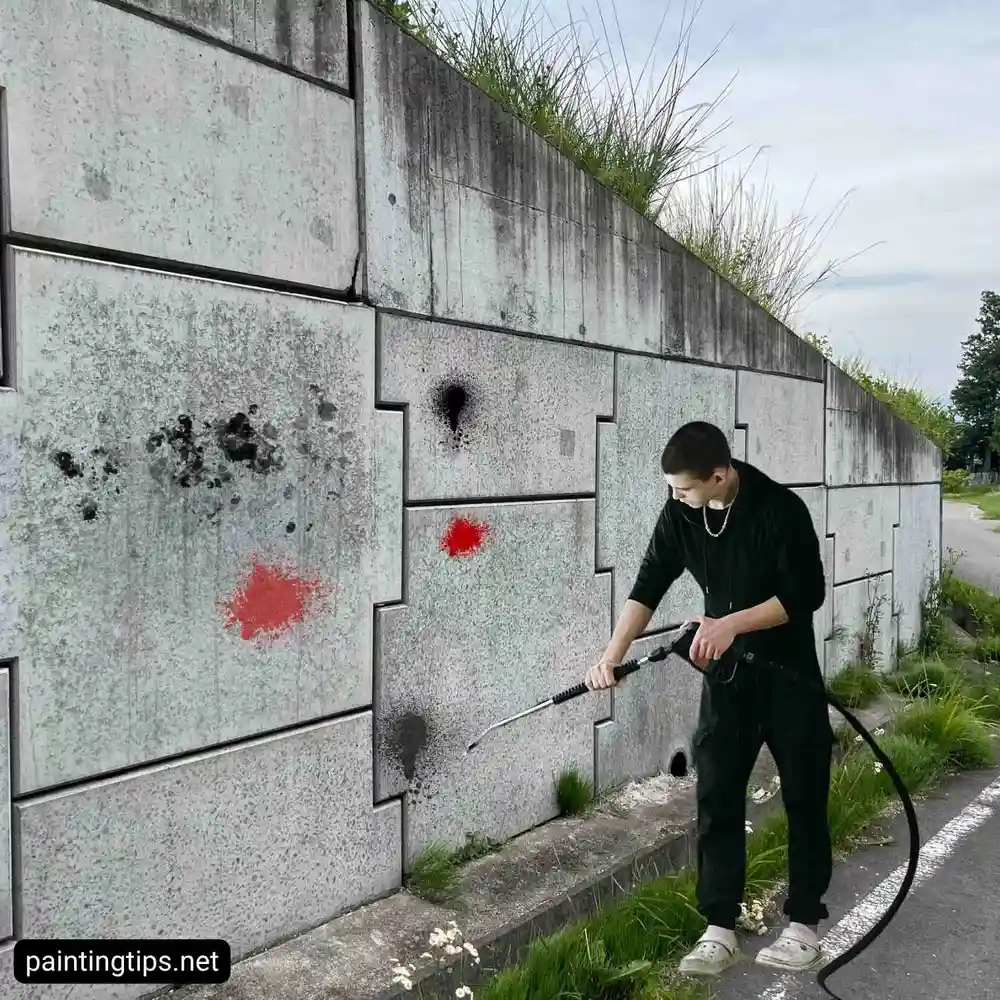
If you have access to one, a pressure washer (2000–3000 PSI with a 25–40° fan tip) is the least chemical way to remove spray paint from concrete. Hold the wand 8–12 inches away, sweep steadily, and let the water blast the paint out of the pores of the concrete or any cement surface. It works best on fresh paint or when you pre-treat first. Be careful on older, crumbly concrete—too much pressure can scar the surface. Avoid cleaning in direct hot sun; the concrete dries too fast and the remover won’t have time to dwell.
2-Paint Remover / Graffiti Remover
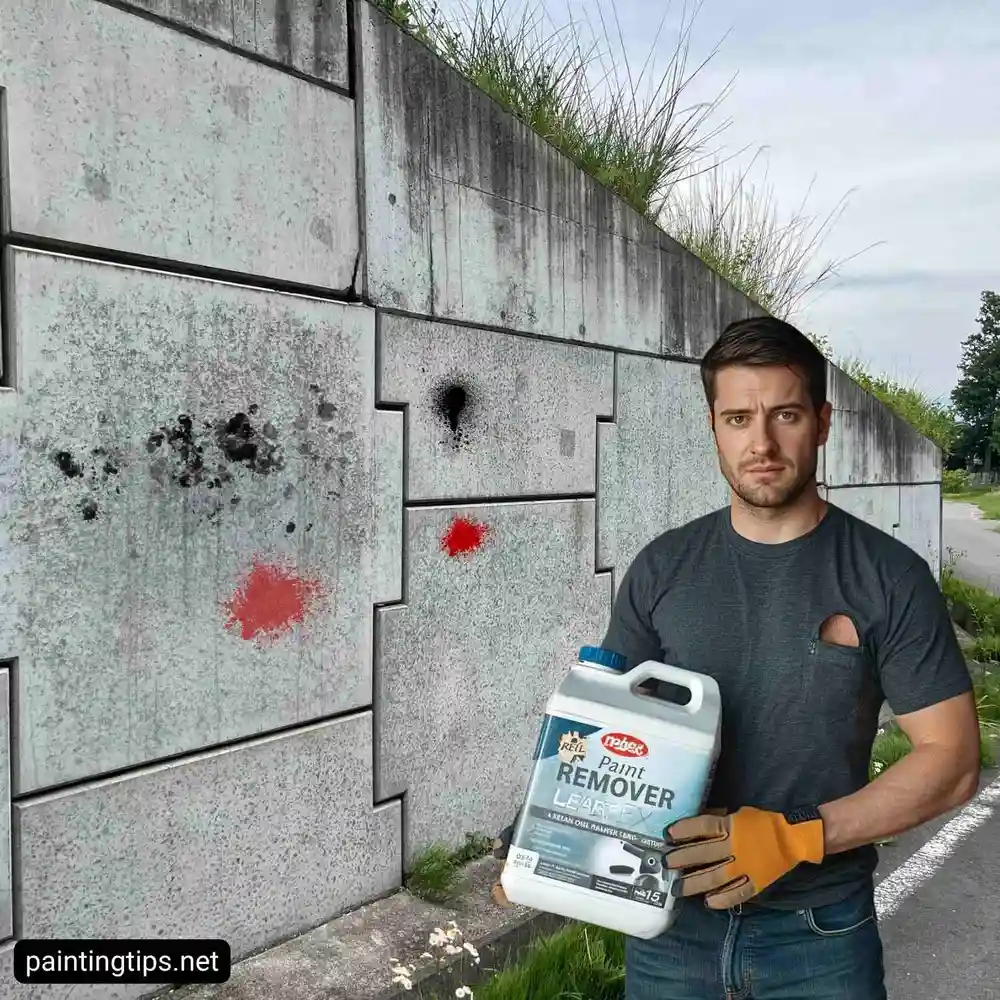
Gel-type masonry paint strippers cling to vertical walls and flat slabs alike and will remove paint from concrete and cement. Apply a thick layer to the concrete or cement, let it dwell 15–30 minutes (follow the label), then scrub with a stiff nylon or wire brush. Soy-based or biodegradable graffiti removers are safer for pets and landscaping. Rinse thoroughly; residue can attract dirt later. This works the same on poured concrete and on smaller cement pieces like statues or steps.
3-Trisodium Phosphate (TSP) or Heavy-Duty Degreaser
Mix TSP with warm water (per package directions), pour it over the stain on the concrete, and scrub in circles to help remove the paint. It breaks down the binder in many spray paints without being as aggressive as solvent thinners, and it’s safe for most cement and concrete. Rinse well—TSP can leave a white haze on concrete if it dries.
4-Angle Grinder with Wire Brush or Sanding Disc
For stubborn, cured paint on an unsealed garage floor or sidewalk, a wire cup brush on an angle grinder (or a rotary floor sander with a masonry pad) will mechanically remove the top layer from the concrete. This is a last resort for cement and concrete; it will alter the texture and create dust, so wear a mask and eye protection.
5-Heat Gun + Scraper
A heat gun softens spray paint enough to scrape off the bulk from concrete or cement, especially on thick drips. Keep the gun moving, don’t scorch the concrete, and follow with a quick wash or light solvent wipe to remove any residue. Works well on small spots or decorative cement items.
If the surface will stay outdoors, seal the clean concrete with a penetrating concrete sealer once it’s fully dry. It helps prevent future stains on cement and concrete and makes any next cleanup much easier.
How to Remove Spray Paint from Concrete with Household Items
If you’d rather start with what’s already under the sink, try this progression to remove spray paint from concrete or cement: first, blot (don’t rub) any fresh paint with paper towels. Then make a paste of baking soda and water, spread it over the stain on the concrete or cement, and scrub with a stiff brush—baking soda adds mild abrasion without chemicals and helps remove light marks.
For a bit more punch, warm white vinegar can soften the paint binder on concrete; pour it on, let it sit 10–15 minutes, scrub, and rinse to remove the residue from the cement or concrete. A drop of dish soap in the mix helps lift oily pigments from concrete. These won’t erase a years-old tag on cement, but they’re perfect for light overspray, patio furniture drips, or a cement or concrete garden ornament you don’t want to hit with harsh solvents.
More surfaces: Concrete and cement are covered here—also see our guides on how to remove spray paint from wood, how to remove paint from glass, how to remove spray paint from metal, and what removes spray paint from plastic.
Does WD-40 Remove Spray Paint from Concrete?
WD-40 can be effective for removing fresh spray paint stains from concrete. Spray a thin layer onto the spray paint on the concrete, let it sit for 5–10 minutes to loosen the adhesive, then scrub with a brush and rinse with soapy water. It is not very effective on old, dried-on spray paint and may leave an oily residue; you may need to degrease the area to remove this residue.
Will Vinegar Remove Spray Paint from Concrete?
White vinegar can help with light, recent marks on concrete. Warm the vinegar, pour it over the stained area, wait 10–15 minutes to soften the paint, then scrub with a stiff brush and rinse with water. It works best on latex-based spray paints; it struggles with enamel or paint that has cured for weeks.
Will Vinegar Remove Spray Paint from Concrete?
White vinegar can help with light, recent marks on concrete. Warm the vinegar, pour it over the stained area, wait 10–15 minutes to soften the paint, then scrub with a stiff brush and rinse with water. It works best on latex-based spray paints; it struggles with enamel or paint that has cured for weeks.
Will Bleach Remove Spray Paint from Concrete?
Bleach is not a reliable remover for spray paint on concrete. It may fade the color slightly and will disinfect the surface, but it does not break down the paint resin effectively. It can also discolor the concrete and harm nearby plants, so use it only for cleanup after the paint is gone.
Will Acetone Remove Spray Paint from Concrete?
Acetone can dissolve many spray paints quickly on concrete. Dab acetone (or nail polish remover with high acetone content) onto a rag, work in small sections, and rinse thoroughly with water. Use gloves and work in a ventilated area; acetone evaporates fast, is flammable, and can darken some concrete.
Will a Pressure Washer Remove Spray Paint from Concrete?
A pressure washer can remove spray paint from concrete, especially if the paint is fresh or has been pre-treated with a remover or soap. Use a 2000–3000 PSI washer with a 25–40° fan tip, keep the wand 8–12 inches from the surface, and sweep steadily. Be cautious on old, weak concrete because the spray can etch the surface.
Will Paint Thinner Remove Spray Paint from Concrete?
Paint thinner (mineral spirits or lacquer thinner) can dissolve most spray paints on concrete, but it is aggressive. Apply sparingly with a rag or brush, work outdoors, and rinse thoroughly with soapy water afterward. It can leave a residue and strong odor; avoid using near plants or indoors and follow with a degreasing wash.
