Whether you’re restoring furniture, repainting trim, or prepping an old surface, you’ll need to remove paint from wood safely and efficiently. The best approach depends on the paint type, how many layers you’re dealing with, and the wood itself—soft pine, hardwood, veneer, or detailed carvings all behave differently. Below are five proven methods—sanding, chemical strippers, heat guns, pressure washers, and solvents—with pros, cons, and step-by-step tips to get a clean surface for refinishing.”
How to Remove Paint from Wood

The right way to remove paint from wood depends on the paint type, how thick the layers are, and what kind of wood you’re working with—soft pine, hardwood, veneer, or detailed carvings all behave differently.
Prep the piece first. Remove nails, screws, staples, hardware, and decals. Work in a ventilated space with gloves, eye protection, and a dust mask or respirator if you’ll make dust or fumes. Always test your method in a hidden spot.
For large, flat wooden surfaces, an orbital sander is fast and economical, but it creates dust and can round over edges if you’re not careful. Chemical strippers cost more but excel on carved or detailed areas—just be sure to neutralize and clean thoroughly, because leftover residue can interfere with new paint or finish.
Heat guns are a solid middle ground for thick, multi-layer paint on flat boards. Solvents (like mineral spirits) are best for small stains and touch-ups. Below are the most common methods and step-by-step tips so you can remove paint from wood safely and get a clean surface for refinishing.
1-Sanding
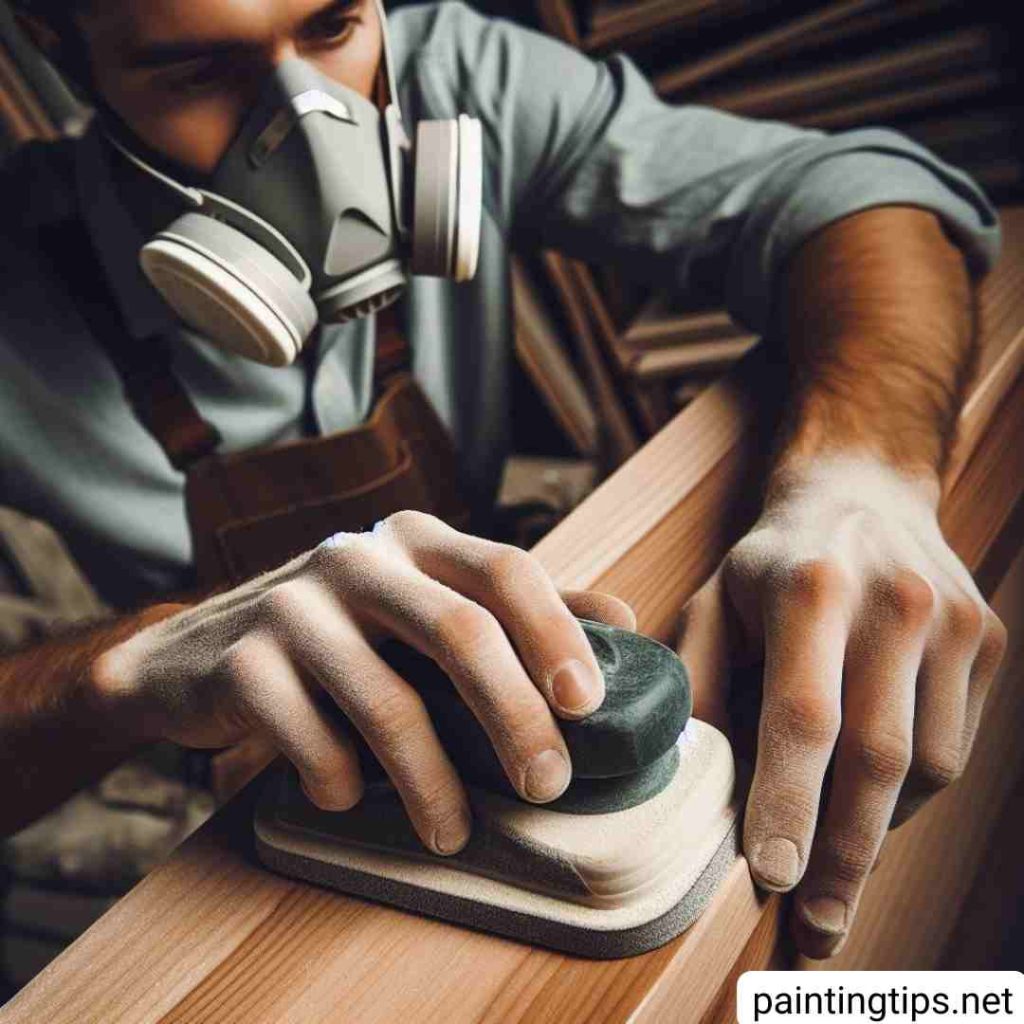
Sanding is a straightforward way to strip old paint from wood furniture and trim. For small pieces—a chair leg, a picture frame, a drawer front—you can do it by hand with sandpaper or a sanding sponge. For larger surfaces like tabletops, doors, or decks, a power sander (orbital or detail sander) will save you hours.
Start with a coarse grit to break through the paint layer (around 80–100 grit), then move to a medium grit (120–150) to smooth the surface, and finish with a fine grit (180–220) so the wood is ready for refinishing. Buy good-quality sandpaper; cheap sheets clog fast and slow you down.
Work in a well-ventilated area or outdoors—sanding paint kicks up a lot of fine dust. Wear a dust mask or respirator and safety glasses, and wipe the surface with a damp cloth or tack cloth between grits to check your progress. Avoid pressing too hard; let the grit do the work so you don’t gouge the wood.
If the paint might be lead-based (common in U.S. homes built before 1978), don’t sand it—use a chemical stripper or call a pro, and check our guide on lead paint removal first.
2-Using a Paint Stripper
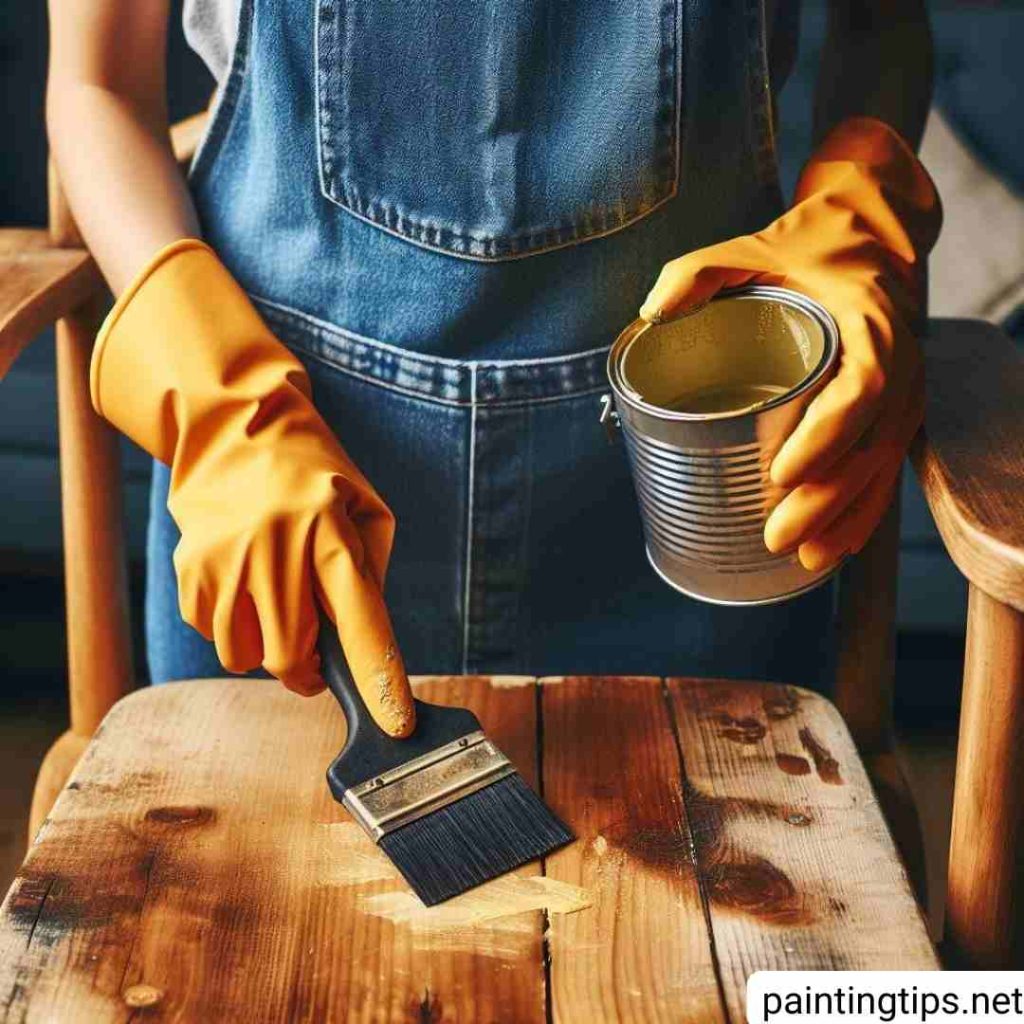
A chemical stripper is one of the most effective ways to remove paint from wood—especially on detailed or carved pieces where sanding won’t reach. It can get pricey for large surfaces (decks, doors), and thick or multiple paint layers usually need more than one round.
Before you start to remove paint from wood: confirm the finish is actually paint, not veneer or laminate. Pull off any hardware, nails, staples, or stickers that could get in the way.
- Apply the stripper to the wood. Use a stiff-bristle or natural-bristle brush to lay on a thick, even coat. Work in a well-ventilated area (open the windows, or better yet, work outside) and wear chemical-resistant gloves, safety goggles, and a respirator rated for organic vapors.
- Let it work. Give it 20–30 minutes (or whatever the manufacturer specifies) to soften the paint on the wood. Don’t let it dry out; if the surface starts to skin over, add a little more.
- Scrape the softened paint off the wood. Use a plastic or metal putty knife—plastic is safer on softer woods—and work with the grain to lift the paint. For cracks and crevices, a small brass brush or detailing tool helps.
- Repeat if needed. Stubborn spots or thick layers may require a second application to fully remove paint from wood.
- Clean up the residue. Check the label: some strippers are water-washable; others need mineral spirits or denatured alcohol. Remove every trace—leftover stripper can interfere with your new finish.
- Let the wood dry, then smooth it. Once dry, lightly sand with 150–180 grit to knock down raised grain and prep for painting or varnishing.
3-Using a Heat Gun
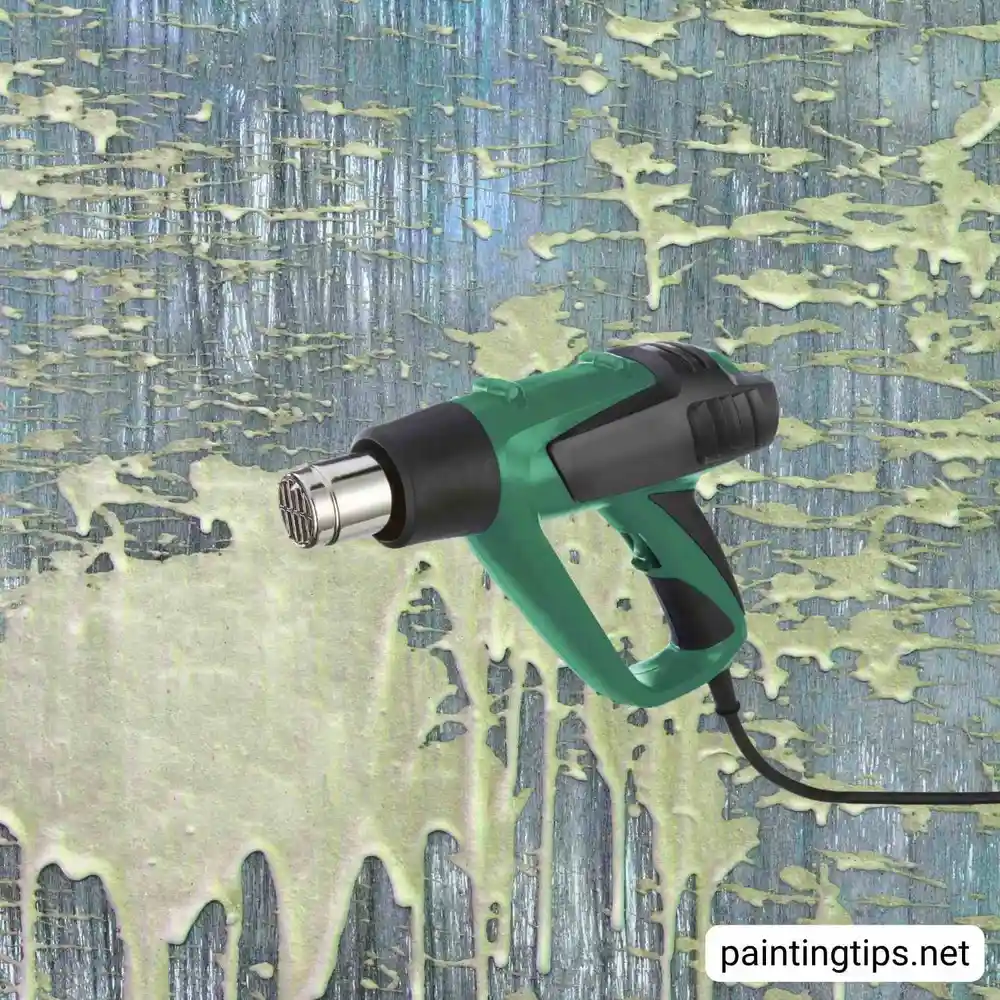
A heat gun is a fast way to remove paint from wood—it softens the paint so you can scrape it off in sheets. It works best on flat surfaces and thick, old paint. Be careful on thin veneers, delicate furniture, and near glass or metal hardware; too much heat can scorch the wood, raise the grain, or darken the surface.
Before you start to remove paint from wood with heat: confirm the finish is actually paint (not veneer or laminate). Clear the area of anything flammable, work in a well-ventilated space, and wear heat-resistant gloves, safety glasses, and a respirator or good dust mask (heated paint can release fumes).
- Set up and test. Start on a low to medium setting (about 400–600 °F / 200–315 °C). Hold the gun 3–6 inches from the surface and keep it moving—never linger in one spot.
- Heat and watch for softening. Sweep the gun slowly until the paint bubbles or wrinkles (usually 5–15 seconds per area). As soon as it softens, move on; overheating burns the wood.
- Scrape while it’s soft. Use a putty knife or paint scraper (plastic for softer woods) and work with the grain to lift the paint. Keep the heat gun ahead of your scraper so the paint stays pliable.
- Handle details carefully. For corners and crevices, switch to a smaller scraper or detailing tool. Avoid digging in—softened wood is easy to gouge.
- Repeat if needed. Thick or multilayer paint may need a second pass to fully remove paint from wood.
- Clean up and finish. Let the wood cool, then wipe away residue with a cloth dampened with mineral spirits (if needed). Once dry, lightly sand with 150–180 grit to smooth raised grain and prep for painting or staining.
Quick tip: If you smell burning wood or see darkening, lower the heat or increase your distance—scorch marks are hard to fix.
4-High Pressure Washers
A pressure washer can help remove paint from wood when the paint is loose or flaking, but it’s not ideal for delicate furniture, veneer, or soft woods—high pressure can gouge the surface and force water into the fibers.
Before you start: test on a hidden spot, wear safety goggles and gloves, and keep the pressure low with a wide fan nozzle.
- Spray at a safe distance. Hold the wand 12–18 inches away, work with the grain in sweeping motions, and don’t linger in one spot.
- Stop if the wood splinters or fuzzes. If it does, skip the pressure washer and switch to a stripper or heat gun.
- Let it dry, then finish. Allow the wood to dry completely (a day or two), then lightly sand with 150–180 grit before painting or sealing.
5-Paint Thinners
Solvents can help remove old paint from wood, especially for small stains or thin layers. For light cleanup, use mineral spirits (sometimes called synthetic thinner). For thicker, older paint, a stronger lacquer thinner works better—but it’s harsher and has stronger fumes.
Before you start to remove paint from wood with solvents: work in a well-ventilated area (outside is best), avoid flames or sparks, and wear chemical-resistant gloves, safety goggles, and a respirator rated for organic vapors.
- Apply. Brush on a thin, even coat. Wait 10–15 minutes until the paint softens—don’t let it dry out.
- Scrape and wipe. Lift the softened paint with a plastic or metal scraper (plastic is safer on soft woods), working with the grain. Wipe any residue with a solvent-dampened cloth.
- Finish. Let the wood dry completely, then lightly sand with 150–180 grit to smooth the surface and prep for paint or sealer.
Note: Solvents are best for small spots and thin coats. For heavy, multi-layer paint, switch to a chemical stripper or heat gun instead of soaking the wood. Learn more in our guide: Will paint thinner remove paint?
Related guides: If you’re working on a specific project, see How to Remove Varnish From Wood for clear finishes, How to Get Paint Off a Wood Table for furniture-safe techniques, and How to Remove Spray Paint from Wood for tackling overspray and graffiti.
Conclusion: Consider Repainting Instead
You don’t always have to remove paint from wood—many projects can be repainted without stripping. If the existing paint is solid (no peeling or flaking), lightly sand the surface to dull the gloss, wipe away dust, and apply a bonding or transition primer made for painted surfaces. Let the primer dry (usually 5–6 hours, or per label), then paint. This saves time and avoids the mess of stripping, especially on detailed pieces or large surfaces.
Frequently Asked Questions
What is the Easiest Way to Remove Paint from Wood?
There isn’t a single “best” method for every project. Chemical strippers are usually the most efficient way to remove paint from wood when the paint is thick or detailed; a heat gun works well on flat surfaces with multiple layers; sanding is best for small spots or final smoothing.
Does Vinegar Remove Paint From Wood?
No. Vinegar won’t break down most paint films and isn’t effective to remove paint from wood.
How do You Get Dried Paint off Hard Wood?
Use a paint stripper to soften the dried paint, then scrape with a plastic scraper and finish with light sanding (150–180 grit). For tiny drips, mineral spirits can lift the spot without having to strip the whole piece.
Can Paint on Wood be Removed?
Yes. You can remove paint from wood completely using a chemical stripper, heat gun, or sanding. For large flat surfaces a sander works; for detailed or carved areas a stripper is usually easier.
Does WD-40 Remove Paint from Wood?
WD-40 is a lubricant/cleaner, not a paint remover. It may loosen very fresh, tiny stains but won’t reliably strip paint.
Will Lemon Juice Remove Paint from Wood?
It can fade or lift very light stains, but it isn’t sufficient to remove paint from wood completely.
Does Alcohol Remove Paint from Wood?
Alcohol (isopropyl or denatured) may soften small latex stains, but it won’t fully strip paint from wood.
Can Hand Sanitizer Remove Paint from Wood?
Hand sanitizer (which contains alcohol) can help with tiny, fresh spots, but it won’t remove paint from wood when the paint is thick or well-adhered.
