Flat vs semi-gloss is the paint finish question we get asked more than any other — and after more than twenty years in the paint and decorating industry, we understand why. They sit at opposite ends of the sheen scale, behave completely differently on a wall, and choosing the wrong one for the wrong surface is a mistake that costs time and money to fix. This guide gives you a straight answer: what each finish does, where it earns its place, where it fails, and how to make the right call for every room in your home.
Flat vs Semi-Gloss Paint: What’s the Actual Difference?

The core difference is light. Flat paint absorbs it. Semi-gloss reflects it. That single distinction drives everything else — the durability, the cleanability, how forgiving each finish is of the surface underneath, and how the room feels once the paint cures.
Flat sits at 0–5% gloss. Its porous surface conceals imperfections better than any other finish but absorbs dirt and moisture rather than shedding them. Semi-gloss sits at 41–70% gloss — moisture resistant, scrubbable, durable, but unforgiving of anything the surface preparation missed.
| Flat / Matte | Semi-Gloss | |
| Sheen Level | 0–5% | 41–70% |
| Light Reflection | Absorbs light | Reflects light clearly |
| Hides Imperfections | Excellent | Low — shows everything |
| Washability | Low — damages easily | Very Good — scrubs well |
| Moisture Resistance | Poor | Very Good |
| Durability | Low | Very Good |
| Surface Prep | Forgiving | Meticulous — no shortcuts |
| Touch-Up Ease | Moderate | Difficult — sheen mismatch |
| Best For | Ceilings, low-traffic walls | Trim, doors, cabinets, bathrooms |
| Avoid On | Kitchens, bathrooms, hallways | Imperfect or unprepped surfaces |
For a full breakdown of all five paint finish types and sheen levels, see our complete paint finishes guide.
The Real Advantages of Flat Paint

Flat paint’s core strength is concealment. It absorbs light evenly, which means wall imperfections, patched repairs, texture variations, and drywall seams all but disappear. Any higher-sheen finish on the same surface would catch light differently at each variation and make the wall look worse than before.
Ceilings are where flat paint is nearly always the right call. Overhead lighting exaggerates sheen — even eggshell on a ceiling creates noticeable glare with a central fixture. Flat eliminates that entirely and handles the inevitable texture variations on virtually every ceiling without showing them up.
Flat is also the easiest finish to apply. Brush marks and roller lines disappear as the paint dries because the surface absorbs light rather than reflecting it. For anyone doing their own painting, that forgiveness is a genuine advantage. It also makes flat the safest choice on uneven, bowed, or heavily textured walls — a higher sheen on the same wall would catch light at every variation and make the surface look worse, not better.
The Real Disadvantages of Flat Paint
Flat paint doesn’t clean well, and that’s not a minor limitation — it’s a fundamental characteristic. The porous surface absorbs grease, dirt, and moisture rather than letting you wipe them off. Scrub too firmly and you lift the paint along with the mark, leaving a shiny patch that requires repainting the entire section to fix. In hallways, children’s rooms, kitchens, and bathrooms this becomes a serious problem quickly.
Moisture is the other dealbreaker. In bathrooms and kitchens, flat paint absorbs humidity and steam rather than shedding it. We’ve seen flat-painted bathrooms develop visible moisture damage — discoloration, bubbling, mold behind the film — within a year of being painted.
Bottom line: Flat belongs on ceilings, low-traffic walls, and surfaces with imperfections. Not in kitchens, bathrooms, or hallways.
The Real Advantages of Semi-Gloss Paint
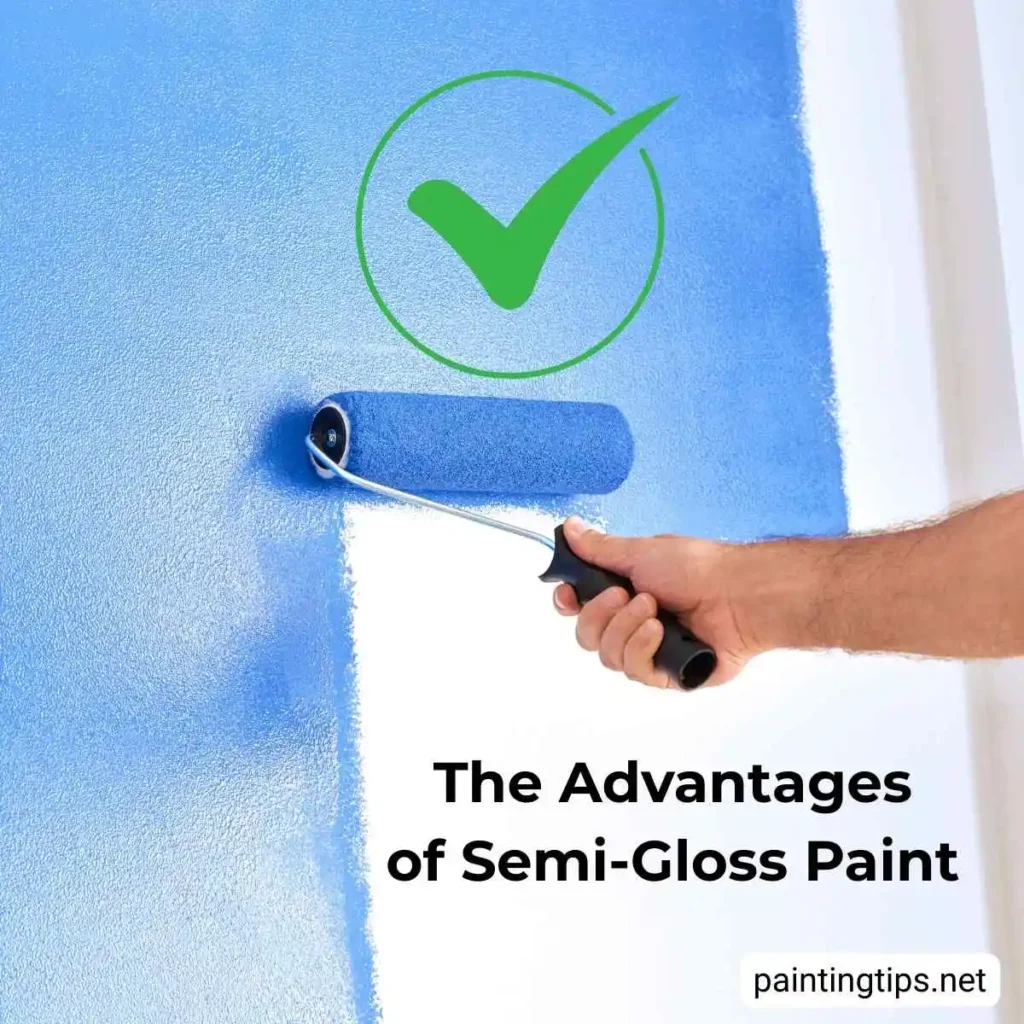
Semi-gloss is what gives a room its architecture. Apply it to trim, baseboards, and door casings alongside flat or eggshell walls and the woodwork has definition and presence — it registers as intentional detail rather than blending into the wall. That contrast is one of the most effective things you can do in a painted interior, and it costs nothing beyond the decision to use two finishes instead of one.
The practical case is just as strong. Its dense surface film resists moisture, survives scrubbing with household cleaning products, and holds up to the daily contact that trim and doors take. We’ve seen semi-gloss bathroom cabinets look as good after fifteen years as the day they were painted. That longevity doesn’t happen at lower sheen levels in the same environment. Semi-gloss on a bathroom ceiling also handles overhead steam in a way flat paint simply cannot — a flat bathroom ceiling typically shows moisture damage within a year or two.
The Real Disadvantages of Semi-Gloss Paint
Semi-gloss is unforgiving of inadequate preparation. Every imperfection you didn’t fix will be visible in the finished surface — sometimes more clearly than before you painted. Touch-ups are also difficult: any repaired area will show a sheen difference against the surrounding cured paint regardless of how well the color is matched. On large wall surfaces, semi-gloss creates glare that makes rooms feel hard and uncomfortable. It belongs on trim and details, not expanses.
Bottom line: Semi-gloss belongs on trim, doors, cabinets, and bathroom ceilings. Not on large wall surfaces.
Flat vs Semi-Gloss by Room — Practical Decision Guide
Different rooms have different demands. The table below is our room-by-room reference, built from what we’ve seen work and fail across two decades of projects.
| Room / Surface | Recommended Finish | Reason |
| Ceiling | Flat | No contact; hides texture; glare-free under overhead light |
| Living room walls | Eggshell | Low traffic; soft appearance; light cleaning only |
| Bedroom walls | Flat or Eggshell | Calm atmosphere; flat if walls are imperfect |
| Hallway walls | Eggshell or Satin | Regular contact; needs to wipe down easily |
| Kitchen walls | Satin | Moisture and splatter resistance |
| Bathroom walls | Satin | Humidity and steam require a moisture-shedding surface |
| Bathroom ceiling | Semi-Gloss | Overhead steam; flat would absorb and fail quickly |
| Interior trim & baseboards | Semi-Gloss | Daily contact and moisture; crisp contrast against walls |
| Interior doors | Semi-Gloss | Handles constant handling and cleaning |
| Front door (exterior) | Gloss | Maximum durability and impact where prep is thorough |
| Kitchen cabinets | Semi-Gloss or Gloss | Heavy use, grease, constant cleaning |
| Exterior walls | Matte or Satin | Gloss looks unnatural outside; matte suits rough surfaces |
Flat vs Semi-Gloss in Living Rooms
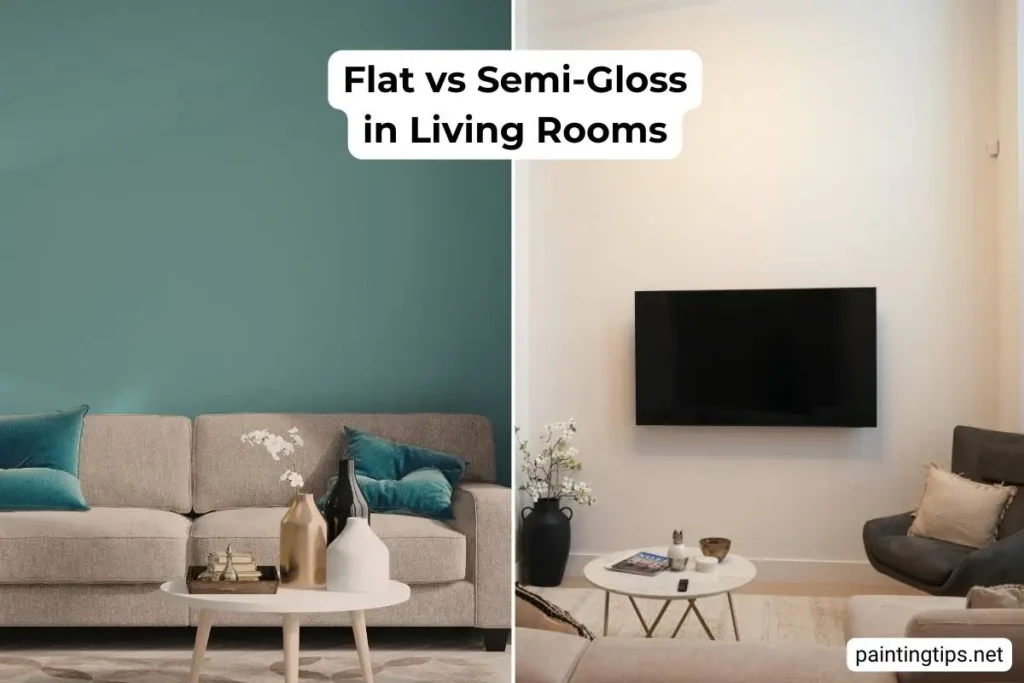
Living rooms are where flat and eggshell do their best work. Low traffic, no moisture, and the priority is warmth and atmosphere. Flat or eggshell walls with semi-gloss trim is the combination that works here almost every time. Semi-gloss on living room walls creates glare under artificial lighting and makes the room feel harder than it should.
Flat vs Semi-Gloss in Bedrooms
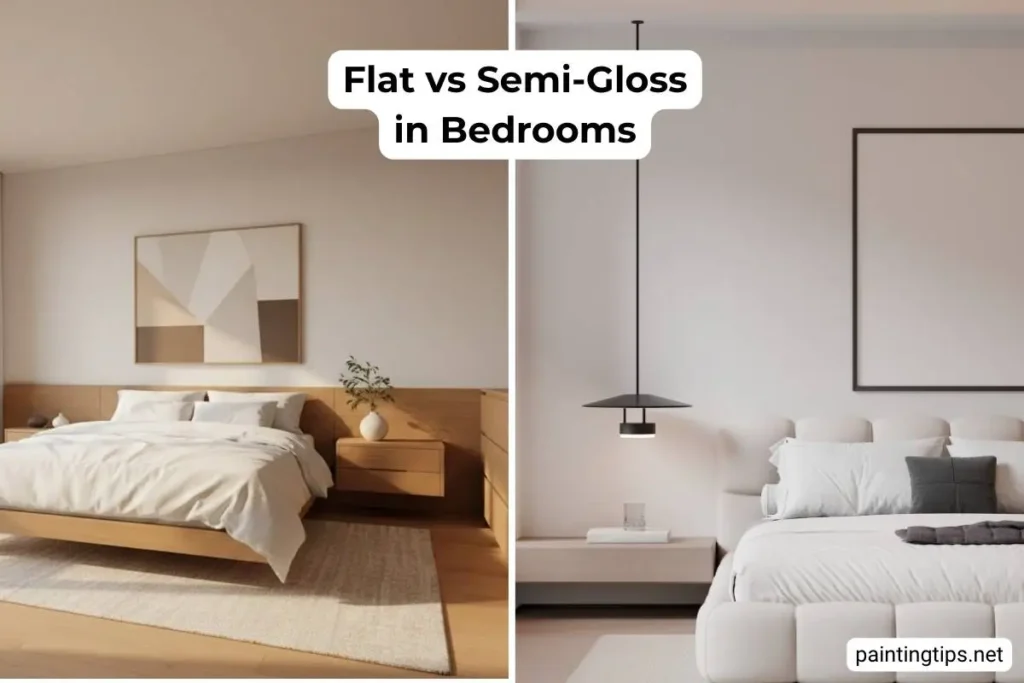
Bedrooms are the easiest decision in the house. Flat or eggshell on the walls, semi-gloss on the trim. These rooms see the least demanding traffic of any space, the priority is a calm and restful atmosphere, and neither moisture nor heavy cleaning is a regular concern. Flat paint’s softness suits a bedroom in a way that few other rooms allow. The exception is a child’s bedroom — crayon marks, sticky hands, and general impact mean eggshell at minimum, satin if the walls take a lot of contact. For a full guide on choosing the best type of paint for bedroom walls, see our dedicated guide.
Flat vs Semi-Gloss in Kitchens
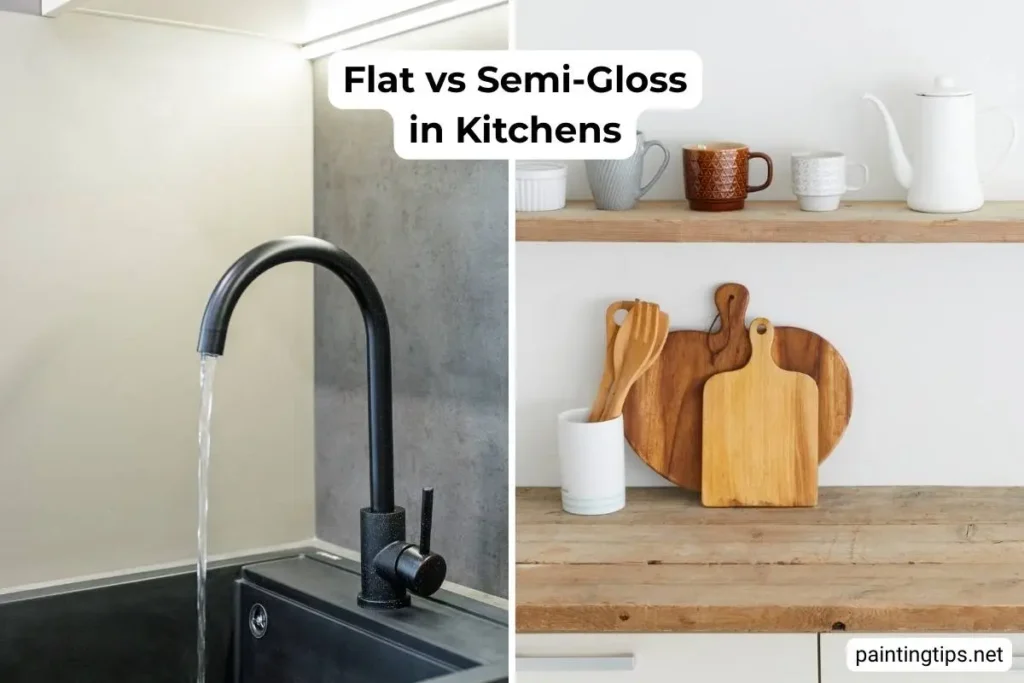
Kitchens are where flat paint fails fastest. Cooking generates grease and moisture that flat surfaces absorb and can’t shed. Satin is the minimum for kitchen walls. Semi-gloss belongs on cabinets, trim, and architectural details — surfaces that take daily handling, grease transfer, and regular wiping with cleaning products.
Flat vs Semi-Gloss in Bathrooms
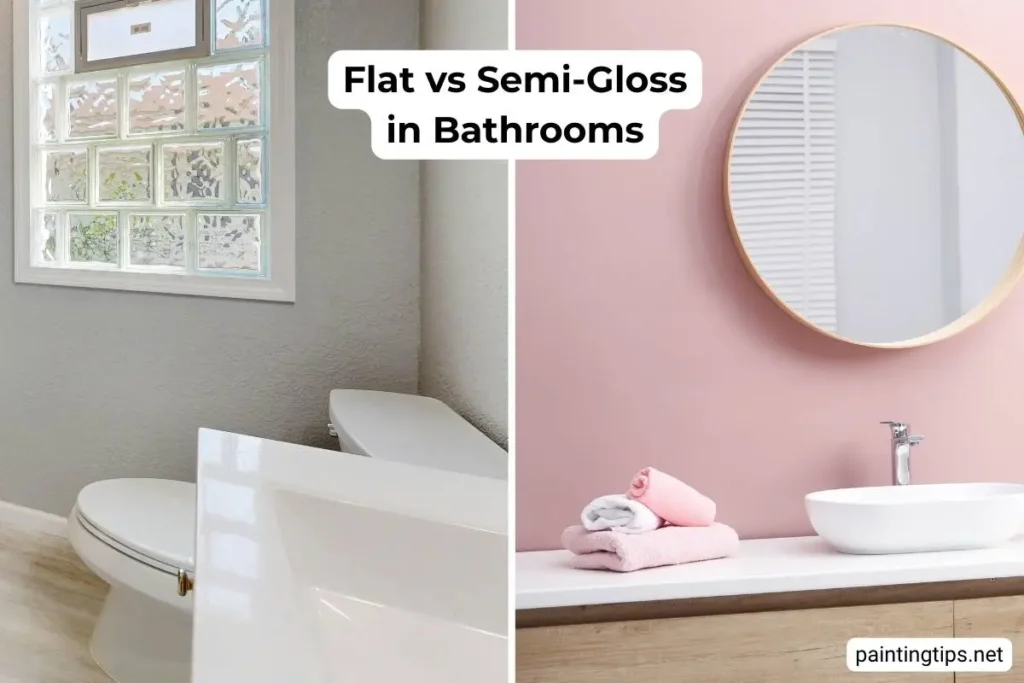
Flat paint has no place in a bathroom. The humidity alone causes problems before you factor in steam and splashing. Satin on the walls, semi-gloss on the ceiling and all woodwork — that combination handles everything a bathroom throws at it. A flat bathroom ceiling is one of the most common mistakes we see, and it almost always shows moisture damage within two years.
Flat vs Semi-Gloss in Hallways
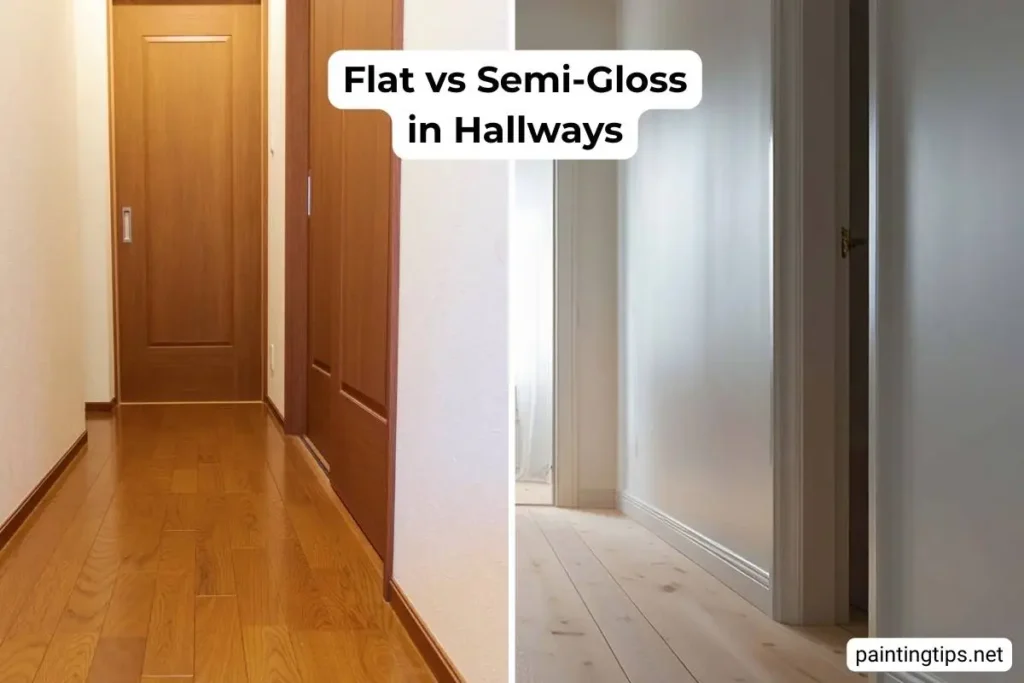
Hallways are where flat paint fails most visibly. Constant shoulder contact, bags brushing the walls, hands touching the surface every time someone passes — flat develops shiny wear patches within months. Eggshell at minimum. Satin if the hallway is narrow or heavily used.
Using Flat and Semi-Gloss Together — Getting the Contrast Right
The most effective approach isn’t choosing one over the other — it’s using both deliberately. Flat or eggshell on walls with semi-gloss on trim is the combination that underpins most well-finished interiors. Each finish is doing exactly what it should on the surface it covers.
The sheen difference between wall and trim is what creates visual separation. You don’t need a color difference — the same white on both surfaces, flat on the wall and semi-gloss on the trim, produces enough contrast to give the architecture clear definition. One combination to avoid: satin walls with semi-gloss trim. The difference is subtle enough to read as an inconsistency rather than a deliberate choice. If satin is needed on the walls for practical reasons, move the trim to gloss to restore a clear contrast.
What Is the Main Difference Between Flat and Semi-Gloss Paint?
Flat paint absorbs light at 0–5% gloss — excellent at hiding surface imperfections, poor at resisting cleaning and moisture. Semi-gloss reflects light at 41–70% gloss — durable, moisture-resistant, and easy to clean, but it reveals every imperfection in the underlying surface. Flat belongs on ceilings and low-traffic walls. Semi-gloss belongs on trim, doors, and surfaces that take daily use.
Can You Use Flat Paint and Semi-Gloss in the Same Room?
Not only can you — in most rooms, you should. Flat or eggshell on walls with semi-gloss on trim and woodwork is the standard approach in professional painting. The contrast between the two finishes gives architectural details definition against the softer wall surface. Using a single finish throughout a room misses the opportunity that the sheen difference creates.
Is Flat or Semi-Gloss Better for a Living Room?
For living room walls, flat or eggshell is almost always the better choice. These rooms prioritize atmosphere over durability, and flat paint’s soft, non-reflective quality suits that. Semi-gloss on large living room wall surfaces creates glare under artificial lighting and makes the room feel harder than it should. Reserve semi-gloss for the trim.
Can You Paint Over Semi-Gloss with Flat Paint?
Yes, but preparation is essential. The semi-gloss surface needs to be sanded until the sheen is gone — without sanding, flat paint won’t bond properly and can peel over time. Sand with 120–150 grit paper, wipe down the dust thoroughly, prime if the surface is in poor condition, then apply your flat or eggshell coat.
Should a Bathroom Ceiling Be Flat or Semi-Gloss?
Semi-gloss, without question. A bathroom ceiling takes more moisture than any other ceiling in the house — steam rises directly into it every time someone showers. Flat paint absorbs that moisture rather than shedding it, and within a year or two shows discoloration, bubbling, or mold that requires stripping back to bare surface to fix. Semi-gloss sheds the steam, cleans easily, and holds up to the environment flat paint cannot handle.
Does Semi-Gloss Paint Leave Roller Marks?
Yes, and this is one of the most common complaints after a DIY semi-gloss project. Because semi-gloss reflects light, any inconsistency in the roller application becomes visible once the paint cures. Dark colors in semi-gloss are the worst case — roller marks that would disappear in flat paint are clearly visible in a deep navy or forest green. To minimize them: use a short-nap roller (6–9mm), maintain a wet edge throughout, work in one consistent direction, and apply thin coats. This is one of the main reasons we recommend semi-gloss for trim rather than large wall surfaces.
